British/Irish in Poland
----------------------
Institute Professor, Lab of Metalloprotein Biology, IBB-PAS, Warsaw
----------------------
Tweets entirely my own
New paper alert! Just out, the latest in our study of the evolution of a fascinating family of metalloenzymes, the iron- or manganese-dependent superoxide dismutases (SodFMs). In this work, we’ve probed the evolutionary mechanism.
"Człowiek po doktoracie dostaje jedynie 19 złotych więcej niż najniższa krajowa". @Kijek_Hubert rozmawia z biolożką molekularną Agatą Starostą i fizykiem kwantowym Michałem Tomzą o kryzysie w polskiej nauce.
💻📱 Oglądaj w TVN24+: https://t.co/IrV74aaN5i
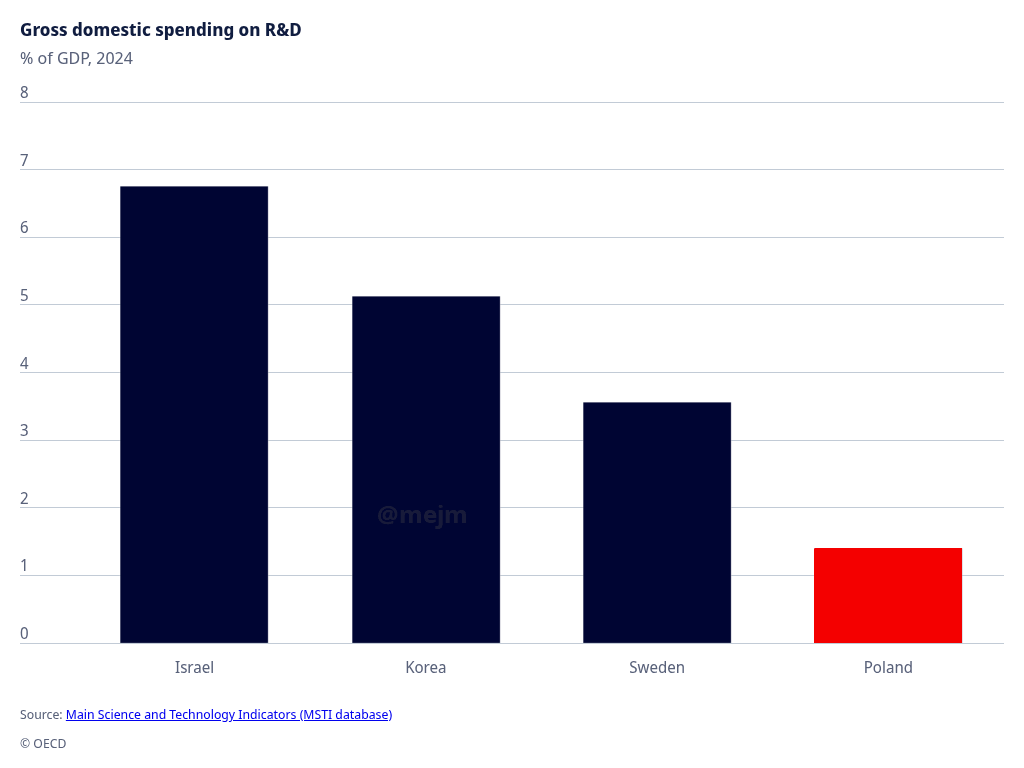
Wielu z Was może mieć jakieś obiekcje wobec tego, by przeznaczać więcej pieniędzy na średnią - tak po prawdzie - naukę w Polsce.
Ale, coś Wam i sobie powiem: jeśli mamy komukolwiek dać więcej kasy w Polsce to naukowcom, ZWŁASZCZA MŁODYM! Oto dlaczego:
- praca naukowców jest fundamentem, na którym opiera się cała masa branż przyszłości – od technologii, przez medycynę, po obronność. W Polsce to zjawisko jest może mniej widoczne, ale jest! A wraz z rozwojem przybiera na sile.
- młodych ludzi w Polsce jest coraz to mniej i KRYTYCZNE staje się właściwe wykorzystanie "zasobu ludzkiego"
- warunki finansowe i pozafinansowe ich studiów czy karier są w zasadzie upokarzające i jest to echo po PRLu, jedno z wielu, które nas ciągnie w dół
- naukowcy jako grupa są bardziej skłonni zmieniać zdanie pod wpływem faktów i dowodów, a w Polsce takich ludzi potrzebujemy więcej niż mniej!
- czym skorupka… jeśli młodzi poczują, że są inwestycją, oni również będą inwestować w młodych, pozwólmy tej spirali się nakręcać samoistnie. Póki co każde kolejnej pokolenie jest upokarzane, dymane, wykorzystywane, a jest tak bo… taka "tradycja", zmieńmy to w choć JEDNEJ branży!
- Polska jest praktycznie otoczona niestabilną sytuacją geopolityczną i sąsiadami, których PKB i "zasoby ludzkie" są kilkukrotnie większe od naszych: jeśli kraj ma być bezpieczny, MUSI mieć coś, co da mu bezpieczeństwo. Nie dadzą nam tego - z całym szacunkiem - ani górnicy, ani rolnicy, ani ekonomiści, ani dziennikarze…
Oczywiście są też minusy… ale nie o nich teraz, nie tu.
Wydatne finansowanie każdej branży ma jakieś plusy i minusy, ale w tym przypadku minusów jest relatywnie mało. Nie skupiajmy się na nich, bo to fałszuje obraz. Spójrzmy szerzej, choć przez miesiąc!
Dajmy tym ludziom godziwe stypendia, godziwe pensje, godziwe umowy, takie, które będą odzwierciedlać naszej nadzieje, które w nich pokładamy, bo póki co, my ich w zasadzie upokarzamy.
Uczyńmy choć jedną, JEDNĄ branżę, taką, która nie będzie odbiegać od zachodnich standardów, taką, która przynajmniej dogoni zachód. Miejmy choć jeden diament, w który będziemy się wpatrywać ze łzami w oczach i cieszyć się, że płacenie podatków ma jakiś głębszy sens.
Ta jedna podwyżka praktycznie nic nie zmieni bezpośrednio, bo walczymy o tak po prawdzie o dorównanie do średniaków! Ale ona powinna być impulsem do działań. Powinna być impulsem dla naukowców, że warto się ORGANIZOWAĆ, warto działać WSPÓLNIE i warto mieć PLAN budowania nauki w Polsce i go realizować.
Jeśli jest jedna grupa ludzi, w których warto w Polsce inwestować, to jest właśnie ta grupa!
Przez dziesięciolecia przepierdoliliśmy setki miliardów na projekty które nic, zupełnie nic nam nie dały poza nadwyżką finansową ich beneficjentów. Im więcej przeznaczymy na naukę, tym mniej zostanie pieniędzy na bzdury, na obietnice, na przekupstwa polityczne.
Zróbmy choć raz coś innego, tak dla odmiany, tak z czystej ciekawości, zróbmy taki krajowy EKSPERYMENT! Przynajmniej tyle! To są grosze, to są praktycznie grosze!
#3procentnanauke www: 3procentnanauke[.]pl
Zaczynamy odliczanie do protestu polskiego sektora nauki!
Jak to naukowcy - przygotowaliśmy dla Was niespodziankę, którą wspaniale zilustrowała @k_rogalska!
Za 14 dni widzimy się pod Sejmem!!!
Today I'll be talking about our work over the last few years, using the superoxide dismutases as a great model system for studying the evolution of metalloenzymes:
https://t.co/0fu0MreZrf
!!! UWAGA - ZACZYNAMY - https://t.co/hCRQuaLRhl!!!
🔬🇵🇱 3% dla nauki, 100% dla Polski 🇵🇱🔬
Zapraszamy do wsparcia, udziału i nagłośnienia naszej akcji! Domagamy się zwiększenia finansowania polskiej nauki do 3% PKB — bo bez nauki nie ma rozwoju.
Nasze postulaty:
1️⃣ Pracownicy sektora nauki muszą mieć za co żyć
2️⃣ Stabilne i godne warunki dla studentów i doktorantów
3️⃣ Badacze muszą mieć za co prowadzić badania
📺 Więcej o postulatach: https://t.co/ehIB1OcLyC
📣 Działamy już w maju:
📝 PETYCJA
Pokażmy jak wielu osobom, zależy na zwiększeniu finansowania nauki! Podpisz i udostępnij: 👉 https://t.co/oklbxa3gFx
🎥 #3procentNaNaukę
Twórzcie posty i rolki pokazujące, dlaczego Wasze badania mają znaczenie. Budujmy razem silny, pozytywny obraz polskiej nauki!
✊ PROTEST
📅 27 maja, godz. 13:00
📍 Warszawa, pod Sejmem (pomnik AK)
👩🔬👨🔬 Przyjdźcie w fartuchach, z transparentami i energią!
#3procentNaNaukę #ProtestSektoraNauki
🚇🚆🚊🚋🚌🚍
Kolega Jacek popełnił animację warszawskiego zbiorkomu, rozkłady dzisiejsze (27 kwietnia 2026).
Jak chcecie inne miasta to piszcie.
https://t.co/viJRd85ciB
A group of researchers from @IBB (including me!) are running the relay marathon again this year. This time for charity: Rak’n’Roll, who work to improve the quality of life of patients receiving treatment for cancer.
Please donate here: https://t.co/YQk6UnbyCS
Every time I tell AI utopianists that biology is too complex for AI to "solve", they cite the success of AlphaFold.
No, AlphaFold did not "solve" protein folding. It gets broad structures correct ~70-88% of the time (depending on evaluation), enabling useful but flawed statistical guesses.
True "solving" would require ~99.9%+ accuracy, practically zero meaningful edge cases, and high confidence across fine details like side chains and conformations.
Even then, this is just one narrow slice of the complexities of proteomics.
The persistent gap between the "AlphaFold solved protein folding" claim and reality is a perfect example of AI overhype in biology.
The Conservative plan to cut the budget of UK Research and Innovation by 20%, reallocating the money to defence, is a signal that a 20 year old cross-party consensus on science funding has come to an end...
That one neuron connects to about 7,000 others. Your brain has 86 billion of them. Do the math and you get somewhere around 100 trillion connections inside your head. More connections than stars in 1,500 galaxies.
And each connection point is way more complicated than anyone expected. A Stanford lab found that every single connection contains about 1,000 tiny switches that can store memories and process information at the same time. So your brain is running roughly 100 quadrillion switches right now, while you read this sentence.
The wild part is the power bill. Your brain runs on 20 watts. That’s less energy than the light in your fridge. The world’s fastest supercomputer needs 20 million watts to do the same amount of raw calculation. A million times more power for the same output.
We’re still nowhere close to understanding how any of this works. In October 2024, a team of hundreds of scientists finished mapping every single connection in a fruit fly’s brain. Took six years and heavy AI help. That fly brain had 140,000 neurons. Yours has 86 billion. Google and Harvard also mapped a piece of human brain last year, a speck smaller than a grain of rice. That speck alone contained 150 million connections and took 1,400 terabytes to store. The lead scientist said mapping a full human brain at that detail would produce as much data as the entire world generates in a year.
A tiny worm had its 302 brain cells mapped back in 1986. Almost 40 years later, scientists still can’t fully explain how that worm’s brain keeps it alive. Your brain has 86 billion of those cells, each one wired to thousands of others, each wire packed with a thousand switches, all of it humming along on less power than a lightbulb.
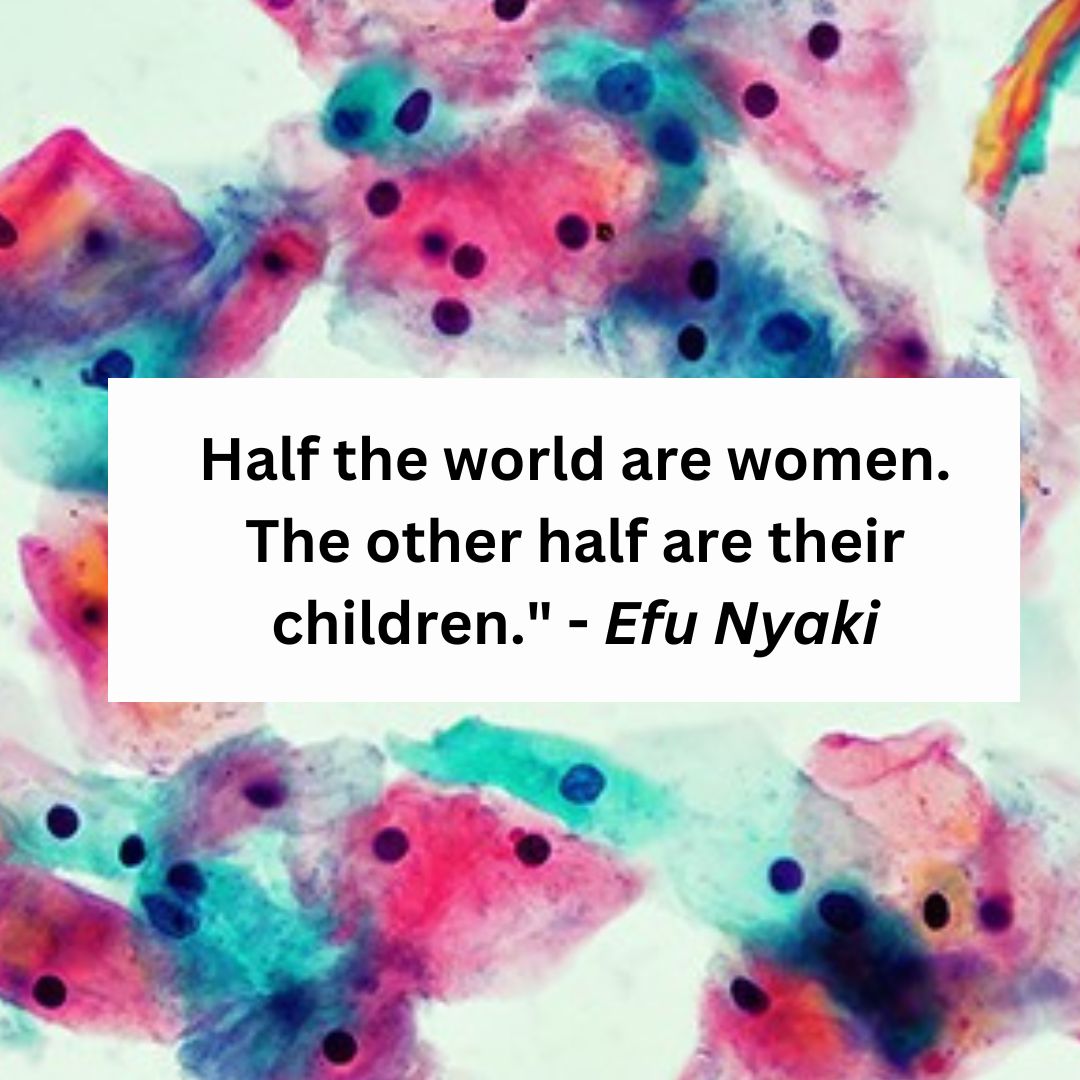
Greek physician George Papanicolaou invented the Pap smear technique for cervical cancer screening. After his PhD, he immigrated to the US in 1913 with wife, for research opportunities.
In U.S he couldn't recruit subjects for vaginal smears. His wife stepped in, providing daily samples from 1914 for over 21 years—about 7,600 tests—collecting and preparing them herself since George lacked a U.S. medical license. While working at Cornell University Medical College, New York, these samples allowed George to track cellular changes from her reproductive years through menopause, establishing baseline patterns for normal and abnormal cells, which was foundational for identifying cancer indicators.
All the work of George was possible only because of his wife, Andromachi Mavrogeni Papanicolaou (known as Mary, born in 1890 in Greece), who decided to step in as a volunteer human subject. George was poor in English and had communication problems, which made the hurdle of obtaining a medical license even greater when he landed in the U.S. It would be impossible for George to advance his research without his wife stepping in. The couple chose not to have children to dedicate themselves to science.
In the early 1940s, George Nicholas Papanicolaou’s work got international recognition. The couple later in 1961 moved to Miami and founded the Papanicolaou Cancer Research Institute at the University of Miami. George died on February 19, 1962, from a myocardial infarction. His Pap smear method revolutionized cervical cancer screening, saving millions of lives globally. After George's death, Mary continued his work at the institute.
In 1969 ( seven years after the death of George), the American Cancer Society honored her for her contributions.The citation highlighted her "unselfish contributions," including her role as the primary human subject for over 21 years, her unpaid work as a lab technician and manager at Cornell, and her recruitment of other volunteers, all while handling household duties to allow her husband to focus on research.
On this Women's Day, let us celebrate not only the ladies who are frontline achievers but also those who contribute to the betterment of the world in the background, through the strong resilience which encompasses womanhood.
Glory to Andromachi Mavrogeni Papanicolaou and her husband. Happy Women's Day!