We asked Jaremy Boyal, the Toshao (mayor) of Warapoka, how tourism contributes to economic development in his village. For remote destinations, like Warapoka, tourism provides great financial opportunities to local populations and incentivizes people to protect wildlife.
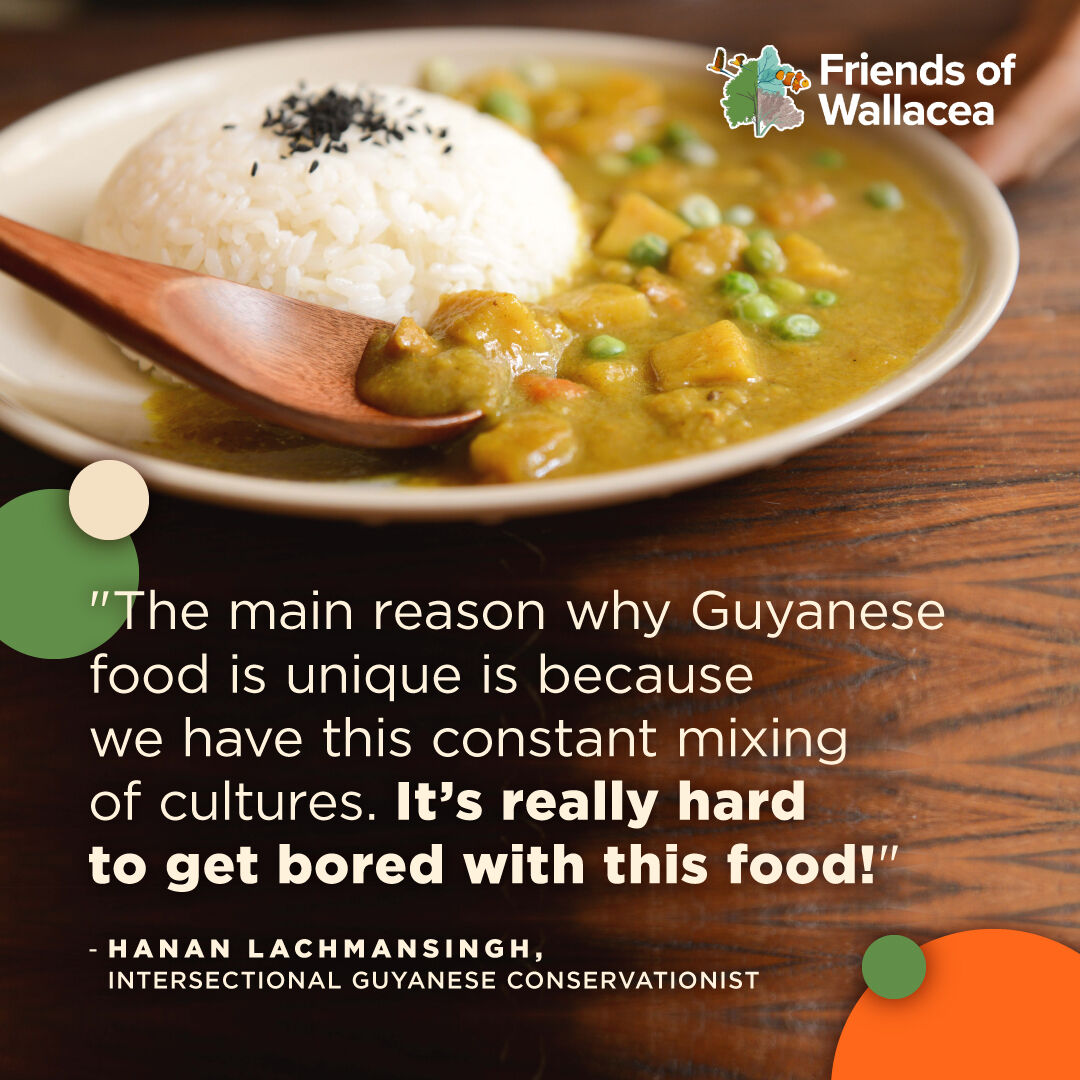
Guyana's diverse cultures, languages, and traditions are bound together by one central element: cassava. Cassava is a root 🌱 that is used everywhere inGuyana. It is thes cornerstone of Guyanese culture and gastronomy. 🇬🇾
What makes a trip to Warapoka so unique? Sharing daily rituals with the local community. ✨ You roast your own coffee ☕ and brew it in the indigenous tradition, with fresh coconut milk! We guarantee coffee tastes best in the middle of the Guyanese rainforest!
Ready to embark on a life-changing adventure in the remote village of Warapoka? Book a tour with us to explore Guyana: meet incredible people, have deep conversations about indigenous ways of living, and help protect a rich wildlife and ecosystem! Book via https://t.co/ivyniZxzRG
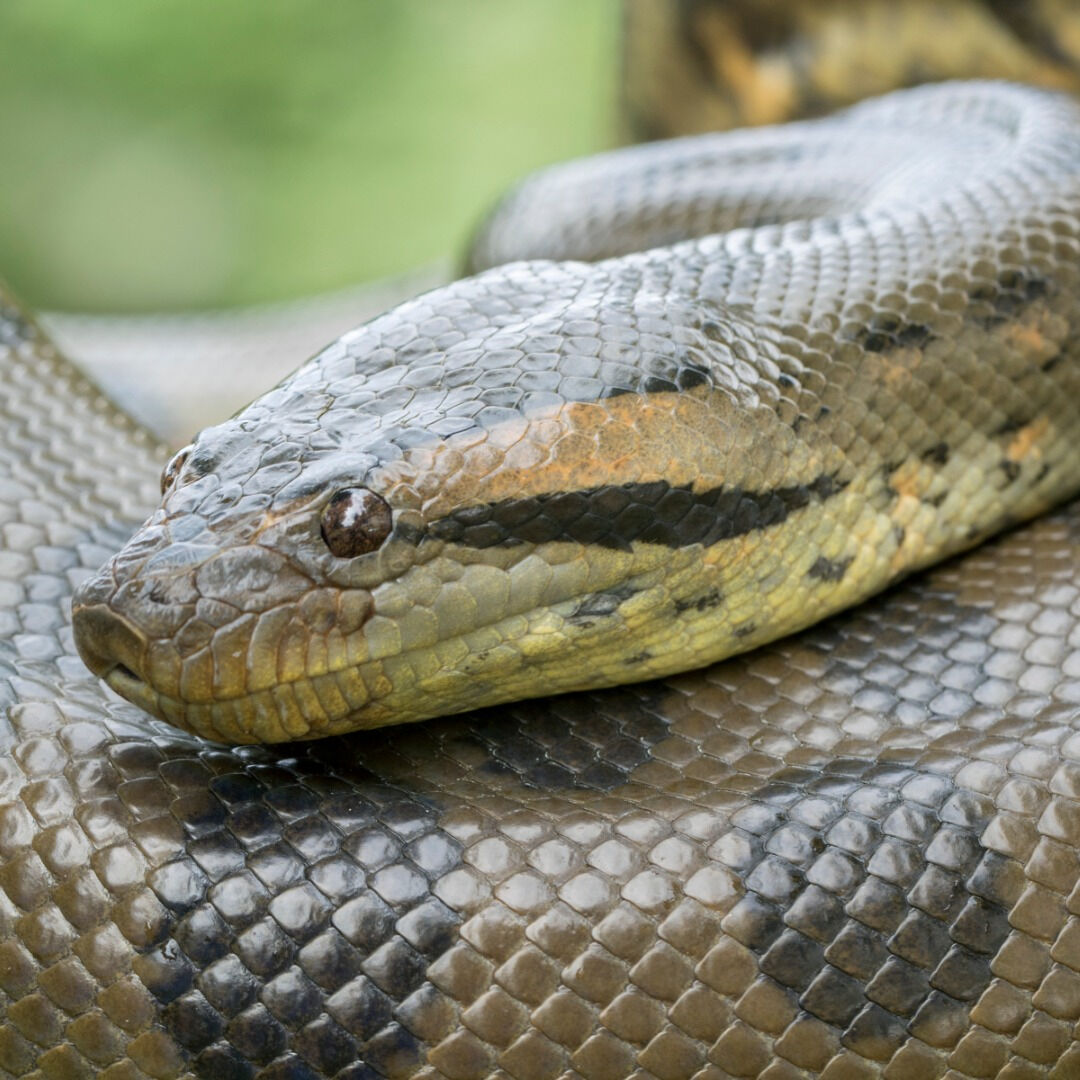
📖 Fun Fact: Emerald tree boas are carnivorous and prey on rodents, monkeys or small mammals - they play a crucial role for the environment as help manage the population of the animals they prey on. 🏞️
🔸 Conservation Status: Least concern
Warapoka is a small village, located in the middle of the Guyanese rainforest, only accessible by boat 🚣. As a result, the Warau people have been developing their dugout canoe building skills 🛶 to move around, go fishing and explore their surroundings.
For this week's Tuesday trivia, we want to know if you carefully read our blog articles! 🤩 If you did, you should remember what a toshao is.
🔎 hint: a toshao is very important for Guyana's indigenous communities!
#guyana#friendsofwallacea#guyanatourism
Getting excited seeing our day-by-day itinerary for travel in Guyana? Check out these 13 things you must know before taking a trip to this beautiful country: https://t.co/MGTYOScYfs
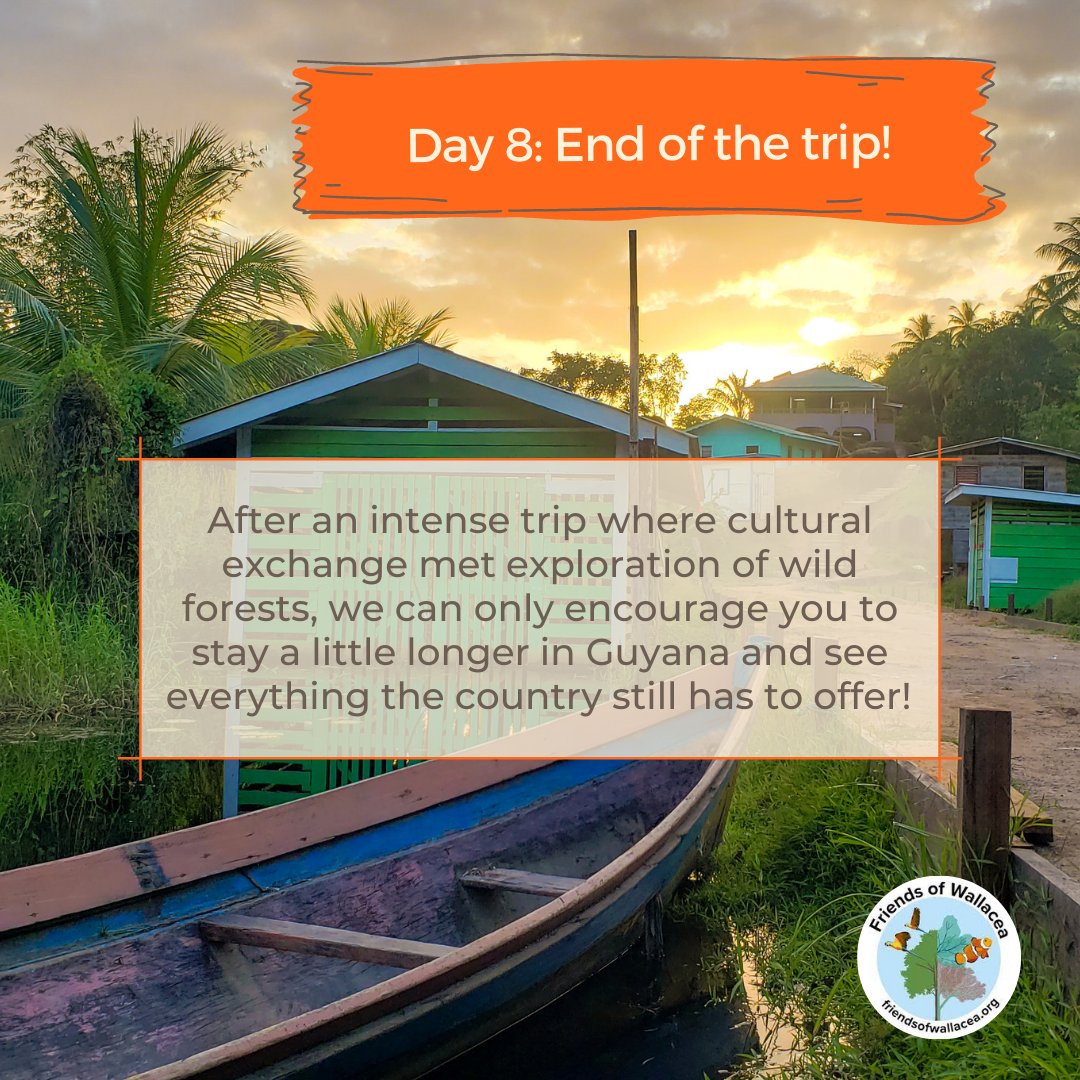
Back in Georgetown after a week full of exploration, learning more about traditional indigenous ways of living, and exchanging with new Guyanese friends, we are sure you will have memories to cherish for the rest of your life. 😍
The world's largest single-drop waterfall is waiting for you! 🌊 A majestic landscape will greet you as you fly over Kaieteur Falls. 🛩️ Appreciate the wonders of nature and enjoy a scenery you will never forget. 🏞️ Seeing Kaieteur Falls is the perfect way to end this trip. 💦
Your stay in Warapoka is already coming to an end.
On your 6th day, you will visit one of Warapoka's historical sites, the Alaka Shell mound, which can be traced back 7000 years. 🌿 We'll close our trip with a dance and song farewell from the local cultural committee.
Day 5 is the day of giants! Today, you'll explore the creeks around Warapoka by canoe in search for black caimans 🐊 and giant river otters! 🦦 Your guide will also teach you how to fish tarpon, a popular local fish. 🎣 And for dinner, you will be eating the tarpon you caught!🍽️
If you didn't get enough of birds 🦜 on day three, today is your chance to potentially see hundreds. Rare Agami herons nest near Warapoka in the summer months, so we'll paddle hours into the jungle (with the help of your guide) 🛶 to monitor these shy birds.
Take out your binoculars and camera 📷 for this third day and look up in search of tropical birds 🦜. With hundreds of birds that live in Guyana and around Warapoka, you are sure to be amazed by unique creatures! ✨
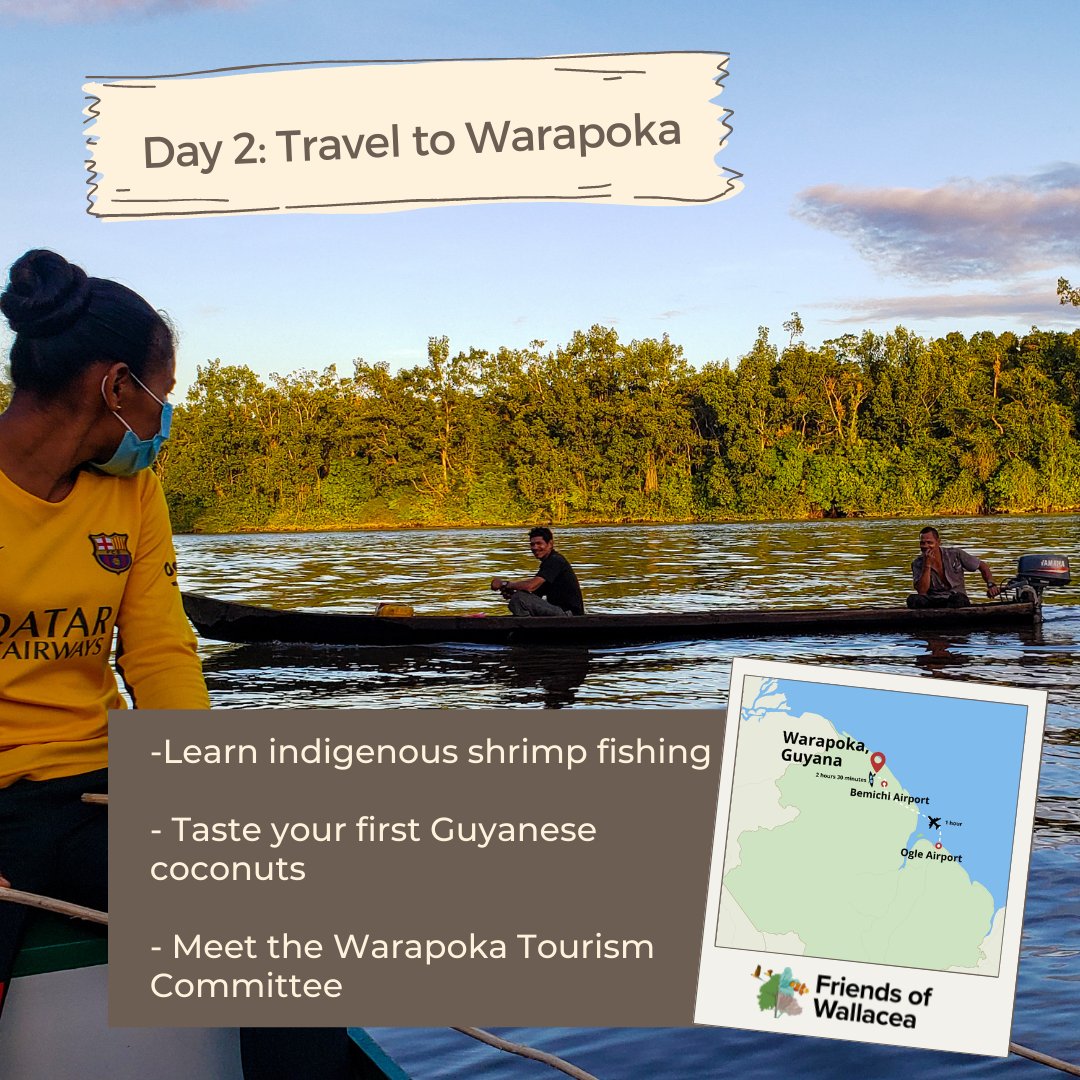
The second day of the trip is here! Traveling to remote Warapoka is an adventure in itself. You will start the journey in a small charter plane 🛩 followed by a boat 🛶 in the middle of the rainforest to finally arrive. Expect fresh coconuts to celebrate your arrival!
The first day of the trip, we all meet together in Georgetown, Guyana's capital. 🇬🇾 Georgetown is a unique city where many cultural heritages coexist! 🌎 This is the perfect place to get to know your guide and travel companions while you start exploring Guyana.🍲
We recently launched our Guyana tour 🌟, and wanted to give you an overview of what you can expect when visiting the indigenous village of Warapoka with us! 🤩
Be ready, your journey starts tomorrow! 🎒🥾
Hanan, @hananabananasplit, used to be an intern with us at Friends of Wallacea and as a Guyanese citizen, we knew she would be the best person to tell us about Guyanese food! 🤩
We love genuine connections with local people and opportunities for mutual learning and understanding. 🗣 When you share deeply with others, you create memories and discoveries that last a lifetime.
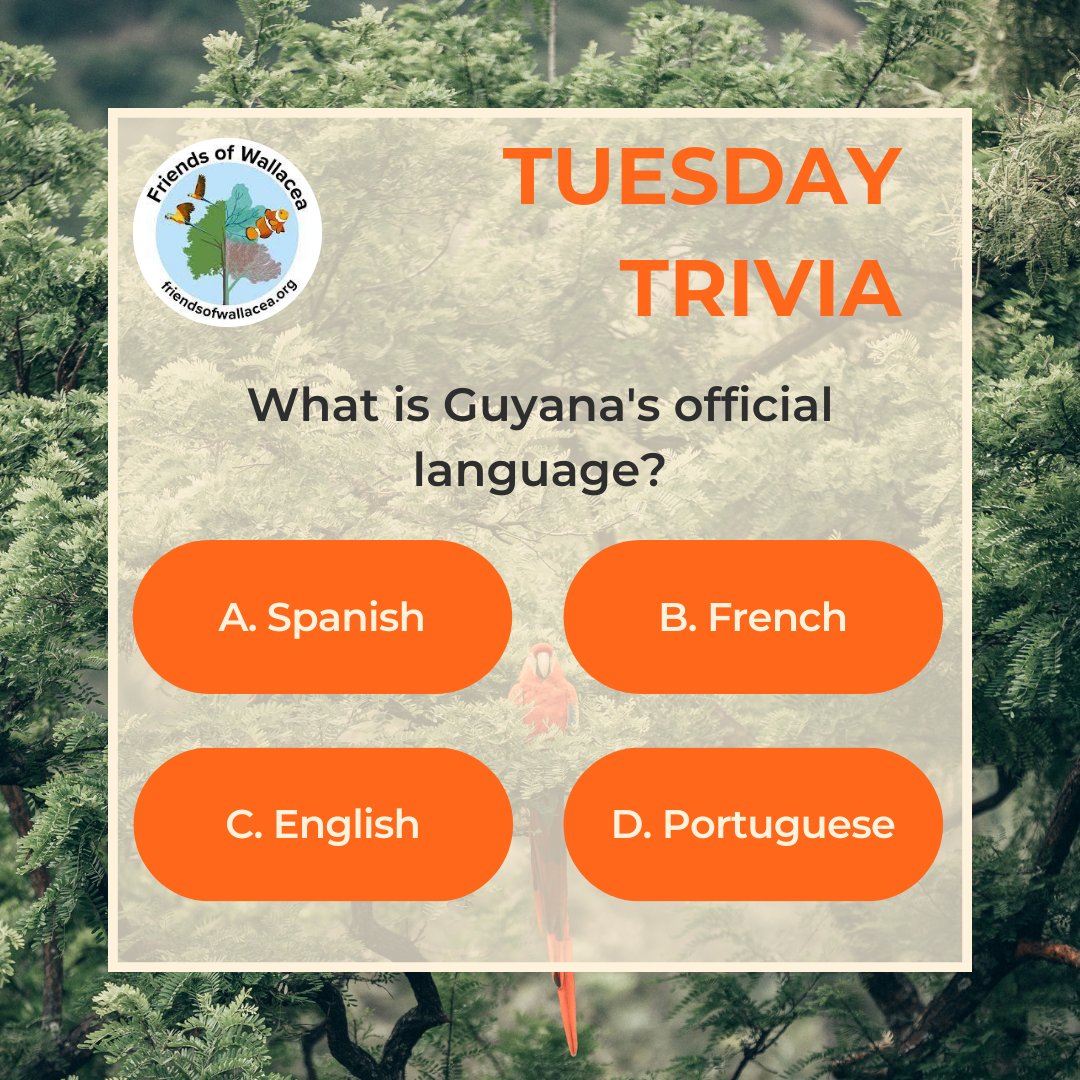
Trivia Tuesday: Do you know what the official language of Guyana is? 🇬🇾🤩