There's a crisis hiding inside British local government right now that almost nobody is talking about. And it connects to almost everything else that's going wrong.
Since 2018, seven councils have effectively gone bankrupt. Northamptonshire. Croydon. Slough. Thurrock. Woking. Birmingham. Nottingham. They issued what's called a Section 114 notice. Local government's way of saying the money has run out.
The number of councils needing emergency help from central government is growing every year. In 2025-26, 30 councils needed exceptional financial support. This year it's 35, sharing around £1.5 billion. The government had been warned it could reach 100.
The Local Government Association estimates almost 1 in 5 councils are at risk. The LGIU found more than half of senior council figures believe their authority will effectively go bankrupt within five years.
Some of this is mismanagement. Woking racked up £2.4 billion in debt, 100 times its annual budget, gambling on hotels and skyscrapers. Thurrock lost hundreds of millions on solar farm investments. Croydon's housing company collapsed.
But the deeper story is structural. Between 2009 and 2020, central government funding to councils was cut by 40% in real terms. From £46.5 billion to £28 billion. At the same time, demand for the services councils are legally required to provide has been rising every single year.
And while the funding was being slashed, your council tax was going in the opposite direction.
In 2011, the average Band D council tax bill was £1,439. Today it's £2,392. Up over 66% in fifteen years. This year, 274 out of 384 councils raised it by the maximum allowed without triggering a referendum. Seven were given special permission to go even higher.
You'd think all that extra money would mean better services. It doesn't. Libraries are closing. Bins are collected less often. Roads are falling apart. Social care is being rationed. You're paying more every year and getting less every year.
So where is the money going?
Social care is the single biggest answer. It's eating local government alive. The adult social care funding gap is now over £1 billion a year just to stand still. The Health Foundation estimates an additional £8.3 billion will be needed by 2032 just to keep up with growing demand. Care England estimates that increases to the National Living Wage and employer National Insurance have added £3.7 billion in extra costs to the sector. The government's response has fallen well short of that.
But there's another cost most people don't know about. And I want to be precise here because the numbers are contested and the picture is complicated.
Councils fund themselves from multiple sources. Government grants. Business rates. Fees. And council tax. Council tax is the part you pay directly. So when I talk about what follows, I'm talking specifically about how much of your council tax revenue goes to one particular cost.
Freedom of Information requests submitted to over 300 councils found that local authorities across England contributed roughly £6.7 billion to staff pension schemes last year. When measured against the council tax those councils collected, that works out at an average of around 23p in every pound of council tax revenue going to staff pensions.
Councils will rightly point out that council tax is only one part of their total funding. That's true and it's an important caveat. But council tax is the part that comes directly from you.
Council employees are enrolled in the Local Government Pension Scheme. A defined benefit scheme where councils pay an average of roughly 20% of each staff member's salary in employer contributions. In the private sector, the minimum employer contribution under auto-enrolment is 3%. The two aren't directly comparable because defined benefit and defined contribution schemes work very differently. But the gap gives you a sense of the cost pressure.
And this isn't an argument against council workers having decent retirements. Many of them are low paid and do vital work. The average LGPS pension in payment is around £4,000 a year. This isn't gold-plated for most people.
But when your council tax has gone up over 66% in fifteen years while your services have visibly deteriorated, you deserve to understand what's driving those costs. Pension obligations are one significant part of the picture. Social care is another. And between them, they leave very little room for everything else.
Now here's where it connects to the NHS.
Care providers are closing. Councils are rationing who qualifies for help. And the knock-on effect is landing directly on hospitals.
Every single day in England, somewhere between 13,000 and 14,000 hospital beds are occupied by patients who are medically fit to go home but can't. Because the social care they need to leave hospital doesn't exist. One in eight general and acute beds in the country. Blocked. Not because the patients are sick. Because there's nowhere for them to go.
Care England estimates that over 45% of hospital discharge delays are linked to social care. The Royal College of Physicians has called this "a failing system" and said the NHS front door will remain in a state of emergency until it's fixed.
This is a doom loop. And nobody in government is treating it as one.
Councils can't fund social care. So elderly patients can't leave hospital. So hospital beds are blocked. So waiting lists grow. So people who need treatment can't get it. So they can't work. So economic inactivity rises. So tax receipts fall. So the government has less money. So councils get squeezed further. So social care gets worse. So more beds are blocked.
And round it goes.
Every part of that chain is supported by data from official sources. The waiting lists. The inactivity figures. The funding gaps. The discharge numbers. The Section 114 notices. They're all published separately by different departments. But nobody is connecting them.
The DWP treats inactivity as a welfare problem. The NHS treats waiting lists as a health problem. The Treasury treats both as spending problems. Local government treats social care as a funding problem. They're all looking at their own piece. Nobody is looking at the system.
Meanwhile your council tax keeps going up. Your services keep getting worse. The population is ageing. The fertility rate just hit its lowest level on record. And the cost of everything, pensions, healthcare, social care, debt interest, keeps growing faster than the economy that's supposed to pay for it.
The councils going bust aren't the crisis. They're the symptom. The crisis is a system that was built for a younger, richer, growing country and is now buckling under the weight of an older, poorer, stagnating one.
And nobody in power is willing to say that out loud. Because the honest answer is that this requires a fundamental redesign of how the state works. And nobody wants to be the one to start that conversation.
'I don't think this is job done'
Energy Secretary Ed Miliband told #BBCBreakfast the 7% fall in the price cap for gas and electricity, which means an average annual cut of £117, is progress towards the election pledge to cut energy bills by £300 by 2030
https://t.co/fIvxFvazLg
The comments say it all. I switch the tv off when he comes on. This post sums out how delusional he is. Usual PMQs doesn’t answer questions/ govt bench laughing. Unfortunately no suitable alternative in any political party
I will never walk away from the mandate I was given.
I will never walk away from the people I'm fighting for.
I will never walk away from the country I love.
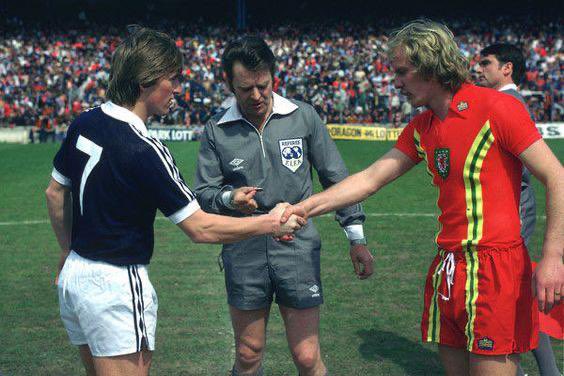
Very sad to hear of the passing of Terry Yorath.
A terrific footballer, but above all a good man who gave so much to the game over many years.
Thoughts are with his family, friends and everyone who had the privilege of knowing him.
Rest in peace, Terry
Here’s a post that many of you will relate to right now. For many years I’ve managed to have a pretty good standard of living through career progression and then being self employed. I’ve always worked hard and have enjoyed a few decent holidays, nights out, got on the property ladder in my twenties and largely always found a way to be reasonably comfortable financially.
But recently, things have changed.
Despite the fact that my annual income is significantly higher than it was in my twenties, I feel significantly poorer than in my twenties. And that’s because the cost of living is completely out of control. And the cost of living is out of control on the basic essentials of energy and food prices. This is combined with a horrendous tax burden - now at record levels.
If we were paying all of this tax and getting a return on investment then at least there’s a social contract of trust between the taxpayer and government. But there’s not. Instead we are paying record amounts of overall taxation and the country is rotting. Nothing works. Public services have diminished and infrastructures are rotting. The decay is everywhere.
I am not alone in saying this. Everyone I speak to is saying the same thing. We are all working our arses off just to keep our heads above water while paying governments extortionate amounts of money for them to make our lives worse.
And for all of this, I blame successive Tory and Labour governments. They have let the country rot. And they’ve sold our assets to multinational corporations. And they’ve made some terrible policy decisions that have cost the taxpayer a fortune. They’ve spaffed away our hard earned tax money on wars, corporate contracts, numerous crisis situations that they created and have feathered their own nests with power and money in the process. They’ve brought Britain to its knees by wilful incompetence and managed decline for corporate greed and we are all paying the price.
At some point we must stop focusing on who needs to pay more tax and instead focus on where all of our tax money is going.
The mood across Britain is unlike anything I’ve ever witnessed before. But it’s not the fault of the people. It’s the fault of government. And don’t ever let these bastards tell you otherwise.