🇮🇱🇮🇷The potential new Prime Minister of Israel Gadi Eisenkot admitted that they had made a mistake by underestimating Iran:
“The Iranians are much stronger than we imagine.
If anyone thought that air power could bring about regime change, they were wrong.”
IRAN: Missile Production OUTPACES Use, Hormuz Under Iran's Control, U.S. Navy FORCED 1,000 KM Away
IRGC Deputy Commander Gen. Ali Fadavi claims there are now NO U.S. warships in the Persian Gulf, Strait of Hormuz or Gulf of Oman.
"The Americans FLED."
He says U.S. warships that attempted to enter Hormuz were ATTACKED by the IRGC Navy and Aerospace Force, arguing Washington cannot impose control through airpower alone.
@makaumutua The sign of panic at statehouse loosing the job to the youngest one term senator you can't believe it next you'll jump to kalonzo musyoka asking him not to deputise sifuna.
The Architecture of Stealth vs. The Spectacle of Ruin
John Arnold Bredenkamp vs Wicknell Munodaani Chivayo
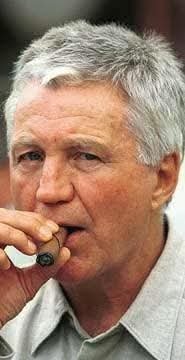
There is an old, unwritten rule among the shadow brokers who oil the gears of fragile regimes: power speaks in whispers, but survival demands total silence. For decades, Zimbabwe’s parallel economic engine was calibrated to the quiet, almost ghostlike rhythm of John Arnold Bredenkamp. When Bredenkamp operated, he moved through offshore boardrooms & grey-market trade corridors like a phantom, building a formidable fortune by keeping his name off public registries & his face far away from cameras. He understood that in the high-stakes game of state capture, institutional insulation is everything. So long as no one can trace the paper trail, the machine keeps running.
Then came Wicknell Chivayo, & the rules were not just broken—they were shattered on Instagram.
Where Bredenkamp built an empire in the dark, "Sir Wicknell" treated state capture as a personal stage show. He measured success not by the discretion of his operations, but by the volume of his flex. He was a man who couldn't buy a fleet of luxury cars without recording himself handing over the keys, couldn't fly first class without posting photos draped in head-to-toe Gucci, & couldn't secure a multi-million-dollar government procurement contract without openly boasting about it online.
Chivayo’s fatal flaw and ultimately the undoing of the state capture apparatus President Mnangagwa sought to entrust to him was his complete inability to separate power from performance. Under the modern tenderpreneur model, wealth meant nothing unless it was broadcasted. His relentless "car-park philanthropy," where he handed out top-of-the-range Mercedes-Benzes, Land Cruisers, & suitcases of cash to political sycophants, musicians, & church leaders, was presented as grand generosity. In reality, it was a weaponized, ego-driven spectacle that left a glaring, undeniable paper trail straight back to the corridors of power.
Bredenkamp survived decades of international sanctions & shifting political tides because he was an architect of stealth; he solved existential crises for the ruling elite behind closed doors without needing a single round of applause. Chivayo, by contrast, demanded an audience for every transaction. By turning sensitive state patronage into viral content, he exposed the entire parallel financial network to foreign regulatory scrutiny, anti-money-laundering probes, & public outrage long before his fatal helicopter crash over Marondera.
When Chivayo's aircraft came down on that September evening, it marked more than just a tragic loss of life. It was the inevitable collapse of an architecture built on vanity. Bredenkamp left behind a template of quiet control that sustained a state for generations; Chivayo proved that when you build a empire out of social media clout, public gifts, and endless opulence, it doesn't just fracture under pressure—it burns out of the sky for everyone to see.