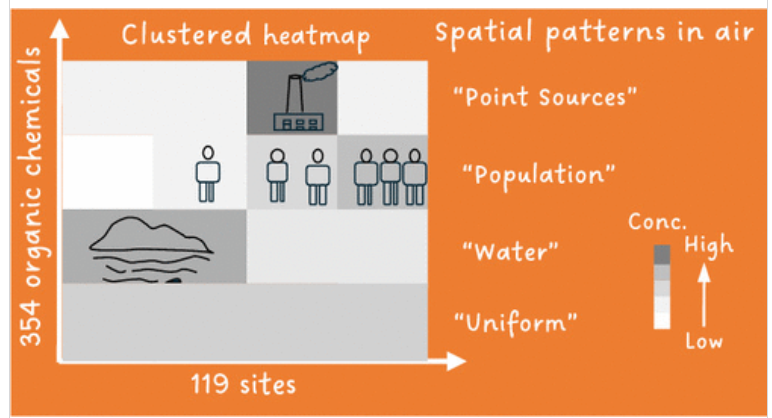
Our first large-scale investigation of organic contaminant distribution in air across Southern Canada with 119 passive sampling sites for 353 organic vapors showing 4 contaminant signatures with common sources and dispersion patterns @ECCCSciTech https://t.co/OngfBO4B13
@sivanibaskaran @EnviroChemUofT@chemuoft Congratulations, Sivani! We are so very proud of what you have accomplished over the past few years. All the best for the postdoc at NGI.
We propose a new approach to long-range transport potential assessment which could reduce the risk of false positives / negatives. Read our policy analysis in @EnvSciTech@WaniaGroup@AcesSthlmUni @NILU_now
https://t.co/tjkcraAM0g
How do you select chemical property data in your research work? What do you do when dealing with multiple experimental measurements or model predictions? Do you think all published data points are of equal quality? Check out our latest open-access Review paper👇👇👇
How do you select chemical property data?
A new review by @ModelerLi and collogues take an in-depth look at how we can ensure we are using the best available data in chemical assessments.
Retrieval, selection, & evaluation of chemical property data for assessments of chemical emissions, fate, hazard, exposure, & risks
By Li Li, Jon Arnot, Frank Wania et al @UCRiverside@UofT@unevadareno
🔓 Open access in ACS Environmental Au 👉 https://t.co/45bMMHkQfT
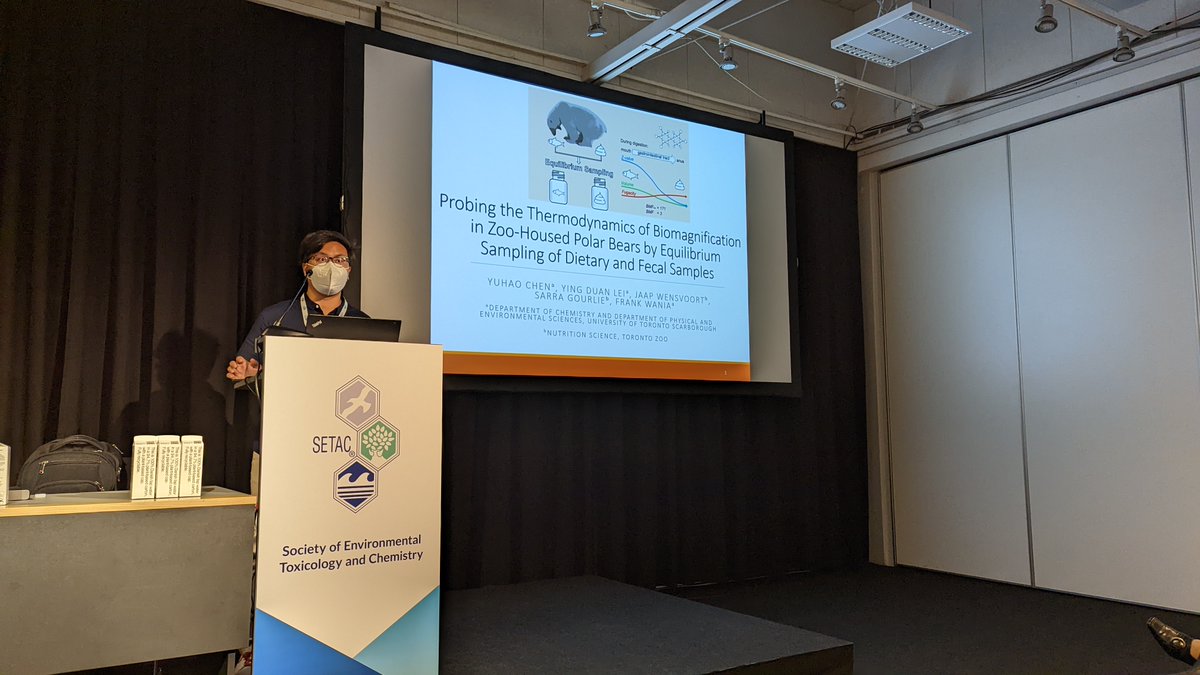
Studying how predators accumulate contaminants usually requires taking a chunk of tissue from an animal—an impossible task for endangered species. However, scientists have now come up with a noninvasive alternative: testing animals' food and feces. https://t.co/GqkYctSU1m
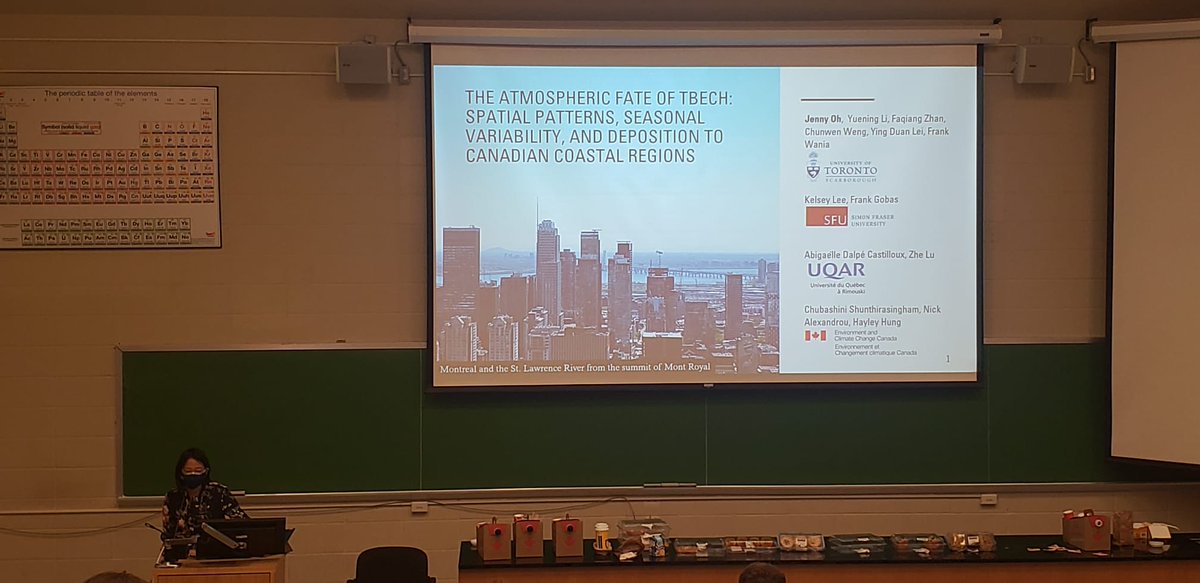
Jenny from the @WaniaGroup is our next speaker. Jenny will discuss the atmospheric fate of a flame retardant, including the spatial Patterns, seasonal variability, and deposition to Canadian Coastal Regions.
We are live at @TheTorontoZoo! For today and tomorrow, our tweets will cover the presentations and activities for our annual Environmental Chemistry Colloquium #ECCXXI. The editors are @IslaWrightson, @specandthecity, @AtmosChemSteph and @chemistzil.
Our next presentation will be by Desmond Ng from @WaniaGroup, where he will discuss how dietary microplastic impacts the biomagnification of organic contaminants.
This work was just published #OpenAccess in ES&T (@EnvSciTech) and was selected as Editor's Choice and for the cover feature for the upcoming issue!
https://t.co/gdrYE6DpEY
#UTSC researchers have developed a new study using polar bear poop, revealing how certain chemical contaminants can get trapped and build up inside their bodies. 🐻❄️#UofT https://t.co/zApZ2OVLBN
The free platform provides experimental #physchem properties and estimation tools for property predictions and integrated environmental fate models for #chemical#riskassessments!
Presentations are almost all done for the #WaniaGroup!
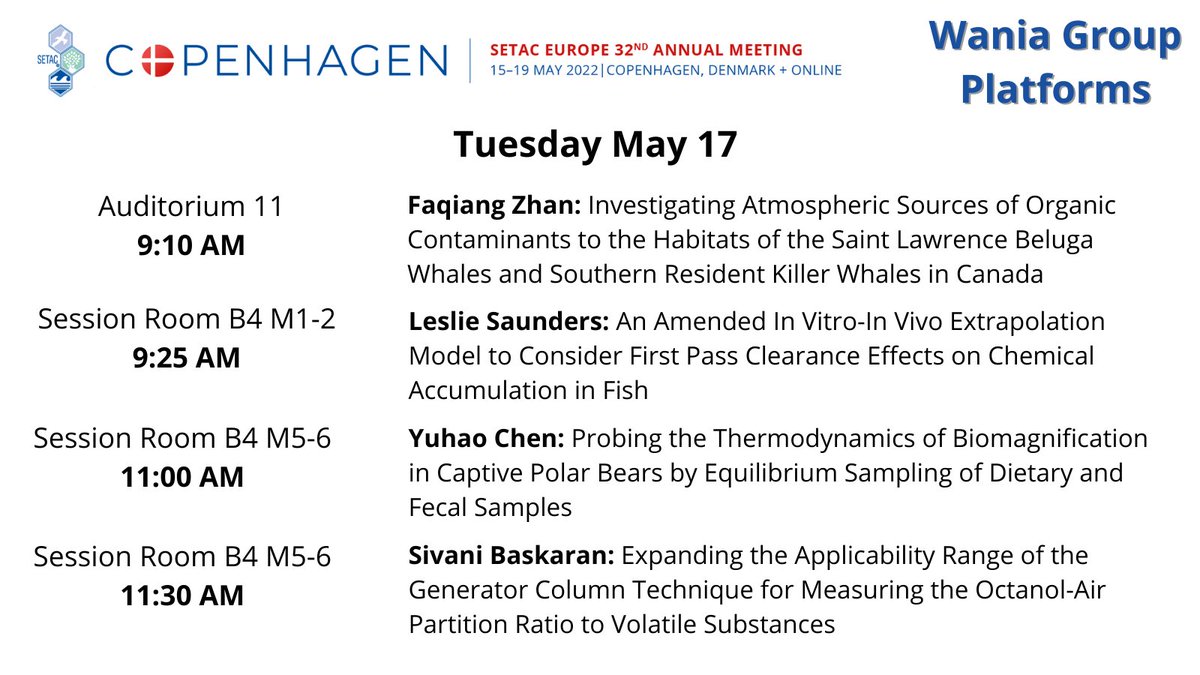
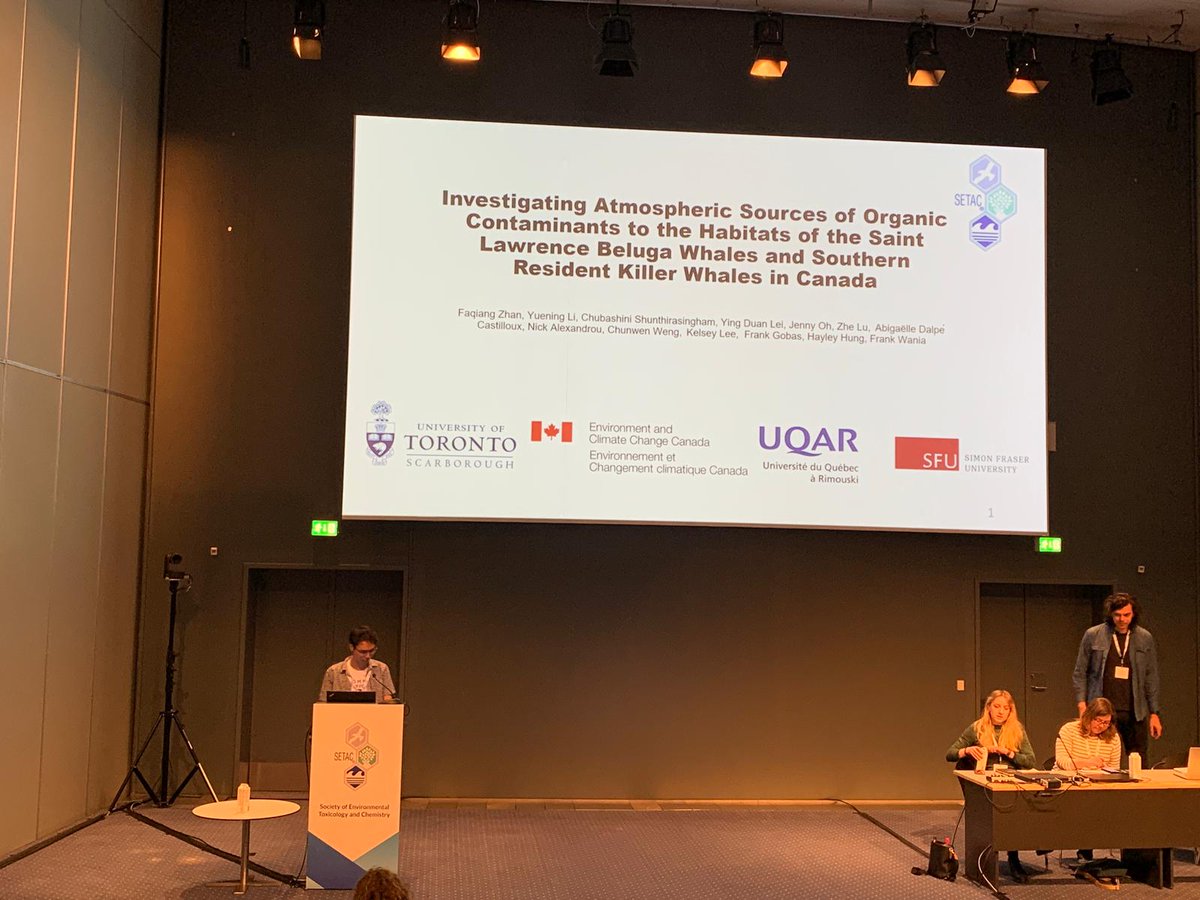
Faqiang started us off this morning with a talk on the sources of organic contaminants in the #StLawrence Beluga #Whales 🐳and Southern Resident Killer #Orcas.🐋🐳🏭🏠🏙 🌊
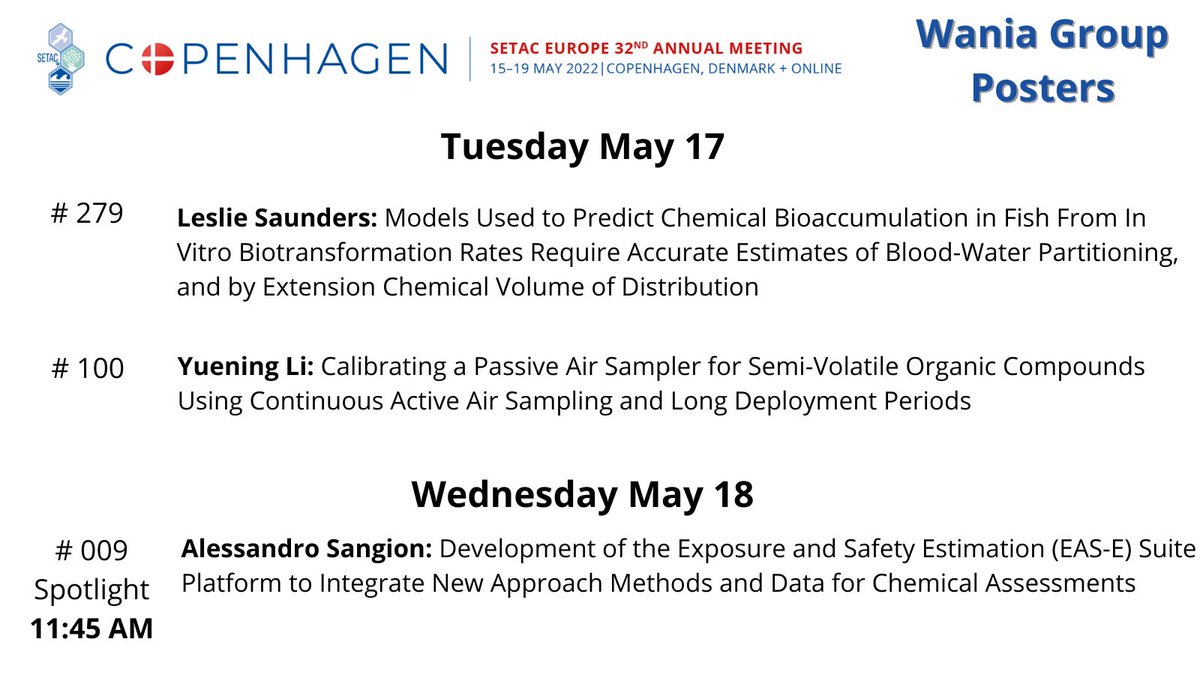
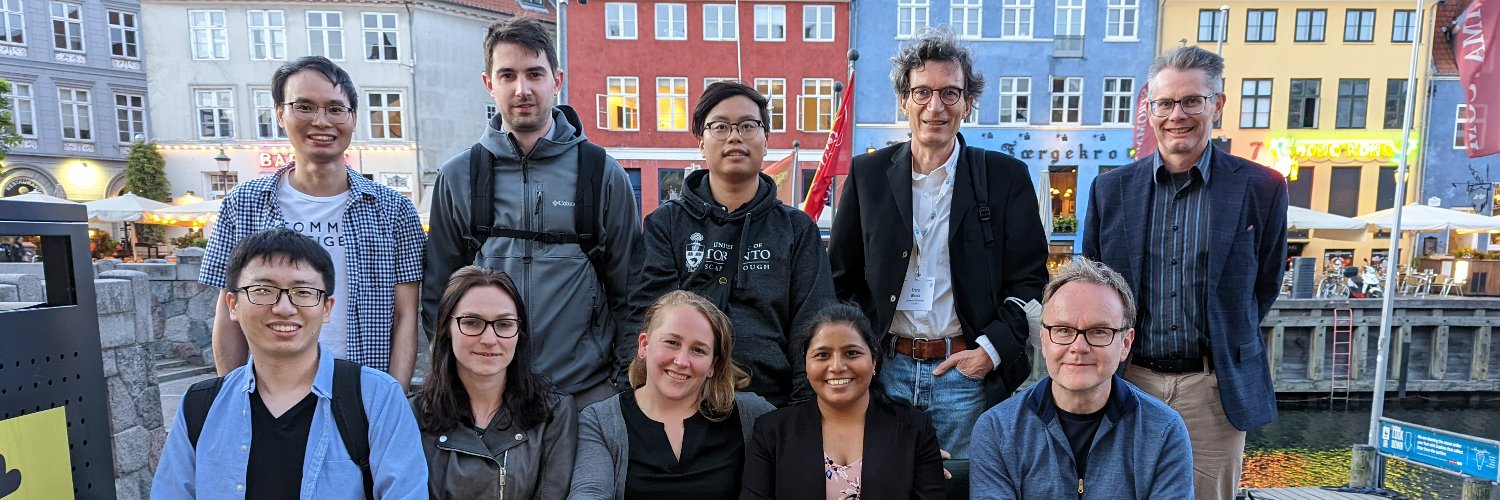
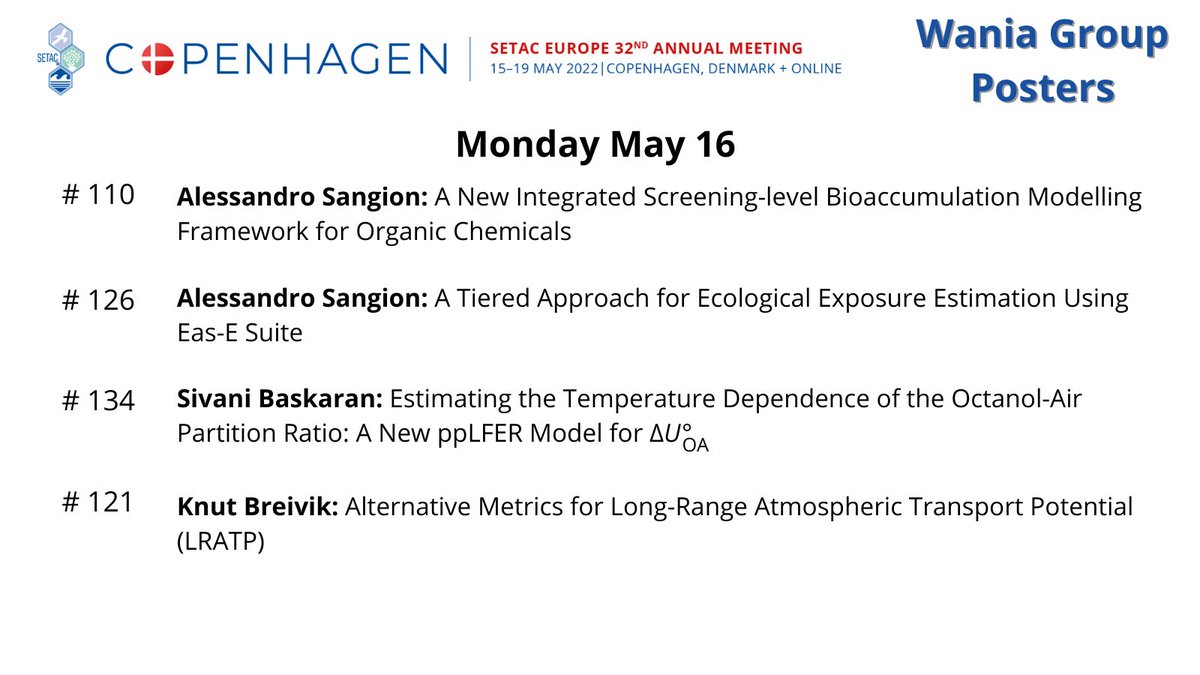
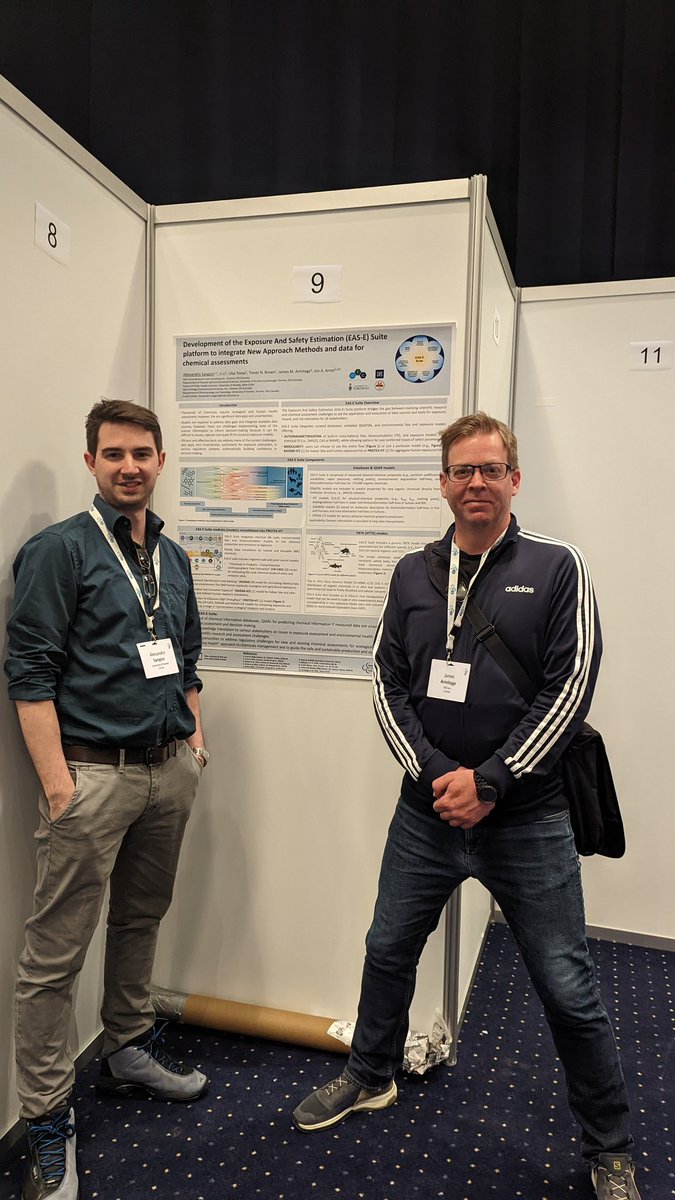
We're at #SETACCopenhagen this week! Check out the group's poster & platform presentations on partitioning, bioaccumulation, in vitro in vivo extrapolations, and passive air sampling!