First impressions of Zambia
To get to the border, you have to pass through the great city of Mbeya, which is one of the busiest cities in the region. The main crossing point into Zambia, at Nakonde, is frenetic and busy. Dozens of people trying to sell goods or services. Zambian immigration was polite but careful - the officer at the desk serving me took one look at my physiognomy, and this was enough to send me for extra checks! A lot of people from the Horn of Africa transit through this point on their way to 'greener' pastures in South Africa. I was allowed in, though, after an examination by the head of immigration!
The drama started at Customs - and took me nearly three hours of patiently waiting, paying, waiting, and then paying some more. The process has been made labyrinthine and tasks ones patience - to a degree where your wallet becomes active. You have to go to all kinds of offices, including Interpol! The local county council also demands its share of the largesse of the wayfarer, while the Ministry of Roads wants you to pay what they call "Carbon Tax" and "Road Tax", all at the same time!
Zambia ("country of copper") possesses one of the world's highest-grade deposits of copper and is ranked the seventh largest copper producer in the world. In addition, Zambia is home to small, exploitable deposits of cobalt, nickel, and manganese. Despite all the taxes collected, and despite the fact that Zambia is rich from exporting copper (copper contributes over 70 percent of the country's foreign export earnings) the first 15 or so kilometers on the Zambian side of the Great North Road, heading to the town of Mpika, is nothing short of catastrophic. The tar has long disappeared, and has given way to ginormous potholes the likes of which we do not simply have in East Africa. Your bike simply disappears into the hole, and the lack of traction makes for difficult riding. In fact, the 370-km between Nakonde and Mpika is probably the worst road I have ever seen. The road from Mpika to Serenje and thereafter all the way to Kapiri Mposhi is broken. A Chinese contractor is now working on the rehabilitation of the main trade artery of Zambia. From Lusaka to the south, however, the roads change dramatically - especially the highway to Livingstone. In the city of Lusaka itself, the roads are in good condition and drivers are very polite, courteous, and wait patiently for the robots. I never saw in Lusaka and the other cities (Livingstone, Ndola, Choma, Mazabuka) the Kenyan-style jumping of the red lights at all - not once.
Northern Zambia is a cycling country. Nearly everyone cycles, including women. The roads are long, straight, and nearly empty. The drivers are unfailingly polite. The women wear colourful dresses, and always seen walking by the road, carrying a baby. The birth rates must be among the highest on the continent - helped along, I imagine, by the fact that this region is fertile and receives good rainfall.
The level of poverty and deprivation is evident --- houses made of straw, lack of power lines crisscrossing the landscape (a la Kenya, which has thousands of kilometers of power transmission lines), almost zero cars on the road (save for the hundreds of Tanzanian heavy trucks that ply Zambian highways), etc. A number of Kenyan trucks are also to be seen, transporting maize and other food commodities that are produced in plenty in Zambia, and which are essential for food security back home.
The people themselves are super friendly and very polite. Their English diction is impressive and way better than any I have experienced anywhere in Africa. Many of the Zambians in the north speak Swahili, so it is easy to communicate. The food is similar to East Africa - plenty of nshima, beef sauces, and fish cuisines.
Major highways are tolled in Zambia. There are toll plazas, which are manned 24/7. I was able to go through unhindered (I had paid road tax and carbon tax at the Nakonde crossing point). You pay cash and get a receipt.
Fun-fact I: Fuel in Zambia, a landlocked country, is much cheaper than Kenya! Zambia depends on Tanzania for its major imports --- and we are talking of thousands of kilometers from Dar-es-Salaam to inland Zambia. At Kasama, the administrative capital of northern Zambia, which is 1,200 km away from Dar, petrol was retailing in April 2021 at Zambian Kwacha 17, or KES 87 equivalent, per litre, which was KES 30 cheaper than the prevailing price in Kenya then.
Fun-fact II: On my way through Tanzania, I got caught by a very bribe-hungry cop at Mafinga. I saw him flying down the road and flinging his arms up and down as he urgently ordered me to stop. He accused me of speeding beyond the 50 KPH limit. What followed was a very spirited discussion between us two adults in free-flowing Swahili, in which the protagonist surrendered. I was let go, without any sanction.
Fun-fact III: In Tanzania, you have to provide granular details of your being, including your tribe, as you register for accommodation. These details are transmitted in EXACT FORM to the various halmashauris (town councils). What I found surprising was that you clearly indicate in the form (they are standardised for the entire country) how much you paid in accommodation. As far as I could tell, no one fibbed - and this, surely, should make life easy for the Mamlaka ya Mapato Tanzania!
Fun-fact IV: Tanzanian highways are so far the best in the region, by very far. TANROADS, the national agency, has outdone itself, and its peers in the region. From Morogoro to Iringa and onwards to Mbeya, the TanZam highway is a spectacle to behold. So well built, you fly along, sans destructive speed humps, and your fuel economy actually improves!
In some places, after Iringa, the road is so wide that it effectively is a dual carriageway. The wide shoulders are amazingly well built, to the same standard as the main carriageway - and this is something that bikers relish, as it gives you a margin for quick reaction in case someone forces you off the road. In any case, in Tanzania, unlike our maniacs prowling the A8 and the A109 highways, who wouldn't think twice about murdering bikers, no one pushes you off the road. At all.
I rode on the Arusha-Babati-Dodoma-Mtera-Iringa highway - and I was blown away by the sheer engineering ingenuity of TANROADS engineers in the difficult mountain passes. Good job, TANROADS.
The signage on Tanzanian roads is something to marvel at, too. You don't have to ask for directions, or ask for directions. The signage is in both Swahili and English. I had a laugh when I read this sign: "Mchepuko wa dharura mbele." I am fairly certain not many Kenyans would be able to tell what this signpost means.
📍ASK Showground Eldoret
Uko na challenge na taxes zako?
Tupate pale kwenye Mobile Tax Unit ambapo tutakua tunapeana usaidizi kuhusu maswala kama PIN retrieval, claiming NHIF insurance relief, email change and much more.
Jitokeze upate usaidizi.
#UshuruMashinani
@FunscapesA why are you running an agent as a Point of Sale Terminal? @Safaricom_Care@SafaricomPLC, why encourage this exploitation, merchant instead of using till uses Agent Withdraw as a payment option? This is double exploitation of customers.2055970 - LUVENA. #Hatuinuani!
@ephraimnjegafan There is also a bigger scam with merchants who have agent withdraw as a payment platform. Instead of a till which is free, they tell you to withdraw from an agent and they benefit from the sales and also get paid paid by @SafaricomPLC@Safaricom_Care commission as agents!
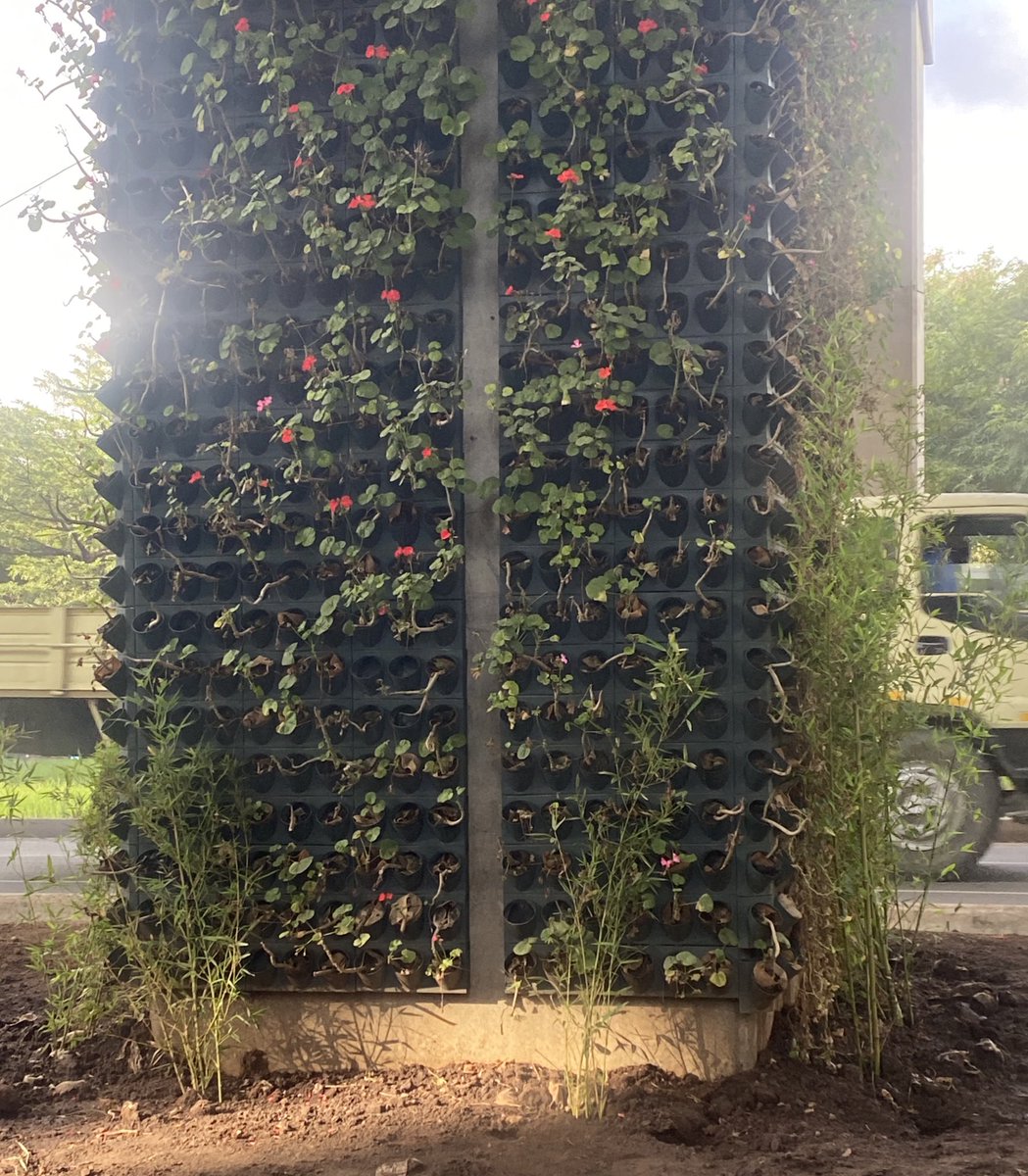
@Ma3Route @SakajaJohnson@NBOExpresswayKE@WaNikolas We should do art on these surfaces,... Coz I don't think we are capable of maintaining the flowers,... Give the job to artists! And experience magic! We can write our history on those pillars,... Visuals are powerful! Hii story ya flowers tuna struggle!
They planted flowers, they dried, now I can see they are planting Bamboo. Am no botany expert but I know what not to plant on the road and Bamboo is one of those. @Ma3Route @SakajaJohnson@NBOExpresswayKE