Your brain has a circuit that doesn't know you live in a city. Its only job is to monitor whether birds are still singing. Right now, in this room, it is on.
The circuit predates primates. Mammals have been using ambient soundscape continuity as a predator-detection system for roughly 200 million years. Birds stop singing when something larger moves through their territory. For most of mammalian history, a forest full of song meant no large predator was nearby, and the cessation of sound was the warning. Your nervous system never updated this software.
The Max Planck Institute tested the inverse in 2022 with 295 participants. Six minutes of birdsong dropped anxiety with a medium effect size. Six minutes of traffic noise raised depression with the same. The effect worked on subjects who lived in dense urban environments and had no regular contact with nature. The brain still ran the check.
Birdsong sits in the 1,000 to 8,000 Hz range. Your brainstem reads continuous patterns in that band as a signal that nothing dangerous is currently moving through the environment. EEG data shows birdsong at 45 to 50 decibels boosts alpha wave activity by 14.1% relative to silence. Alpha is the brainwave signature of relaxed alertness. Push the same birdsong above 60 decibels and the response flips. Stress markers rise 29%. The circuit only trusts the signal at the volume of quiet conversation, which is exactly the volume birds sing at from a typical distance.
Three things happen simultaneously when the brain registers ambient safety. The amygdala downregulates. The parasympathetic nervous system takes over from the sympathetic. Heart rate variability rises, cortisol drops. The posterior cingulate cortex, which sits at the center of the rumination circuit, quiets down. King's College London tracked this through a smartphone study with over 1,200 participants and found the mood lift lasted hours after the sound stopped. People diagnosed with depression got the same response as healthy controls.
Most of what gets labeled mental fatigue is hypervigilance running in the background. Birdsong tells the circuit it can stand down, and the brain reallocates the freed compute everywhere else.
A quiet park feels different from a quiet office because the parks have sentinels.
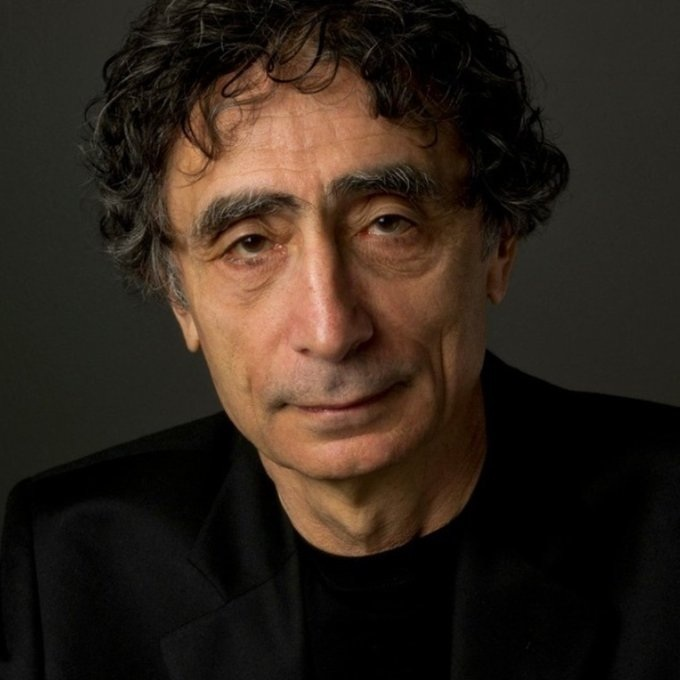
The man who heals what medicine can't:
Dr. Gabor Maté.
This 80-year-old physician says true healing comes from nervous system regulation, not drugs or meditation.
Here are his 7 forgotten laws for ending chronic stress at the root: 🧵
Carl Jung believed life truly begins at 40, viewing the first four decades as "research"—a preparatory phase focused on building an ego, establishing a career, and meeting societal expectations. The second half of life, starting around 40, is for inward exploration, authenticity, and fulfilling one’s true self (individuation) rather than pursuing external validation.
“With cigarettes, my wife and I, we made a deal. We only smoke after sex. I've got the same pack now since 1975. What bothers me is my wife. She's up to three packs a day.”
The late great RODNEY DANGERFIELD on The Tonight Show.
I highly recommend you find yourself a clingy (healthy) lovey dovey partner who's super excited about you. life is too short to spend it with someone who act like showing love is a chore
I was skeptical, but now I’m completely convinced. Fencing will become super popular due to this one very particular improvement to the sport.
“Sword tip visualization” It’s going to debut at the summer olympics.
Every single duel will look like a bloody lightsaber fight