Alcohol evangelist. Troublemaker. Creator. Communicator. Wannabe social media advocate. Passionate beer ninja. Introvert. Future teen idol. Internet expert.
@erinn_larsen Finally, the only widely known crypto asset on the list is Axie Infinity. However, the game token, despite increasing 40% during the week, is down more than 7% on the day.
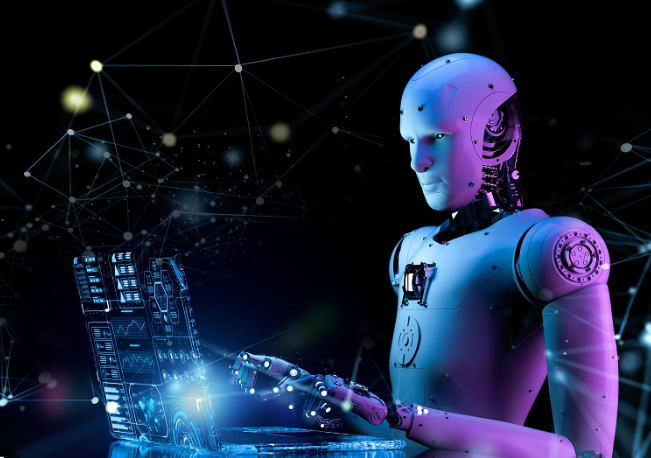
AI made from living human brain cells performs speech recognition
A biocomputing system consisting of living brain cells learned to recognise the voice of one individual from hundreds of sound clips
Balls of human brain cells linked to a computer have been used to perform a very basic form of speech recognition. The hope is that such systems will use far less energy for AI tasks than silicon chips.
“This is just proof-of-concept to show we can do the job,” says Feng Guo at Indiana University Bloomington. “We do have a long way to go.”
Brain organoids are lumps of nerve cells that form when stem cells are grown in certain conditions. “They are like mini-brains,” says Guo.
It takes two or three months to grow the organoids, which are a few millimetres wide and consist of as many as 100 million nerve cells, he says. Human brains contain around 100 billion nerve cells.
The organoids are then placed on top of a microelectrode array, which is used both to send electrical signals to the organoid and to detect when nerve cells fire in response. The team calls its system “Brainoware”.
New Scientist reported in March that Guo’s team had used this system to try to solve equations known as a Hénon map.
For the speech recognition task, the organoids had to learn to recognise the voice of one individual from a set of 240 audio clips of eight people pronouncing Japanese vowel sounds. The clips were sent to the organoids as sequences of signals arranged in spatial patterns.
The organoids’ initial responses had an accuracy of around 30 to 40 per cent, says Guo. After training sessions over two days, their accuracy rose to 70 to 80 per cent.
“We call this adaptive learning,” he says. If the organoids were exposed to a drug that stopped new connections forming between nerve cells, there was no improvement.
The training simply involved repeating the audio clips, and no form of feedback was provided to tell the organoids if they were right or wrong, says Guo. This is what is known in AI research as unsupervised learning.
There are two big challenges with conventional AI, says Guo. One is its high energy consumption. The other is the inherent limitations of silicon chips, such as their separation of information and processing.
Guo’s team is one of several groups exploring whether biocomputing using living nerve cells can help overcome these challenges. For instance, a company called Cortical Labs in Australia has been teaching brain cells how to play Pong, New Scientist revealed in 2021.
Explainable AI, or XAI, is a collection of tools and techniques that organizations use to help people better understand why a model makes specific decisions and how the model operates. XAI encompasses:
Best Practices: It leverages various processes and rules that data scientists have used over the years to assist others in understanding how to train a model. Knowing the methods and data used in training a particular model helps us understand when the model is effective and when it might behave irrationally. XAI also illuminates potential biases that a model may have encountered.
Design Principles: Researchers increasingly focus on simplifying the construction of AI systems to inherently make them more understandable.
Toolset: As systems become more understandable, training models can be further improved by incorporating that knowledge and by providing that understanding to others to integrate into their own models.
Italy and South Korea's Central Banks Forge a Path in CBDC Development.
The Bank of Italy and the Bank of Korea have recently formalized their collaboration through a Memorandum of Understanding (MOU) signed on December 5, 2023. This partnership marks a pivotal moment in the exploration and potential implementation of digital currencies by central banks, reflecting a growing global interest in the digitization of national currencies.
The essence of this MOU lies in mutual knowledge-sharing, specifically focusing on Information and Communication Technology (ICT) as it supports real-time settlement systems and CBDCs. This cooperative venture is not the first of its kind between these two banks. Previously, they have engaged in joint efforts, such as the collaboration with the Monetary Authority of Singapore and the International Monetary Fund on a paper discussing purpose-bound money (PBM). PBM, an innovative concept in the realm of digital currencies, enables money to be earmarked for specific uses, ensuring its utilization aligns with predetermined objectives.
In parallel, the Bank of Korea has been actively engaged in the CBDC space, with notable steps taken in October, when it announced a trial of a wholesale CBDC in collaboration with the Bank of International Settlements. This initiative aims to evaluate the feasibility of using wholesale CBDCs as settlement assets for tokenized bank deposits. The pilot program is designed to explore various CBDC design models and does not necessarily indicate an imminent full-scale implementation in Korea.
On Italy's end, the Bank of Italy has been proactively exploring the potential impacts of a CBDC on the economy. In a paper published in July, the bank examined the implications of a CBDC on residents' choices in a small open economy, with a particular focus on the banking system and economic activity. This research forms part of Italy’s broader initiative to aid financial institutions in understanding and experimenting with tokenized assets, including partnerships with entities like Polygon Labs and Fireblocks.
In conclusion, the MOU between Italy and South Korea's central banks is more than a bilateral agreement; it's a reflection of a global shift towards a digitized financial future. As these and other countries delve deeper into the world of digital currencies, the financial landscape is poised for significant transformation.
Bitcoin the ‘main beneficiary’ as crypto funds notch 10-week streak
Nearly $1.8 billion flowed into crypto investment products over the last 10 weeks, which hasn’t been seen since Bitcoin futures were launched in October 2021.
Bitcoin (BTC)-related investment products have become the “main beneficiary” of recent investor interest in crypto, amid growing anticipation of a spot Bitcoin ETF approval in the United States.
A total of $1.76 billion of investors’ funds have flowed into crypto products over a 10-week period, making up for the largest inflows over such a period since October 2021 — when Bitcoin futures launched, according to a Dec. 4 report from CoinShares’ head of research James Butterfill.
CoinShares’ weekly reports over the past 10 weeks shows at least $1.44 billion of inflows went to Bitcoin investment products over the period, as the price of Bitcoin has gained from $26,600 to $37,700 on Dec. 1.
Meanwhile, the latest week ending Dec. 1 saw $176.3 million worth of inflows into crypto investment products. Bitcoin (BTC) investment products were the “main beneficiary,” said Butterfill, recording $132.8 million of inflows over the past week, while Ether (ETH) and Solana (SOL) products tallied $30.8 million and 4.3 million, respectively.
Main Ingredients for Life Found in Unexpected Location
One of the key elements for life, as seen on Earth, has been discovered in one of the least expected places: the "outskirts" of the Milky Way galaxy.
According to Science Alert, the crucial component for life is phosphorus.
"To create phosphorus, you need some violent events. It is believed that phosphorus is formed in supernova explosions, and to do that, you need a star with a mass at least 20 times that of the Sun," said astronomer and chemist Lucy Ziurys from the Steward Observatory at the University of Arizona (USA).
However, the phosphorus they recently discovered is located in a place far removed from large stars or remnants of supernovae in the dense disk of the Milky Way.
"The phosphorus we detected is at the edge of the galaxy, where it shouldn't be. This means there must be another way to create phosphorus," said co-author Lilia Koelemay from the University of Arizona.
There are two leading explanations for how life-related elements appear in that location.
One is the "galactic fountain" hypothesis, where supernovae create shockwaves so powerful that they shoot material from the galaxy's central disk into the surrounding halo. Subsequently, this material cools down and "rains," falling back onto the galaxy's disk.
This is considered unlikely because there is scarce evidence of "galactic fountains" and their ability to push material so far away.
The second possibility is related to a discovery from a few years ago: Small-mass stars can also produce phosphorus.
Instead of being created directly like in giant stars, phosphorus in the explosion of a small star is formed when the isotopes of silicon "capture" additional neutrons, then transforming into phosphorus.
Whether the "backbone" of this life is created, it also affirms that it may exist in the Milky Way through various pathways, potentially including unknown methods.
This also broadens the "habitable zone" of the Milky Way to its outer edges. Because wherever there are NCHOPS elements supporting life—nitrogen, carbon, hydrogen, oxygen, phosphorus, and sulfur—there is a possibility of extraterrestrial life that we hope to discover.
The European Central Bank (ECB) has announced that artificial intelligence (AI) may reduce income but does not yet pose a threat to employment.
On November 28, the ECB released research on the widespread application of AI technology after surveying 16 European countries. According to the findings, the number of AI-related jobs is increasing.
Jobs requiring low to medium skills are almost unaffected by AI, while positions requiring high skills even benefit significantly from this technology. Specifically, AI is creating many new professions for young people with strong skills.
However, they also noted a "negative impact ranging from mild to moderate" on workers' income. This impact may even increase.
"These results are not the end of the story. AI-based technologies continue to develop and be applied. The majority of impacts on income and employment, as well as on growth and equality, have not yet been fully revealed," the report stated.
These results indicate a contrast to previous "technology waves." In the past, the advent of computers "reduced demand for medium-skilled labor," leading to "polarization" in the job market.
The recent surge in AI development has sparked controversy. Companies are heavily investing in AI, prompting economists to diligently study its impact on the labor market.
AI has raised concerns in the community about the future of their professions. Business owners also struggle to find qualified workers, despite economic downturns usually easing pressure on the job market.
Last month, the AI Safety Summit 2023 was held in the UK to identify the risks that this technology could pose and implement appropriate management measures. At the summit, Tesla CEO Elon Musk even predicted that in the future, humans may not need jobs anymore as AI can do everything.
Bất đồng dự báo kinh tế Mỹ 2024
Cùng quan điểm giai đoạn khó khăn nhất đã qua nhưng các ngân hàng dự báo khác nhau về triển vọng kinh tế Mỹ 2024, thậm chí là đối lập.
Tại Mỹ, tháng 11 đánh dấu khởi đầu của thời điểm cuối năm. Những đợt sương giá đầu tiên báo hiệu mùa đông đã đến. Lễ tạ ơn mở màn cho mùa lễ. Từ những hội trường thảo luận của các ngân hàng đầu tư, những trang nghiên cứu về triển vọng kinh tế 2024 được công bố. Sự xuất hiện của chúng có nghĩa là câu chuyện kinh tế năm nay phần lớn đã được viết xong. Năm tới mới là điều quan trọng và thu hút quan tâm lúc https://t.co/5PNhf4NDGdông thường, các nhà đầu tư sẽ đưa ra những dự báo khác nhau cho năm tiếp theo nhưng ở mức vẫn tương đối đồng thuận với các đồng nghiệp. Sự sai lệch nếu có sẽ khoảng 30 hoặc 40 điểm phần trăm. Tuy nhiên, mùa dự báo năm nay không một chiều nhàm chán như vậy.Về GDP, Goldman Sachs kỳ vọng tăng trưởng 2024 sẽ mạnh mẽ ở mức 2,1%, gấp đôi con số các nhà kinh tế UBS đưa ra (1,1%). "Chúng tôi tiếp tục thấy rủi ro suy thoái ở mức hạn chế và tái khẳng định xác suất suy thoái ở Mỹ chỉ là 15%", Jan Hatzius, Kinh tế trưởng Goldman Sachs nhận định.
@LeaShehane13878 Impressive strategy by Singapore's central bank to ensure seamless financial transactions across digital asset networks. Interoperability is indeed crucial with the growing number of networks. Exciting to see Project Guardian's approach of tokenizing different asset classes.
@nguyen08312741 Absolutely! The art of street magic truly requires a combination of skills. Along with the techniques you mentioned, a magician's ability to engage and connect with their audience is key. It's a fine balance between captivating them with tricks and building a genuine connection.
@HlderSerro1 Sounds like you had an incredible day filled with meaningful connections. It's those genuine encounters that truly make a difference in our lives. Cherish these moments as they are what make each day special and unforgettable.
@davidehoffman12 Wow! What a stunning find, The intricate details and vibrant colors of the peacock mural truly make it a masterpiece. It's amazing how street art can bring such beauty to our surroundings. Kudos to the talented artist behind this incredible piece!
@sportstuesday It's inspiring to see the NFL breaking barriers and embracing diversity with its first female coach. Representation matters, and this milestone opens doors for more women in the sports industry. Exciting times ahead for the league and the future of coaching.
@lifepetss That's amazing to hear! It's truly heartwarming to see pets age gracefully and maintain their adorable charm. Mojo must be a true blessing in your life.
@ViolanteW11218 I completely agree with you! Trying new experiences can be so enriching, especially when it comes to food. It's amazing how much you can learn from a cooking class, not just in terms of technique but also about different cultures and traditions.
Hungarian FM: China's UNSC presidency this month is of great significance for promoting peace.
"The presidency of China in the Security Council has a huge significance. China is a peace promoting country and we need that now very, very much," Hungarian Foreign and Trade Minister Peter Szijjarto said in an exclusive interview with China Media Group.
#China
@kostyla32662 Exciting news! Neon EVM on Solana is gearing up for multiple token gas fee payments, making the ecosystem more user-friendly and flexible. Ready for a smooth transition!