Specifically, this class has taught me that crows are as intelligent as a seven year old. As crow expert John Marzluff says, he would “like to think of these animals as small flying monkeys, rather than small flying birds”. 🐦⬛���⬛🐦⬛#WhatIlearnedinWR60
I also gained incredible insight on the intelligence the dogs possess. Dogs are extremely beneficial to us humans and can provide much more love and support than we can ever imagine.
#WhatIlearnedinWR60
The fourth thing I learned from this class was to not be afraid to use Artificial Intelligence when completing assignments. AI is a new technology, and many of my professors/TAs strictly instruct to not use AI... #WhatIlearnedinWR60
@PAanchal0615 AI is definitely a helpful tool in writing, especaily when writer needs something to start from. It can quickly collect relative infomation and summarize them upon the critetions we asked!
The fifth thing I learned was the power of multimedia writing. Specifically with the advocacy project, I used many forms of media such as a podcast, infographics, and data charts. The advocacy project helped me realize how interesting and engaging it can be! #WhatIlearnedinWR60
@VinayRaja_UC A youtube video in a huge text will absolutely attracts audience's eyes! Utilizing multimedia really help a article or preject to be easily-understanding!
This course offers me answers: abbreviation style, full MLA style, etc. After learning it, I am so confident to write other articles! #WhatIlearnedinWR60
Writ 60 also offers me how to make citations! I was so confused about how to cite articles in my own writing before this course: where should I cite them? Which style should I use? How to include one sentence in a paragraph.
When writing my scientific communication article, it is important to know how to describe essential information from a research paper into a version that people can understand easily, where I need close-reading to find these information and summarize them correctly.
Now, we need to take action to prevent unnecessary hunting! For example, applying warning signals to expel foxes is useful in reducing the need to kill foxes due to their destructive activity!
https://t.co/4jzmrmP8Ew
#WhatIlearnedinWR60
YOU can make a difference too!
📢 During a fox hunt, protect the foxes by:
Pretending you've seen a fox to misdirect the hunt.
Calling hounds with sharp commands.
Taking stray hounds to the police.
Using sprays and noise to confuse the hounds.
#UCanimals
https://t.co/2Q2ZPlBN3h
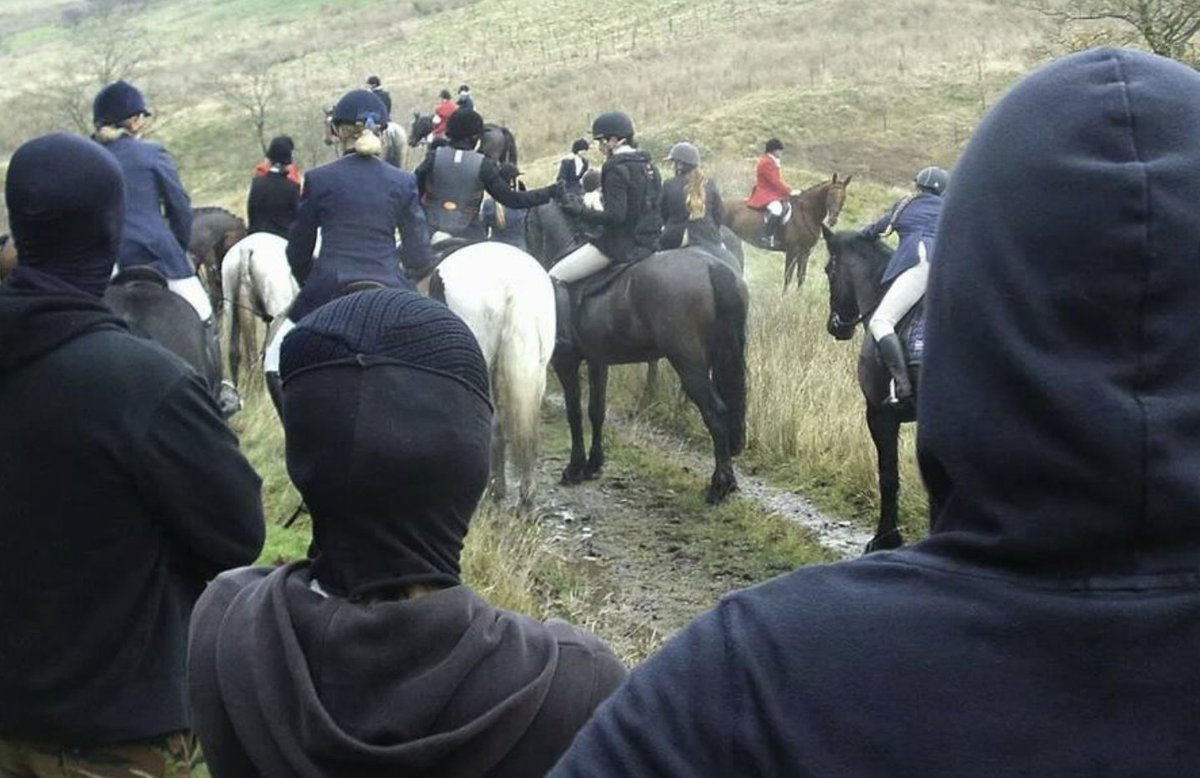
I also learned a lot from my classmates’ works! Bahaar Ahuja, who also focuses on foxes, illustrated another problem that foxes are facing: illegal hunting! In earlier years, fox hunting was considered an aristocratic sport; the pursuit of fox fur also drove illegal hunting.
The corresponding solution is in a hurry including construction of wildlife-passage, utilization of animal detection systems, and the enhancement of drivers’ relative knowledge!
https://t.co/U3TQOBaNHC
#WhatIlearnedinWR60
A report to the congress about WVC points out that combining it with other measures could help driver avoid traffic accidents with wildlife!
https://t.co/UXENz1iX3F
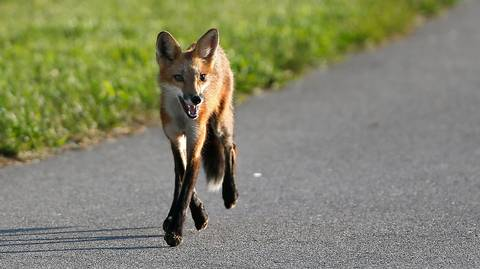
The other one is a problem the urban foxes confronting: mortality due to vehicle collisions. This is the inevitable result of urbanization and may cause not only the decline of urban fox’s population but also the ecological loss of drivers!
According to the relative research, urban foxes with higher social status are more timid and cautious, but when foxes are in groups, their overall behavior tends to be bolder! This conclusion helps in making urban wildlife management!
#WhatIlearnedinWR60
In studying urban foxes, there are two truths that impressed me the most and are the subjects of my scientific communication article and advocacy project. One is the various personalities of urban foxes, especially for their boldness!