"In the market society the proprietors of capital and land can enjoy their property only by employing it for the satisfaction of other people's wants. They must serve the consumers in order to have any advantage from what is their own." - Ludwig von Mises
Alexander Solzhenitsyn's son, Ignat, this morning read from his father's seminal 1978 Harvard Address.
Extract in full here:
It is almost universally recognized that the West shows all the world the way to successful economic development, even though in past years it has been sharply offset by chaotic inflation. However, many people living in the West are dissatisfied with their own society. They despise it or accuse it of no longer being up to the level of maturity attained by mankind. And this causes many to sway toward socialism, which is a false and dangerous current.
I hope that no one present will suspect me of expressing my partial criticism of the Western system in order to suggest socialism as an alternative. No; with the experience of a country where socialism has been realized, I shall certainly not speak for such an alternative… socialism of any type and shade leads to a total destruction of the human spirit and to a levelling of mankind into death…
But should I be asked, instead, whether I would propose the West, such as it is today, as a model to my country, I would frankly have to answer negatively. No, I could not recommend your society as an ideal for the transformation of ours. Through deep suffering, people in our country have now achieved a spiritual development of such intensity that the Western system in its present state of spiritual exhaustion does not look attractive.
… if our society were to be transformed into yours, it would mean an improvement in certain aspects, but also a change for the worse on some particularly significant points. … after the suffering of decades of violence and oppression, the human soul longs for things higher, warmer, and purer than those offered by today’s mass living habits, introduced as by a calling card by the revolting invasion of commercial advertising, by TV stupor, and by intolerable music.
There are telltale symptoms by which history gives warning to a threatened or perishing society. Such are, for instance, a decline of the arts or a lack of great statesmen. Indeed, sometimes the warnings are quite explicit and concrete. The center of your democracy and of your culture is left without electric power for a few hours only, and all of a sudden crowds of American citizens start looting and creating havoc.
…
How has this unfavorable relation of forces come about? How did the West decline from its triumphal march to its present debility? Have there been fatal turns and losses of direction in its development? It does not seem so. The West kept advancing steadily in accordance with its proclaimed social intentions, hand in hand with a dazzling progress in technology. And all of a sudden it found itself in its present state of weakness.
This means that the mistake must be at the root, at the very foundation of thought in modern times. I refer to the prevailing Western view of the world which was born in the Renaissance and has found political expression since the Age of Enlightenment. It became the basis for political and social doctrine and could be called rationalistic humanism or humanistic autonomy: the proclaimed and practiced autonomy of man from any higher force above him. It could also be called anthropocentricity, with man seen as the centre of all.
… this humanistic way of thinking, which had proclaimed itself our guide, did not admit the existence of intrinsic evil in man, nor did it see any task higher than the attainment of happiness on earth. It started modern Western civilization on the dangerous trend of worshiping man and his material needs. Everything beyond physical well-being and the accumulation of material goods, all other human requirements and characteristics of a subtler and higher nature, were left outside the area of attention of state and social systems, as if human life did not have any higher meaning.
Thus gaps were left open for evil, and its drafts blow freely today. Mere freedom per se does not in the least solve all the problems of human life and even adds a number of new ones.
And yet in early democracies, as in American democracy at the time of its birth, all individual human rights were granted on the ground that man is God’s creature. That is, freedom was given to the individual conditionally, in the assumption of his constant religious responsibility. Such was the heritage of the preceding one thousand years. Two hundred or even fifty years ago, it would have seemed quite impossible, in America, that an individual be granted boundless freedom with no purpose, simply for the satisfaction of his whims. Subsequently, however, all such limitations were eroded everywhere in the West; a total emancipation occurred from the moral heritage of Christian centuries with their great reserves of mercy and sacrifice. State systems were becoming ever more materialistic. The West has finally achieved the rights of man, and even to excess, but man’s sense of responsibility to God and society has grown dimmer and dimmer.
In the past decades, the legalistic selfishness of the Western approach to the world has reached its peak and the world has found itself in a harsh spiritual crisis and a political impasse. All the celebrated technological achievements of progress, including the conquest of outer space, do not redeem the twentieth century’s moral poverty, which no one could have imagined even as late as the nineteenth century.
... I am referring [here] to the calamity of an autonomous, irreligious humanistic consciousness.
It has made man the measure of all things on earth—imperfect man, who is never free of pride, self-interest, envy, vanity, and dozens of other defects. We are now paying for the mistakes which were not properly appraised at the beginning of the journey. On the way from the Renaissance to our days we have enriched our experience, but we have lost the concept of a Supreme Complete Entity which used to restrain our passions and our irresponsibility. We have placed too much hope in politics and social reforms, only to find out that we were being deprived of our most precious possession: our spiritual life. It is trampled by the party mob in the East, by the commercial one in the West.
…
Today it would be retrogressive to hold on to the ossified formulas of the Enlightenment. Such social dogmatism leaves us helpless before the trials of our times.
We cannot avoid reassessing the fundamental definitions of human life and human society. Is it true that man is above everything? Is it right that man’s life and society’s activities should be ruled by material expansion above all? Is it permissible to promote such expansion to the detriment of our integral spiritual life?
If the world has not approached its end, it has reached a major watershed in history, equal in importance to the turn from the Middle Ages to the Renaissance. It will demand from us a spiritual blaze; we shall have to rise to a new height of vision, to a new level of life, where our physical nature will not be cursed, as in the Middle Ages, but even more importantly, our spiritual being will not be trampled upon, as in the Modern Era. This ascension is similar to climbing onto the next anthropological stage. No one on earth has any other way left but—upward.
The planners say: how can you be so stupid as to advocate the absence of planning? But no one advocates the absence of a plan. The man who plans to go to work, read a book, and raise his children is planning. Socialism doesn't introduce planning. It abolishes yours. https://t.co/phR4CpqeUj
There's no economics for black people and economics for white people. Economics is economics. The economy is the economy. The skin colour of economic agents is meaningless. All that must happen is production, with goods and services bought and sold. #economy#politics#markets
Marx lived his entire adult life as a dependent. The capitalist system funded his "research" through Engels, whose family wealth came from textile factories. The irony cuts deep: capitalism's profits subsidized its most famous critic.
Marx never held a real job. Never met payroll. Never risked capital or faced bankruptcy. He spent decades theorizing about labor value while avoiding actual labor. His insights into production came from library books, not factory floors.
The parasitic intellectual tradition he spawned continues today. Academic Marxists collect taxpayer-funded salaries while denouncing the market system that creates the wealth they consume.
It's time to get rid of these people.
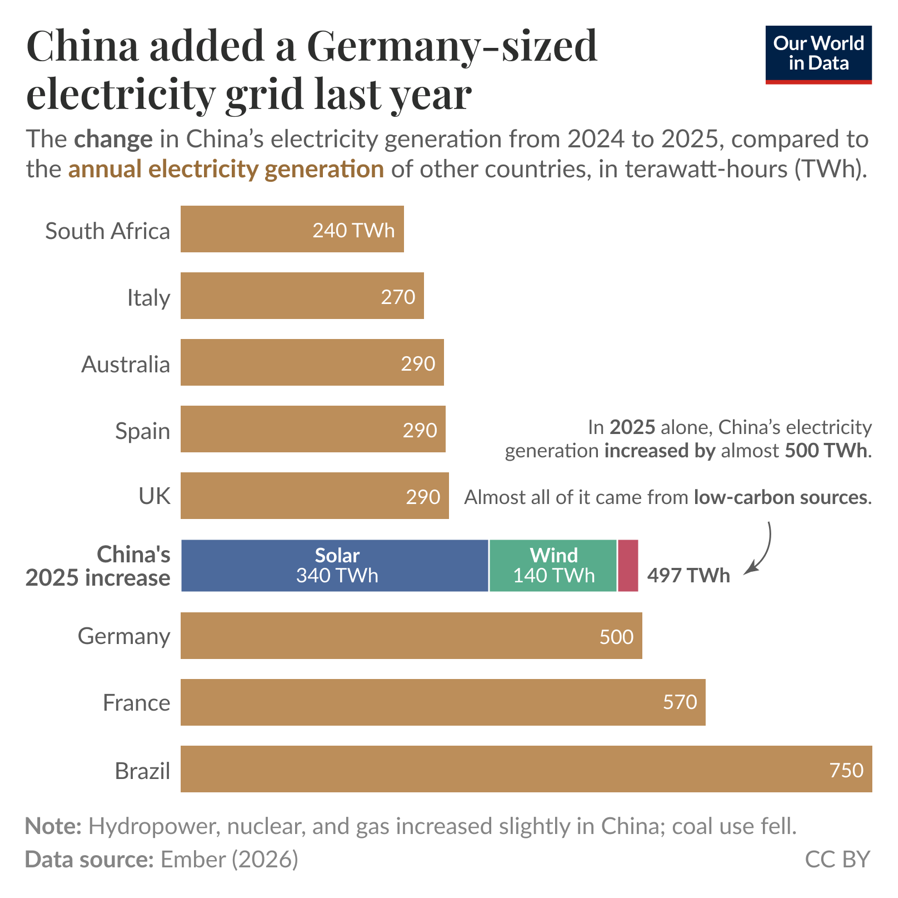
En twee Suid-Afrika's in een jaar! Merkwaardig!
Insetkostes op krag in Sjina, weens hierdie skaal, kan nie anders as om drasties af te neem nie. Wie gaan met hulle kan meeding?
Nee. Kapitaal vloei uit SA omdat mense minder vertroud is om hier te belê. En, hoe meer beperkinge SA plaas op die vloei van kapitaal, hoe minder gaan SA daarvan kry.
Dit sal beter wees as daar 'n 0% beperking is, maar dit los steeds nie die probleem op nie. SA moet drastiese veranderinge maak in terme van beleid, infrastruktuur en dienslewering om ekonomiese groei te bewerkstellig.
The R800-billion mistake hollowing out the JSE https://t.co/56akWj5req




![ARC_Conference's tweet photo. Alexander Solzhenitsyn's son, Ignat, this morning read from his father's seminal 1978 Harvard Address.
Extract in full here:
It is almost universally recognized that the West shows all the world the way to successful economic development, even though in past years it has been sharply offset by chaotic inflation. However, many people living in the West are dissatisfied with their own society. They despise it or accuse it of no longer being up to the level of maturity attained by mankind. And this causes many to sway toward socialism, which is a false and dangerous current.
I hope that no one present will suspect me of expressing my partial criticism of the Western system in order to suggest socialism as an alternative. No; with the experience of a country where socialism has been realized, I shall certainly not speak for such an alternative… socialism of any type and shade leads to a total destruction of the human spirit and to a levelling of mankind into death…
But should I be asked, instead, whether I would propose the West, such as it is today, as a model to my country, I would frankly have to answer negatively. No, I could not recommend your society as an ideal for the transformation of ours. Through deep suffering, people in our country have now achieved a spiritual development of such intensity that the Western system in its present state of spiritual exhaustion does not look attractive.
… if our society were to be transformed into yours, it would mean an improvement in certain aspects, but also a change for the worse on some particularly significant points. … after the suffering of decades of violence and oppression, the human soul longs for things higher, warmer, and purer than those offered by today’s mass living habits, introduced as by a calling card by the revolting invasion of commercial advertising, by TV stupor, and by intolerable music.
There are telltale symptoms by which history gives warning to a threatened or perishing society. Such are, for instance, a decline of the arts or a lack of great statesmen. Indeed, sometimes the warnings are quite explicit and concrete. The center of your democracy and of your culture is left without electric power for a few hours only, and all of a sudden crowds of American citizens start looting and creating havoc.
…
How has this unfavorable relation of forces come about? How did the West decline from its triumphal march to its present debility? Have there been fatal turns and losses of direction in its development? It does not seem so. The West kept advancing steadily in accordance with its proclaimed social intentions, hand in hand with a dazzling progress in technology. And all of a sudden it found itself in its present state of weakness.
This means that the mistake must be at the root, at the very foundation of thought in modern times. I refer to the prevailing Western view of the world which was born in the Renaissance and has found political expression since the Age of Enlightenment. It became the basis for political and social doctrine and could be called rationalistic humanism or humanistic autonomy: the proclaimed and practiced autonomy of man from any higher force above him. It could also be called anthropocentricity, with man seen as the centre of all.
… this humanistic way of thinking, which had proclaimed itself our guide, did not admit the existence of intrinsic evil in man, nor did it see any task higher than the attainment of happiness on earth. It started modern Western civilization on the dangerous trend of worshiping man and his material needs. Everything beyond physical well-being and the accumulation of material goods, all other human requirements and characteristics of a subtler and higher nature, were left outside the area of attention of state and social systems, as if human life did not have any higher meaning.
Thus gaps were left open for evil, and its drafts blow freely today. Mere freedom per se does not in the least solve all the problems of human life and even adds a number of new ones.
And yet in early democracies, as in American democracy at the time of its birth, all individual human rights were granted on the ground that man is God’s creature. That is, freedom was given to the individual conditionally, in the assumption of his constant religious responsibility. Such was the heritage of the preceding one thousand years. Two hundred or even fifty years ago, it would have seemed quite impossible, in America, that an individual be granted boundless freedom with no purpose, simply for the satisfaction of his whims. Subsequently, however, all such limitations were eroded everywhere in the West; a total emancipation occurred from the moral heritage of Christian centuries with their great reserves of mercy and sacrifice. State systems were becoming ever more materialistic. The West has finally achieved the rights of man, and even to excess, but man’s sense of responsibility to God and society has grown dimmer and dimmer.
In the past decades, the legalistic selfishness of the Western approach to the world has reached its peak and the world has found itself in a harsh spiritual crisis and a political impasse. All the celebrated technological achievements of progress, including the conquest of outer space, do not redeem the twentieth century’s moral poverty, which no one could have imagined even as late as the nineteenth century.
... I am referring [here] to the calamity of an autonomous, irreligious humanistic consciousness.
It has made man the measure of all things on earth—imperfect man, who is never free of pride, self-interest, envy, vanity, and dozens of other defects. We are now paying for the mistakes which were not properly appraised at the beginning of the journey. On the way from the Renaissance to our days we have enriched our experience, but we have lost the concept of a Supreme Complete Entity which used to restrain our passions and our irresponsibility. We have placed too much hope in politics and social reforms, only to find out that we were being deprived of our most precious possession: our spiritual life. It is trampled by the party mob in the East, by the commercial one in the West.
…
Today it would be retrogressive to hold on to the ossified formulas of the Enlightenment. Such social dogmatism leaves us helpless before the trials of our times.
We cannot avoid reassessing the fundamental definitions of human life and human society. Is it true that man is above everything? Is it right that man’s life and society’s activities should be ruled by material expansion above all? Is it permissible to promote such expansion to the detriment of our integral spiritual life?
If the world has not approached its end, it has reached a major watershed in history, equal in importance to the turn from the Middle Ages to the Renaissance. It will demand from us a spiritual blaze; we shall have to rise to a new height of vision, to a new level of life, where our physical nature will not be cursed, as in the Middle Ages, but even more importantly, our spiritual being will not be trampled upon, as in the Modern Era. This ascension is similar to climbing onto the next anthropological stage. No one on earth has any other way left but—upward.](https://pbs.twimg.com/media/HLfNamSW8AACZtp.jpg)