Ph.D. Candidate in Ed Policy @UNCSchoolofEd, Studying teacher labor markets, the economics of education, and rural communities. Alumni @vupeabody & @WakeForest
New research from @WesleyTMorris finds that federal grant programs like TEACH help strengthen the teacher pipeline, but they're not enough to ease financial burdens on aspiring teachers. Pairing them with other aid incentives can make them more impactful. https://t.co/UcfLivnsTo
📢 New from the #EdWorkingPapers Policy and Practice Series:
A summary of “Financial Aid For Future Educators: Assessing A Federal Grant's Impact On Students' Postsecondary Decisions” by @WesleyTMorris!
📄 https://t.co/yhoYZPvzkt
#AnnenbergEdExchange
🚨 New working paper!
I examine how universities and students use federal TEACH Grants, how these grants change recipients’ financial aid packages and out-of-pocket costs, and their relationship to students’ decisions to pursue teaching degrees.
https://t.co/1M7wEFiti7
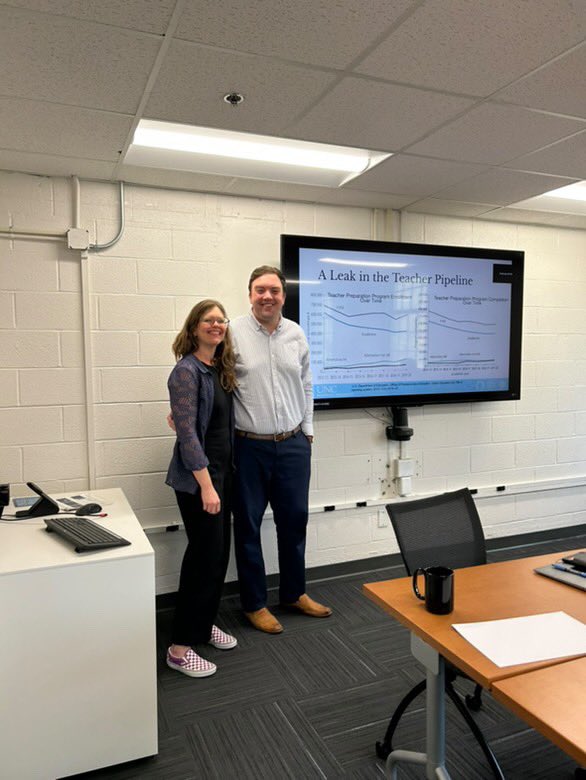
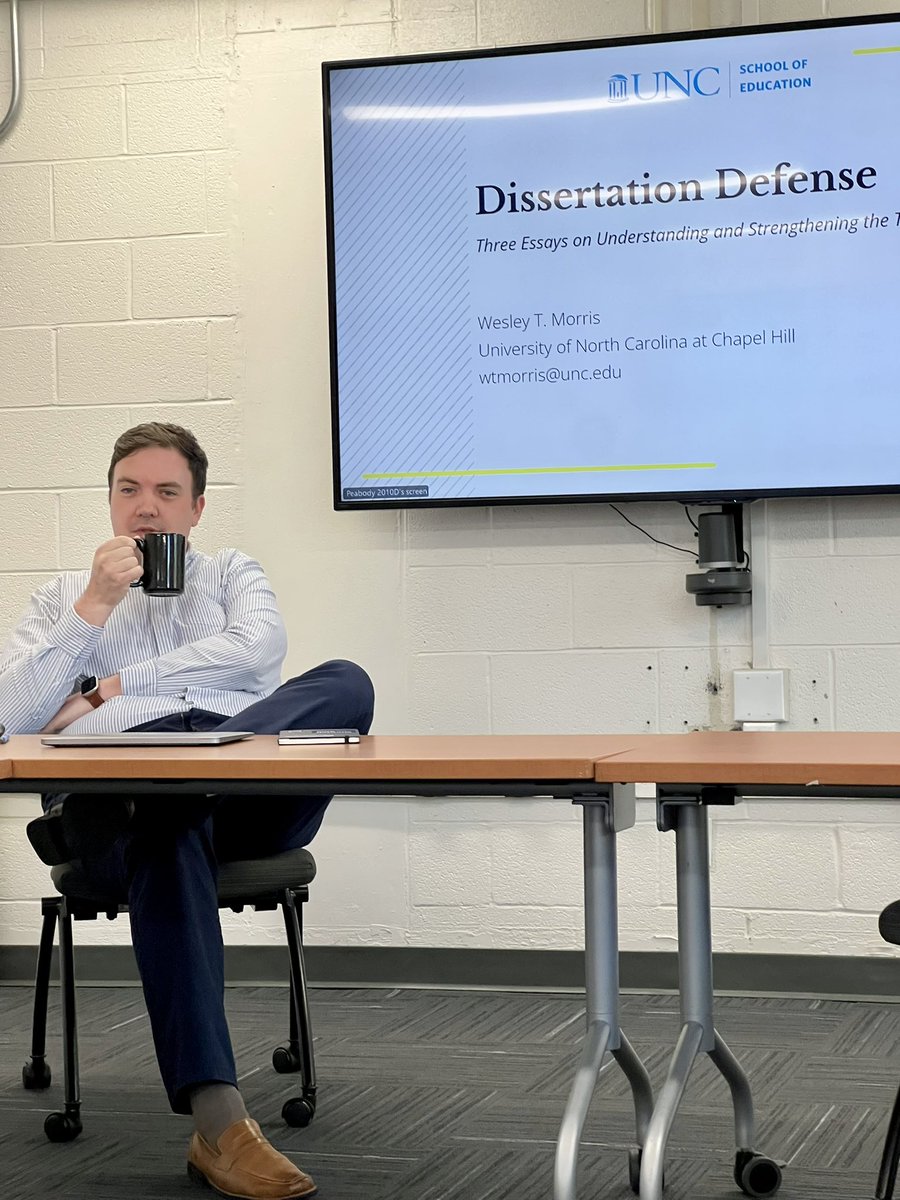
Late update, but excited to share I successfully defended my dissertation on April 1—and no one’s said April Fools yet.
Big thanks to my advisor Dr. Lauren Sartain and committee members @Dr_ConstanceL, @ehutt1, @SteveHemelt, & Daniel Klasik for their support the past 5 yrs!
I haven't seen an analog to this paper for Teachers/Prep Programs, but it seems important if we believe student debt influences teachers' decisions about where (and potentially whether) to teach. Here’s the paper I was thinking of when I wrote this thread: https://t.co/J6qGAnZTJJ
If we are worried about the cost of obtaining a teaching credential, I also think there is some credence in moving from thinking about (seemingly uncapped) loan forgiveness (like PSLF) to more upfront and fixed subsidies such as conditional grants and scholarships.
2) TPPs reduce, or at least do not increase, costs in response to new subsidies. This could be a big assumption, but if subsidies increase TPP enrollment, then programs could be incentivized to keep costs at or near the same level as these subsidies
@ChadAldeman : "Is there some limit when the degrees are no longer worth public subsidy?"
Certainly, but this graph doesn't tell us much about that question because it depends on a whole host of factors (how long teachers stay in the profession, how effective they are, etc)
{new} We shouldn’t allow preparation programs to saddle teacher candidates with sky-high debt burdens that they won’t be able to comfortably pay back -->
https://t.co/l62ZY8voxB
This relies on a few assumptions:
1) These subsidies actually reduce the real cost for TPP participants. Meaning that these grants supplant existing dollars students pay out of pocket or take out in loans.
@andrew_avit Yeah! Also so interesting it highlights even single teachers moving from district X to district Y. I obviously know this is possible, but to call it out so plainly is…… interesting
ICYMI, see our recent pub in @AeraOpen . We investigate teacher’s perceptions of their evaluation systems and how these processions are related to the positions and contexts in which they work.
🚨🚨New publication 🚨🚨
Check out this thread on our new paper out now in the Journal of Labor Economics, “The Expanding Landscape of Online Education: Who Engages and How They Fare” @ChicagoJournals@UNCSchoolofEd
Just published: Cleveland Fed economist Lisa Barrow with coauthors Lauren Sartain and Wesley T. Morris, “The Expanding Landscape of Online Education: Who Engages and How They Fare” in the Journal of Labor Economics. https://t.co/7vQBWrKjbZ 1/
Much of this matches how I am seeing TEACH used in NC. It's shocking how many inst and students miss out on money to pay for college. However, it also points toward these institutions as important actors as policymakers think about how to improve TEACH
Stay tuned!