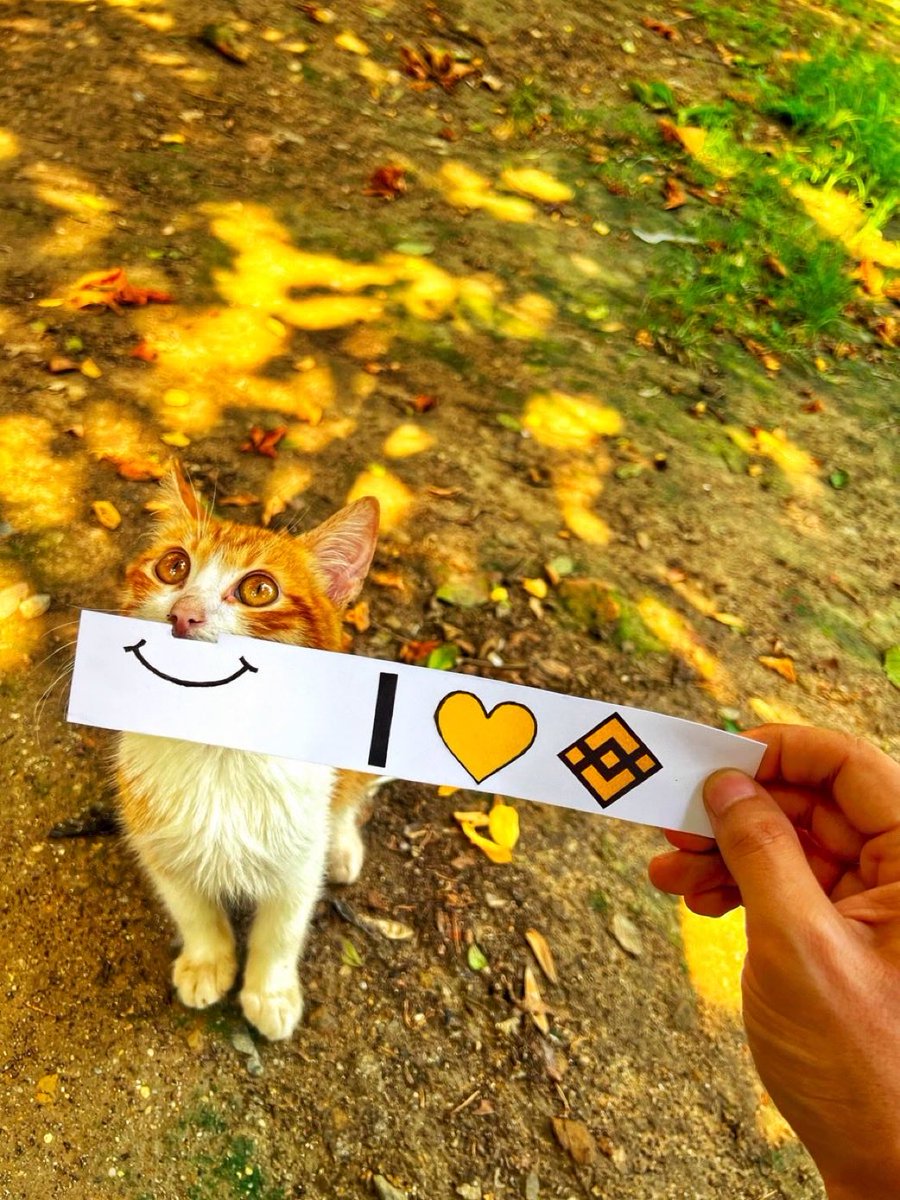
https://t.co/RZxE4IWuZc is the first launchpad on @bnbchain built for tokens paired with perpetual markets and native leverage.
Instead of launching a token with no underlying exposure, https://t.co/ch74zFVQ1C lets creators pair tokens directly with perps and choose the leverage attached to them.
Launch the token. Pick the market. Set the leverage. Let it trade.
A new way to bring leveraged market exposure onchain through simple, tradable tokens.
Powered by @BNBChain.
CA: 0x265b3982ea730748100947f52561a4eab54affff
After seeing the Binance cat, I chose #十八bro.🐈⬛.18bro the blackcat.
Every memecoin has its own unique story and is not affiliated with the Binance brand.
For example, #牛来 (NiuLai).
十八bro:
0xccfbcd3bf85d8657a6bbd10b8c81c99f13207777
@binance alpha soon.
BTC.D update
Bitcoin dominance just down about 4% but some low-cap coins are pumping very strong
Some project I made big profit like $LIT +110% , $US +500% , $ALLO +340% , .... in just 2 months . I'm public all my trade in my X
From now on to end of year , I'm predicts it will down about 15% , altcoins will huge pump more !
You bought at $1.3–$1.5 because the price had hit a historical support zone (~$1.86) that's held since 2021 not a random bottom. The crash was driven by leveraged liquidations plus a smart contract exploit, not a systematic team dump. So the money leaving was forced selling, not continuous insider selling. When the seller type is a liquidated leveraged trader rather than an insider, the odds of a bounce are much higher.
The pattern looked similar, but the cause was completely different. With RAVE and LAB, insiders controlled over 95% of supply, and there was continuous dumping from wallets funded by the team itself not a one-time event. That means every bounce gets met with fresh selling from the same dominant party, so there's no real bottom you can rely on. Shorting them was a safe bet because the source of the crash (insiders) would keep selling but buying the dip would've been blind gambling, since there was no real liquidity or trust to support a recovery.
You bought at $1.3–$1.5 because the price had hit a historical support zone (~$1.86) that's held since 2021 not a random bottom. The crash was driven by leveraged liquidations plus a smart contract exploit, not a systematic team dump. So the money leaving was forced selling, not continuous insider selling. When the seller type is a liquidated leveraged trader rather than an insider, the odds of a bounce are much higher.
The pattern looked similar, but the cause was completely different. With RAVE and LAB, insiders controlled over 95% of supply, and there was continuous dumping from wallets funded by the team itself not a one-time event. That means every bounce gets met with fresh selling from the same dominant party, so there's no real bottom you can rely on. Shorting them was a safe bet because the source of the crash (insiders) would keep selling but buying the dip would've been blind gambling, since there was no real liquidity or trust to support a recovery.