https://t.co/zJt5lIJkUG
Versatile Modular RAV4 Divider 🚗✨
Slides in easily with no permanent changes. Adds a square receiver to your cup holder for phone mounts, chargers, PopSockets & custom inserts while still holding two cups.
MagSafe: “MagSafe Power in Your Cup”
PopSocket: “Secure PopSocket in Seconds”
Blank insert included for your own designs
Great little upgrade for the 2026 RAV4!
#RAV4 #ToyotaRAV4 #3DPrinting
History in the making as we completed the world’s largest nuclear refurbishment, ahead of schedule and $150M under budget.
A big win for Ontario, with 96% of the Darlington refurbishment #MADEINCANADA 🇨🇦
The Darlington Refurbishment was more than just a project — it is the foundation for our nuclear future. Together, we've shown major nuclear projects can be done under budget, ahead of schedule. Now, we’re ready to lead & build for the future. Learn more: https://t.co/bQbj456ukJ
No budget. Massive new spending announced in the Liberal plans and on defence. No cuts to bureaucracy. No cuts to massive Trudeau spending programs. New accounting tricks to split the budget and not actually balance it. New soviet era central planning projects and house building. New carbon taxes after pretending to cut old one... and the PBO is begging for numbers
But pay a billionaire owned rag with taxpayer dollars and they will sing whatever BS tune you tell them... embarrassed for these elbows up clowns! https://t.co/S8Fc4Vs2uV
Canada has committed $20 billion to Ukraine.
They could have purchased or done any of these things instead:
-Erase nearly all student debt
-400 water bombers
-40 new hospitals
-10,000 MRI machines
-80,000 long-term care beds
-4 major city LRT lines
-Clean water for all reserves
-1 million homes with solar panels
-End homelessness for at least 4 years
Imagine the impact any of these would have domestically in our country.
With Bill C-202, Parliament chose to protect supply management and the dairy sector—which represents less than 1% of our economy.
In doing so, it effectively threw the other 99% under the bus.
"By protecting a shrinking sector with outdated tools, Canada isn’t just coddling dairy farmers — it’s abandoning its credibility, its consumers, and its future as a serious trading nation."
Our Dairy Addiction Is Making Canada a Trade Pariah
When it comes to supply management and trade policy, Canada seems trapped in a cycle of repeating the same costly mistakes.
Before @MarkJCarney's arrival as Prime Minister, the previous Parliament adopted Bill C-282, introduced by the Bloc Québécois. The bill granted blanket immunity to Canada’s supply-managed sectors—most notably dairy—against any future concessions in trade negotiations, regardless of the partner or economic context. It effectively locked in protectionism for a system that is already struggling to justify itself in the modern global economy.
During the federal election campaign, on April 3, Mr. Carney stated in a @RadioCanadaInfo interview that no legislation was necessary to protect Canada’s dairy industry. It appears he has since changed his mind—or someone changed it for him.
Last week, the newly elected 45th Parliament unanimously passed Bill C-202, a near-identical copy of C-282. The Senate may still push back, as several senators have signaled concerns about the bill’s long-term economic implications. But the momentum is clear: supply management is once again being shielded from scrutiny under the pretense of national interest.
Politically, it’s a savvy move—especially for the @BlocQuebecois. In Ottawa, few MPs from any party dare challenge one of the most powerful lobby in the country: The @dfc_plc. Their influence is formidable, both federally and provincially.
But the question remains: What exactly are we protecting?
Canada has the highest industrial milk prices in the G7. This is not true for poultry or eggs—but it is for milk, a critical staple in household diets. These elevated prices do not necessarily lead to innovation or reinvestment. In fact, many producers are content to maintain the status quo, knowing the system protects them from competition. The result? Canadian consumers foot the bill for a sector with little incentive to become more efficient or cost-effective.
Defenders of supply management often point to food safety and quality. It’s true that bovine growth hormones are banned here. That’s commendable. But there are other practices that deserve more transparency.
A 2022 study published in Trends in Food Science and Technology revealed that palm oil derivatives are permitted in dairy cow feed in Canada. This may contribute to the now-documented phenomenon of firmer, less spreadable butter at room temperature—a story known as “Buttergate” was dismissed by dairy farmers initially, despite mounting evidence.
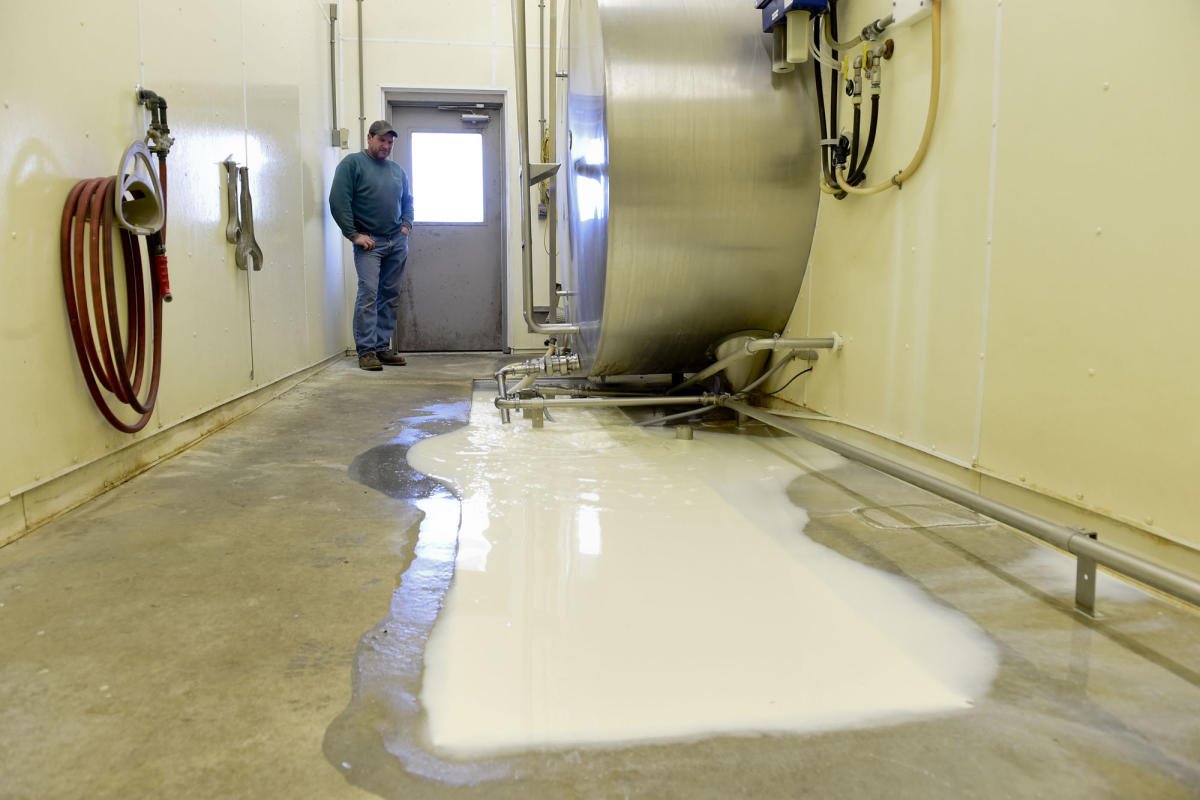
More recently, a peer-reviewed study co-authored by researchers at McGill and Dalhousie Universities and published in Ecological Economics estimated that Canada discards between 600 million and one billion litres of milk annually. The dairy lobby vehemently disputed these findings but has yet to present alternative data. The reality is simple: cows don’t stop producing milk when market demand fluctuates, and losses—whether in volume or value—are inevitable.
Canada’s dairy sector has long cultivated a culture of opacity. Rather than engage with critics or offer transparency, it leans on silence and self-congratulation. Accountability is elusive, and reform is taboo.
Looking ahead, Canada will need to renegotiate trade deals with the United States, Mexico, and other partners. Two choices await: we either pay billions in compensation to dairy farmers for theoretical “losses” each time concessions are made—a practice that borders on economic racketeering—or we forfeit our credibility as a reliable trade partner, unwilling to negotiate in good faith for a sector that represents less than 1 per cent of our GDP.
What message does this send to the world at a time when Canada urgently needs to diversify its economy?
By clinging to a misunderstood and outdated system, our elected officials are prioritizing short-term political gain over long-term economic progress. We are rewarding complacency and institutionalizing inefficiency—all under the guise of defending national interests.
The more things change, the more they stay the same.
— Dr. Sylvain Charlebois is the Director of the Agri-Food Analytics Lab at Dalhousie University and co-host of The Food Professor Podcast
Another ANONYMOUS LETTER from a dairy farmer in Ontario highlighting the growing mess created by supply management. And it’s only going to get worse.
"Sylvain, thank you for calling out a misleading idea that Canadian dairy farmers are losing money. In fact, the dairy industry has made some decisions that are now backfiring.
A few years ago, Canada’s main dairy-producing provinces introduced stricter rules to reduce the amount of skim milk—which is often wasted because there’s too much of it and not enough demand. They wanted more butterfat, which is used in products like butter and cream and is in higher demand.
To meet these new rules, farmers found ways to increase the butterfat content in their milk—like feeding cows palm oil supplements (which led to complaints about “hard butter” at the time). This worked: now milk in Ontario has more butterfat than ever—about 4.5% compared to 3.8–4% before.
But this created a new problem: farmers use up their quotas faster because their quota is based on butterfat, not milk volume. So if butterfat is higher, they can ship fewer litres of milk before hitting their limit. To fix this, the industry gave farmers quota increases and extra production days.
Now milk plants (processors) are getting less milk by volume—even if it’s richer in fat. For example, a truck that used to carry 32,000 litres of 4% milk might now carry less milk with 4.5% fat. That’s causing supply issues for processors who still need a certain amount of milk to make products.
Meanwhile, there’s now a surplus of butter and cheese, because the milk coming in is so fatty. They already have as much butter and cheese in storage in January as they’d normally expect to have by summer—when milk production is higher and demand is lower. They��re running out of storage space.
And they can’t just cut milk production, because processors still need it. So they’re stuck in a catch-22.
On top of it all, the high-fat milk is very expensive. In Ontario, raw milk now costs over $102 per 100 litres—while it’s only about $66 in the U.S. That makes Canadian milk production very profitable, if you’re part of the supply-managed system (aka “the club”)."
In short:
➡️Tried to fix a problem (dumping skim milk)
➡️ Created new problems (less volume, storage issues, higher prices)
➡️Industrial milk in Canada is twice as expensive as in the U.S.
➡️Now they’re stuck between needing more milk and having too much fat.
FYI. All this information is public.
🇨🇦🇺🇸I would consider shutting down X an act of War if I was Trump.
US could not stand by if our democracy falls.
Without X can you imagine all the misdeeds of the liberals that would never have been exposed?🤷🏻♂️
Once they control “all” media it’s over.
Why is Canada engaged in trade wars with the two largest economies in the world
and our two largest customers
to protect Quebec dairy farmers and our god-awful EV industry?