A few matrices, a strange-looking equation, and a prediction that rewrote physics.
The Dirac equation remains one of the most beautiful examples of mathematics uncovering reality.
An English engineer wrote a calculus book in 1910 opening with the line "what one fool can do, another can," and proved that almost everything making math feel impossible was put there on purpose by people who wanted it to stay exclusive.
His name was Silvanus P. Thompson.
He was a physicist, an engineer, a Fellow of the Royal Society, and a professor at the City and Guilds Technical College in London.
He had spent his entire career teaching calculus to working-class engineering students who needed the math to actually do their jobs, and he had watched generation after generation of bright kids walk out of math classrooms convinced they were stupid.
He knew they were not stupid. He knew exactly what was wrong, and he was about to say it in print in a way that would get him quietly hated by every academic mathematician in Britain.
In 1910 he published Calculus Made Easy. He published it anonymously at first, listing the author only as F.R.S., which stood for Fellow of the Royal Society. He did not want his name attached to it until he saw how the establishment was going to respond. Because the prologue of the book was not a polite introduction. It was an accusation.
He wrote that calculus was not actually hard. He wrote that the people writing the standard textbooks were what he called "clever fools" who deliberately took the easiest parts of the subject and presented them in the most complicated way possible, because doing so made them look more impressive.
He wrote that they "seldom take the trouble to show you how easy the easy calculations are" and instead "seem to desire to impress you with their tremendous cleverness by going about it in the most difficult way."
Then he opened the first chapter by telling readers something nobody had been willing to admit out loud. The reason calculus felt impossible was not because calculus was impossible. It was because the symbols had been chosen to feel impossible. The notation looked like ancient ritual on purpose. The Greek letters, the formal epsilon-delta definitions, the abstract limit proofs that opened every standard textbook, were not how Newton and Leibniz had originally thought about the subject. They were a 19th century renovation of the field done by professional mathematicians who wanted calculus to feel like a closed shop.
Thompson refused to use any of it.
He went back to the way Leibniz had thought about it 250 years earlier. The letter d in front of a variable, he told his readers, just meant "a little bit of." That was the whole secret. dx meant "a little bit of x." dy meant "a little bit of y." dy/dx meant "a little bit of y divided by a little bit of x," which is just how steep the curve is going at that exact moment. Integration was the opposite. It just meant adding up all the little bits.
That is calculus. That is the entire subject. Everything else is technique, and the technique only works once you understand what you are doing.
A 12-year-old can follow that explanation. A 12-year-old cannot follow the opening chapter of a typical university calculus textbook. The gap between those two facts is the entire reason most adults walk around believing they are bad at math.
The book became one of the bestselling math books in history. Over a million copies. Still in print 115 years later. Still recommended by physicists, engineers, and self-taught learners as the only calculus book they actually finished. Martin Gardner revised it in 1998 and the foundation of the book did not need to change because Thompson had built it on Leibniz, not on the academic conventions that have come and gone since.
The deeper point Thompson was making is the part that should haunt anyone reading this in 2026.
Difficulty is often a marketing strategy. It is not always a property of the subject. When a discipline is taught in a way that feels impossible, the difficulty is doing a job for someone. It is keeping the field small. It is protecting the salaries and the status of the people already inside it. It is filtering out the kinds of people who would otherwise show up and crowd the room.
This happens in math. It happens in law. It happens in medicine. It happens in finance, in machine learning, in philosophy, in software. Every field has a layer of jargon and notation and ritual sitting on top of a core idea that is usually much simpler than the people inside the field want to admit. The jargon is not there to communicate. It is there to gatekeep.
The way you recognize a real teacher is that they keep stripping the ritual off. The way you recognize someone protecting their priesthood is that they keep piling it on.
Thompson finished his prologue with five words that are the entire spirit of his project. "What one fool can do, another can." He meant it as both a joke and a threat.
If a working-class engineering student in 1910 with no Greek and no Latin and no university privileges could learn calculus from a 200-page paperback, then so could anyone the establishment had been excluding for the previous 200 years.
Most subjects you have given up on were never as hard as the people teaching them needed you to believe. You were not stupid. The course was designed to make you feel that way.
What one fool can do, another can.
Taylor Series ✍️
The Taylor Series is a way to approximate any smooth function using a polynomial, which is a simple equation made of powers of x. It works by taking a function f(x) and expanding it around a specific point 'a' as an infinite sum: f(x) = f(a) + f'(a)(x-a) + [f''(a)/2!](x-a)² + [f'''(a)/3!](x-a)³ + ... Here, f(a) is the starting value, f'(a) is the slope, f''(a) is the curvature, and so on. Each new term adds more detail to better match the original curve near point 'a'. The more terms you add, the more accurate the approximation becomes near 'a'. This useful concept is used in calculators, physics, and engineering to easily compute complex functions like sin(x), e^x, or cos(x). When the center point a = 0, it is called the Maclaurin Series.
Types of intergals ✍️
An integral in mathematics refers to the techniques employed in determining the sum of various quantities including area, volume, and flow among others. The single-variable integral is used to find the area below a curve in a graph. The line integral is used in addition of certain values while traversing a curve such as finding the total mass of a curved wire. Lebesgue integral is an advanced integral technique that involves the use of new and flexible techniques in dealing with complex functions. Double integral determines the volume of the space lying under a curved surface within a given plane, for instance, the volume underneath a hill. Flux integral computes the flux of quantity such as water and electrical fields through a curved surface. Lastly, the triple integral is utilized in calculating the total mass inside a solid 3D body.
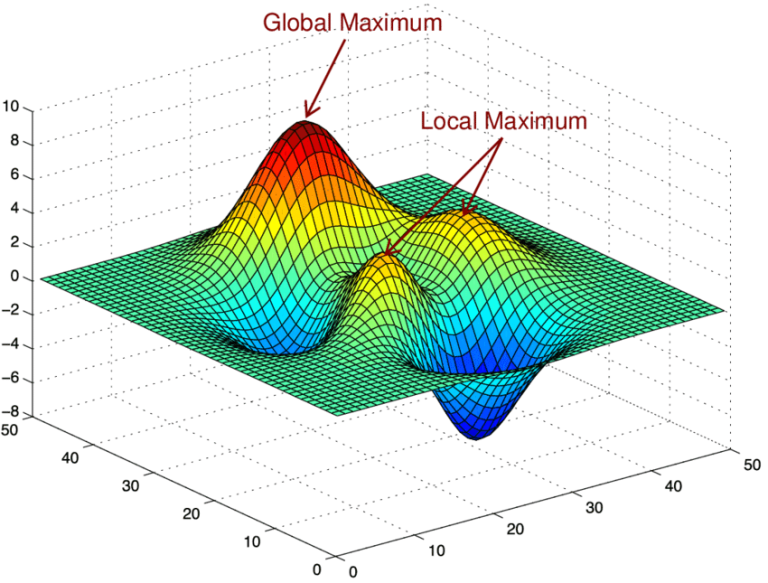
How many technologies are stuck in a local optima?
Big loudspeakers basically peaked in the 1970s.
Obviously we’ve gotten somewhat better, but it’s a lot closer to: “a couple % more accurate” than “the average person immediately notices the +50-year technological progress”
Miniaturization has improved a lot, so has digital signal processing, amplification. But take a high end setup from 50 years ago, sit in the sweet spot at the same volume…it won’t feel radically different.
I’m trying to think of other fields where the underlying principles were so mature that half a century of progress in materials/software/electronics is underwhelming.
Camera Lenses seem like a good candidate. Non-electronic instruments is another; it’s not like cellos have gotten that much better in the last ~300 years.
Apple has handed Intel a “once-in-a-generation” foundry lifeline, claims analyst, but 80% of the orders hinge on a single iPhone chip.
https://t.co/TDOppgpgeQ
I've been coding for 40 years. Here are the top 5 things I wish I knew when I started.
1. 90% of the job is debugging and fixing, not creating new code. Which is still fun if you're good at it.
I used to think programming was mostly writing fresh, clever stuff. In reality, most of your time is spent in other people's (or your own past self's) messy code, chasing down why something that "should" work doesn't. Get really good at debugging early. Learn assembly reading, call stacks, and kernel debuggers. It pays off hugely. The best engineers I saw were absolute magicians at this.
2. Manage complexity from day one (ie: don't write slop and "fix it later" if it goes somewhere).
Very early on, I'd hammer out code and refactor afterward. Big mistake. Now I start with clean, skeletal structure (minimalism first) and flesh it out carefully, with AI or not.
Messy code compounds and becomes unfixable. Upfront discipline on architecture, naming, and simplicity saves enormous pain later, especially in large systems like Windows.
3. Tools and processes matter more than you think
We suffered with basic diff/manual deltas instead of modern source control like Git. Branching, testing, and good tooling would have made porting and collaboration way smoother. Invest in your environment, automation, and reproducible builds early. Good tools amplify your output; bad ones (or none) drag everything down.
4. Understand the problem and existing code deeply before writing
Don't jump straight to coding. Map out the problem, study what's already there (you'll inherit a lot), and plan. Low-level knowledge (hardware quirks, alignment issues on different architectures like MIPS/Alpha) was crucial. Also: assert early and often. It forces clarity.
5. People, politics, and "the right tool for the job" beat pure tech arguments.
Brilliant engineers still argue endlessly. Sometimes it's about ego, not merit. Learn to spot the difference and "steer" the conversation rather than "winning" it.
Bonus from experience: Side projects like Task Manager (started at home because I wanted the tool) can become your biggest hits. Ship small, useful things often. If you're just starting, focus on fundamentals, patterns over syntax, and building resilience for the long haul. It's going to be a wild ride, but the fundamentals still matter.
At the top of the dot-com bubble, a Berkshire shareholder asked Buffett and Munger to “just speculate” 10% in tech.
Their answer aged perfectly.
April 29, 2000.
In the 1920s, Paul Dirac introduced a highly unconventional mathematical object known as the delta function, denoted δ(x). It is defined informally as being zero everywhere except at x = 0, where it is infinitely large, yet constrained so that its total integral over all space equals 1.
From a strict mathematical standpoint, this object is not a function in the traditional sense.
Mathematicians at the time objected, arguing that such a definition violated standard analysis and lacked rigorous foundation.
Despite this, Dirac used it as a practical tool in quantum mechanics, where it proved extraordinarily powerful, especially in describing localized states and continuous spectra.
The formal justification came much later. In 1945, Laurent Schwartz developed distribution theory, a new branch of mathematics that rigorously defined objects like the delta function as generalized functions.
This framework not only validated Dirac’s intuitive approach but also transformed modern analysis, showing that what was once considered mathematically ill-defined was, in fact, deeply consistent within a broader structure.
In hindsight, Dirac’s delta function became a striking example of how physical intuition can precede mathematical formalism and even guide its creation.
I see that we are also in the part of the cycle where contractors, HVAC companies and construction equipment businesses are being valued at 40-80x NTM earnings, based on peak Y/Y backlog increases. Caveat Emptor.







² + [f'''(a)/3!](x-a)³ + ... Here, f(a) is the starting value, f'(a) is the slope, f''(a) is the curvature, and so on. Each new term adds more detail to better match the original curve near point 'a'. The more terms you add, the more accurate the approximation becomes near 'a'. This useful concept is used in calculators, physics, and engineering to easily compute complex functions like sin(x), e^x, or cos(x). When the center point a = 0, it is called the Maclaurin Series.](https://pbs.twimg.com/media/HJUxAuTbcAA_Fjd.jpg)


