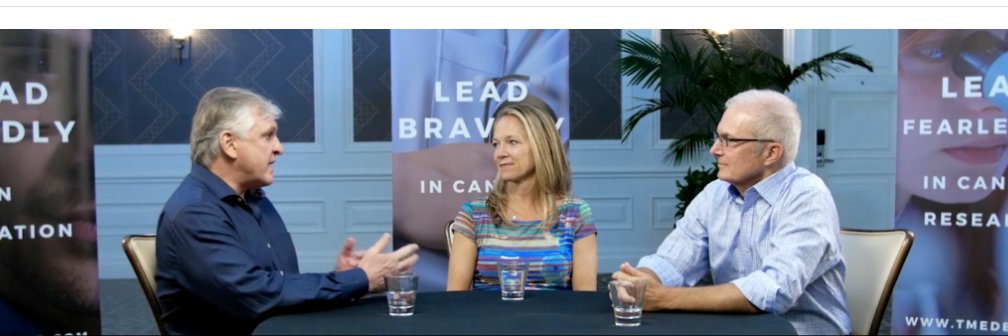
"Radiation therapy can be very effective—but it's not necessary for everyone."
In Episode 4 of #ConversationsWithHannahStorm, breast surgeon Dr. Barry Rosen explains why personalized treatment is changing DCIS care and why he calls DCISionRT® "transformative."
🎥Watch now. https://t.co/x6aHO2oepE
#DCIS #PrecisionMedicine #DCISionRT
OPTIMA: Genetic Test–Determined Chemo Is Noninferior to Chemo + Endocrine Therapy in Selected Patients With Early Breast Cancer https://t.co/gb5YNRwke4 @ASCOPost Someone should correct this headline: 1. ET (not Chemo) is noninferior 2. It's a Genomic test (did AI write this?)
For genitourinary and sexual health, four randomized trials of vaginally applied testosterone in women with hormone receptor–positive breast cancer reported improvement in vulvovaginal atrophy and hypoactive sexual desire without elevation in serum estradiol.22-25 Prospective observational data on testosterone pellets in breast cancer survivors also show no increase in breast cancer incidence over 10-15 years compared with WHI placebo rates.26,27
@UofLDeptofSurg@McMastersKelly They are in a great place to become leaders with real world experience. Hats off to Dr McMasters and the U of L family. So proud to be from there.
@DrJudyBoughey@TJH0828@saskia_leonard@MayoCancerCare@MayoClinicSurg Looks untrue in NAC w pCR and untrue in adjuvant chemo cases. 4% difference in NAC w RD. (Similar to the difference w extended ET). Sad to treat 100 patients (w attendant side effects) to help 4. Needs biomarker targeting in 2026.
@klara_sjo Pretty sure you wanna correct this. I think I know what you meant, but what you said was a water molecule has a lot of hydrogen atoms which is not what you meant. A water molecule has two hydrogen atoms.
@bethanyjbabcock@SwiftOnSecurity Great advice! As a cancer surgeon I told my patients, don’t pay anything until the police come. An exaggeration but it got the point across. I saw too many suffer from severe additional financial stress (financial toxicity) as they were trying to overcome a cancer diagnosis.
"Nobody understood why Dad kept the storage unit.
Cost him $89 a month. We told him to cancel it, sell the stuff, save the money. He's 68, retired on a fixed income. Can barely afford his medication. But every month, without fail, $89 to Store-All on Industrial Drive.
"What's even in there?" I asked last Christmas.
"Things people need," he said. Wouldn't explain further.
I followed him there in March. Couldn't help myself. Worried he was hoarding, losing his mind, wasting money we didn't have.
Watched him unlock unit 247. It was full. Furniture. Appliances. Clothes on racks. Kitchen supplies. Bedding. Toys. All organized, labeled, clean.
A woman with three kids met him there. He walked her through like a store. "Take whatever you need. No rush. No charge."
She left with a microwave, dishes, winter coats for the kids, blankets. Crying. Thanking him over and over.
"Dad, what is this?"
He sighed. "When your mom and I divorced in '92, I moved into an empty apartment. Slept on the floor for three months. Ate off paper plates. It broke something in me, that emptiness. Made a promise then. If I ever could, I'd help people starting over."
"But $89 a month"
"I don't need much. But they need everything. People leaving abuse. People getting out of shelters. Refugees. Anyone starting from zero."
He'd been doing it for eleven years. Filled that unit with donated furniture, thrift store finds, things neighbors gave him. Gave it all away to people rebuilding their lives. Over 200 families.
"Why didn't you tell us?"
"Because you'd try to stop me. Say I can't afford it. But I can't afford not to. You don't forget what empty feels like."
I posted about it on Facebook. Just a photo of Dad in his storage unit, brief explanation. Asked if anyone had furniture to donate.
It exploded. 4,000 shares in two days. Donations poured in. Furniture stores contributed. People rented additional units. Five units now. Volunteers helping.
"Dad's Second Start" it's called. Sixteen storage facilities across the state doing the same thing. Furnishing empty apartments for people escaping, recovering, beginning again.
Dad still pays for his original unit though. Won't let anyone else cover it.
"It's my promise," he says. "Some things you pay for yourself."
Last week, a woman showed up with her daughter. "Your dad furnished my apartment in 2015 when I left my abusive husband. I'm a social worker now. I send people to him. Brought dishes to donate."
Dad cried. Doesn't cry often.
Because he remembers sleeping on an empty floor. And he made sure hundreds of others never had to."
.
Let this story reach more hearts....
.
Ai image is for demonstration purpose only.
.
By Mary Nelson