A chief executive officer of a state entity boldly accuses the Leader of the Minority Caucus in Ghana’s Parliament, which accusations have been vehemently denied by both the Leader and the Minority Caucus in Parliament.
Issues are joined on the allegations made in the court of public opinion and the maker of the allegations has the burden of proof.
Now, the question is: are those allegations supported by the Government of which the maker of the allegations is part? The silence of senior government officials on the allegations against the Leader of the Minority Caucus in Parliament is deafening. Are they scared that they would be made to retract and apologise, if they dare oppose the maker of the allegations?
Another question to be asked is whether the Speaker of Parliament will remain silent and unconcerned whilst a leader of Ghana’s Parliament is denigrated in the public space by a CEO of a state entity that reports to Parliament on many levels. I remember how in the previous Parliament, during President Akufo-Addo’s term as President when the current Speaker was Speaker of Parliament, he used to assert the authority of Parliament at every little opportunity. Or that assertion of Parliamentary authority applies differently under President Mahama and the NDC?
Meanwhile, the GHS 22billion Cedis loss is hardly the concern of the fourth estate of the realm and our cherished civil society organisations. Their silence on scrutinising this gargantuan loss is ear-drum shattering.
Citizens, as we go to church this morning, let’s pray that our GHS 22billion loss will get the much needed attention, scrutiny and accountability so that it doesn’t repeat itself in next year’s report.
#IMAGINE!!!
It has been 9 weeks since the NDC announced that the IMF has left town. Today they’ve brought loans of nearly $1 billion to parliament for approval. The same party that said the NPP over borrowed has started borrowing billions of USD, 9 weeks after the IMF left. This is bcos govt has chosen to spend the limited resources on pushing nice headline figures while the lived experiences of people say otherwise. Dear NDC get the revenue measures right so you don’t have to go this way. Prioritize expenses so you spend treasury resources on what matters most.
In January this year, a citizen filed an RTI request with the Bank of Ghana, seeking disclosure of non-performing loans written off by commercial banks, totalling GHS 1.39 billion. The Bank initially asked for the citizen’s identification, which was duly provided. Then it simply refused to release the information.
On 28 April 2026, the citizen did what the Constitution entitles him to do; he filed an application at the High Court to compel disclosure.
Then something interesting happened.
Today, the Bank of Ghana produced a letter, purportedly dated 24 April 2026, refusing the request on grounds that the information is “exempt.” No explanation. No legal basis offered. Nothing.
I say purportedly dated 24 April because the dispatch stamp tells a different story: the letter was posted on 7 May 2026; nine days after the court application was filed. Draw your own conclusions about the timing.
This is not an isolated incident. I have seen, firsthand, this government and its appointees go to deliberate, calculated lengths to keep the public in the dark. Transparency is not merely neglected by this government; it is actively resisted.
GHS 1.39 billion in written-off loans. Public money. Public interest. And a government that would rather litigate than simply answer the question.
That should tell you everything. Accountability is a strange concept to this government.
PUBLIC UPDATE: A Five-Month Ordeal for One Simple REQUEST to MIIF!!!
What began as a simple request for information, grounded in my constitutional right to access information and my responsibility as a former Board Member of the Minerals Income Investment Fund (MIIF), has unravelled into a disturbing five-month saga that raises profound questions about transparency, accountability, and the rule of law in Ghana.
All I asked for was a copy of MIIF’s 2024 audited financial statements. Five months later, the question remains: Why was it so difficult to provide it?
I think this is a matter that should concern every Ghanaian. Let me break down the timeline for you to follow:
26 September 2025 - Concerned by conflicting reports in the media about MIIF’s financial position, I formally wrote to MIIF requesting a copy of its 2024 audited financial statements.
14 October 2025 - Having received no response, I wrote again, this time asking whether MIIF had complied with its own law by submitting the audited accounts to the Ministry of Finance.
15 October 2025 - MIIF finally responded, but not with the documents. Instead, it claimed its failure to respond was due to “inadvertence” and suggested that the accounts would only be released after Board approval for publication.
This explanation was plainly unlawful. By that date, the MIIF Board Chairman had already signed the accounts on 26 June 2025, the Auditor-General had signed off on 27 June 2025, and the accounts had already been submitted to the Ministry of Finance. The law did not require any further approval. This was not a delay. This was a refusal.
After pointing out the illegality, I triggered the internal review process under the RTI Act. MIIF ignored it. But while refusing to provide the audited accounts, MIIF was doing something else, something on the blind side of the public.
31 October 2025 - More than a month after my request, MIIF wrote to the Auditor-General seeking to review and restate the already signed audited financial statements, claiming they contained “misstatements.” At the time, I had no knowledge of this.
5 November 2025 - The Audit Service responded to my separate RTI request. It confirmed that the accounts were signed on 27 June 2025 and submitted to both MIIF and the Ministry of Finance.
The facts were now clear. The accounts existed. They were final. They had been submitted. So why were they being withheld?
26 November 2025 - After two months of silence, I filed an application for review with the RTI Commission. Around this time, it became public that MIIF had asked the Auditor-General to rewrite the audited accounts. The Auditor-General’s response was unequivocal: the request was “improper.” He refused.
Instead of accepting the Auditor-General’s position, MIIF reported the Auditor-General to Jubilee House. The Auditor-General was invited to meet the Chief of Staff. Discussions followed about a second look at the accounts. And then an external auditor was appointed to audit MIIF’s 2025 accounts. This was no longer a simple information request. It had become a high-level national controversy.
Meanwhile, after persistent follow-up, the RTI Commission finally acted. But not in the way one would expect.
16 January 2026 (received 19 January) - The Commission informed me that MIIF had claimed the accounts were under review by the Auditor-General, and on that basis, it granted MIIF a three-month deferment.
This was shocking. Why? Because the Auditor-General had already signed off on the accounts months earlier, and there was no review underway. This was public knowledge.
Even more troubling, the RTI Commission did not verify this claim with the Auditor-General. It simply accepted MIIF’s word.
26 January 2026 - I responded to the RTI Commission, pointing out that the legal provisions they relied on did not apply. I also responded to a letter I had received from MIIF informing me of the RTI Commission’s decision, a week after the RTI Commission wrote to me. It was ironic that MIIF, which could not even acknowledge receipt of a letter, considered it necessary to inform me of the RTI Commission’s decision.
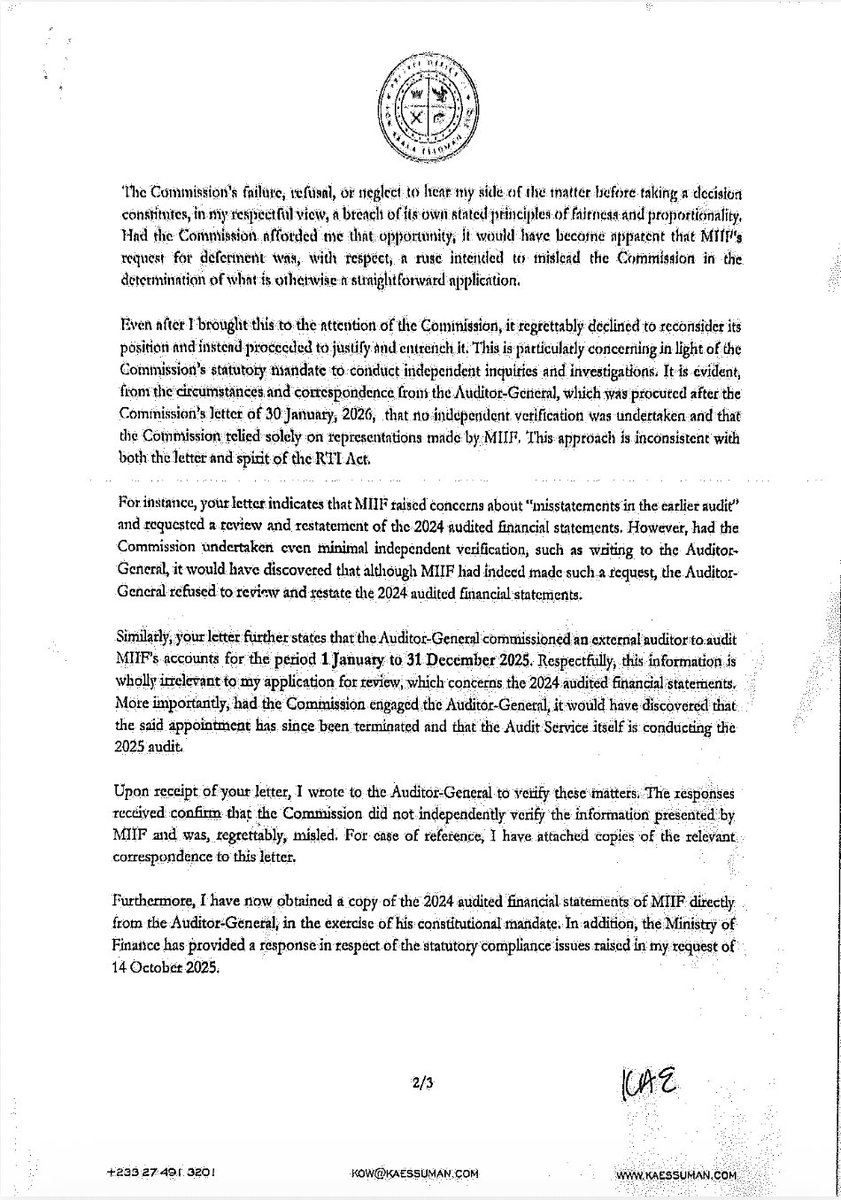
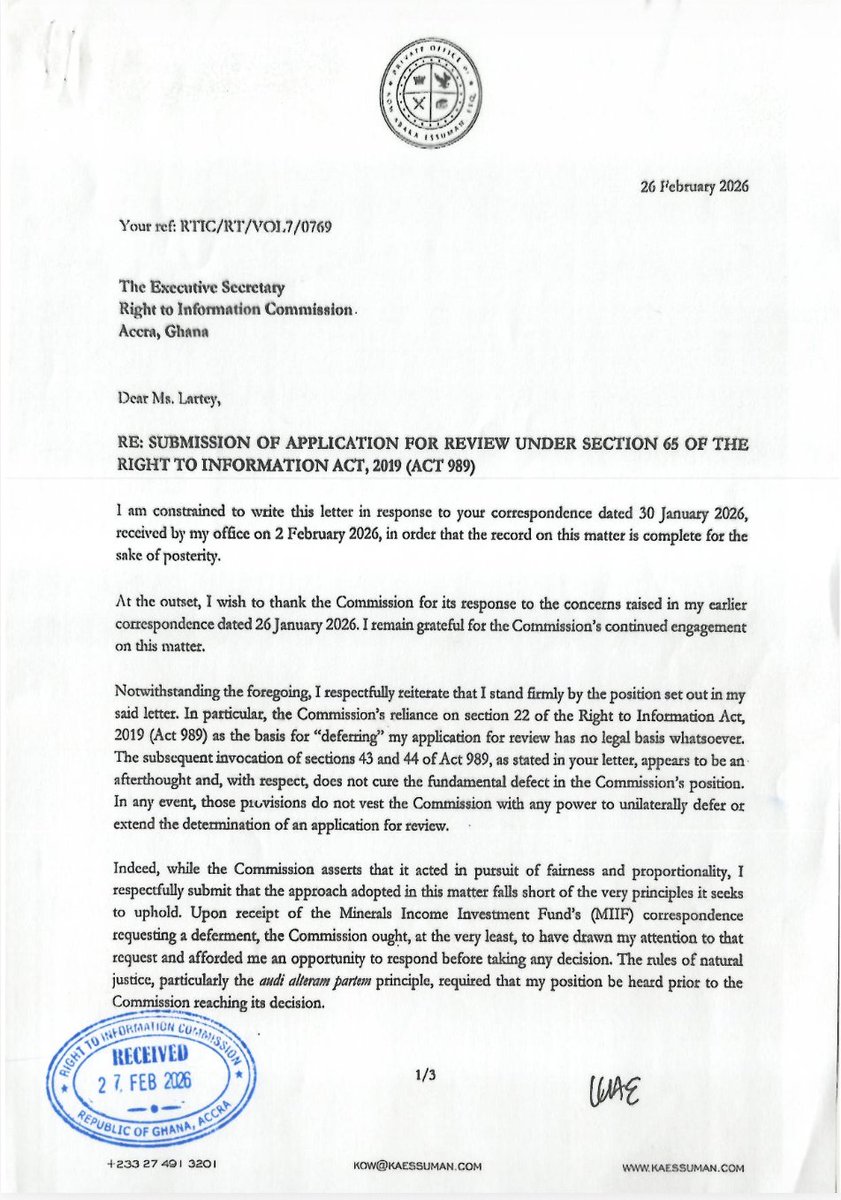
30 January 2026 (received 2 February) - The Commission doubled down, now shifting its justification to different provisions of the RTI Act, which still did not support its position. It had not only misapplied the law but also failed to observe basic fairness.
3 & 6 February 2026 - I wrote directly to the Auditor-General.
11 February 2026 - The Auditor-General responded and confirmed that the Commission had not contacted him, that there was no review of the 2024 audited accounts, and that MIIF’s claim to the Commission was not true.
At this point, the situation became undeniable. A public institution had misled another public institution, and that institution had acted without verification.
The Auditor-General also revealed that the appointment of the external auditor had been terminated. Why? Because “Management of MIIF attempted directing the audit…” The Auditor-General stated that he terminated the engagement to protect independence, transparency, and public trust.
26 February 2026 - Five months after my initial request, I wrote to the RTI Commission, enclosing the Auditor-General’s confirmation and explaining that the information had now been obtained, the Ministry of Finance had confirmed compliance, and that the basis for the Commission’s decision was flawed. I therefore withdrew my application.
What this timeline reveals is that this was never just about a document. In five months, we have seen:
• A lawful request for information was ignored
• The RTI Act breached
• A completed audit challenged after the fact
• An attempt to rewrite audited financial statements
• The Auditor-General’s position escalated to the Presidency
• An external auditor was appointed and then removed over interference
• The RTI Commission misled and acted without verification
This is not administrative inefficiency. This is systemic failure.
There is a bigger question that must be asked. Why was a simple request for information met with resistance at every stage? Why was a completed audit challenged? Why was the Auditor-General reported to the Presidency? Why was an external auditor brought in and then removed? Why did the RTI Commission not verify a critical claim? And most importantly, what was so important in those 2024 audited financial statements that it triggered all this?
When a citizen must fight for five months to obtain information that already exists… when institutions designed to ensure transparency become obstacles… when truth must struggle to survive within public systems… then we must pause.
Because the issue is no longer about MIIF. It is no longer about an audit. It is about whether the rule of law still governs our public institutions. And whether truth still has a place in public administration.
Ghanaians must ask questions. Because silence, in moments like this, is not neutrality. It is permission.
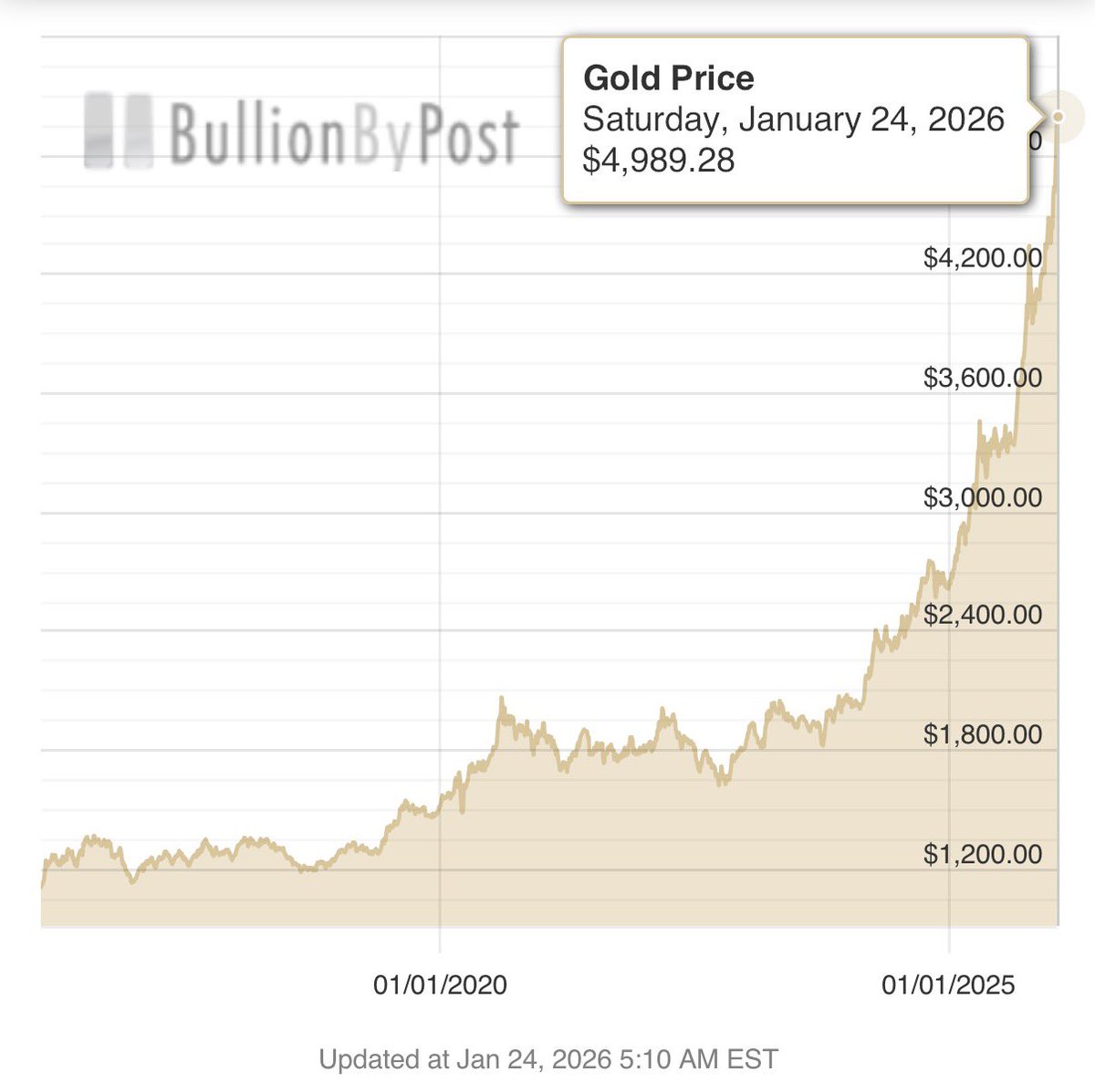
The gold price when Asaase Royalties (later Agyapa Royalties) was birthed and ready to be listed on the London Stock Exchange was approximately $1,300. There was a strong appetite for the listing, with over $750m to be raised by floating 49% of the shares on the stock exchange, while Ghana still retains its majority shareholding.
Today, the gold price is almost $5,000. Now, just imagine how much money would have been flowing into our economy if Agyapa Royalties had been listed on the LSE, GSE, and other stock exchanges, alongside the work that GoldBod is doing. Sadly, we will never know. That is what happens when petty politics and personal interest override the national interest. A vision that is good for our country should not be killed because we want personal interests, including political interests, to override the national interest.
On September 26, in exercise of my constitutional right and rights under the Right to Information Act, and as a former board member of Minerals Income Investment Fund (MIIF or the Fund), I submitted a request to the Fund, seeking responses to 10 specific questions and requesting a copy of the signed audited financial statements of the Fund.
MIIF refused my request.
I submitted an application for internal reviewnof the refusal and another request to confirm whether MIIF had complied with its statutory obligations under the MIIF Act.
Again, MIIF refused to even acknowledge or respond to my request and internal review. MIIF however sent me a letter on October 15 stating that the audited financial statements would be published after the Board approves it. I responded to that letter stating that MIIF’s position was not supported by any law.
It has now come to light that on October 31, MIIF wrote to the Audit Service seeking to “review and restate” the audited financial statements. Note that this request from MIIF is subsequent to my RTI request and refusals by MIIF.
The Audit Service stood its ground and in a letter dated November 12, shut down any attempt by MIIF to “review and restate” the 2024 audited financial statements. I have seen and read the letter which has been circulating on social media today. The tone and conviction of the Audit Service in the letter to MIIF leaves much to be desired.
All I want is for MIIF to comply with the law (both the MIIF Act and the RTI Act) and respond to my queries. Transparency is a fundamental principle of the Fund, but it appears the opposite is occurring.
If you wish to understand what this case is all about please tune in to Asaase’s Big Bulletin at 5pm today. It is a simple case. No excuses. Just pay up. APN sues Africa Oil Week organisers to recover $300,000 service fee - Asaase Radio https://t.co/0hj6sw6Yru
On "The Forum" tomorrow, my guests and I will be discussing two personalities, the Chief Justice of the Republic, Justice Gertrude Araba Esaaba Sackey Torkornoo and the Ashanti Region Chairman of the NPP, Bernard Antwi Boasiako (Chairman Wontumi)
Dr. Bawumia’s innovative plan to build up Ghana's Central Bank gold reserves has led to a significant increase in our total holdings, contributing to the stability of the Cedi during a time of high gold prices. If we continue on this path, we are likely to strengthen our position against the dollar.
📻—Your regular host Wil is back in full force on #Forum tomorrow! Join us at 8AM for deep insights and expert takes on all the hot trending topics. Don’t miss it — make time to tune in!
On-Air and Online
#AsaaseRadio
I have seen a letter circulating on social media purportedly written by the Secretary to the President and addressed to the Ag. Chief Justice in his capacity as Chairman of the Judicial Council. The letter supposedly nominates seven Justices of the Court of Appeal to the Supreme Court.
This method by which the Secretary to the President writes directly to the Chairman of the Judicial Council is alien to the age-old practice of nominating persons for appointment to the Supreme Court. The Supreme Court in Ghana Bar Association v. Attorney-General (2016) affirmed this practice of nomination, which does not involve the President writing through his Secretary to the Judicial Council. The Court held:
“That Practice is that nominations for appointment to the Supreme Court come mainly from the Attorney-General, the Ghana Bar Association and
the Chief Justice and the Judicial Council sends their recommendations on successful candidates to the president, who then pursues the process
to completion.”
In practice, the President notifies the Attorney-General of his nominations. The Attorney-General then attends the Judicial Council meeting and submits the President’s nominations. If the Judicial Council finds the nominees suitable, the Council will advise the President accordingly. President Mahama has, in the past, ignored the Judicial Council’s advice.
Yes, President Mahama is doing a lot of things that are alien to the constitutional order, the rule of law, legal practice and the independence of the judiciary.
Ghana is currently on a very serious slippery slope.