@legendofmi I'll admit the first time, I wasn't grossed out because I wasn't sure what actually happened in this moment 😅 Skip to years later, and yeah it's pretty horrendous, along with the spit contest.
I relaunched my online workshops last night after my breakdown but no takers yet. They used to be the majority of my income so it is scary tbh.
I've taught creative & mental health classes on BBC Countryfile, @V_and_A, the Bronte Parsonage & even Highgrove. I've been advised to go on PIP (my autism,ADHD & PMDD together are disabling & my breakdown means my income's a quarter of what it was) but I really don't want to do that.
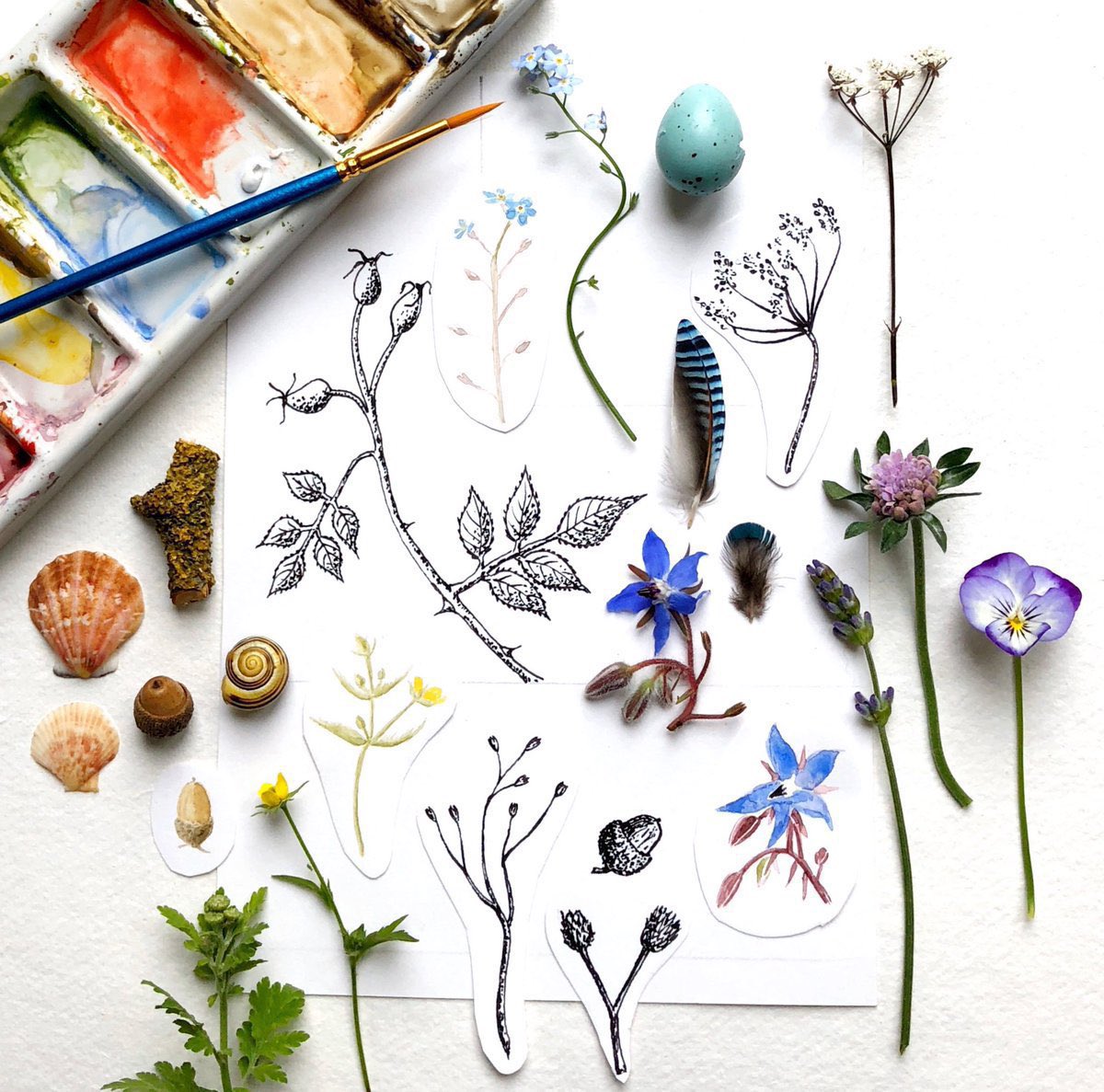
If you'd like to learn to draw plants & how creative activity alters our brain biochemistry to improve mental health my 29th August class is here👇
A RT would really really help, thankyou🌿: https://t.co/UFgNLxO8ey
Amazing footage of the extremely rare Glass Octopus (Vitreledonella richardi) filmed 651m (2135 ft) beneath the waves near the Phoenix Islands Archipelago.
🦔AI companies are bulk-buying rare books, scanning them through high-speed machines that cut the spines off, and shredding the originals. A service called ISBNdb facilitates orders of up to a million books and keeps buyers anonymous. Pre-2022 books are premium because they're free of AI-generated text. A federal judge ruled the practice is fair use because eliminating the original means only one copy exists at a time. Anthropic hired the former head of Google Books partnerships to obtain "all the books in the world."
My Take
This got to me. A bookseller told 404 Media that rare books with almost no surviving copies are being fed into this pipeline. Books that survived wars, fires, and centuries of handling are being shredded so an AI can learn to write a better marketing email.
ISBNdb's website literally says "'AI company destroys two million books' is not a headline that generates sympathy," and they still built an entire business around making it happen quietly. They offer NDAs as a feature. They coach clients to call it "digital preservation."
I've covered AI companies scraping the internet, torrenting libraries, and stealing music. This is worse because it's irreversible. You can re-upload a website. You can reprint a bestseller. You can't replace the last three copies of an 18th-century botanical text once someone shreds them for training data. And the judge said it's legal. So it's going to accelerate.
"We shred rare books and offer NDAs so nobody finds out" is a legitimate business model in 2026. What a timeline.
Hedgie🤗
'Why Humans Draw'
A discussion on the philosophy of why humans draw pictures, even when it doesn't become commercially rewarded.
https://t.co/bF9OyrmxMx
Este es un antiguo relieve Asirio que data del periodo neoasirio del 911- 612AC. Representa a un espíritu guardián alado o genio alado sosteniendo a una serpiente o criatura mitológica similar. Los relieves asirios son conocidos por sus detalles y a menudo monumentales tallas de piedra que adornan los Palacios reales. La antigua región Asiria se centra en el curso del Río Tigris, lo que hoy llamamos el País de Irak.
Most people don’t realize just how incredible pigeons truly are.
They don’t need much, some oats, bird seed, clean water. What they deserve is empathy.
Pigeons are not pests. They are intelligent, emotional, deeply social beings. They remember us. It’s time we remember them
We grew up watching hand drawn Disney and now it's gone. We don't talk about this enough.
Every frame of this video was painted by hand, by a human being. Every single one...
To put that into perspective: to make Snow White and the Seven Dwarfs, Disney employed around 750 artists for three years, and they produced nearly two million individual paintings. More than 700 of the backgrounds were painted in watercolour. Over 150 people worked in a single department whose only job was to ink and paint the transparent sheets, called cels, that the characters were drawn on.
It all ended within our lifetime.
According to the Smithsonian, The Little Mermaid, released in 1989, was the last Disney feature made with the hand-painted cel method. The very next film, one year later, went digital.
And something was lost in that transition. In every frame of the old films, a human hand physically touched the surface. A person sat at a desk, held a brush, and made a decision. Two million small decisions, made by hundreds of people, most of whose names we will never know.
But the deepest difference is that the old animators knew they were making a cartoon. They did not try to copy the world. They stretched it, exaggerated it, bent it out of shape, because they understood something we seem to have forgotten: a drawing that imitates life exactly feels dead.
Walt Disney even had a name for this: he called it the plausible impossible.
Today, everything chases realism. And somehow, the more real it looks, the less alive it feels...
I started my newsletter because the past is full of beauty, and fewer and fewer people take the time to show it to us anymore. Every week I try to. If that is something you'd like to be part of, you can join through the link in my bio, and if you'd like to support my work, a paid subscription is what makes it possible.
Thanks for reading.