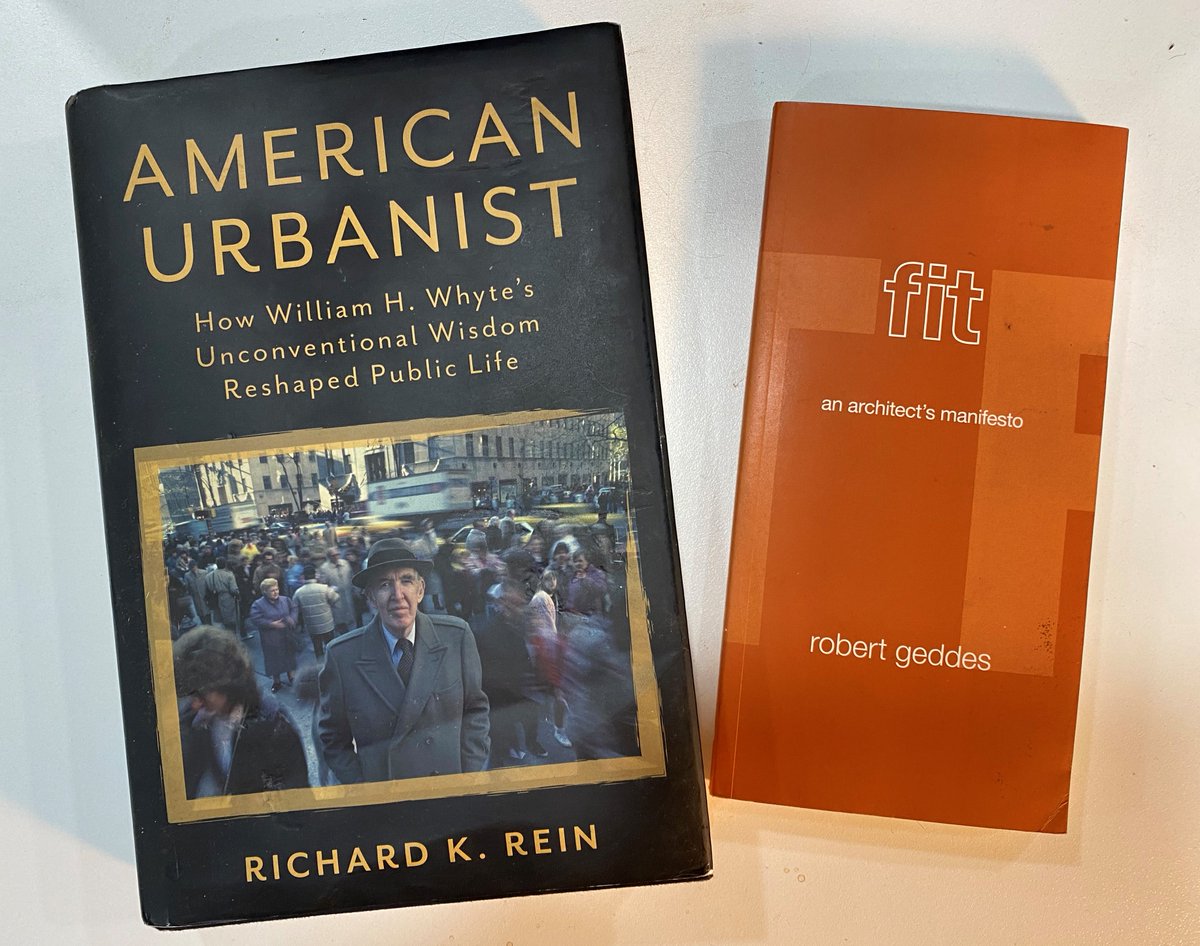
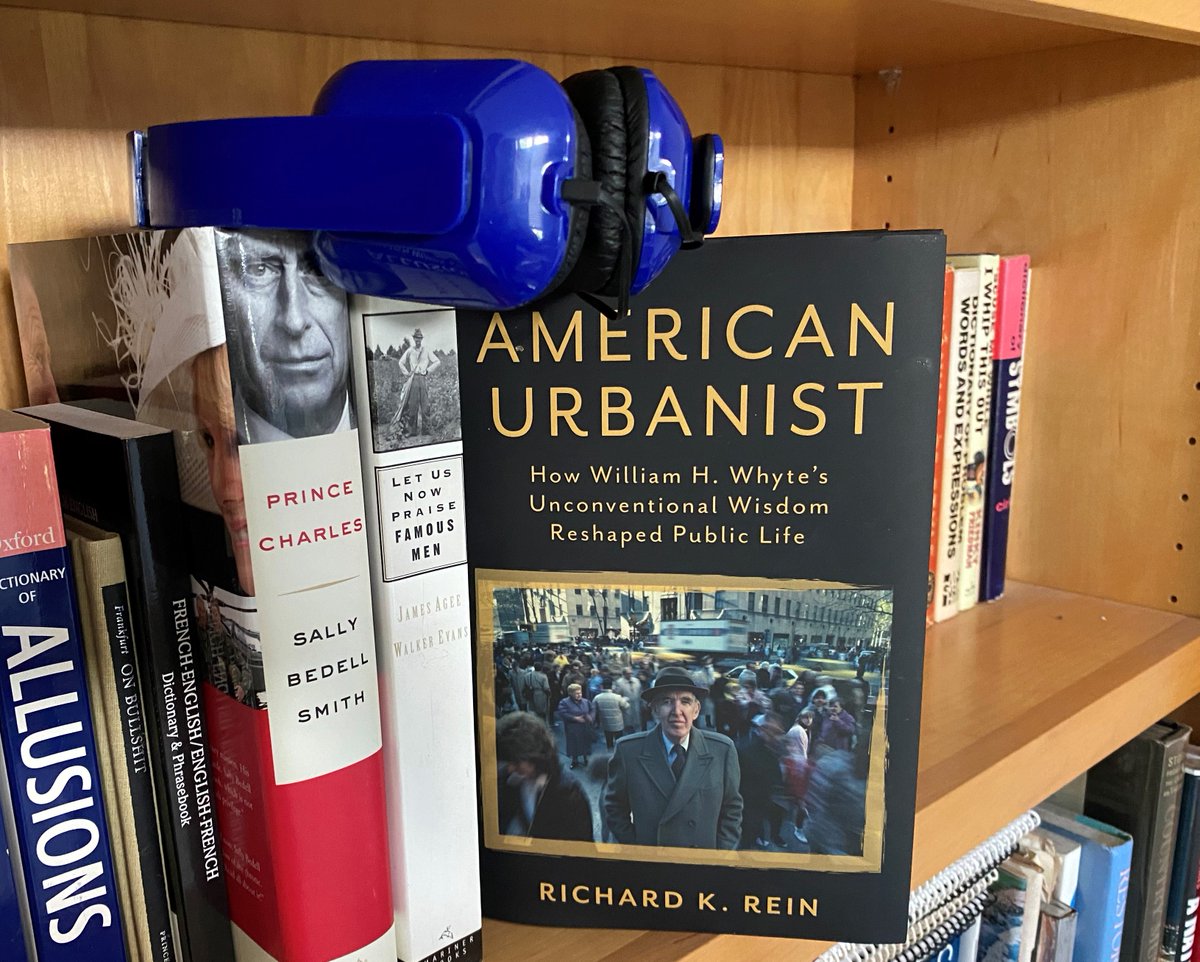
Whyte was not an architect or urban planner. He was an English major with an above average sense of skepticism, questioning & curiosity. As this thread suggests, we can do in the 2020s what Whyte did in the 1970s -- 'if we will look,' as Whyte wrote in 'Small Urban Spaces.'
Fifty years ago, William Whyte studied how New Yorkers schmoozed, sat, and relaxed the small open spaces available to them. This 1980 treasure was the result.
Join me as I share a few timeless lessons. 🧵
“The use of cars in the business districts should be limited to the few people for whom they are a necessity, and to those who are willing to pay handsomely for the privilege.��� -- William H. Whyte, the Plan for New York City (1969!).
On Holly Whyte's 106th birthday, we reflect on some prescient observations. From 1969: "Concentration is the genius of the city. We are not afraid of the bogey of high density." https://t.co/X9mBYp1BKd
One thoughtful review of the William H. Whyte biography came out after the initial wave and deserves reading. From Sam Sklar's Exasperated Infrastructures: https://t.co/wCoC24eHfv
AMERICAN URBANIST shares the remarkable life and wisdom of William H. Whyte, whose advocacy reshaped many of the places we know and love today—from New York's bustling Bryant Park to preserved forests and farmlands around the country. https://t.co/tMF8gLbRdM
Paul Krugman 2023: 'The case for imposing a New York congestion charge as soon as possible is overwhelming.' William H. Whyte 1969: Drivers in Manhattan should be 'willing to pay handsomely for the privilege.'
… the congestion you create by driving into the busiest part of Manhattan is just beginning when you’ve exited the tunnel. Your presence slows city buses, the taxis and other for-hire vehicles that make up more than half of Midtown traffic…
https://t.co/FJAEEJ3iUh
William H. Whyte called out this abuse in his 1969 New York City Master Plan. It led to his creation of the Project for Public Spaces. He'd be heartened that Jerold Kayden's POPS database and the NYTimes remain vigilant. https://t.co/X9mBYp1BKd
This is one of 392 New York buildings with a special agreement with the city: extra square feet in exchange for building a privately owned public space. It’s also just one example of a space that hasn’t been maintained according to that agreement. https://t.co/l7nGSmQDTe
Geddes also recruited 'Holly' Whyte to serve on his Princeton architecture advisory board and was a mentor to the architects who started the Congress for the New Urbanism. https://t.co/Vlhnh8Ml4Z
RIP Robert Geddes, a founding member of the Philadelphia School. People forget how much that loose group of designers at Penn changed the way we think about modern buildings in cities. My obituary: https://t.co/mGynBMfNfZ
It's great to see American Urbanist on this list, right next to another @IslandPress book: Arbitrary Lines by @mnolangray, which I am hoping everyone on my town's zoning board will read.
And now through Monday, Oct. 10, you can get American Urbanist, or any other Island Press e-book for just $4.99. Read up and catch up with us at the Holly Whyte/Jane Jacobs show Oct. 26. https://t.co/xY0wHIxPX4
Join @ctr4livingcity on 10/26 for a conversation with @WilliamHWhyte on his book, AMERICAN URBANIST, and how the work relates strongly to Jane Jacobs. https://t.co/dGlnBRxr9R
On October 1 we commemorated Holly Whyte's birthday with a talk linking Whyte's advocacy for higher densities to Robert Geddes' 2013 manifesto that architecture must 'fit -- fit the purpose, fit the place, fit for future possibilities.' Geddes, 98, participated.
Update: The Historic Preservation review was postponed to October 17 -- Daniel Barsky, the applicant, had everything in order but the Planning Board had not yet filed its report. It can be a long road for developers.
Dan Bauer shares his favorites in the upcoming arts schedule: https://t.co/x4QutaHNZE Fun fact: An actor in @mccarter 's production of The Wolves, Mikey Gray, got her start in the children's ensemble of A Christmas Carol.
On Wednesday Dan Biederman & I spoke about the park's 'guiding light,' William H. Whyte. Later, from the rooftop cafe, I caught this view after the lawn was closed for maintenance, etc.: Visitors sitting around the edge just watching the grass grow.
I'll be old school & disagree. I give a thumbs up, salute, &/or smile to the driver, even though she/he is just obeying the law. My reasoning: Civility could be contagious.
Rob Steuteville of Congress for the New Urbanism has posted a thoughtful review of American Urbanist, 'a fascinating study of a man and era that have shaped the work and ideas having an impact today.' https://t.co/Lw2Sx7mFrr
This blazing hot day in 2022 is a good time to recall Whyte's rewriting of NYC's zoning code in 1975, calling for at least 6 trees for every 5,000 sq. ft. of public plaza. Not all towns followed that advice. Thanks to @pawprinceton for helping to sustain Whyte's legacy.