I started this handle Jan 2019 for my thoughts on architecture beyond my own practice @WTAD. I’ve taught in the UK and US & written for architectural journals like ARQ, industry magazines like Detail and Monument, and a few lifestyle publications. Now mostly self-publish online.
‘Practising architecture today has two flavours: foregoing principles for work, or foregoing work for principles’
I disagree strongly on abandoning the idea of architecture as art, but agree with a lot of it. De Graaf is very thoughtful as always.
https://t.co/iekGgyxFYi
I mean, if you like that early 2000s angular computery aesthetic, go for your life, but doing it here diminishes the abstract power of the SANAA building in relation to the rest of the cityscape. Rude.
A lot of people hating on the build quality of the new New Museum building by OMA, but saying they like the form.
So I’m going to go ahead and say I don’t like the form.
It’s curious watching architects use music on Instagram, and seemingly not realise the difference between copyright, licensing, and royalties.
As producers of creative work themselves, you’d think by they’d know better.
Jealous House by Owain Williams Architects.
‘It’s called the Jealous House, a reference to Iago’s description of jealousy in Shakespeare’s “Othello” as “the green-eyed monster which doth mock / The meat it feeds on.”’
https://t.co/ryayaMKTW2
I’ve long thought there is a curious circularity to the Pritzkers contributing to the internationalisation of architecture through their Hyatt hotels, and then rewarding starchitect internationalism through the Pritzker Prize.
https://t.co/lxmKSi96gB
Eero Saarinen facade retained, external alterations and addition by David Chipperfield, and lavish interiors by French designer Joseph Dirand.
Too many cooks?
https://t.co/rCBRScxcp9
‘he sponsored a yearlong seminar and studio at the Yale School of Architecture in 2000 and 2001 . . . the seminar began with lectures from leading architects and the studio ended with students proposing conceptual designs for a possible house . . .’
https://t.co/tP4Wb5HsUQ
“Calder’s work was about negative space,” says Herzog, “so our process was one of excavating and carving, rather than creating positive form.’
https://t.co/1RkCZKcxQo
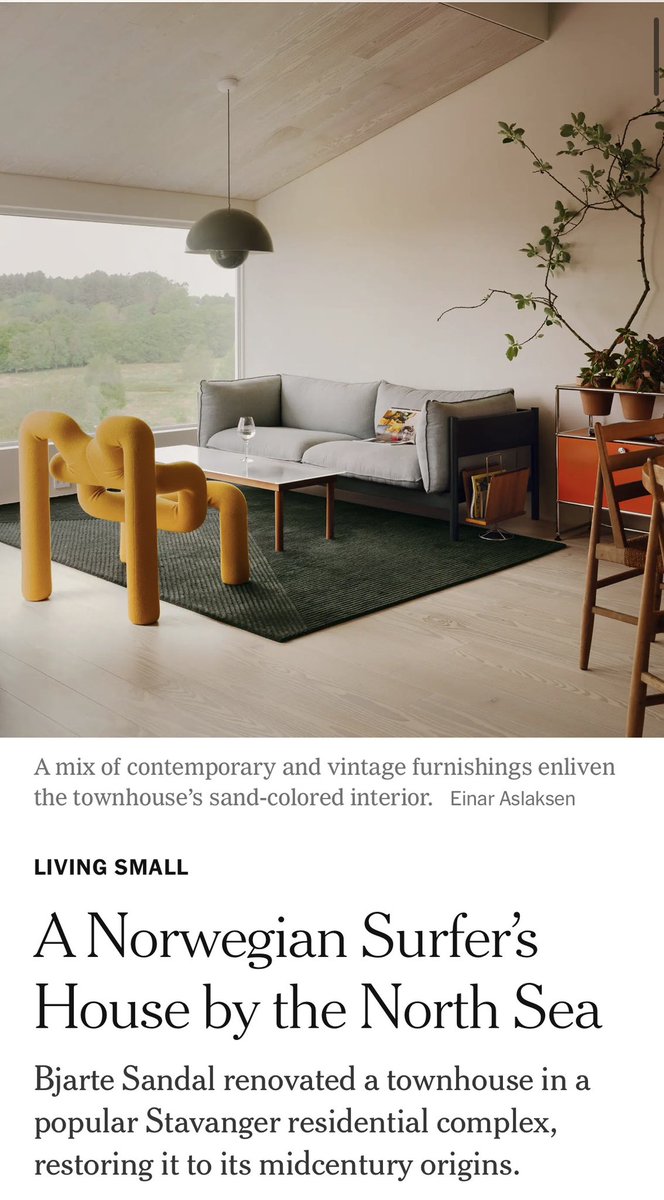
‘The townhouse he updated . . . with attention to its midcentury roots is part of a residential complex that emerged in Norway's postwar housing boom.’
https://t.co/FYDuVNYozv
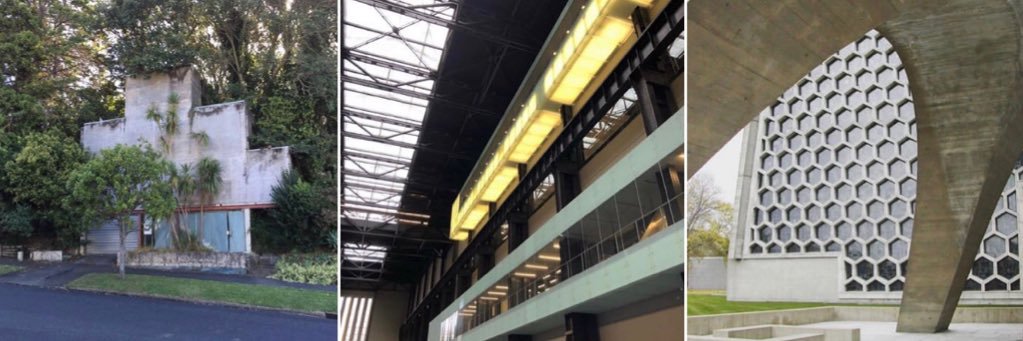
As they have grown in size, Adjaye’s projects have all too often given the impression of someone in a hurry . . . the Princeton museum [is] leagues ahead’
I wonder if this is partly because they lost a lot of projects when this one was being realised.
https://t.co/31Y07NxijY
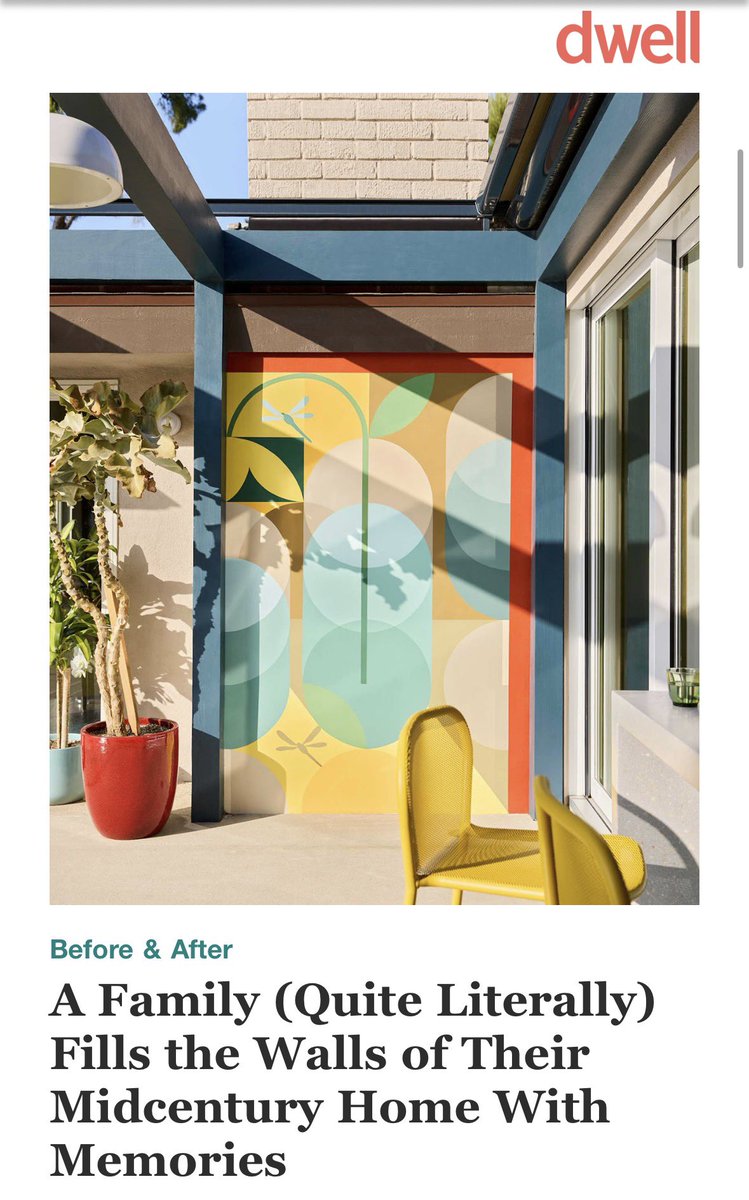
‘contrary to the suburban stereotype, [Irvine’s] neighborhoods are layered with a diversity of single-family homes and multiunit buildings’
https://t.co/P9MzugyxJk
‘differences in the composition of income growth and its translation into housing demand—as opposed to differences in housing supply—can explain both the higher average price growth and low growth in quantity in some metro areas relative to others’
https://t.co/4RREBlAe3b
‘a fascinating new exhibition at the Canadian Centre for Architecture (CCA) in Montreal, which explores the development of modern architecture in the first decades of communist China.’
https://t.co/ugulHOrSPi
Congratulations, Niall McLaughlin!
This seems like a refreshing change of direction for the RIBA Gold Medal. In recent decades it’s been a bit of a race with the Pritzker to be first to recognise an international starchitect.
https://t.co/mZHpDQPfpW
‘Farrell grew disenchanted with high-tech Modernism — an architecture that, as the architect Colin Fournier wrote in 2011, tolerated “no contradictions, no jokes, no attempts at seduction, no symbolic references, no slang, no local dialects”’
https://t.co/xxvoca495t






![WilliamTozer's tweet photo. As they have grown in size, Adjaye’s projects have all too often given the impression of someone in a hurry . . . the Princeton museum [is] leagues ahead’
I wonder if this is partly because they lost a lot of projects when this one was being realised.
https://t.co/31Y07NxijY https://t.co/JCc47SUJ9l](https://pbs.twimg.com/media/HBVQ3NlbcAMNwmt.jpg)
![WilliamTozer's tweet photo. ‘contrary to the suburban stereotype, [Irvine’s] neighborhoods are layered with a diversity of single-family homes and multiunit buildings’
https://t.co/P9MzugyxJk https://t.co/A66wZ0Bfeq](https://pbs.twimg.com/media/HBAoLiXbcAAYIut.jpg)