Thrower of assorted objects, writer of words. Graduate of University of Findlay Doctor of Physical Therapy Program |CSCS, Former: @VeloSportsOhio pitching coach
I am making a Substack page titled "Tales From the Plyowall" where I will be writing about pitcher development topics and breaking down how to apply current research in the field of baseball. Here is my first post. Check it out!
Who Am I? https://t.co/yN4SlUzgDF
At @VeloSportsOhio we don’t cut players, we develop them.
My job isn’t to decide who’s good enough.
It’s to help you get better every single day.
A few years ago, I coached a pitcher who was cut from his high school team.
He kept showing up and he kept working.
Five years later, he was drafted by a Major League organization.
That’s what this place is about.
No judgment. Just development.
When you walk through our doors, you’re not being evaluated for a roster spot
you’re being coached for your future. ⚾️
#VelocitySports #PlayerDevelopment #BaseballTraining #PitchingDevelopment
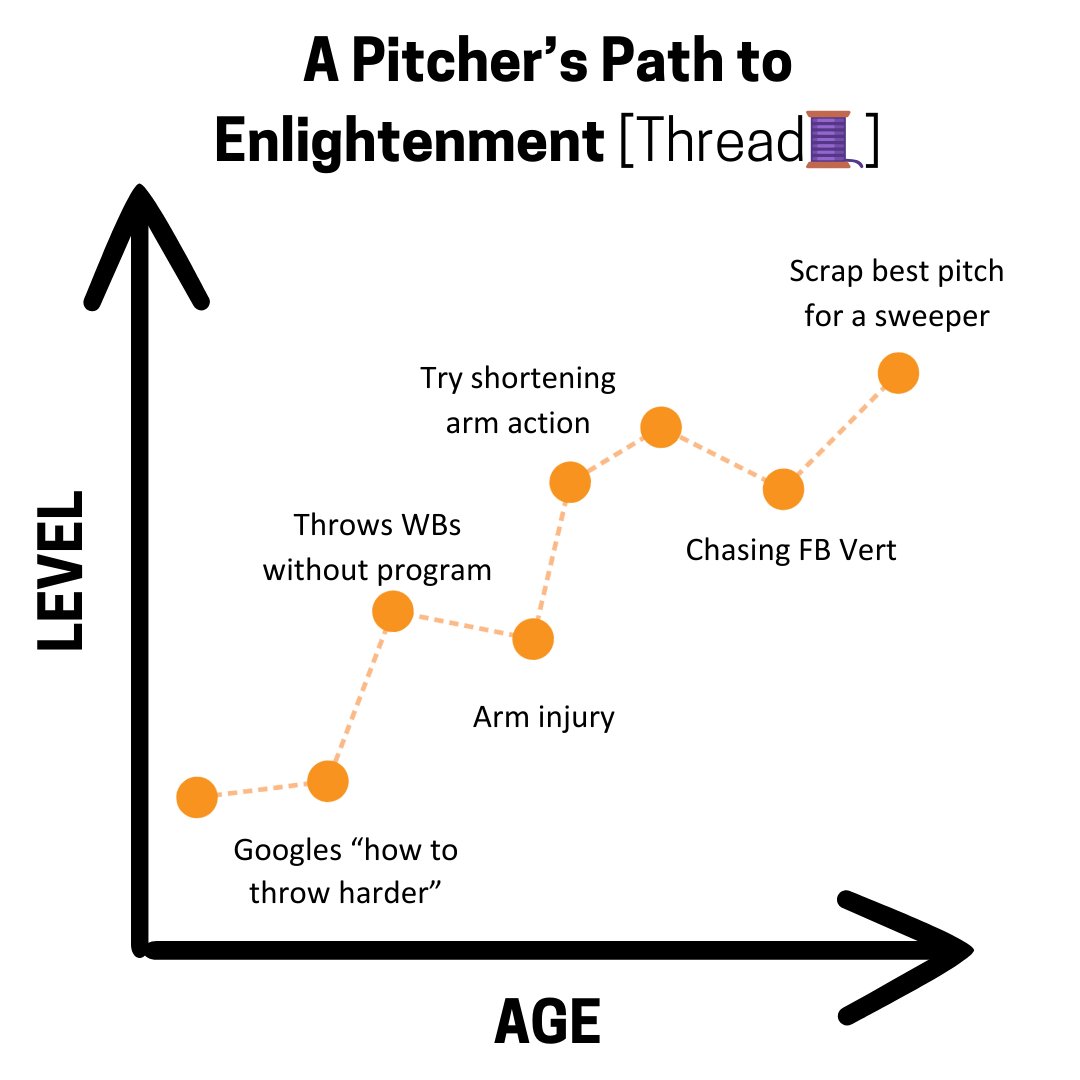
A Pitcher's Path to Enlightenment🧘♂️
The classic arc from ignorant high school pitcher to salty vet or coach.
(Plus common mistakes made along the way).
🧵
A “Level 1” study on weighted balls had 13–15 y/o kids throwing 32 oz balls max effort… then concluded weighted balls cause injuries.
That’s not how quality training works. Most coaches use 4–6 oz balls with older athletes and individualized plans.
Bad protocol ≠ bad tool.
Check out my thoughts on the best tools for building a safe throwing ramp-up program and what the data means
Return to Throwing: Tools for a Safe Ramp-up https://t.co/Jx8WdSupSg
A problem I see in the pitching world is the overprescription of drills without a real understanding of why we prescribe them. This is how I think we should approach pitching development.
3 Drills or Less: Lessons from the PT World
https://t.co/aEWT8yAKUk