There’s a fine line between raising the capital you need and seizing whatever is on offer.
With so much riding on the Anthropic flotation, it would be a shame if the apparent dash for more cash overshadows what has otherwise been a textbook execution.
Did Anthropic and its bankers get a key call wrong after IPO? https://t.co/LKLI2rHKPS via @ft
This paper applies LLMs to 170 years of @TheEconomist (1843-2013), extracting indicators of speculative content and aggregating them into a monthly bubble index.
Applied to September 2026, the index assigns a upto a 97% probability of an AI bubble:
https://t.co/IJAQILXYAQ
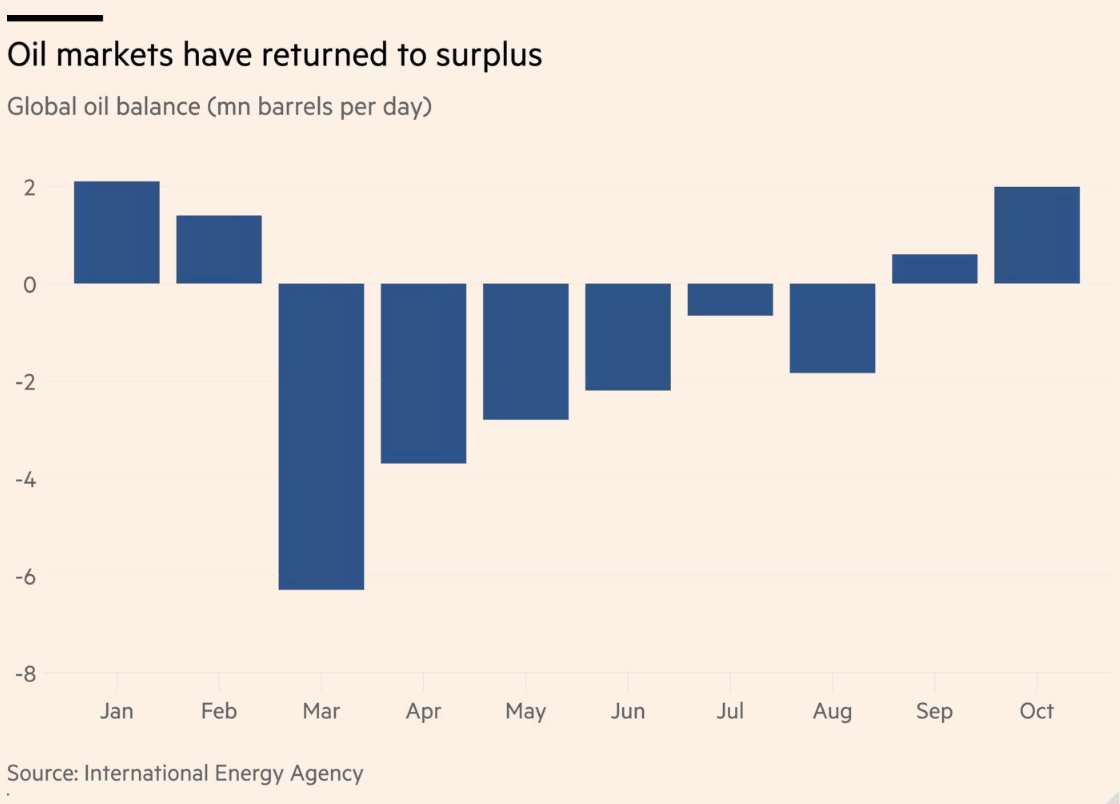
@HFI_Research Oil markets are oversupplied for the first time since the US-Iran war began, reviving the question of whether the world is heading for a glut of crude after months of historic supply disruption.
https://t.co/WCkzikPeGz via @ft
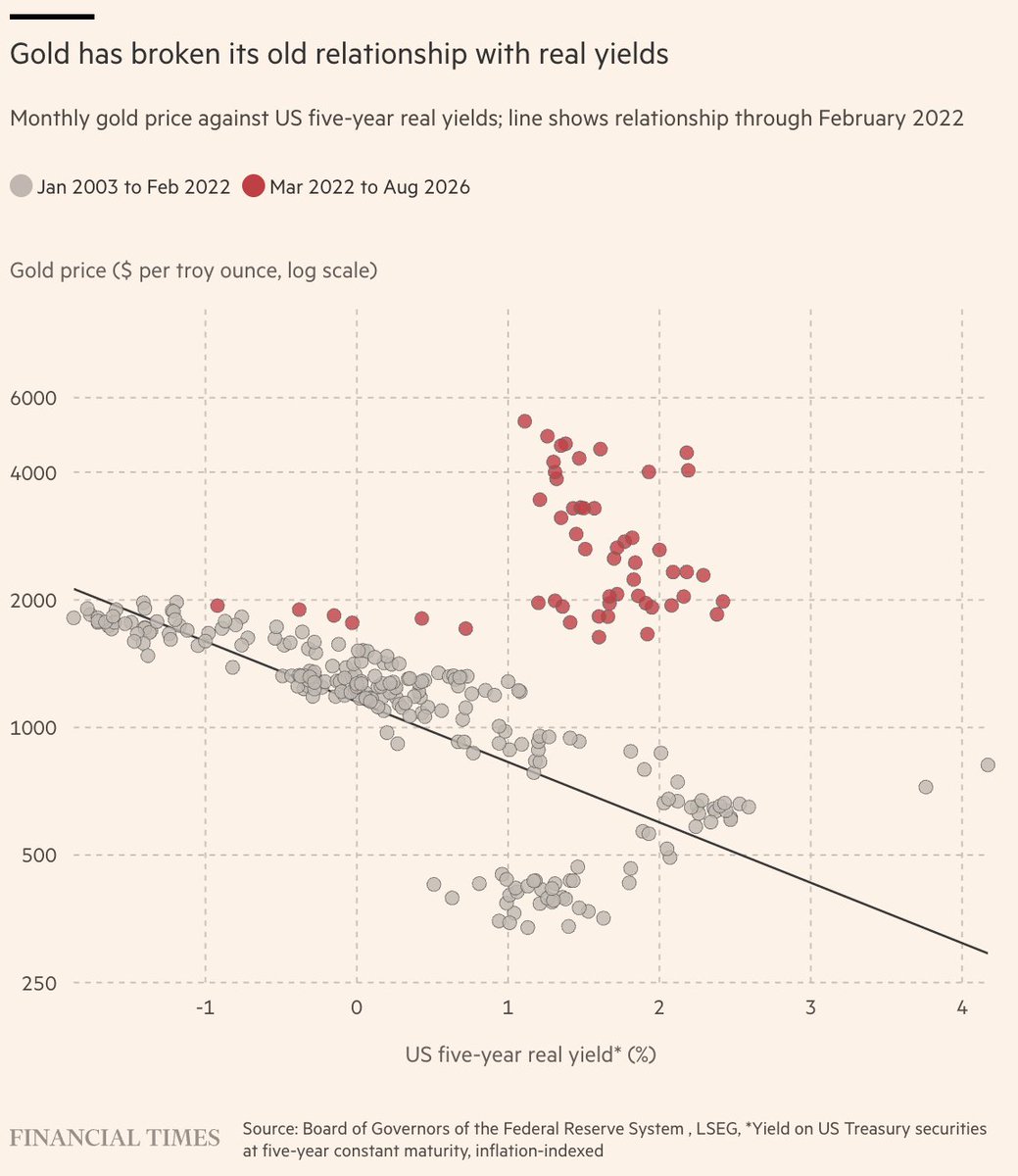
As markets assess how the fiscal piper will ultimately be paid, they have begun to put a modest but systematic premium on currencies of better-rated sovereigns such as Switzerland, Australia and Canada.
But nowhere is that theme more manifest, or more investable, than in gold.
https://t.co/LdMx8Vzjbt
@ArrakisGlobal That survey was completed on November 16th.
$XLK Technology sector has fallen 10% since that day.
So, there may be more rinsing to be done 🙂
Market-wide Circuit Breaker halts kick in at 7%, 13% and 20% S&P declines, and individual stocks have their own limits.
This is the Brady Report from 1988 with recommendations to prevent a recurrance of the Oct 1987 crash:
https://t.co/oS8gIvdwBA
The Brady Commission (January 1988) mostly blamed portfolio insurance plus a small group of large institutional sellers.
On 19 October, portfolio insurers sold roughly $4bn of futures, a big share of futures volume.
When NYSE openings were delayed, the link between futures and stocks broke. Futures then traded at a deep discount, which told everyone more selling was coming.
So, Casa delle compere e dei banchi di San Giorgio was founded in 1407 to consolidate Genoa’s public debt and began full public banking (deposits, transfers). It was one of Europe’s earliest public banks.
By the mid-1440s it faced serious liquidity problems.
It lacked a permanent capital endowment and had repeatedly extended large advances to the Republic that were not fully repaid; these advances effectively converted cash into long-term claims on the state.
Accounts became increasingly strained and banking activity was suspended in 1445.
During the orderly wind-up, depositors were reimbursed over roughly 2 years, starting with smaller creditors, without major disruption or violence.
The core Casa di San Giorgio continued to manage the public debt and associated fiscal rights.
Public banking resumed only in the early 1530s and continued, with interruptions, until the institution was abolished in 1805.
@JoanLaundy@dieworkwear Vera Ellen: "You do find me gay, amusing, fund to be with"
Danny Kaye: "I do ..but I feel the same way about my cocker spaniel"
@ChiefNosey OpenRouter's user base leans toward independent developers and cost-sensitive workloads.
How do you get a full picture of enterprise AI demand?
@BreannaMorello Markwayne Mullin's "sentences still tend to travel like a drain line, making loops and turns en route to an unseen destination"
https://t.co/vPOnZj2HSl
When FKA Twigs (Tahliah Barnett) she wrote "Cellophane", a visual narrative came to her immediately and she knew she needed to learn pole dancing to realise it.
She trained intensely for about 9 months with instructor/choreographer Kelly Yvonne, practicing at least two hours a day on the pole plus cardio, cross-training, strength work, and stretching.
Twigs documented the process in the short film Practice which features extensive, demanding pole work—spins, contortions, inversions, and climbs.