Stop asking “what is this?” and start sorting what you smell.
We use the Wine Folly flavor framework to break Cabernet into six buckets: Fruit · Herb · Spice · Oak · Earth · Other
And suddenly, the glass gets specific. In this pour of J. Lohr Seven Oaks Cabernet Sauvignon, here’s what shows up:
• Fruit → Blackberry + raspberry (both sides of the spectrum = more dimension than “dark fruit”)
• Spice → Asian 5-spice + fig (sweet spice + dried fruit = warmth, not heat)
• Other → Balsamic (that lifted, tangy edge that makes you stop and smell again)
That’s five distinct aromas from one glass.
Next time you pour a Cabernet, run the categories. Fill the grid. Push past fruit.
This tasting is sponsored by J. Lohr Wines. Learn more with @jlohrwines and thanks for supporting wine education.
Red meat changes wine, literally. Protein and fat soften tannin, which is why bold reds suddenly taste smoother, juicier, and more balanced beside the grill. But barbecue pairing goes beyond “big wine with big meat.”
The real magic happens when you match the style of barbecue to the structure of the wine:
- Smoky brisket + Tempranillo → savory, earthy, structured
- Sweet-spicy pork + Zinfandel → ripe fruit meets caramelized glaze
- Pepper-crusted burgers + Syrah → black pepper, smoke, and char lock together
- Vinegar-heavy barbecue sauces + high-acid reds → fresher, brighter finish
But sauce changes things, too. Sweet sauces amplify alcohol. Spice can make tannins feel harsher. Smoke pulls forward oak and savory notes in wine.
Learn more at https://t.co/s3vB0zjF4Y
Pinot Grigio varies more than most bottles on the shelf suggest. A closer look at climate explains the shift in style:
Cooler growing conditions (Trentino Northern Italy, Austria, Oregon, Okanagan Valley)
→ slower ripening
→ higher natural acidity
→ citrus, green apple, tighter structure
Warmer growing conditions (California, Australia, New Zealand, parts of southern Italy)
→ faster ripening
→ lower acidity
→ pear, stone fruit, broader texture
Save this for your next label scan at the shelf!
In partnership with @mezzacoronawine. Domenica Trentino DOC is a true tribute to Italy's Dolomite Mountains, encapsulating over 120 years of winemaking tradition. Grown around the village of Mezzocorona, the vines benefit from the Dolomite rocks reflecting sunlight, creating dramatic diurnal temperature shifts. Each year, only the finest plots are selected to make Domenica through careful, low-yield harvesting to ensure the highest quality.
Learn more about Domenica, the signature Pinot Grigio from Mezzacorona’s collection at https://t.co/chHJf5kUod
Long before low-alcohol wine became a trend, Vinhos Verdes was already doing it naturally. Here’s the full picture:
What Vinhos Verdes actually is:
- A wine region in northwest Portugal, not a single style
- Influenced by the Atlantic Ocean → cooler temps, higher rainfall
- “Verde” refers to youth and freshness, not color
- Produces white, red, and rosé wines (yes, red exists!)
- Many white Vinhos Verdes wines naturally sit around 8.5–11.5% ABV — without dealcoholization or manipulation.
Why most people misunderstand it:
- Export markets have long focused on approachable white blends with moderate alcohol and bright acidity.
- Those wines are designed to be: low alcohol, high acid, food-friendly
👉 That’s one expression of the region, not the full identity.
Indigenous grapes like Alvarinho, Loureiro, Arinto, and Avesso are what truly define Vinhos Verdes wines. These varieties bring distinct textures, aromatics, and structure that feel increasingly relevant in today’s wine landscape.
👉 Smaller zones = more stylistic clarity
Naturally lower alcohol, Atlantic influence, and indigenous grapes have always defined Vinhos Verdes — long before the rest of the wine world caught on.
Vinhos Verdes, Beyond the Expected. In partnership with @vinhosverdeswines.
#vinhosverdes #vinhosverdeswines
Wine pours aren’t just about glass size; they’re about alcohol content, which actually changes how much wine fits into a “standard” experience.
Most serving guidelines are built around a baseline: a typical glass of wine at ~12% ABV. Once alcohol shifts, the pour needs to shift with it.
Low alcohol wines (≈5–10% ABV)
- Lower alcohol per sip means more flexibility in glass volume
- A fuller pour can still sit within a lighter total alcohol intake
- Common in styles like Moscato d’Asti or some cool-climate Rieslings
- Easier to drink casually, so pacing still plays a role
Low-medium alcohol wines (≈10–11.5% ABV)
- Close to the lower edge of “standard wine” perception
- Slightly more room in the glass compared to higher-alcohol styles
- Often crisp, food-friendly wines where a generous pour feels natural
- Still well within traditional serving assumptions
Medium alcohol wines (≈11.5–13.5% ABV)
- The global benchmark for table wine
- Standard 5 oz (150 ml) pours align closely with common serving guidelines
- Balanced structure and alcohol feel predictable across styles
- The reference point most wine traditions are built on
Medium-high alcohol wines (≈13.5–15% ABV)
- More alcohol per glass means a standard pour carries more intensity
- Slightly smaller pours can help keep balance over a full meal or tasting
- Common in warm-climate reds and fuller-bodied whites
- Texture and weight become more noticeable in the glass
High alcohol wines (≈15%+ ABV, including fortified styles)
- Alcohol concentration rises sharply per ounce
- Smaller pours are typical, especially with fortified wines like Port or Sherry
- Often served in shorter glasses or measured pours
- A slow pace keeps the structure and sweetness in balance
🎯 Learn more at https://t.co/m0pYUyOWkO
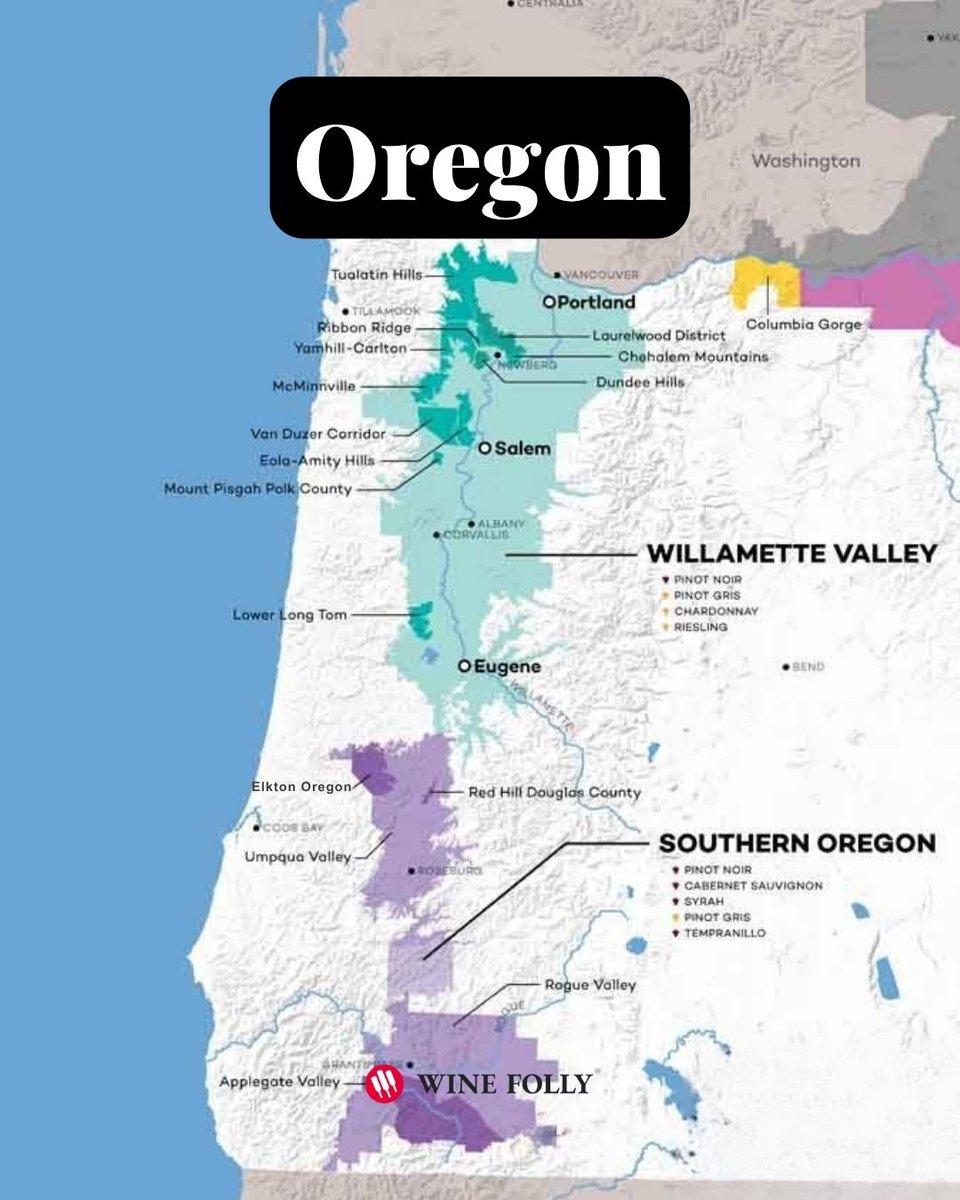
Oregon wine country is anything but one-note. Swipe the map, then decode what actually drives the styles.
The Big Picture
Latitude similar to Burgundy, but that comparison only goes so far
Strong Pacific influence in the north, continental warmth in the south and east
Elevation + topography = constant shifts in temperature, wind, and ripening speed
Result: one state, dozens of distinct wine identities
What ties it all together
Oregon wine isn’t defined by a single grape — it’s defined by site
Climate shifts happen fast: a few miles can change everything
Soil shapes structure, aromatics, and ripeness
From the Willamette Valley’s world-class Pinot Noir to the bold expressions of The Rocks District, Umpqua, Rogue, and the Columbia Gorge.
Each place tells a different story.
Each bottle captures it.
This lesson is supported by @OregonWineBoard. See Oregon for yourself and watch the Oregon Wine Film: https://t.co/jn7Nz5Ia44
🍷 Red wine, but make it summer.
Most people serve red too warm, and it mutes everything that makes it delicious. Fruit goes flat, spice gets heavy, and the structure feels dull.
Here’s the fix:
• Grab a bottle of Côtes du Rhône (Grenache + Syrah = built-in juicy fruit + spice)
• Chill it for ~30 minutes
• Aim for about 15–16°C / 60°F
What happens next?
• Fruit gets brighter
• Texture gets lighter
• Overall, it’s fresher and way more drinkable
Educational content proudly supported by @cotesdurhone. What bottle of Côtes du Rhône are you chilling?
🎯 Learn more at https://t.co/ms1ZGVyz3S
#cotesdurhone #cotesdurhonevillages
Wine already asks us to pay attention to tiny variables:
- vintage
- serving temperature
- oxygen exposure
- glass shape
- even the room you taste in
So it’s no surprise that one of wine’s strangest debates centers on timing.
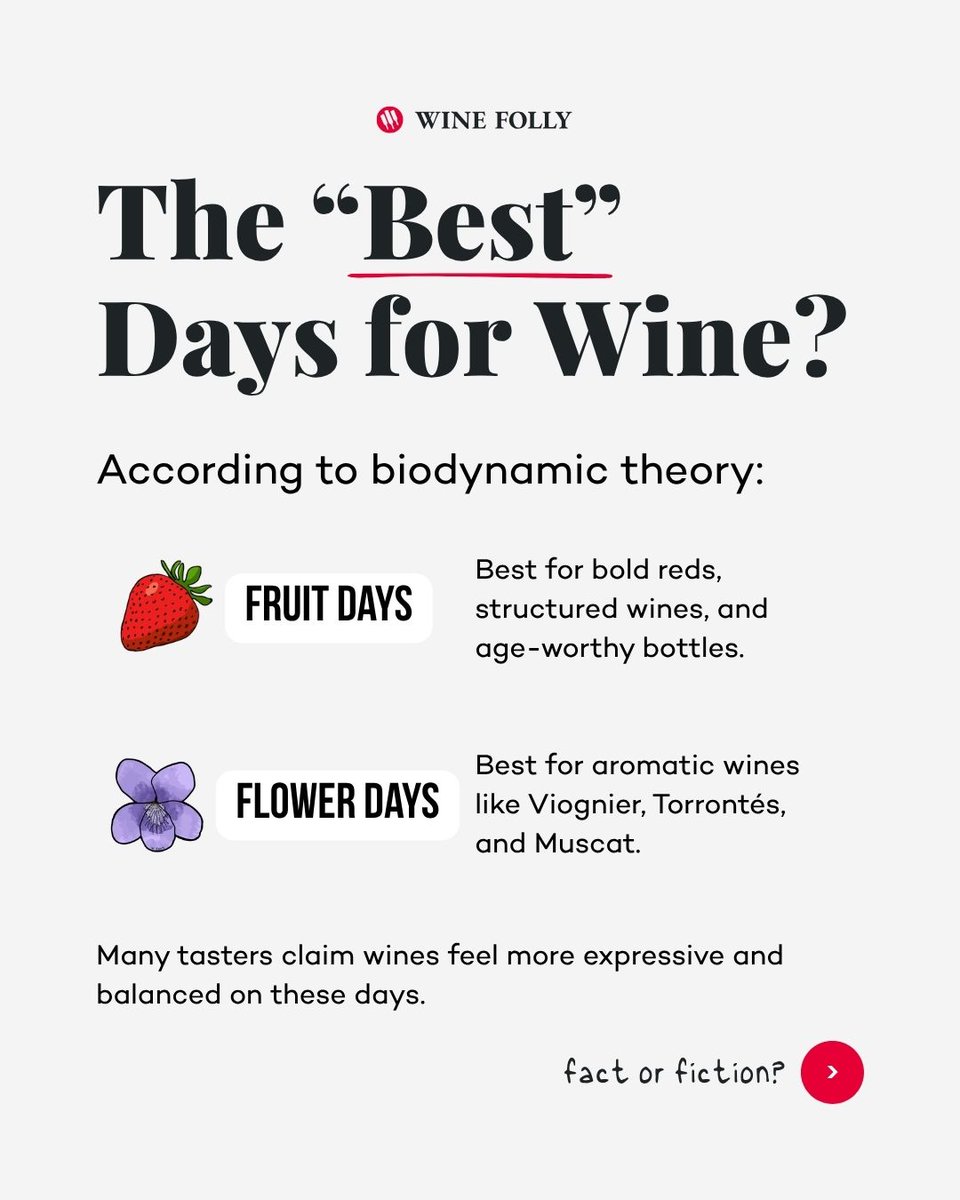
In biodynamic calendars, days are divided into four categories based on the moon’s position relative to zodiac constellations:
- Fruit Days
- Flower Days
- Leaf Days
- Root Days
The theory suggests wines show differently depending on the day. According to proponents:
- fruit days favor structured reds and age-worthy wines.
- flower days flatter aromatic varieties like Viognier and Torrontés.
- root and leaf days can make wines feel muted or less expressive.
Science hasn’t confirmed a measurable connection between lunar cycles and wine tasting. But the idea persists because many tasters, from collectors to sommeliers, claim they notice consistent patterns.
Learn more at https://t.co/qXsBxFzsIf
Light red wines are less a category and more a spectrum — color, tannin, acidity, structure — all shifting depending on grape, climate, and winemaking choices. They sit in that middle space where red fruit leads, tannin steps back, and freshness does most of the structural work.
A practical breakdown:
- Color intensity ranges from pale ruby to translucent garnet. Examples like Poulsard can look closer to rosé than red.
- Tannin profile are generally low, but not uniform. Gamay often shows soft, powder-fine tannins, while grapes like Nebbiolo sit on the opposite end of the spectrum despite lighter color
- Aromatics: Red cherry, raspberry, cranberry and floral tones (rose, violet). There’s olccasional savory lift depending on region and carbonic maceration
- Structure: High acidity is common across many examples, which keeps the wines lifted rather than heavy
- Winemaking influence
- Carbonic maceration can push fruit toward bubblegum, banana, and candied red fruit (notably in Beaujolais styles)
- Whole-cluster fermentation can add spice, herbal lift, and aromatic tension
Learn more at https://t.co/9vtAAAoEJG
Sauvignon Blanc was basically engineered for lime-splashed fish tacos and citrusy ceviche. That electric acidity? It slices through richness. Those punchy aromatics? They lock arms with herbs and make everything taste brighter. This is the white you open when your food is fresh, vibrant, and a little wild.
Thanks to @Imagerywinery for supporting wine education. Off the beaten path and worth every step.
Imagery Estate Winery’s WOW Oui Sauvignon Blanc shines with pink lemonade, grapefruit, and dazzling citrus. Grown high atop Pine Mountain, where elevation meets expression.
So today, raise a glass to the grape that refuses to be boring — and make sure whatever’s on your plate can keep up.
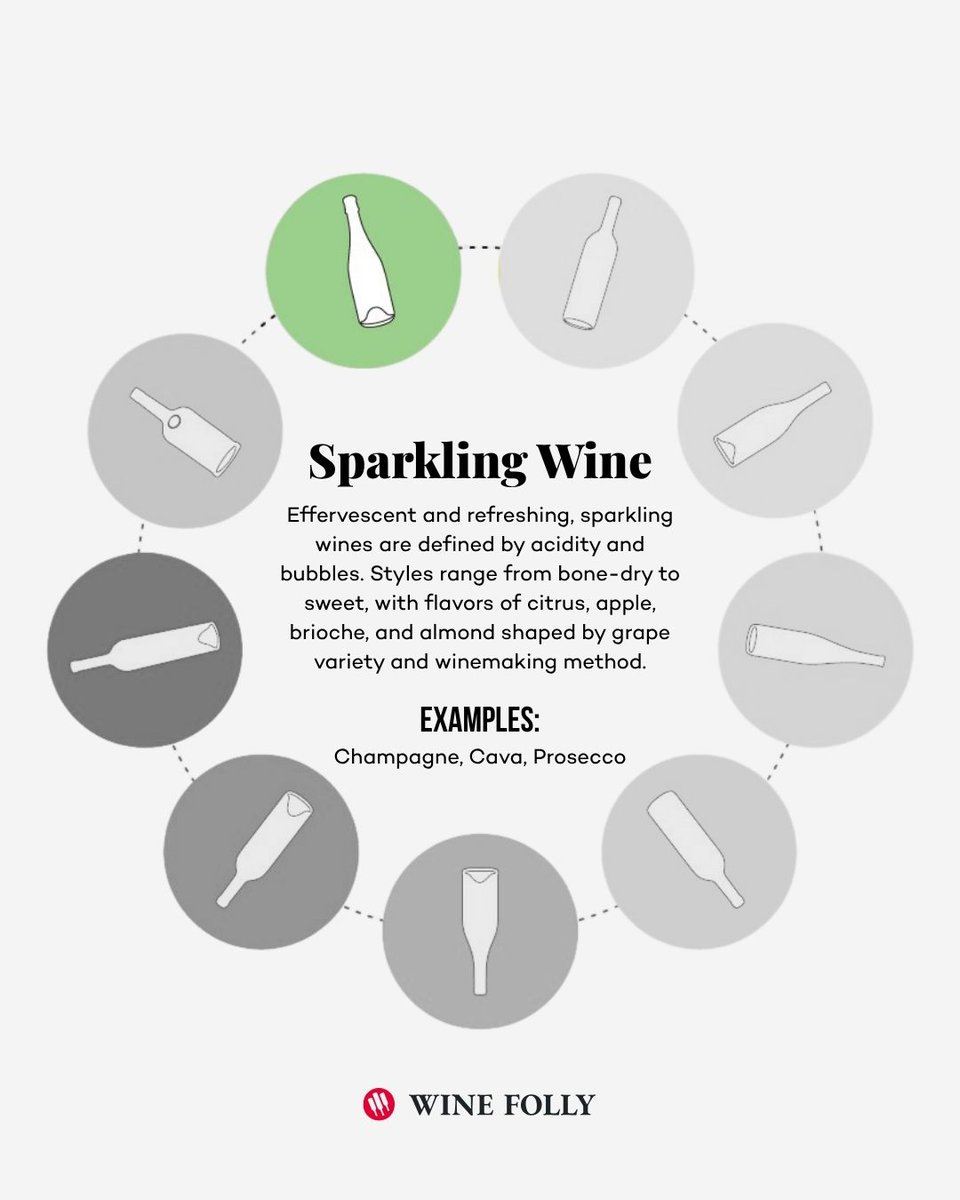
Wine can feel endless — thousands of grapes, regions, and labels. Yet most bottles fall into 9 core styles of wine. Learn these styles and the rest of the wine world starts to organize itself.
1. Sparkling Wine → Bubbles come from dissolved carbon dioxide created during fermentation. Expect high acidity and aromas of citrus, apple, and sometimes brioche from extended aging.
2. Light-Bodied White Wine → Crisp wines driven by acidity. Citrus, green apple, herbs, and mineral notes dominate, often without oak influence.
3. Full-Bodied White Wine → Richer whites built through ripeness, oak aging, or lees contact. Texture increases, with flavors of ripe orchard fruit, vanilla, spice, and cream.
4. Aromatic White Wine → Grapes with naturally intense perfume. Floral, citrus, tropical fruit, and spice aromas lead the experience. Some styles finish dry; others retain sweetness.
5. Rosé Wine → Pink wines made by briefly macerating red grape skins with juice. Fresh acidity supports flavors of strawberry, melon, citrus, and herbs.
6. Light-Bodied Red Wine → Pale, translucent reds with low tannin and lively acidity. Red cherry, cranberry, and earthy notes define the profile.
7. Medium-Bodied Red Wine → Balanced structure with moderate tannin and acidity. Expect red and black fruit, herbs, and savory complexity.
8. Full-Bodied Red Wine → Deep color, firm tannin, and concentrated fruit. Dark berry, plum, cocoa, smoke, and spice dominate the structure.
9. Dessert Wine → Sweet wines produced through late harvest, noble rot, drying grapes, or fortification. Concentrated flavors include honey, dried fruit, caramel, and spice.
Nine styles. Countless bottles to explore. 📷
Learn more at https://t.co/VcL0sBISJG
Wine sustainability is a spectrum of farming practices that range from conventional agriculture to regenerative systems designed to rebuild soil health. A useful way to understand it is as a pyramid of practices, where each level adds more environmental and social commitments.
The Wine Sustainability Pyramid
1. Conventional Farming (Base Level)
Most vineyards in the world operate here. Conventional farming may use synthetic pesticides, herbicides, and fertilizers to manage vineyard health and maintain yields.
2. Certified Sustainable Wine
Sustainable programs focus on responsible resource management across vineyards and wineries.
Common areas measured include:
- water use
- energy consumption
- biodiversity
- waste reduction
- worker welfare
Sustainability programs often allow some synthetic inputs but require growers to track and improve environmental performance.
3. Organic Wine
Organic certification restricts most synthetic chemicals in both the vineyard and winery. Organic vineyards rely on:
- natural pest and disease control
- soil-building practices
- organic-approved vineyard treatments
Organic standards establish a clear baseline for chemical use, but they primarily regulate what cannot be used.
4. Regenerative Farming
Regenerative viticulture focuses on improving ecosystem health over time. Common practices include:
- cover crops to protect soil
- compost to increase organic matter
- reduced tillage to preserve soil structure
- biodiversity within and around vineyards
The goal is to increase soil biology, improve water retention, and strengthen vineyard resilience to climate variability.
5. Regenerative Organic Certified (Top Level)
The Regenerative Organic Certified (ROC) framework builds on organic certification and adds audited standards for:
- soil health
- animal welfare
- social fairness
It represents one of the most comprehensive certification systems currently applied to agriculture, including vineyards.
Where does biodynamic wine fit?
Biodynamic farming overlaps with organic and regenerative practices but follows its own philosophical framework.
Learn more at https://t.co/V3Ia7fOf7I