@FKeuleneer Joos sprak inderdaad niet gehinderd door enige kennis van zaken (hij sprak ook over Iran als een prachtig land met een prachtig volk, alsof hij er ooit is geweest). Schoenmaker, blijf bij uw leest.
It always astonishes me how there is virtually ZERO public debate - or even public awareness - in Europe about the decisions that will most shape ordinary people's lives.
These days, the EU is drafting a new anti-China legal framework where - quite literally - the more affordable and competitive Chinese products are, the more illegal they'd become.
You'd think EU citizens would want to be informed about such things - as it couldn't be more consequential for their prosperity.
Yet I bet virtually no EU citizen is even aware of it, beyond a vague sense that there is some sort of trade dispute going on.
So what's going on exactly? It all centers around a new legal instrument the EU is drafting called the "overcapacity instrument" (https://t.co/mNpCMudYyS).
First of all, the very notion of "overcapacity" is pretty ridiculous to begin with, especially the way it's being defined by the EU, as it basically means being competitive enough to export.
By this definition of "overcapacity," pretty much every European industry that's ever run a trade surplus - German cars, French wine, Italian fashion - has been guilty of "overcapacity."
I'm not even exaggerating: if you read this study by the EU Parliament on "Industrial overcapacities, with a focus on China" (https://t.co/TcwEBoL8mD), they define "overcapacity" as building more capacity than your domestic market can absorb. So the moment you build capacity to export abroad, you're in "overcapacity."
Utterly ridiculous.
And what this "overcapacity instrument" is about is creating a permanent legal mechanism for the EU to block Chinese competition across whole sectors of the economy, if they happen to be in "overcapacity."
In effect, this means that if China is competitive globally in a given sector in such a way that it exports a lot, that's proof of overcapacity, and legally it'd mean that the entire sector can be restricted from the EU market.
Which means it really, factually, is a legal framework where the more affordable and competitive your products are, the more illegal they become.
Which is a CRAZY economic concept! 🤦♂️
Please note that it's different from the anti-subsidy legal instrument, which the EU has already put in place in 2023 (the "Foreign Subsidies Regulation": https://t.co/SvPKFyN0zo).
This "overcapacity instrument" would be above and beyond this: it wouldn't even matter if a particular sector was subsidized by the Chinese government or not, the mere fact of its competitiveness in exports would be grounds for restrictions in the EU.
It doesn't take a genius to understand how badly this could impact everyday people: this is European consumers being forced to pay more for worse products by law, so that uncompetitive European firms don't have to improve.
Politicians frame it as avoiding a "China shock 2.0" but really this is choosing an even steeper self-inflicted decline than is already the case, where EU citizens would subsidize mediocre EU companies that would have even less pressure to catch up. It's a hidden tax: subsidies for uncompetitive firms paid by consumers instead of governments, which in turn makes them less incentivized to become competitive.
The first "China shock" did de-industrialize Europe somewhat, but at least it made things cheaper for European consumers. If this becomes Europe's response to a second "China shock" not only it'd make everything more expensive but it'd do nothing for EU industry: you don't become competitive by banning the competition...
Look at China itself: the way it industrialized was NOT by banning Western firms but on the contrary by welcoming them strategically and learning from them. You learn to compete by... competing, duh!
What I find most shocking in all of this isn't even the policy itself - you can make arguments for and against protectionism, and reasonable people can disagree.
What's shocking is that virtually no European media outlet is explaining any of this to the public. This is unarguably one of the single most consequential economic decisions the EU will make this decade, affecting the price of everything, and it's being drafted in near-total silence.
No newspaper is running the headline "EU plans to make Chinese goods illegal if they're too affordable" - even though that's essentially what's happening.
But that's what you call a "democracy" with "freedom of expression" these days apparently...
Het soort steriele uitspraken die je vandaag van alle hoeken mag verwachten. Niemand durft het aan om de flagrante schending van het VN Handvest en van het internationaal recht door de VS en Israël aan te klagen. #vazallencomplex
@albcontact Une analyse éclairante, sauf pour un détail : le roi Philippe n’a jamais fait cette déclaration. Vous connaissez bien la Belgique, donc vous savez qu’il n’est pas permis au roi de se prononcer en publique sur des sujets politiques.
@SnegviLuang12@PaulKagame Vous avez trop de fantaisie, le roi Philippe n’a jamais déclaré cela. Aujourd’hui, il n’est pas permis au roi de la Belgique de s’exprimer publiquement sur des sujets politiques. S’il aurait vraiment tenu ces propos, ça sera un crise constitutionnelle, voire son abdication.
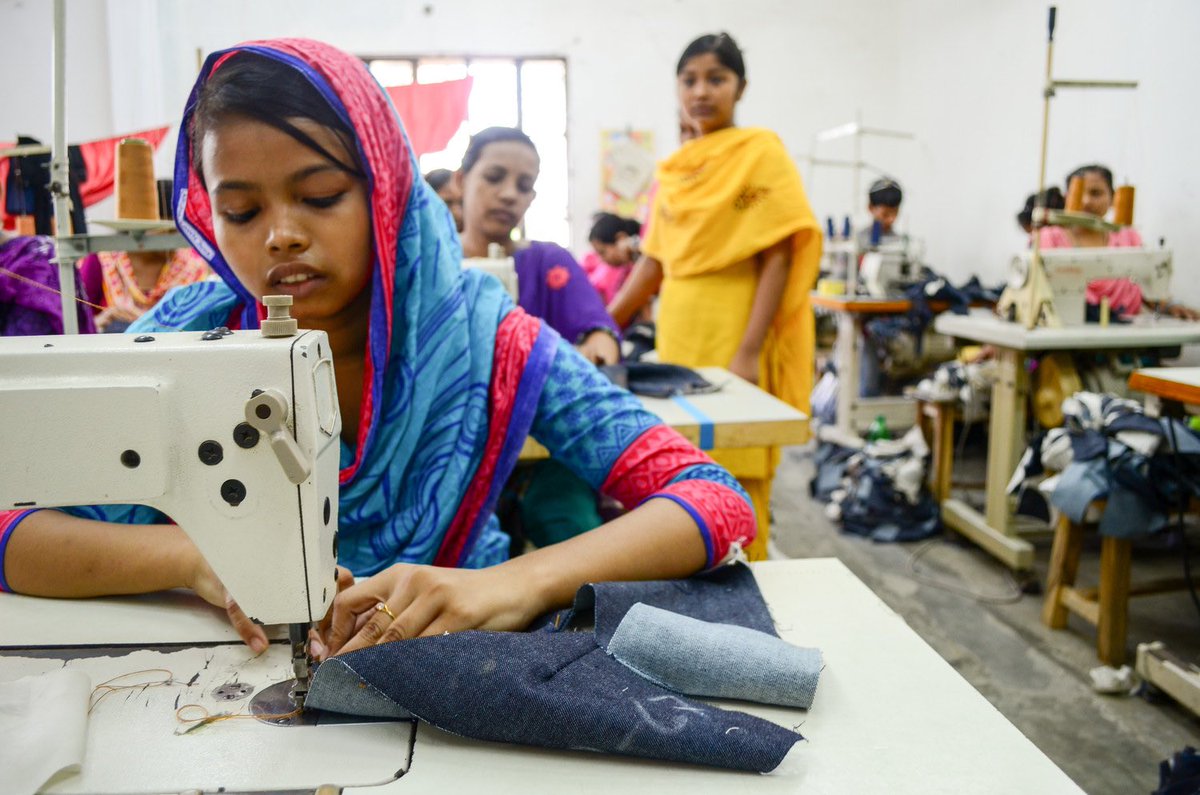
Trump’s view of global trade:
“Look at this girl in Bangladesh ripping off America!”
“Calvin Klein generously pays her $1 an hour, but she never buys any luxury American clothes.”
“This lopsided trade is so UNFAIR!”
On the day of the latest Russian massacre in #Kyiv, the Berlin police says speakers at the #Ukraine demonstration at the Russian embassy are not allowed to speak Ukrainian because there is no police interpreter on hand to check what's being said.
Sick.
Debat op @terzaketv over de Colruyt-prik van @PvdA.
Het probleem met dergelijke debatten is dat de heat of the moment de debaters naar uitersten drijft.
Neen @RaoulHedebouw heeft geen gelijk als hij stelt dat de groep Colruyt geen belastingen betaalt, maar hij heeft wel gelijk als hij stelt dat internationale bedrijven fiscale schaalvoordelen hebben.
Ja @PieterVBO heeft gelijk als hij stelt dat Colruyt 30.000 mensen tewerkstelt en voor hen belastingen en sociale bijdragen betaalt. Maar het is jammer dat niet wordt erkend dat de (overigens legale) fiscale schaalvoordelen van multinationals wel degelijk bestaan en dat onze KMO’s zonder deze voordelen ook heel wat mensen tewerkstellen.
Als beide partijen aan de tafel naar elkaar hadden kunnen luisteren zou het debat misschien over oplossingen en hervormingen hebben kunnen gaan. Maar dat blijkt zo moeilijk te zijn.
Beide partijen hadden dan misschien kunnen voorstellen om van de 15% minimumbelasting voor multinationals ook de maximumbelasting voor KMO’s te maken. Zo zou de vennootschapsbelasting rechtvaardiger zijn, en budgettair is dat met enkele gerichte ingrepen zeker haalbaar.
En ja, fiscaliteit expliciet opnemen in de eindtermen van het onderwijs, zou ook wel een mooi voorstel zijn…
Tenez :
=> Les pères de l'indépendance ont porté haut l'idée de chasser les belges : ils ont réussi selon leur perception. Et après?
=> Mobutu et ses alliés ont porté haut l'idée de mettre ordre et paix dans le pays et stopper net des querelles intestines et rébellions des années 60/70 : ils ont a réussi selon leur perception des choses. Et après?
=> Laurent-Désiré Kabila et alliés ont porté haut et fort l'idée de chasser Mobutu sous prétexte de libération : ils ont réussi selon leur perception des choses. Et après?
=> Joseph Kabila et alliés ont porté haut l'idée des 5 chantiers et d'organisation d'élections sans aide internationale : ils ont réussi à commencer sans commencer. Et après?
=> Etienne Tshisekedi et ses alliés ont porté haut et fort la perception d'une opposition politique tenace ayant pignon sur rue, avec le mot démocratie à propager et à apposer machinalement sur toutes les lèvres : ils ont réussi selon leur perception. Et après?
=> Jean-Pierre Bemba et autres groupes rebelles dans l'Est (RCD, CNDP, M23, ...) ont porté haut l'idée et l'action de rébellion contre le pouvoir en place : ils ont réussi à commencer sans commencer. Et après?
=> Felix Tshisekedi et ses alliés portent haut et fort le message d'Etienne Tshisekedi "LE PEUPLE D'ABORD" : ils sont en train de réussir selon leur perception. Et après?
A ce jeu, nous devons un jour ou l'autre devenir honnêtes avec nous-mêmes et reconnaître qu'après le travail brouillon de nos pères de l'indépendance (ils ont fait avec leurs moyens du bord), les pères qui ont succédé ne se sont jamais penchés sur le cas de la CONSTRUCTION DE L'HOMME CONGOLAIS. Et les intellectuels, les églises et les sociétés civiles n'ont jamais encouragé cette voie. Nous en payons le prix, et cela risque de continuer. Les discours et les bonnes intentions n'y changeront rien.
For those who missed it, NATO Secretary General Jens Stoltenberg has now publicly acknowledged that Putin made clear to NATO in a draft treaty before the war that it could avert it if NATO agreed not to keep enlarging. But NATO rejected the offer. https://t.co/SL4t1mW4yM
The extent to which speculation about the future of military juntas in the Sahel has become largely focused on their relationship with France rather than their inability to slow down JNIM or ISGS momentum is becoming a little absurd
The former matters, but the latter is decisive
They just don't get it, do they? If France really wants the #Niger coup to end, it should just shut the f*** up. Every further word like this from Paris against 'les putschistes' bolsters their perceived legitimacy.