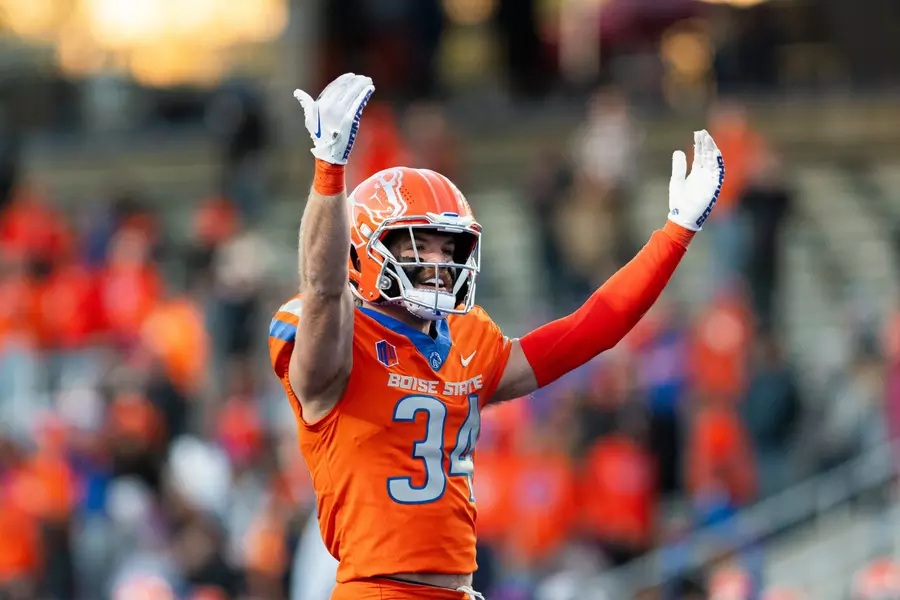
He grew up in a Giants family, in a Giants town, and learn from a decorated Giants manager. But Will Venable has found a home managing the Chicago White Sox, one of baseball’s best stories of the year.
📝: @JohnSheaHey https://t.co/WAmL5zaetn
"We play other teams that on paper might have more talent than us, but we are competing with them and beating them because we play harder, we run harder, have more energy in the dugout." Great insight from my talk with Will Venable in my Newsletter today: https://t.co/TNqSxNYKeW
Representation is not just negotiating bigger deals.
It’s also about helping athletes and families understand what they’re signing.
Contract language, payment structures, and termination clauses matter. Good agents have legal resources around them to help protect athletes.
Some schools are withholding final #NIL payments by invoking transfer portal clauses even after the athlete has fulfilled every obligation in the contract. That's a problem. Perhaps the deeper problem is that these contracts are not really NIL agreements.
https://t.co/SogaiBTFlW
This is exactly why representation and contract review matter.
Not to create conflict, to help athletes understand what they’re signing in an increasingly professional environment.
Over the past week, I have reviewed dozens of #NIL agreements across the country. The market continues to mature, but certain issues keep surfacing in negotiations. Here are some of the things I'm finding:
Payment structures have grown far more sophisticated. I'm seeing more hybrid deals that combine guaranteed upfront payments with performance bonuses tied to specific deliverables and some deals that contain no guarantees whatsoever. Any non-guaranteed income could leave athletes chasing money they were orally promised.
Termination clauses remain the most heavily negotiated provision. One-sided, "sole discretion," termination rights without notice or cure periods are concerning.
Post-termination rights and IP ownership remain areas of emphasis. I specifically look for "perpetual" and "irrevocable" grant of rights or extended licenses in my review. Athletes should want rights (other than limited archival rights) to expire cleanly when the deal ends.
These are real business contracts with real dollars and real consequences. Athletes and their advocates need to treat them that way. The deeper the NIL industry develops, the more important it is for athletes to retain experienced counsel to walk them through every material term before signing.
There’s a lot of noise around agents right now.
The reality is simple, athletes are making real business decisions earlier than ever.
The right guidance matters. The wrong kind doesn’t help anyone.
Texas Tech GM told me NIL and revenue sharing have changed everything and because of that, every college athlete should have an agent.
There are bad agents out there…
But there are a lot of good ones too.
For most players, it makes a real difference.
⬇️
@USAT
Pre enrollment representation is moving closer to a real pro model, not just NIL.
That’s a positive but only if athletes have the right people around them.
Earlier access without education equals more risk.
The DI Cabinet has adopted these changes to preenrollment eligibility rules.
The decision is not final until the Cabinet's meeting concludes Wednesday.
“I tell the coaches I deal with… Stay OUT of it. Let's identify the players you want. Let the professionals handle the business side.”
@AndrewBrandt shares the advice he tells his College Football coaches when it comes to NIL deals:
I love sharing my NFL & CFL experiences with younger athletes. You don’t know what you don’t know. Then you go north and find out quickly. Check your ego at the border. Or it will get checked for you.
Jeff Garcia LIVED both leagues: CFL All‑Star, NFL Pro Bowler, and he’s telling you the truth some fans don’t want to hear: the talent gap is not as big as most believe, but the opportunity gap is massive!
Sunk cost fallacy in action!
Explained on page 59 of #BushLeagueBook
The worst thing an agent can do is inflate expectations, promise money or landing spots that aren’t real, and leave a player stranded.
That gets you exposed fast. Players talk. Coaches talk. Agents like that don’t last.
The whole system needs to get better for young athletes.
College sports wanted rules and structure. Now athletes are being asked to trust unclear deals and uncertain systems ..and the risk continues to fall on the player.
Schools: "We desperately need clear NIL rules!"
CSC creates rules.
Schools: immediately use MMR partners to circumvent $20.5M revenue-sharing caps.
CSC this week: These deals "likely do not comport with the rules."
Oh, the irony!
https://t.co/wTJj6WhON4
In pro sports, contracts are always reviewed. College athletes signing rev-share or NIL agreements deserve the same protection. Discouraging review or working with your representation is a red flag.