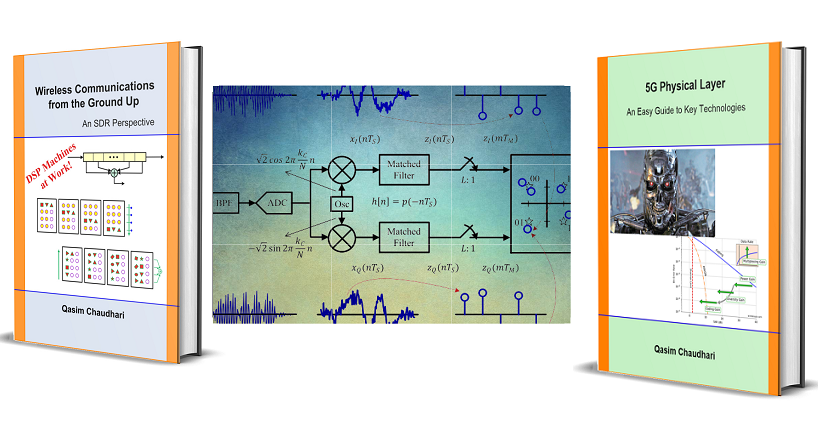
Upgrade your wireless skills! Get 58% off Wireless Communications 2nd ed. with a new Radar Signal Processing chapter (critical knowledge for wireless professionals in the current era of transformation and uncertainty): https://t.co/6BEfcwC4iP #wireless#signalprocessing#radar
This might not be noticeable right away, but we don’t fly a directional antenna on our missions. We have the ability to, but directional antennas add mass, something we want to minimize as much as possible.
We fly omnidirectional antennas. They’re smaller, and they also allow us to talk to the planet when we are under continuous thrust from our Hall-effect thrusters. The cost? Well, it’s steep. At our max range, 20 million miles from the planet, our link is 120 bits per second.
Normal data protocols don’t even work. We’re talking in the same domain as Voyager: slow. It drives all the decisions on data and tactics we use to rewrite the way we explore.
We already have a number of mission in the pipe that will require a directional antenna for data, but this one, our core mining mission, will not.
P25 radio systems are designed in a way that a CQPSK signal can be demodulated with a receiver designed for C4FM signals. See how this this is done here. #p25#wireless https://t.co/hGGlDUQplR
To aid in understanding, I have put Python/MATLAB/Octave based software implementation of QAM/PAM/PSK, C4FM and CQPSK demodulators on my website, including several timing, frequency and phase synchronization algorithms #p25 https://t.co/n56DhUR9cb
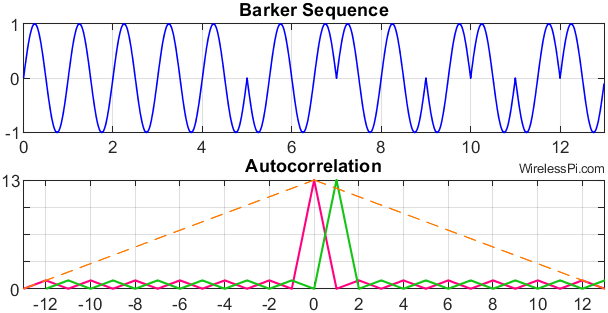
I set out to explain Time-Bandwidth Product (TBP) in an intuitive manner, something I have never seen done before. https://t.co/VC8NiTeBGa #dsp#signalprocessing#RADAR
In addition to my earlier post on 2nd ed. of Wireless Comms book, the SDR course and 5G PHY eBook on multiple antenna communications is also included in the bundle. https://t.co/6BEfcwC4iP #wireless#Signals#radar#dsp
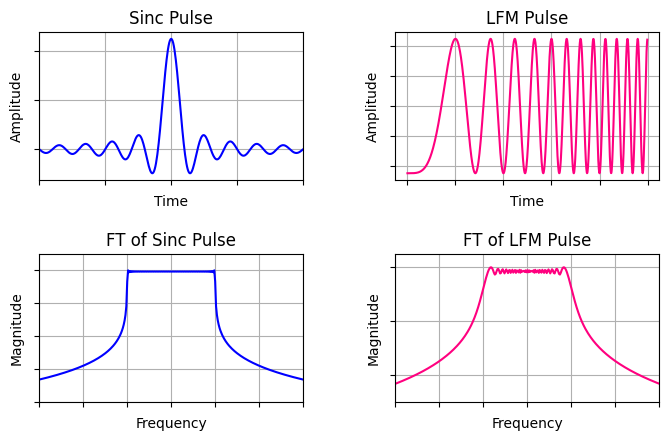
@erabrar11@grok This time-bandwidth product being large is important. Their magnitude spectra are similar in this ideal case only, while phase spectra are always different.
An interesting question for junior DSP engineers. How can two different signals, a sinc pulse and an LFM pulse, have an identical spectrum?
Best to figure it out yourself first, then see the answer in the link below.
https://t.co/Nzo7WfpYvw
#dsp#signalprocessing#Wireless
After years of writing on DSP, wireless comms & SDRs, I’ve compiled my most popular articles into a book:
Signal Processing Recipes for Communication Systems.
🧠 Free download: https://t.co/3dCp3KgivR
📗 Full-color paperback: https://t.co/V29RUOeQ62
Hope it helps your journey!
@Benathon Exactly. The magnitude plots are identical in the limit time-bandwidth product goes to infinity, but missing phase plots is the correct answer.
Part 2 of the article on I/Q signals: Two Birds with One Tone: I/Q signals and Fourier Transform. https://t.co/xYPsPnotNJ #signalprocessing#wireless#DSP
When a new member arrives at the DSP club, this is what they find at the club gate: I/Q signals. Perhaps a secret plot to keep most people out of the party? https://t.co/tW1qF6n97C #dsp#Wireless
A description of how Goertzel algorithm works to evaluate the Fourier Transform without computing the Fourier Transform. https://t.co/n9jOZMIiYE #signalprocessing
The wireless comms bundle (Wireless Communications eBook + 5G eBook + the SDR Course) is now available at a discounted price of $49 only. I hope that you will enjoy sending your own text and image in the air in GNU Radio experiments. https://t.co/pECSebmgOF #SIGNALS#wireless