@RoundTableLaw funny you mention Lisp, though - imo Lisp via Emacs is terrible and Lisp via Clojure rocks. maybe a niche somewhere for the Clojure of Prolog, some more modern, adoptable incarnation. Ciao, Logtalk, Mercury, Picat, Curry all come to mind
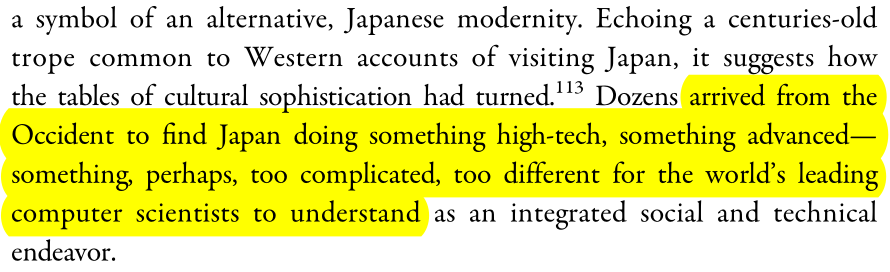
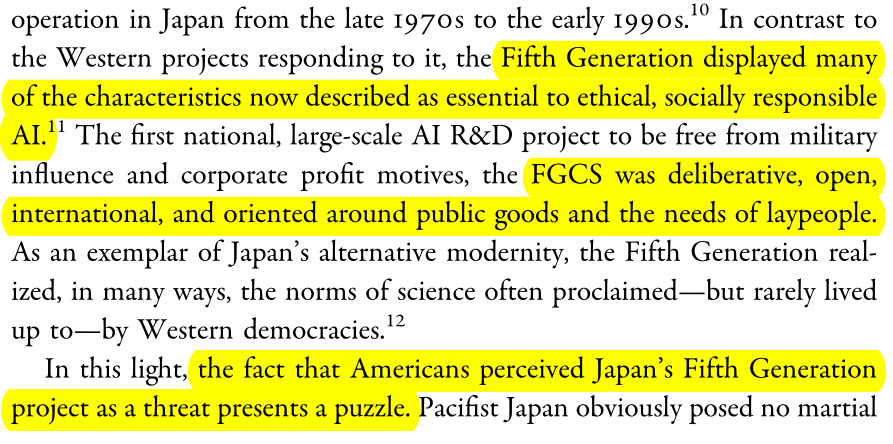
today's lunchtime reading: Colin Garvey's history of the Fifth Generation Computing Project, in which Japanese researchers tried to build a national computing infrastructure based on logic programming, and of the Western responses to it
the American project, of course, has to be competitive and militaristic. there's a lot more good stuff in there about the different forces shaping R&D in postwar USA and Japan
@mengwong@craigaatkinson and not out of any technical necessity, just people don't seem to prioritize it most of the time. therefore optimistic that things can improve a lot here, many 20/80 effort/return things not yet done
@mengwong@craigaatkinson this is an important avenue, I think - I would love to work with visual representations on equal footing with textual, but it's rare to find toolsets that encourage that. usually round-tripping between diagram and code loses some info (e.g. positioning)
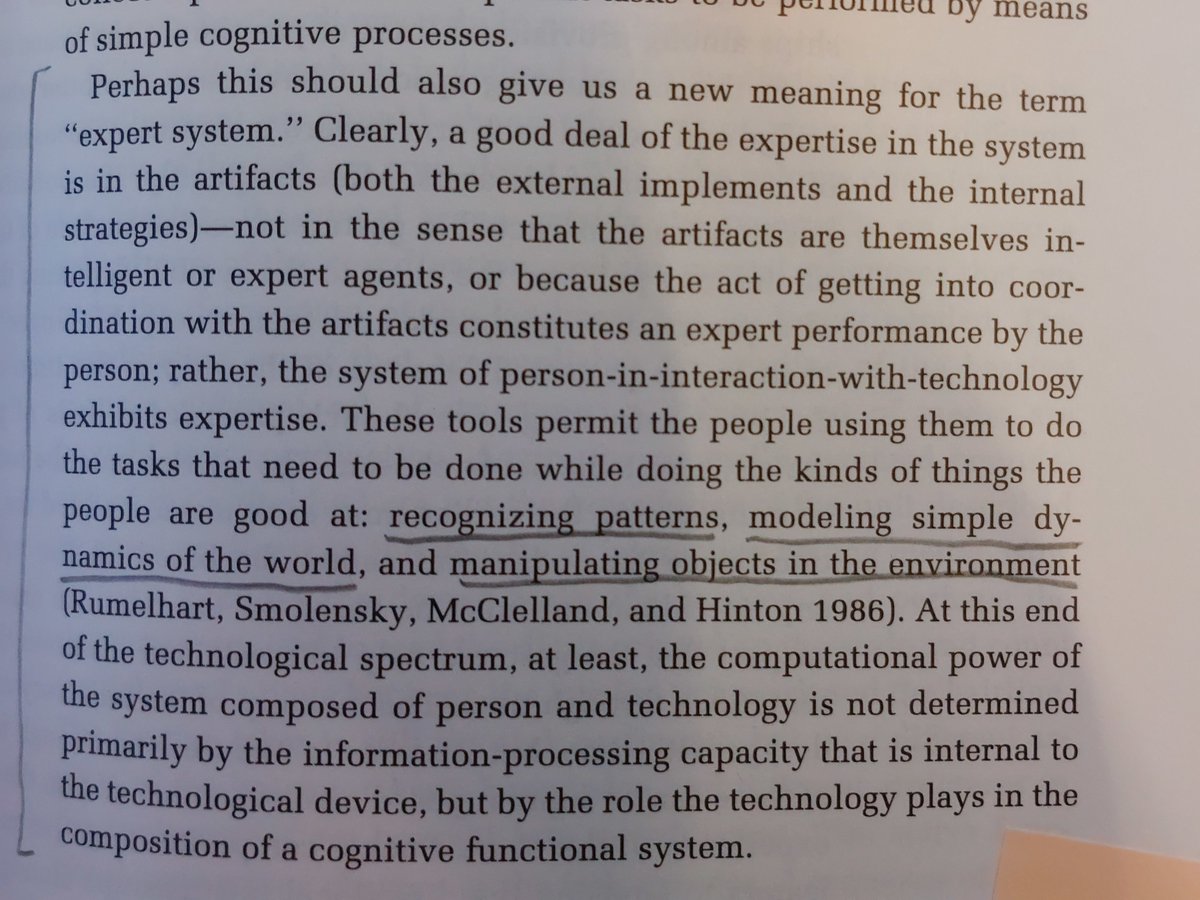
i think next up in this vein will be The Sciences of the Artificial, which is quoted: "solving a problem simply means representing it so as to make the solution transparent". coooool
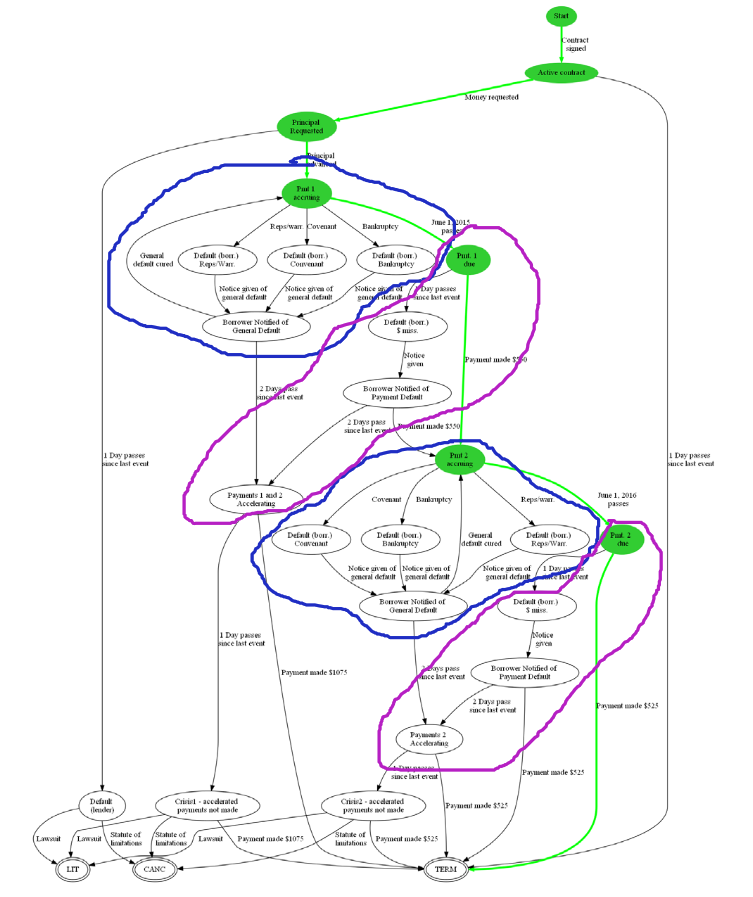
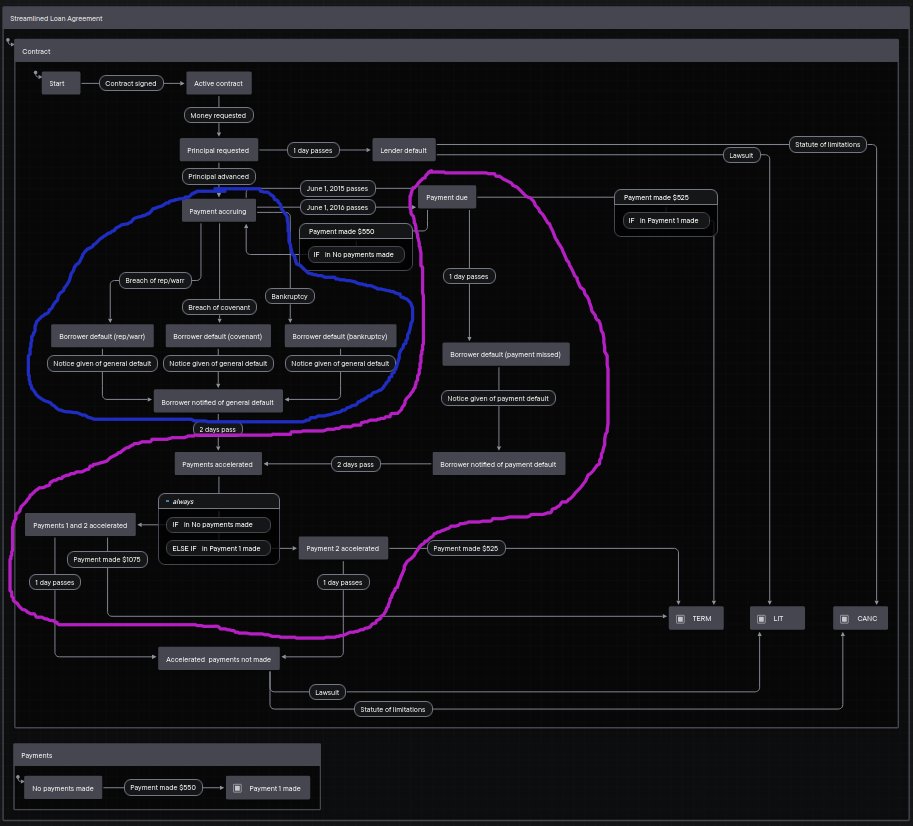
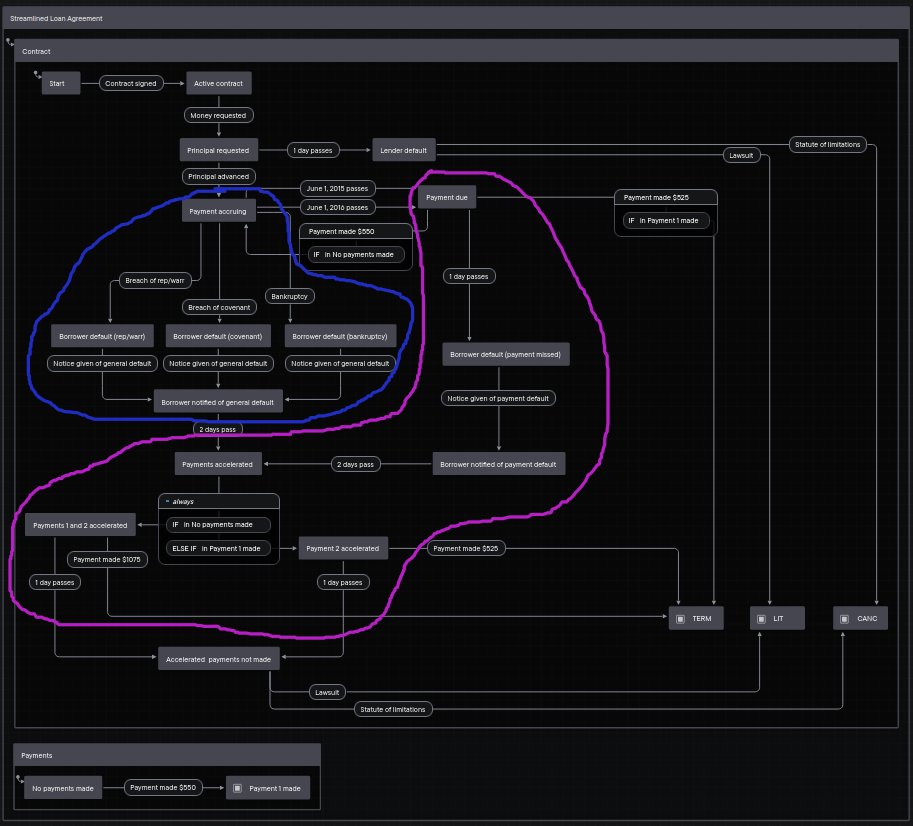
saw @mengwong refer to @orgoodenough and Flood's contract DFA paper in a presentation about the (very cool) work happening on L4, and I ended up re-encoding that DFA as a Harel chart
of course, state explosion is not the only problem with DFAs for this purpose, but statecharts have some cool visual ideas that I'm going to try to remember
statecharts (or Harel charts) promise to solve this kind of problem, and I had never tried to make one before, so I made this one. the contract that takes 45 transitions to express as a DFA takes only 28 as a statechart. neat tool