From a company perspective, the need to industrialize 🇷🇴Romania’s defense sector is increasingly clear. Current efforts focus largely on procurement and rapid capability acquisition. While necessary, this approach alone does not ensure long-term resilience.
Many Romanian companies remain confined to integration, support, or maintenance roles, with limited opportunities to develop and own complete defense products.
Moving toward product development is demanding, requiring sustained investment, engineering depth, and long-term commitment. Yet it is the only path to building durable capabilities, technological ownership, and meaningful contributions to national and allied defense. Romania has the technical talent and practical experience to develop competitive defense products, particularly in platforms, sensors, software, and autonomous systems. What remains lacking is a stable environment that supports companies willing to invest in development, testing, and scaling. Partnerships with allies remain essential, but the strongest are built when companies contribute capabilities, not merely receive technology.
For Romania’s defense industry, the shift from contractor roles to product-driven companies is a necessary evolution, one that begins at the company level, through sustained engineering investment, ownership, and long-term vision.
🔗https://t.co/snrBLJ4vXk
Building the future of autonomous systems, one mission at a time.
At Wolfe Systems, we believe innovation in defense starts with reliability, adaptability, and purpose, creating dual-use technologies that strengthen security while unlocking new possibilities for industry and society.
🔗 https://t.co/snrBLJ4vXk
That's a wrap on BSDA 2026, Bucharest.
Wolfe Systems was proud to exhibit at this year's edition, a powerful gathering of leaders, innovators, and defense professionals shaping the future of security and emerging technologies in the Black Sea region.
The discussions were insightful, the perspectives were strategic, and the connections made were ones that move the needle.
We're energized and ready to keep pushing forward.
🔗 https://t.co/snrBLJ4vXk
Technological innovation has always influenced the evolution of warfare, but its effects are rarely immediate. Instead, new technologies gradually reshape doctrine, organization, and operational concepts.
Today, autonomous and robotic systems are beginning to play this role.
From reconnaissance and logistics to support in contested environments, unmanned systems are expanding the operational toolkit available to modern armed forces. Their real impact, however, will not come from the platforms themselves, but from how they are integrated into broader operational networks and human decision-making structures.
As recent conflicts illustrate, the future battlefield will increasingly involve close interaction between human operators and autonomous systems, operating within interconnected environments.
Understanding and adapting to this transformation will be essential for those shaping the next generation of defense capabilities.
🔗 https://t.co/snrBLJ4vXk
Wolf-E Systems was recently featured in @ZiarulFinanciar IT Generation.
In this conversation, we shared more than just our technology, we spoke about the foundation behind it, why we are building autonomous ground systems and how our vision is shaped.
https://t.co/uiIxtG4kO0
Traditional defense procurement cycles are designed for a stable, predictable security environment. The current environment no longer fits that profile.
Asymmetric threats and autonomous technologies evolve at a pace that conventional procurement cannot sustain. Institutional agility is no longer a competitive advantage — it is an operational requirement.
Defense startups are not an alternative to traditional contractors. They are a necessary structural corrective.
For Romania, developing this ecosystem is both an economic opportunity and a national security imperative.
At Wolfe Systems, this is the model we are operationalizing.
Romania 🇷🇴 cannot afford to wait. Neither can we.
🔗 https://t.co/snrBLJ4vXk
For emerging defense startups, the dual-use model enables faster iteration, access to broader innovation ecosystems, and the possibility to scale industrial capabilities across both civilian and defense markets.
At Wolf-E Systems, we view dual-use innovation as a strategic pathway for developing autonomous platforms that combine technological agility with industrial scalability.
In an era defined by rapid technological change and asymmetric threats, the ability to translate innovation across domains becomes a critical strategic advantage.
🔗 https://t.co/snrBLJ4vXk
In the context of the evolving security environment, 🇷🇴Romania’s defense ecosystem requires more than innovation, it requires scalable industrial capability.
We aim to contribute as a dual-use startup focused on the development and manufacturing of autonomous multi-domain platforms. Our approach prioritizes robustness, modularity, and operational relevance in asymmetric warfare environments.
We believe that sustainable growth in the Romanian defense sector depends on local production capacity, software-hardware integration, and disciplined execution aligned with long-term strategic objectives.
Industrial capability defines credibility.
🔗 https://t.co/snrBLJ4vXk
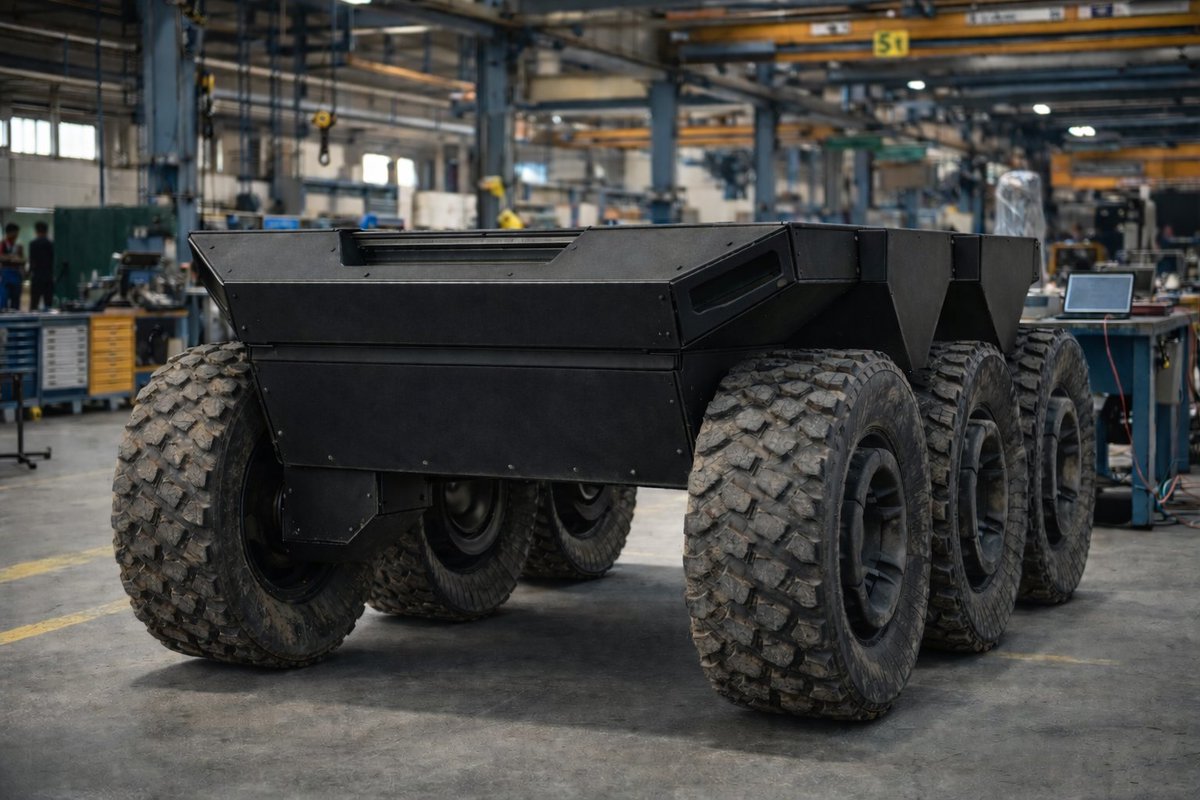
At Wolf-E Systems, our platforms are engineered for performance across:
• Sand
• Asphalt
• Rough terrain
• Snow
• Gravel
Each surface imposes distinct mechanical and traction demands. Designing for cross-environment reliability requires structural resilience, drivetrain optimization, and rigorous validation.
Operational adaptability is not an added feature.
It is the core requirement.
🔗 https://t.co/5CXceYQkca
We participated at BlackSeaX Translatatintic DSR Forum, organised by InnovX.
The conversation focused on a critical issue: how dual-use companies can scale responsibly while navigating regulatory complexity, capital requirements, and strategic expectations.
In defense-adjacent sectors, growth is not driven by funding alone. It requires industrial capability, disciplined execution, and alignment with long-term strategic priorities.
We appreciate the opportunity to contribute to the dialogue and to engage with an ecosystem shaping the future of dual-use innovation.
🔗 https://t.co/snrBLJ4vXk
In today’s security environment, technological self-reliance begins with manufacturing capability. At Wolf-E Systems, we are building in-house production capacity for autonomous ground systems — because in defense technology, control over production is not optional, it is strategic.
Industrial depth means faster iteration between field feedback and engineering, reduced reliance on external supply chains, rapid mission-specific configuration, and reliability in real conditions. Industrial resilience is, ultimately, a form of deterrence.
As the security architecture of the Black Sea region and NATO’s eastern flank continues to evolve, credibility will depend not only on strategic alignment, but on strong domestic and regional production capability.
Wolf-E Systems is committed to building that capability.
🔗 https://t.co/snrBLJ4vXk
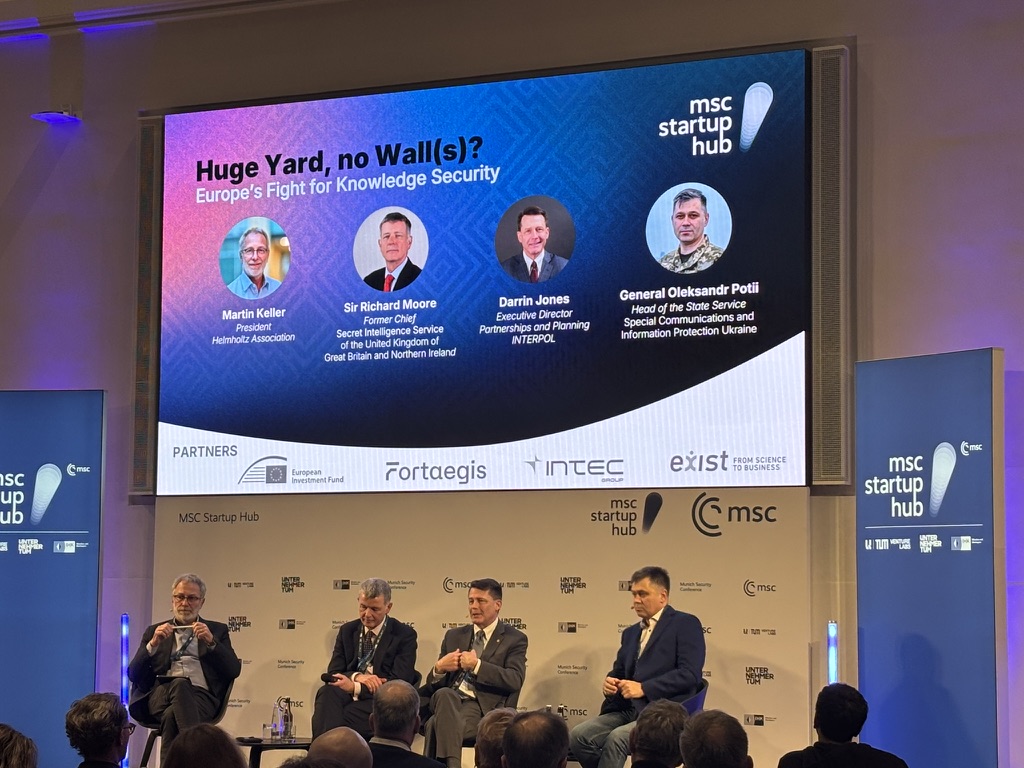
Wolf-E Systems was present at the @MunSecConf 2026 and the MSC Startup Hub events, where one theme was constant: Europe has entered the readiness phase.
From the discussions between defense startups, investors, and military stakeholders, the focus has shifted from long-term planning to immediate capability.
Key observations:
• The U.S. has a consolidated defense market; Europe remains fragmented across national procurements.
• Autonomy is becoming a baseline capability, not a future concept.
• Readiness now depends on software, production capacity, and rapid iteration cycles.
• Technology sovereignty is increasingly treated as a security requirement.
For Wolf-E Systems, this reinforces the role of autonomous ground systems and field robotics, particularly for the Eastern Flank and the Black Sea region.
Europe is entering an era where defense innovation speed becomes a strategic variable.
🔗 https://t.co/snrBLJ4vXk