Christian, Freedom Loving, American! I treasure our Constitution ♡Republican♡DJT2024!
Make America Safe & Great Again!
Never Give Up, Never Surrender !
A young woman carefully outlines her lover’s shadow on the castle wall before he departs to join the Crusades, hoping to preserve a final image of him before he leaves for war.
The Shadow (1909) was painted by Frederic Leighton, one of the most celebrated artists of the Victorian era.
The painting shows a young woman carefully tracing the silhouette of her lover’s shadow onto a wall before he departs. The scene draws on the ancient Greek legend of the Corinthian maiden, a story long regarded as the mythical origin of drawing. In the original tale, a young woman outlines her lover’s shadow by lamplight on the eve of his departure for war, creating an image she can keep after he is gone.
Leighton reimagined the story in the age of the Crusades, replacing the classical Greek setting with a medieval castle. The lover stands outside as the woman records his outline, preserving a final trace of him before he leaves.
Beyond its romantic narrative, the painting can also be seen as a meditation on the purpose of art itself. The woman is creating an image to hold onto someone she cannot keep, transforming a fleeting moment into something lasting. In this way, Leighton presents drawing as an act of defiance against time, separation, and mortality, giving the scene a beauty that is both tender and quietly heartbreaking.
Texas Early Voting Numbers
While Republicans are outvoting democrats, we’re seeing exceptionally low turnout across the Lone Star State:
🟥 2% of Republicans
🟦 1% of Democrats
Today is the LAST day of early voting — you have until 7 p.m. to vote.
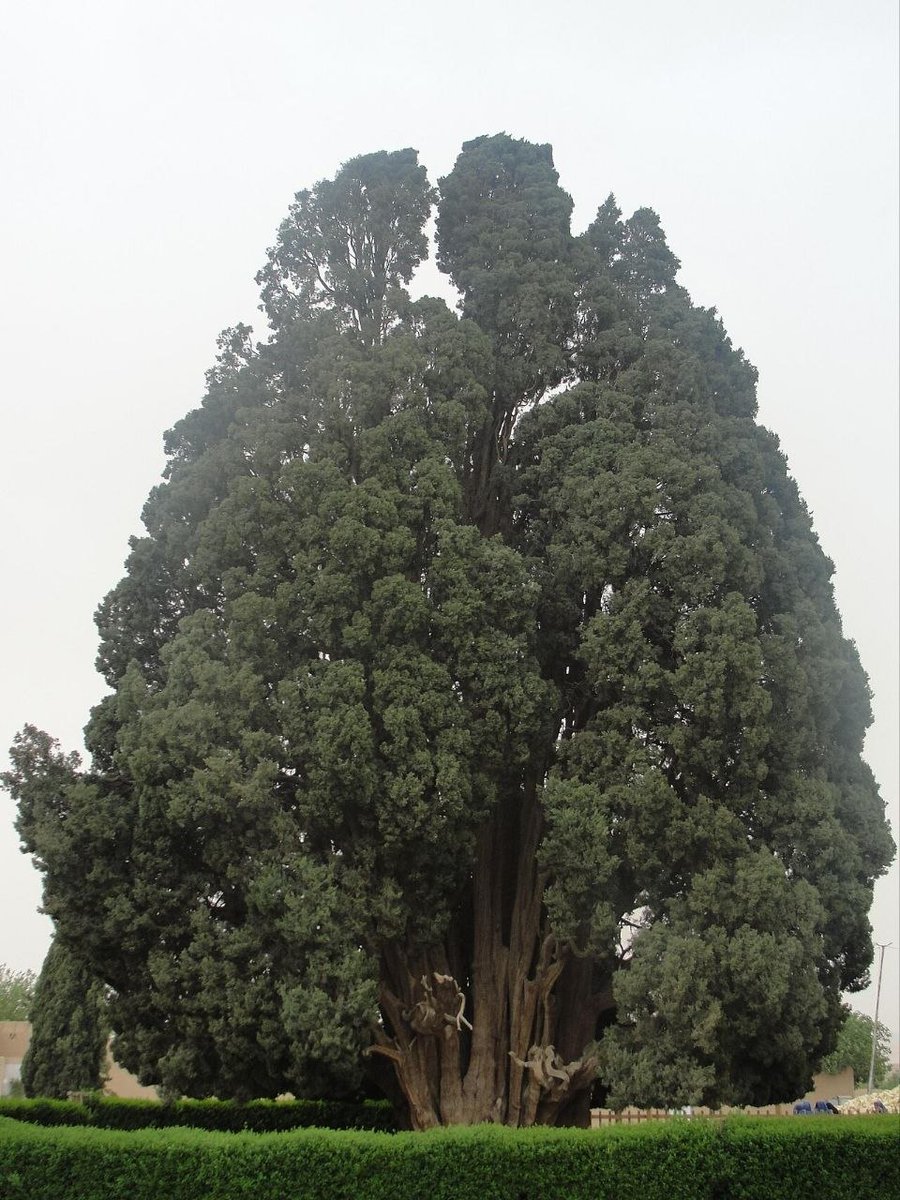
Asia's oldest living organism, the ancient Abarkuh cypress tree - at least 4500 years old - is rooted in land that was already known as Iran at the time.
In 2020, ancient Roman mosaic floor discovered under vines in northern Italy 🇮🇹
In an extraordinary archaeological discovery, stunning Roman mosaics have been unearthed beneath a vineyard in picturesque province of Verona, near the town of Negrar di Valpolicella, Italy. This find offers a fascinating glimpse into the opulent lifestyle and artistic achievements of the late Roman Empire, dating back to 3rd-4th Centuries AD.
Negrar di Valpolicella, a charming town in Verona's province, renowned for its historical richness and agricultural traditions, particularly its vineyards. The discovery of the mosaics in this region emphasizes the seamless blend of Italy's historical and contemporary cultural landscapes. This area has long been recognized for its significant archaeological potential, and this recent find confirms its status as a treasure trove of Roman heritage.
After the discovery in 1922, the site was mostly left abandoned until a team from Superintendent of Archaeology, Fine Arts and Landscape of Verona resumed digging last summer. The team returned to the site in October 2019, and again in February 2020, before excavation was suspended because of the coronavirus pandemic. The mosaic was found a few metres beneath a row of vines a week after work got going again.
The mosaics date back to a period when Roman Empire was at the zenith of its cultural and artistic development. The 3rd-4th Centuries AD marked a time of great sophistication in Roman art, architecture, and lifestyle. During this era, Roman villas were often adorned with intricate mosaics that showcased the wealth and status of their owners. The mosaics in Negrar di Valpolicella are exemplary of this trend, reflecting the high level of craftsmanship and artistic expression characteristic of the late Roman Empire.
The discovery was part of a concerted archaeological effort to locate the remains of an ancient Roman villa first identified over a century ago. Underneath a vineyard, the archaeologists unearthed these remarkably well-preserved mosaics, revealing intricate designs and vibrant colors that have survived for nearly two millennia. The mosaics likely adorned the floors of a luxurious Roman villa, providing insights into the daily life and aesthetic preferences of its inhabitants.
Surveyors in commune of Negrar di Valpolicella north of Verona published images of well-preserved tiles buried under metres of earth. According to officials, scholars first found evidence of a Roman villa there more than a century ago. Team discovered tiles, as well as portions of villa’s foundation, “a few meters” below the vineyard’s surface. Villa cover an area of 300 square metres. Technicians are still gently excavating the site to see full extent of ancient building.
“After countless decades of failed attempts, part of the floor and foundations of the Roman villa located north of Verona, discovered by scholars a century ago, has finally been brought to light,” authorities from Negrar di Valpolicella.
“The superintendent will now liaise with the owners of the area and municipality to identify the most appropriate ways of making this archaeological treasure, which has always been hidden beneath our feet, available and accessible.”
Roberto Grison, the mayor of Negrar di Valpolicella, told the local newspaper L’Arena: “We believe a cultural site of this value deserves attention and should be enhanced. For this reason, together with the superintendent and those in charge of agricultural funds, we will find a way to make this treasure enjoyable.”
#archaeohistories
A mother jaguar was recorded teaching its cub how to swim in the Brazilian Pantanal, captured by photographer Tomás Thibaud.
Unlike most cats, the Jaguar is an apex predator that actually loves water, capable of swimming across rivers while carrying prey heavier than itself