Workable is an all-in-one HR platform for hiring and managing talent. With a world-class ATS and a flexible HRIS, it’s your system of record for everything HR.
At 24, Kevin McCarthy became CEO of @unrealsnacks. A decade later, the chocolate brand is in 35,000+ stores. 🍫
On Next at Work, he shares lessons on leadership, burnout, remote culture, and why he prioritizes the brand's mission over everything. https://t.co/I2xmGjFYLn
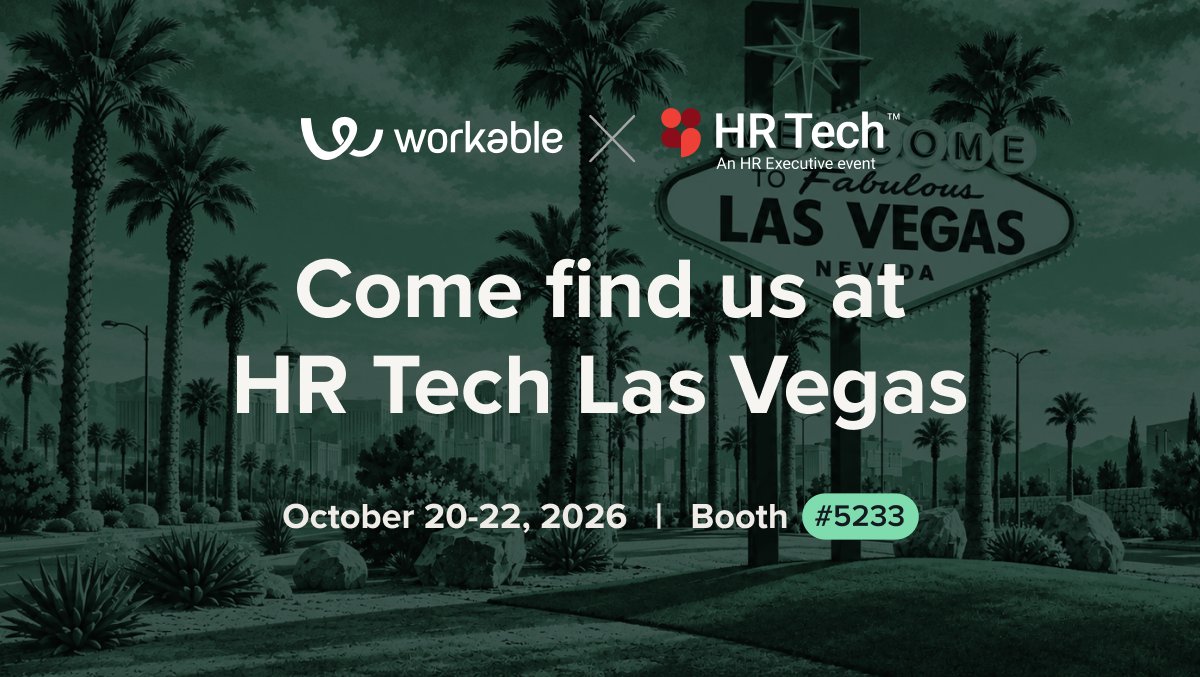
We’re headed to HR Tech Las Vegas 🎉
Find Workable at Booth #5233, where we’ll be demoing our lineup of recruiting agents and showing off 90+ capabilities available through our MCP server.
We’ll also be taking the Next at Work Podcast to the show floor, recording live conversations with the people shaping what’s next in hiring and HR.
Stop by for the demos and conversations, and stick around for plenty of giveaways, Workable swag, and... free ice cream!
Beyond the booth, our CRO Sarfraz Ali will take the stage to share what 200,000 AI interviews taught us about candidate experience, and what we’ve learned from putting AI into practice at that scale.
See you there!
📍 HR Tech Las Vegas
📅 October 20–22
🎪 Booth #5233
Recruiting measures time-to-fill. Time-to-hire. Cost-per-hire.
But what about the candidate’s clock?
As AI takes on more of the hiring process, should “Time to Human” become a recruiting KPI? https://t.co/IVQngM4l7K
The “coffee cup test” is just one example of the invisible tests candidates can face during an interview.
If candidates don’t know what they’re being evaluated on, are we really measuring the things that matter?
Workable is excited to announce that we will be integrating with @LinkedIn Hiring Assistant, through RSC+.
Recruiters will benefit from AI-powered evaluations for every applicant and sourced candidate, with insights shared in real-time to Workable.
Collaborations like this are what strong partnerships look like - helping our joint customers make more informed hiring decisions, wherever they work.
We're proud to be part of LinkedIn's story at hashtag#TalentConnect 2026.
Hiring in healthcare is competitive, especially for nonprofits with lean recruiting teams.
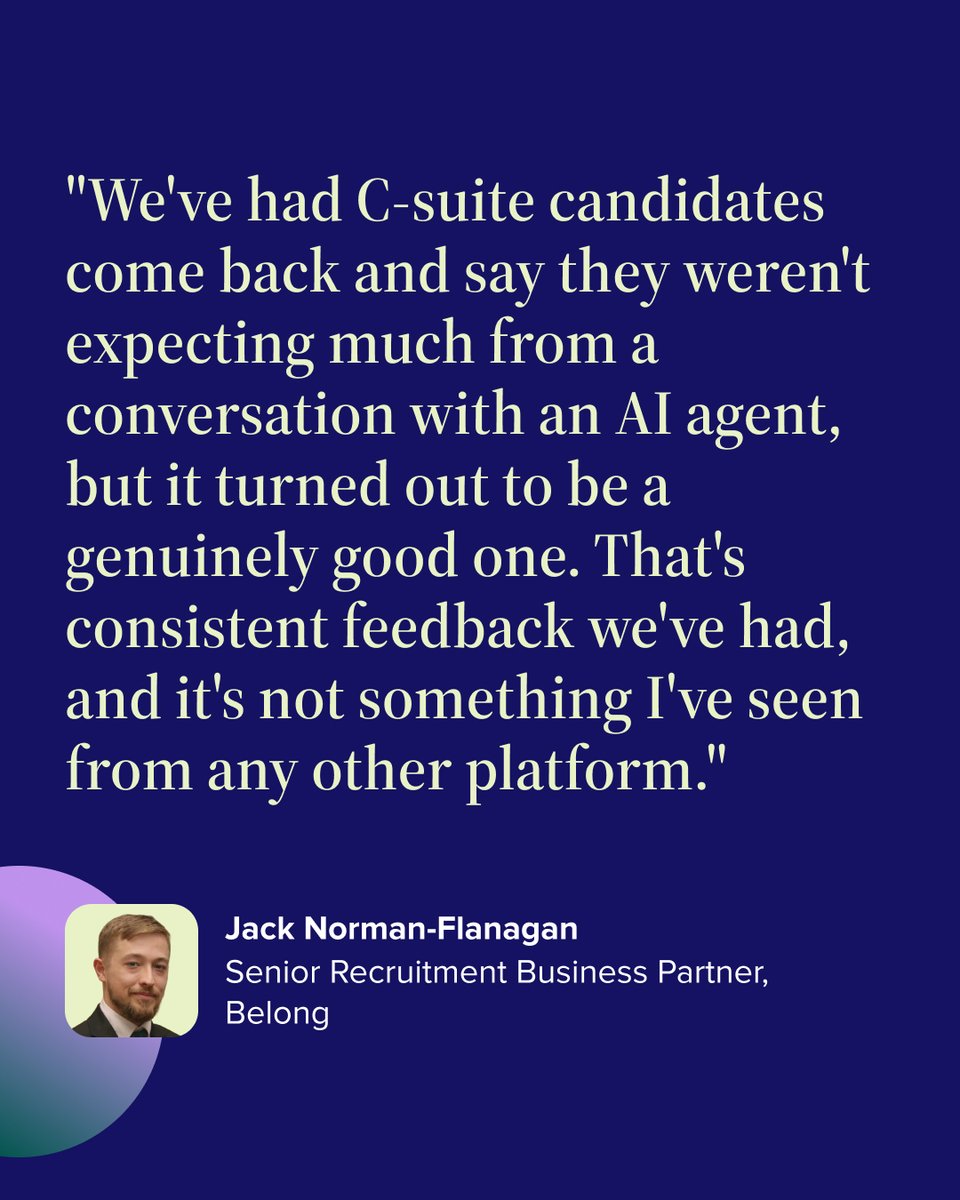
So Belong thought outside the box: using Workable’s AI Agent to surface candidates with transferable experience, even if they didn’t come directly from the healthcare sector.
The result? A wider talent pool, positive feedback from C-suite candidates, and a hard-to-fill Head of Operations role filled in just 7 days.
What does it look like when real recruiting teams put AI to work?
From managing 300+ open positions to processing 930+ applications in 36 hours, here’s how Workable customers are using the Agent to save time, find qualified candidates, and hire more efficiently.
What does AI-enabled recruiting actually look like?
The Workable Agent helps recruiters source, screen, engage, and move qualified candidates through the hiring process, while keeping the recruiter in control.
Here’s the Workable Agent in action 👇
Recruiting shouldn’t require 47 tabs open at once.
With Workable’s MCP server, you can connect your ATS to AI tools like Claude and use natural language to pull recruiting data, update candidates, automate workflows, and even connect tools like Slack and Google Calendar.
No tab switching. No digging through dashboards. Just ask.
Here’s the MCP server in action 👇
For years, recruiting software has helped people manage the hiring process. But the world of work has changed.
● Applicant volume is higher.
● Hiring cycles move faster.
● Recruiters are expected to do more with less.
We don’t think the answer is another layer of automation. We know it is a completely new operating model.
Which is why we built the Workable Agent.
A line of agents that source candidates, engage talent, screen applicants, fill information gaps, and build a qualified shortlist, continuously and inside your ATS.
You define the role. The Agent does the work.
And because transparency is essential, we're also introducing the AI Credits Report. Enterprises can see exactly where AI credits are being spent, which roles are consuming them, and what each hire costs.
Because this is what we believe agentic recruiting should look like:
An AI that works. A system that knows the context. A business that knows the ROI.
The agent recruits. You manage talent.
Your AI hiring agents are sourcing 24/7 and closing roles faster than ever. But without visibility into how much you're spending? That's just faith.
Today we're showing you exactly where every credit goes, what it costs per hire, and the real ROI your board wants to see.
Meet the AI Credits Report:
https://t.co/7eeO1aKJE4
7 days to fill a critical Head of Operations role. For most organizations, that's impossible. For Belong's 3-person team using Workable's AI Agent, it's the new standard.
https://t.co/GOuCga17dA
Six broken patterns. One solution.
When screening and sourcing are manual, your hiring suffers from silent inefficiencies. Workable Agent doesn't just speed things up. It removes bias, eliminates delays, and catches the candidates you'd otherwise miss.
The best hiring teams aren't faster because they work harder. They're faster because they've automated the work that was holding them back.
Discover how Workable Agent transforms your recruiting process:
https://t.co/rasHDO6ihB
Your hiring process has six silent killers. They're not intentional. They're what happens when screening and sourcing are manual, slow, and human.
Workable Agent rewires both. Here's what changes.