The Centre for Sustainable Employment (CSE) at Azim Premji University generates research in the areas of job creation, employment, and sustainable livelihoods.
We have an opening for a Research Associate position at the Centre for Sustainable Employment. Deadline is June 7th.
If you're interested in applying, more details here:
https://t.co/SD1Tqwl30B
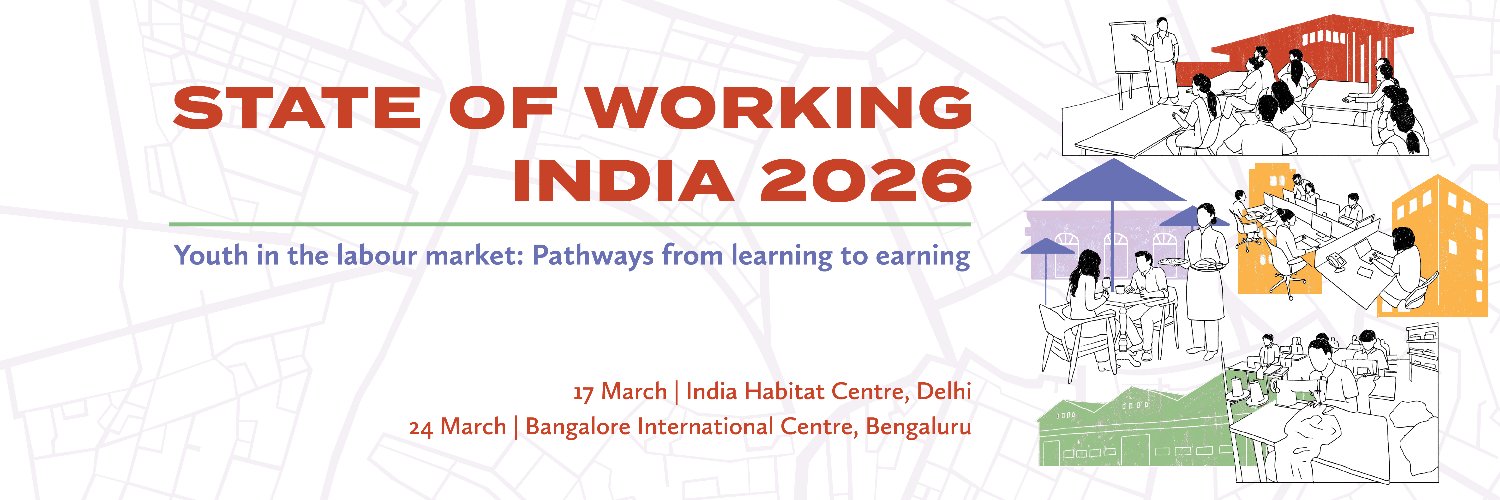
We will be hosting a discussion on State of Working India 2026 at BIC at 5:30 PM on the 24th. Followed a panel discussion with Akshatha (Quess Corp), Aditi Jha (LinkedIn), Swati Shivanand (MAHE) and Divya Varma (Work Fair&Free), moderated by Arjun Jayadev
https://t.co/icu16m0SoZ
The report release will be followed by a panel discussion with Shrayana Bhattacharya (World Bank), Farzana Afridi (ISI, Delhi), Abhishek (NSDC), Amit Basole (Azim Premji University) moderated by Tamoghna Halder (Azim Premji University). We hope you can join us!
We're releasing the next State of Working India 2026 report in Delhi on the 17th of March, at IHC, 9:30 AM. This year's report looks at the theme of *`Youth in the labour market: Pathways from learning to earning'.* Register here:
https://t.co/bH8SpwPZWy
Re-employment in permanent salaried jobs yields the highest return to prolonged unemployment. This explains the wait among educated individuals for whom expected benefits justify the cost of job search. (7/7)
Unemployment rate is the usual metric to understand the ‘wait’ for employment, but how long someone stays jobless also matters. A new CSE WP by Kannan examines what drives unemployment duration & its impact on re-employment earnings and job type.
https://t.co/rxBcqmBwjE🧵(1/7)
A multinomial logit suggests that with the increase in the duration of unemployment, the relative probabilities of entering self employment or salaried employment rise, while casual labour becomes less likely. (6/7)
While casual work is easier to find, educated jobseekers face long waits. This calls for urgent policy action on youth unemployment - should we focus on skills, training or stronger aggregate demand? Much more research is required, but the urgency of the task is evident. (7/7)
A new CSE working paper by Rahul Menon and Paaritosh Nath examines job search and job-finding rates in urban India and what this means for labour market dynamics. The analysis reveals weaknesses in the urban economy over 2017-2023. Available here: https://t.co/bX9K5tli2i (1/7)
The study is important for two reasons: it raises critical questions for future research on how India’s labour market works and, it highlights the urgent need to address low and falling job-finding rates, especially among women, youth, and the educated. (6/7)
Openings for Research Fellow positions at the Centre.
Recently completed PhDs or those nearing the submission of their thesis, please consider applying.
Details here:
https://t.co/FUWFTeobRF