Materialism is a philosophy; science may be best thought of as a methodology for investigating the natural world. Materialism is an important part of much of philosophical naturalism. Science, a methodology, is therefore neither identical with, nor dependent upon, materialism or philosophical naturalism. This brings out a distinction. One can practice science without believing in materialism.
Often, materialists present an assumption of their “owning science.” Perhaps the basic thought behind this is that the natural sciences study only physical things. Naturalism combined with materialism is the philosophy that all that exists are physical things. Therefore, it is thought, science and naturalism/materialism are the same thing. This reasoning is fallacious, and obviously so. To say that the natural sciences study only natural things does not imply that only natural, physical things exist anymore than the fact that organic chemists study chemicals with carbon in them means that only chemicals with carbon exist.
Atheistic naturalists and materialists have gotten a lot of mileage over the years by conflating their philosophy with science, but it is an illegitimate thing to do.
— Stephen E. Parrish, Atheism? A Critical Analysis
Anselm (1033-1109), the bishop of Canterbury, was one of the most creative and original philosophers the Christian church has ever produced. He emphasized the side of Augustine’s view of faith and reason that viewed faith as prior to reason or understanding. “For I do not seek to understand in order to believe but I believe in order to understand [credo ut intelligam].” Although his philosophical arguments are often treated simply as rationalistic proofs designed to convince atheists, for him they were expressions of the search for understanding of one who already believed. On the other hand, he did intend at least some of his arguments as proofs to answer unbelievers and to confront them with the truth.
https://t.co/DEYiTmARxw
Mrs. Frank L. Jones once wrote [C. S.] Lewis and asked, “What is a soul?,” to which he responded “What is a soul? I am. (This is the only possible answer: or expanded, ‘A soul is that which can say I am’).” And moving from the first- to third-person plural, Lewis wrote of “our souls, that is, ourselves.” One sometimes hears the query “Can you provide me with a positive characterization of a soul?” (A strictly negative characterization would be “A soul is not material; a soul is not visible; etc.”) Lewis would have responded: “A soul is that thing which thinks and reasons, chooses, experiences pleasure and pain, etc.” He believed it is important to stress that all these kinds of transitory events of which we are directly aware, namely, thoughts, reasonings, experiences of pleasure, etc., presuppose that the soul or “I” is “the stage” on which they appear, where this stage is substantial and endures through time.
— Stewart Goetz, C. S. Lewis
https://t.co/DEYiTmARxw
The apologists of the second century modeled their arguments after contemporary philosophical refutations of polytheism and the critiques of pagan philosophy by Hellenistic Jews. Of the many apologists from this period, the most important by far was Justin Martyr (ca. 100-165), a convert to Christianity from Platonism. Justin wrote three important works of apologetics, but perhaps the most notable is his First Apology. In this book, addressed to the Roman emperor Antoninus Pius, he appealed for the civil toleration of Christianity and argued that it was in fact the true philosophy. About ten years after writing the book, during the reign of Antoninus’s successor Marcus Aurelius, Justin and six other Christians were beheaded in Rome for refusing to perform sacrifices to the Roman gods.
https://t.co/Sqf7d7HKCj
In the early fifth century, pagan religions were on the wane yet still very much alive, while Christianity was on the ascendancy throughout the Roman empire. Then in 410, the Visigoths sacked Rome, an event that grieved both pagans and Christians throughout the empire and that provoked recriminations from pagans who blamed Christianity for Rome’s demise. A response to this complaint came from the greatest apologist and theologian of this period and indeed of the first millennium of Christian history after the New Testament, Aurelius Augustine (354-430), the bishop of Hippo. Augustine was won to the Christian faith after trying Manicheaism and Platonism, a story he brilliantly presents in his book Confessions (400). While his worldview was at first heavily Platonic, as he matured his theology and philosophy became significantly less Platonic and more and more biblical.
https://t.co/vhECOcYCtL
Researchers have been asking young ex-Christians why they leave the church, and their answers are enlightening. Here are the most popular student responses from four different studies:
“Some stuff is too far-fetched for me to believe.”
“Too many questions that can’t be answered.”
“I’m a scientist now, and I don’t believe in miracles.”
“I learned about evolution when I went away to college.”
“There is a lack of any sort of scientific or specific evidence of a creator.”
“I just realized somewhere along the line that I didn’t really believe it.”
“I’m doing a lot more learning, studying, and kind of making decisions myself rather than listening to someone else.”
“Because I grew up and realized it was a story like Santa or the Easter Bunny.”
“As I learn more about the world around me and understand things that I once did not, I find the thought of an all-powerful being to be less and less believable.”
“I realized that religion is in complete contradiction with the rational and scientific world, and to continue to subscribe to a religion would be hypocritical.”
“It no longer fits into what I understand of the universe.”
“I have a hard time believing that a good God would allow so much evil or suffering in the world.”
“There are too many injustices in the history of Christianity.”
“I had a bad experience at church with a Christian.”
— Sean McDowell and J. Warner Wallace, So the Next Generation Will Know
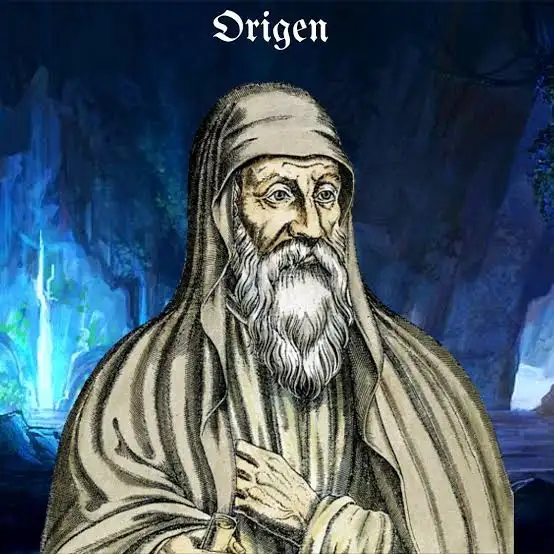
By far the most important Greek apologist of the third century was Origen (ca. 185-254), whose lengthy Contra Celsum (“Against Celsus”) was a reply to Celsus’s philosophical, ethical, and historical criticisms of Christianity. Celsus was a pagan philosopher whose book The True Word was written around AD 170. Celsus’s book has not itself survived, but much of it is preserved within Origen’s book, which contains generous quotations from it. Celsus drew on an earlier critique of Christianity by an unknown Jewish author, and quotations from this “Jew of Celsus,” as Origen calls him, are also preserved in Contra Celsum.
Just as Luke had written his two-volume work (Luke–Acts) for a patron named Theophilus, Origen wrote his work for a Christian patron named Ambrose (or Ambrosius). In his preface, Origen explains that he intended his work not for mature believers, whom he assumed would not be shaken in their faith by arguments such as Celsus’s, but for those unfamiliar with the Christian faith or for new and weak believers. Whereas the second-century apologists had pleaded for imperial toleration of Christianity, Origen pleaded for intellectual respect for Christianity.
https://t.co/BJHtFCoRZb
Enjoyed talking with Kerby Anderson on his Point of View radio show about Jesus' resurrection and the loss of meaning, value, and purpose on naturalism.
https://t.co/cjxrVUbLNo
The apologists of the second century modeled their arguments after contemporary philosophical refutations of polytheism and the critiques of pagan philosophy by Hellenistic Jews. Of the many apologists from this period, the most important by far was Justin Martyr (ca. 100-165), a convert to Christianity from Platonism. Justin wrote three important works of apologetics, but perhaps the most notable is his First Apology. In this book, addressed to the Roman emperor Antoninus Pius, he appealed for the civil toleration of Christianity and argued that it was in fact the true philosophy. About ten years after writing the book, during the reign of Antoninus’s successor Marcus Aurelius, Justin and six other Christians were beheaded in Rome for refusing to perform sacrifices to the Roman gods.
https://t.co/Sqf7d7HKCj
An ossuary, unearthed from the antiquities market in 2002, carries an inscription so provocative that it sparked a global controversy, years of legal battles, and renewed interest in the historical figure James, the brother of Jesus. The inscription, if authentic in its entirety, would constitute the first archaeological artifact bearing the name of Jesus of Nazareth, linked to both his familial and historical identity.
The ossuary itself is modest—just over half a meter long, slightly asymmetrical in width, and weathered by time. Like many from the first century, it once held the bones of an individual whose identity was lovingly etched in Aramaic into its side: Yaʿaqov bar Yosef akhui d’Yeshua (James, son of Joseph, brother of Jesus).
https://t.co/hasbqGuDwO
“There are an estimated 350,000 religious congregations in the United States, and a ‘vast majority . . . serve in some capacity as a community safety net for those in need.’ Together with faith-based organizations, congregations help over 70 million Americans each year, fueled by a staggering $20 billion in donations. One key service is feeding the millions who are struggling with poverty and limited access to food. Over 60 percent of the 46,000 agencies working with food banks nationwide are faith-based organizations. Simply put, America would starve if the church vanished.”
— Jeremiah J. Johnston, Unimaginable: What Our World Would Be Like Without Christianity
“Older Eastern religions do not even require the actual historical existence of their founders for their beliefs and practices to make sense. In some ways they are more akin to philosophies than to historical truth-claims (e.g., Hinduism, Buddhism, Confucianism). But Christianity lives or dies with the claim of Christ’s resurrection.”
https://t.co/V2UCksadtO
Thank you Lord for how Your Word ALWAYS comports with real history & thus affirms or bolsters my faith. Bless the work of @WorldviewB
& @Pauldeanweaver with his #FaithAffirmingFindings book🙏✝️
https://t.co/meIh4W6Qb6
During the first several decades of the 20th century, the disciplines of physics and cosmology enjoyed major advancements that provided new insights into the nature and origin of the universe. This inevitably led to developments in the science and theology conversation, including a renewed emphasis upon one of natural theology’s oldest and most resilient roots: the rationality of the cosmos and its transparency to the human intellect.
Planck regarded science and faith as compatible and complementary enterprises. He was particularly fascinated by the congruence between the mathematical, law-governed structure of the material world and human rationality; he saw this uncanny correspondence as indicative of a designing Mind.
https://t.co/n3IwLzur27
The reality police tell us that there is no extra-mundane reality. Nothing is sacred. Nothing is divine. There is no deep meaning to the world. There is just one little bit of matter colliding with another bit of matter in a vast sea of nothingness. Yet this disenchanted and rather boring picture of the world is betrayed by our longings. We long for a world full of deep mystery, magic, and meaning. We long for a story that matters and understands us. These longings can lead to reenchantment. They can set us on the path that ends, if faithfully followed, to God. But success along the way is not guaranteed. False reenchantments are possible. One false reenchantment that many today find alluring is transhumanism.
https://t.co/qA3Nyz7uNN
As it turns out, apatheism is an indication of civilizational decline. After all, the question of God is a wide-ranging one, with profound intellectual, cultural, moral, and existential implications. So to neglect the ramifications of the divine would be—to one degree or other—indicative of an unexamined life.
Consider the cultural. As it turns out, the idea of God is a major civilizational advance and the inspiration of so many cultural goods and much aesthetic inspiration. The noted agnostic philosopher Sir Anthony Kenny observes:
"If there is no God, then God is incalculably the greatest single creation of the human imagination. No other creation of the imagination has been so fertile of ideas, so great an inspiration to philosophy, to literature, to painting, sculpture, architecture, and drama. Set beside the idea of God, the most original inventions of mathematicians and the most unforgettable characters in drama are minor products of the imagination: Hamlet and the square root of minus one pale into insignificance by comparison."
https://t.co/HVSloUku7E








![WorldviewB's tweet photo. Anselm (1033-1109), the bishop of Canterbury, was one of the most creative and original philosophers the Christian church has ever produced. He emphasized the side of Augustine’s view of faith and reason that viewed faith as prior to reason or understanding. “For I do not seek to understand in order to believe but I believe in order to understand [credo ut intelligam].” Although his philosophical arguments are often treated simply as rationalistic proofs designed to convince atheists, for him they were expressions of the search for understanding of one who already believed. On the other hand, he did intend at least some of his arguments as proofs to answer unbelievers and to confront them with the truth.
https://t.co/DEYiTmARxw](https://pbs.twimg.com/media/HL8XS8lWgAA4Ctr.jpg)


![WorldviewB's tweet photo. Mrs. Frank L. Jones once wrote [C. S.] Lewis and asked, “What is a soul?,” to which he responded “What is a soul? I am. (This is the only possible answer: or expanded, ‘A soul is that which can say I am’).” And moving from the first- to third-person plural, Lewis wrote of “our souls, that is, ourselves.” One sometimes hears the query “Can you provide me with a positive characterization of a soul?” (A strictly negative characterization would be “A soul is not material; a soul is not visible; etc.”) Lewis would have responded: “A soul is that thing which thinks and reasons, chooses, experiences pleasure and pain, etc.” He believed it is important to stress that all these kinds of transitory events of which we are directly aware, namely, thoughts, reasonings, experiences of pleasure, etc., presuppose that the soul or “I” is “the stage” on which they appear, where this stage is substantial and endures through time.
— Stewart Goetz, C. S. Lewis
https://t.co/DEYiTmARxw](https://pbs.twimg.com/media/HL2IN4BXcAAxwUu.jpg)