What does the National World War II Memorial mean to you?
Following this week’s deeply disturbing vandalism, we want to fill this moment with something far more powerful:
The voices of those who cherish the National World War II Memorial.
We’re inviting you to record a short video — just 30–90 seconds — and tell us what the Memorial means to you.
Maybe you visited with a WWII veteran. Traveled there on an Honor Flight. Remembered someone you love at the Freedom Wall. Brought your children or students. Attended a ceremony. Or perhaps the Memorial simply represents something deeply personal to you about service, sacrifice, courage, unity, and freedom.
Whatever your connection, we want to hear your story.
Your video could be featured as Friends’ Video Tribute of the Day on our social media channels and website, helping us build a growing public tribute to this extraordinary place and the generation it honors.
No script. No special equipment. Just your phone and your own words.
Your voice. Your memories. Your Memorial.
🎥 Share your video: https://t.co/myVdGZkyZ3
Together, let’s show America and the world what the National World War II Memorial truly means — and why its meaning must be preserved and passed on.
#WWIIMemorial #GreatestGeneration #WWIIVeteran #WeRememberThem
We say goodbye to another one of our treasured heroes!
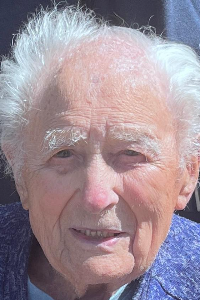
WWII Veteran Stephen J. Annuci, of Worcester, MA, passed away on October 14, 2026. He was 102 years old.
Born in Brooklyn, New York, in 1924, Steve was the beloved son of Dominick and Concetta (Santacroce). He served as a radio operator aboard U.S. Army transport ships in the Asiatic-Pacific Theater during World War II.
Following his military service, Steve dedicated 33 years of his career to aviation communications, working with the former Civil Aeronautics Administration and the Federal Aviation Administration before retiring.
His passion for learning continued well into adulthood. In the 1980s, Steve attended Worcester State College, where he earned a Bachelor of Arts degree in History.
At the remarkable age of 100, Steve was honored by the City of Worcester with a key to the city presented by the mayor, as well as a certificate recognizing his distinguished military service during World War II, presented by the director of Veterans Services.
His wife of nearly 76 years, Elizabeth, passed away peacefully in August of 2026.
Rest in peace, Sir! We thank you for your service!
#WeRememberThem
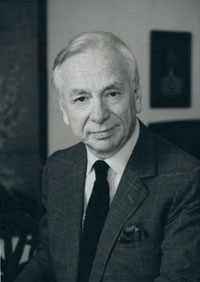
For Dan Breitenbach, the National World War II Memorial is personal.
His connection begins with his father and his father’s bomb group — and continues today through the countless hours Dan spends helping others remember the WWII generation.
Thank you, Dan, for sharing your story — and for all you do to honor theirs.
What does the Memorial mean to you?
🎥 Share a video
📷 Or a Memorial photo + a few words
https://t.co/RnRSBr8kxQ
Your voice. Your memories. Your Memorial.
#WWIIMemorial #GreatestGeneration #WeRememberThem #HonorOurVeterans
🎉🇺🇸 100 years today.
World War II veteran Warren Nees was drafted into the U.S. Navy right out of high school in 1945.
He trained as an electrician’s mate, served aboard a destroyer escort based in Key West, then came home and used the GI Bill to earn a degree in electrical engineering from the University of Minnesota.
Then came the rest of an extraordinary life:
❤️ 75 years of marriage to his high school sweetheart, Phyllis
👨👩👧👧 3 daughters and a growing family
💡 Decades as an electrical engineer
⛳ Golf
🪿 Goose hunting
🃏 Card games
😄 A famously clever wit
🔧 And a reputation for being able to fix absolutely anything
From Navy sailor to engineer, husband, father, grandfather, outdoorsman, and beloved problem-solver, Warren has packed an extraordinary amount of living into a century.
Happy 100th Birthday, Mr. Nees—and thank you for your service!
Sign his digital birthday card: https://t.co/5SFcGXcumQ
#Happy100 #WWIIVeteran #100thBirthday #GreatestGeneration #HonorOurVeterans #WeRememberThem
🎉🇺🇸 100 years today.
WWII veteran Albert Marlin “Marlin” Brown has a motto:
“Anything worth doing is worth overdoing.”
His century makes a pretty convincing case.
At 17, he volunteered for the U.S. Army.
His service took him to the Philippines and Japan.
Then came:
🎓 Advanced degrees in education & mathematics
🍎 Nearly 25 years teaching at Augusta College
🐕 Prize-winning Shelties
🌹 400 rose bushes — many prize winners
📷 Photography trips from Canada to Trinidad, Ecuador & Alaska
❤️ 57+ years of marriage to Jessie
🐶 And a Christmas tree devoted entirely to Snoopy
From Depression-era Alabama to military service across the Pacific, from classrooms to camera lenses, Marlin has spent a century learning, creating, serving, laughing, and doing things wholeheartedly.
Happy 100th Birthday, Mr. Brown — and thank you for your service!
Sign his digital birthday card: https://t.co/I2NyiXVZQs
#Happy100 #WWIIVeteran #100thBirthday #GreatestGeneration #HonorOurVeterans #WeRememberThem
U.S. Army Captain James Montross Burt of Lee, Massachusetts, was awarded the Medal of Honor for his extraordinary actions on October 13-23, 1944, near Wurselen, Germany.
Burt graduated from Norwich University as part of the Norwich Corps of Cadets in 1939. He entered active service in 1941 and was assigned to the 66th Armor Regiment, 2nd Armored Division at Fort Benning, Georgia. Promoted to captain, he commanded Company B, 66th Armor, in nearly continuous combat from the day the unit landed at the Normandy beach in June 1944 through the end of the war.
Captain Burt’s Medal of Honor citation is unique in that he was awarded the Medal not for a single act but for his actions during a 10-day period starting on October 13, 1944, as the 2nd Armored Division fought to capture Aachen, Germany.
Burt left military service after the war and became a mathematics and business instructor at Franklin Pierce College. He died at age 88 in February 2006.
#WeRememberThem
THIS SATURDAY | Oct. 17 | 10 a.m.–1 p.m. ET
🎬 Michael Benson: Hollywood vs. Nazis
🇫🇷 Katie Sanders & Nicholas Reynolds: Ortiz's War
✈️ Adam Makos: Tidal Wave
Join our FREE, live WWII Virtual Conference!
Register: https://t.co/2PfN0by6Jq
#WWII #WWIIHistory #GreatestGeneration #HistoryMatters #WeRememberThem
U.S. Army Captain Arlo L. Olson of Toronto, South Dakota was posthumously awarded the Medal of Honor for his heroic actions on October 13, 1943 while serving in the 15th Infantry Regiment, 3rd Infantry Division near Monte San Nicola, Italy.
On October 13, 1943, and throughout the following two weeks, Captain Olson showed tremendous leadership and courage during the push across the Volturno River in Italy. He repeatedly led his men in attacks against German forces, personally capturing several enemy positions, until he was mortally wounded during a reconnaissance patrol. Captain Olson died on October 28, 1943. He was 25 years old.
Captain Olson is one of nine Eagle Scouts to be awarded the Medal of Honor.
#WeRememberThem
U.S. Navy Rear Admiral Norman Scott of Indianapolis, Indiana, was posthumously awarded the Medal of Honor for his heroic actions on October 11-12 and November 12-13, 1942, during the Battle of Guadalcanal.
Scott graduated from the Naval Academy and was commissioned as an ensign in March 1912. By October 11, 1942, he was serving as a rear admiral and led his force to victory in the Battle of Cap Esperance. He intercepted a Japanese Task Force, destroyed eight hostile vessels, and sent the others away. He died in battle a month later during the Naval Battle of Guadalcanal. Scott and many of his staff were killed when the ship he was on – the light cruiser USS Atlanta – was hit by gunfire from the heavy cruiser USS San Francisco during the nighttime fighting in the Naval Battle of Guadalcanal.
He was posthumously awarded the Medal of Honor for his actions on October 11-12 and November 12-13, 1942. Scott was buried at sea, and the Navy ships USS Norman Scott (DD-690) and USS Scott (DDG-995) were named in his honor.
#WeRememberThem
U.S. Army Staff Sergeant Jack James Pendleton of Yakima, Washington was posthumously awarded the Medal of Honor for his heroic actions on October 12, 1944 while serving in Company I, 120th Infantry Regiment, 30th Infantry Division.
On October 12, 1944, in Bardenberg, Germany, Staff Sergeant Pendleton voluntarily led his squad in an attack against an enemy machine gun. After being seriously wounded, he continued forward alone, purposely drawing the machine gun's fire so that another squad could advance and destroy the enemy position. He was killed by the intense fire from the machine gun. He was 26 years old.
#WeRememberThem
U.S. Army Air Corps Colonel Neel Ernest Kearby of Arlington, Texas was awarded the Medal of Honor for his extraordinary actions on October 11, 1943 while serving as a P-47 Thunderbolt fighter pilot with the 348th Fighter Group near Wewak, New Guinea.
Colonel Kearby was one of two U.S. fighter pilots to be awarded the Medal of Honor for actions while flying the P-47.
One month later, with 12 victories to his credit, Colonel Kearby was transferred to the headquarters of the 5th Air Force Fighter Command. Despite his assignment to administrative duties, Colonel Kearby still wanted to be in combat.
He flew missions whenever he could, and his victory tally continued to rise. For a time, Colonel Kearby was in competition with Richard Bong to be the leading Army ace of the Pacific Theater. Like Colonel Kearby, Major Bong wasn't assigned to a combat unit at the time and flew in addition to his assigned duty of instructor in order to stay in combat.
On March 5, 1944, Colonel Kearby and two other pilots attacked a formation of 15 Japanese aircraft near Wewak. After shooting down one of the aircraft, Kearby himself was shot down. The P-47, his personal aircraft named "Fiery Ginger IV," crashed into the jungle below. Colonel Kearby escaped by parachute, but died of his wounds. He was 32 years old.
Colonel Kearby's remains were found in 1947, but they were left unidentified for two more years. He was buried in Dallas, Texas in July 1949.
#WeRememberThem
U.S. Army Air Forces Major Richard Ira Bong of Superior, Wisconsin, was awarded the Medal of Honor for his extraordinary actions on October 10, 1944, over Borneo and Leyte, in the Philippines.
Bong enlisted in the Army Air Corps Aviation Cadet Program in May 1941, was commissioned as a second lieutenant, and was awarded his pilot wings in January 1942. By October 10, 1944, he was serving as a major in the 49th Fighter Group. From October 10 to November 15, Bong was assigned to duty as a gunnery instructor and not required to perform combat duty. However, he voluntarily engaged in repeated combat missions. He was one of the most decorated American fighter pilots and the country's top flying ace in the war, credited with shooting down 40 Japanese aircraft, all with the Lockheed P-38 Lightning fighter.
He was awarded the Medal of Honor for his actions from October 10-November 15, 1944. Bong then became a test pilot and flew P-80 Shooting Star jet fighters out of Lockheed Air Terminal in California. On August 6, 1945, the plane’s primary fuel pump malfunctioned during takeoff. Bong was able to clear the aircraft but was too low for his parachute to deploy. The plane crashed into a narrow field at Oxnard Street and Satsuma Avenue, North Hollywood. His death was front-page news across the country, sharing space with the first news of the bombing of Hiroshima.
Bong was posthumously inducted into the National Aviation Hall of Fame in 1986 and has several commemorative monuments named in his honor around the world, including an airport, two bridges, a theater, a veterans historical center, a recreation area, a neighborhood terrace, and several avenues and streets, including the street leading to the National Museum of the United States Air Force in Dayton, Ohio. He is buried at Poplar Cemetery in Poplar, Wisconsin.
#WeRememberThem
Victor Leonard Kandle of Roy, Washington, a First Lieutenant in the U.S. Army, was posthumously awarded the Medal of Honor for his heroic actions on October 9, 1944, near La Forge, France.
Kandle joined the Army in September 1940, and by October 9, 1944, was serving as a first lieutenant with the 15th Infantry Regiment, 3rd Infantry Division. On October 9, near La Forge, France, he led his platoon in capturing a German stronghold and destroying two machine gun emplacements. Then, with his men providing supporting fire, he attacked a fortified house and forced the Germans inside to surrender. He was killed in action two months later on December 31, 1944. He was just 23 years old.
He was posthumously awarded the Medal of Honor for his actions on October 9, 1944. Kandle is buried at the Epinal American Cemetery and Memorial in Épinal, France.
#WeRememberThem
Joseph Jacob Foss of Sioux Falls, South Dakota, a Major in the U.S. Marine Corps, was awarded the Medal of Honor for his extraordinary actions on October 9, 1942, over Guadalcanal.
Foss was a private in the 147th Field Artillery Regiment, Sioux Falls, South Dakota National Guard, from 1939 to 1940. By 1940, Foss enlisted in the Marine Corps Reserves to join the Naval Aviation Cadet program. After being designated a Naval Aviator, he was commissioned as a second lieutenant. On October 9, 1942, Foss and his group were launched off the USS Copahee escort carrier and flew 350 miles to reach Guadalcanal. Foss soon gained a reputation for aggressive fighter tactics and uncanny gunnery skills. He shot down a Japanese plane on his first combat mission, and in the several months of sustained combat, Foss had shot down a total of 26 enemy aircraft. Having matched the record of 26 kills held by America’s top World War I ace, Eddie Rickenbacker, Foss was accorded the honor of becoming America’s first “ace-of-aces” in World War II.
During the Korean War, Foss, then a Colonel, was called to active duty with the United States Air Force, relinquishing command of the 175th Squadron, and served as a Director of Operations and Training for the Central Air Defense Command; he eventually reached the rank of Brigadier General.
In 1955, Foss became the youngest governor of South Dakota at age 39. In 1959, he became the first Commissioner of the American Football League. He stepped aside as commissioner in April 1966, two months before the historic agreement that led to the merger of the AFL and NFL and the creation of the Super Bowl. He was also inducted into the National Aviation Hall of Fame in 1984. In 1988, Foss was elected to two consecutive one-year terms as president of the National Rifle Association of America. Foss suffered a stroke in October 2002 and died three months later on New Year’s Day, 2003. He is buried in Arlington National Cemetery, Arlington, Virginia.
#WeRememberThem
Ron Hustvedt helps students think critically, engage civically, and find their voices.
Here, the Friends Teachers Network member shares why the World War II Memorial is both a place of remembrance and a lesson for the future.
Watch, then share yours:
https://t.co/RnRSBr8kxQ
Your voice. Your memories. Your Memorial.
#WWIIMemorial #TeachersNetwork #CivicEducation #GreatestGeneration #WeRememberThem
U.S. Army Captain Robert “Bobbie” Evan Brown Jr. of Dublin, Georgia, was awarded the Medal of Honor for his extraordinary actions on October 8, 1944, on Crucifix Hill, Aachen, Germany.
Brown was the First Sergeant in the Headquarters Company of Patton’s 2nd Armored Division when World War II began. After fighting across North Africa, he received a battlefield promotion to second lieutenant and transferred to the 1st Infantry Division. While fighting across France, he assumed command of his unit when his company commander was killed.
On October 8, 1944, he received orders for an attack on Crucifix Hill. He single-handedly destroyed several enemy pillboxes under heavy fire. Despite being wounded three times, he did not seek medical attention until his company’s position was completely secure.
He was awarded the Medal of Honor for his actions on October 8, 1944. Brown left the Army in 1952 after 34 years of service. Tragically, Brown was tormented by traumatic memories of his experiences during the war and was in constant pain from his war injuries. He took his own life on November 8, 1971 and is buried in Arlington National Cemetery.
#WeRememberThem
On October 7, 1943, Rear Admiral Shigematsu Sakaibara, commander of the Japanese garrison on Wake Island, ordered the execution of 97 Americans Prisoners of War - civilian workers kept to perform forced labor. The Americans were taken to the northern end of the island, blindfolded, and executed with a machine gun. One of the prisoners (whose name has never been discovered) escaped the massacre, apparently returning to the site to carve the message 98 US PW 5-10-43 on a large coral rock near where the victims had been hastily buried in a mass grave. The unknown American was recaptured, and, it is believed, Sakaibara personally beheaded him with a katana. The inscription on the rock can still be seen and is a Wake Island landmark.
*The names of the Wake 98 -- one contractor had been killed earlier for stealing food -- are listed on a plaque at the site.
#WeRememberThem
James Lindell Harris of Hillsboro, Texas, a Second Lieutenant in the U.S. Army, was posthumously awarded the Medal of Honor for his heroic actions on October 7, 1944, near Vagney, France.
Harris was drafted into the Army in March 1941, eventually receiving a battlefield commission in March 1944. By October 7, 1944, he was serving as a second lieutenant in the 756th Tank Battalion. On that day, near Vagney, France, he commanded an M4 Sherman tank in a hunt for an enemy raiding party that had infiltrated Allied lines. He was seriously wounded by enemy fire but managed to crawl back to his tank and lead his crew, but was again severely wounded in the ensuing firefight. He refused medical attention until another wounded man had been evacuated and subsequently died of his injuries.
He was posthumously awarded the Medal of Honor for his actions on October 7, 1944. Harris is buried at Ridge Park Cemetery in Hillsboro, Texas.
#WeRememberThem
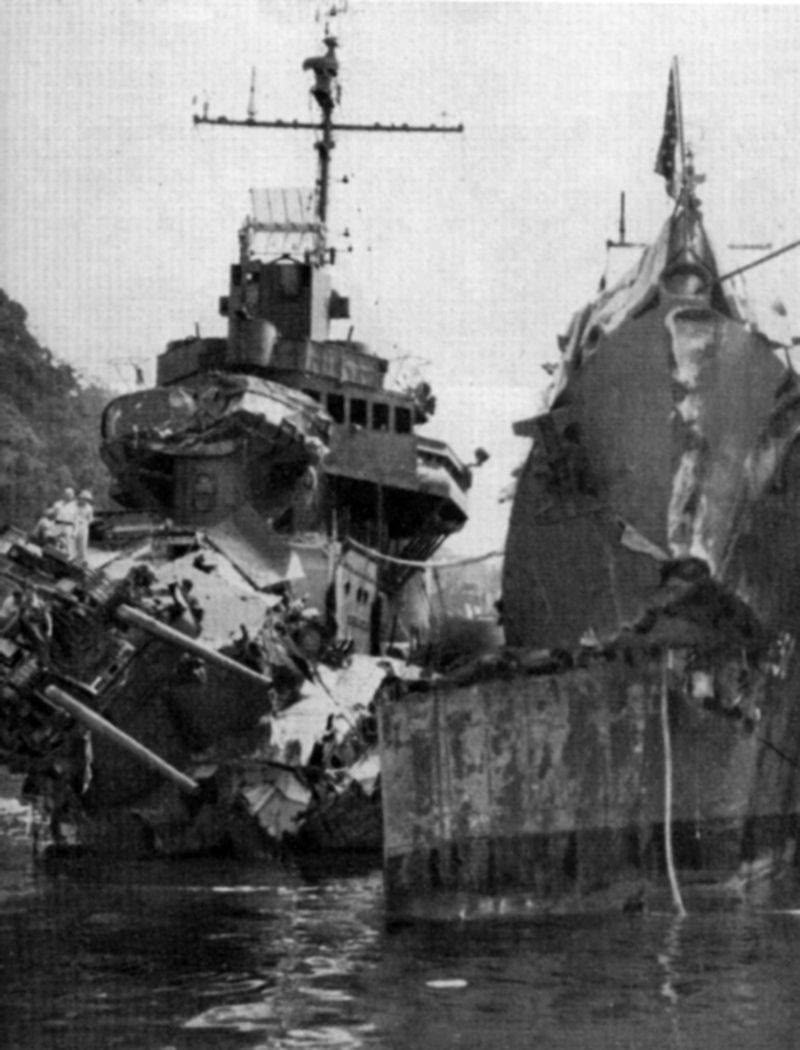
On October 6, 1943, American and Japanese ships fought the naval Battle of Vella Lavella after nine Japanese destroyers arrived to evacuate troops from New Georgia island.
The battle was fought near the island of Vella Lavella in the Solomon Islands. It marked the end of a three-month fight to capture the central Solomon Islands as part of the Solomon Islands Campaign.
The battle occurred at the end of the ground campaign on Vella Lavella, as the Japanese sought to evacuate the 600-strong garrison from the island. The garrison had become hemmed into a small pocket on the island's northern end around Marquana Bay.
While around 20 auxiliary ships and barges evacuated the stranded soldiers, nine Japanese destroyers fought a short but sharp engagement with six U.S. Navy destroyers to the north of the island, diverting attention from the evacuation. As a result of the engagement, the Japanese evacuation effort was successfully concluded, but the U.S. recaptured the island, ending the second phase of Operation Cartwheel. Each side lost one destroyer.
#WeRememberThem
PHOTO: The U.S. Navy destroyers USS Selfridge (DD-357), left, and USS O'Bannon (DD-450), damaged at Noumea, Espiritu Santo, after the naval Battle of Vella Lavella, on October 7, 1943. Selfridge´s bow was torn off by a Japanese torpedo (note sailors climbing in the wrecked gun turret). O'Bannon collided with USS Chevalier (DD-451) during the battle, after a torpedo had hit Chevalier (she had to be sunk later).
We say goodbye to another one of our treasured heroes!
World War II veteran and Dallas real estate pioneer Vincent A. Carrozza, died in Dallas on September 29, 2026, at the age of 101.
Vincent was one of the few remaining World War II frontline combat soldiers and a remarkable figure whose life of service, leadership and achievement left a lasting mark on Dallas and beyond.
Born in New York City on January 15, 1925, Vincent entered Columbia University in 1943 before being inducted into the U.S. Army Infantry. He served with Patton’s Third Army in Europe as a combat infantry platoon sergeant, fighting through Germany and crossing the Rhine and Danube.
During the final days of the war, Vincent’s knowledge of German helped him negotiate the surrender of German forces in Austria. While exploring the area with his squad, he encountered prisoners at the Mauthausen concentration camp and its subcamps — an experience that remained with him throughout his life. For his World War II service, Vincent received the Bronze Star and other military honors.
After the war, he returned to Columbia University, graduating in 1949. His career took him from newspaper reporting and public relations to broadcasting, military service in Alaska and work supporting Alaska’s path to statehood.
After returning to Dallas in 1958, Vincent began a career that would help shape the city’s skyline. Through Carrozza Investments and other partnerships, he developed more than 4 million square feet of high-rise office space over three decades.
Among the landmark projects associated with his career were One Main Place, One Main Tower, One Energy Square and One Dallas Centre. His work also helped shape Oklahoma City’s skyline, including the development of several major downtown towers.
Rest in peace, Sir! We thank you for your service!
#WeRememberThem
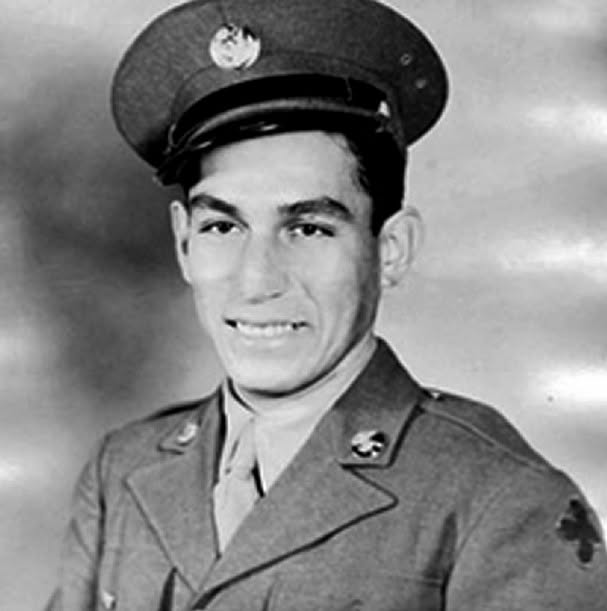
U.S. Army Master Sergeant Manuel Verdugo Mendoza of Miami, Arizona, was posthumously awarded the Medal of Honor for his heroic actions on October 4, 1944, near Mt. Battaglia, Italy.
Mendoza joined the Army in November 1942 and, by October 4, 1944, was serving as a staff sergeant at Mt. Battaglia, Italy. He is credited with single-handedly breaking up a German counterattack. Despite being wounded in the arm, he repeatedly fired on the attacking Germans, enabling his company to hold their position on the hill.
He was posthumously awarded the Medal of Honor for his actions on October 4, 1944. Mendoza had died in 2001 before his Distinguished Service Cross was upgraded to the Medal of Honor in 2014.
#WeRememberThem