BREAKING: The FCC has accepted @SpaceX’s application to acquire 800 MHz of wireless spectrum from Grain Management, covering nearly 100% of the U.S. population and supporting Starlink Mobile’s expansion into satellite-to-phone connectivity
SpaceX is proposing a massive $24 billion power plant and SI supercomputer facility at Starbase, Texas
A newly published notice from the City of Starbase reveals that SpaceX planning to construct, own, and operate BOTH a gas-fired power plant and a super-compute facility
The scale of this proposed expansion is absolutely staggering:
• Approximately 444 acres of land between Boca Chica Blvd and the Port of Brownsville
• Estimated $24 BILLION investment for the initial phases alone
• Multiple construction phases, with potential for even further expansion
• December 9 public hearing on proposed tax incentives
And this is where things get REALLY interesting
SpaceX is planning to bring two of the most critical pieces of superintelligence infrastructure together: power generation and compute
The same city where SpaceX is building the world's most powerful rocket is now being considered for a massive new SI computing and energy complex
Turns out that the Starlink software, built for managing the movement of vast amounts of data through space and to the ground, is also very well suited to training super intelligence
Super Heavy moved to the launch pad at Starbase. Booster 22 is the first Super Heavy V3 booster planned to return to the launch site for catch and was used for final catch testing upon arrival, including a suspended squeeze test at catch height
After its long hero's journey back to Starbase, Ship 40 is getting ready to be transported out of Megabay 2!
What do you think will be the fate of this extraordinary ship? @NASASpaceflight | https://t.co/tPjkWXgBZC
SpaceX has just released a new blog about Starship's upcoming 15th flight planned for Nov 13 with more info about what to expect, the significance of this flight, and their approach to safety:
"Starship is preparing to take a major step towards full reusability: bringing the Starship upper stage back to the launch site for a catch by the tower at Starbase.
To return Starship to Starbase, the spacecraft must now fly a safe trajectory that will take it over inhabited areas in northern Mexico and southern Texas to reach its launch site for catch. Like previous flight testing and the first successful mission to orbit, Starship’s flight profile for this ambitious mission is being designed with opportunities to safely end the mission early if necessary and will follow strict criteria before committing to the final phases of flight.
OUR APPROACH TO A SAFE RETURN:
On Flight 15, Starship will initially launch to a passively safe suborbital trajectory. This is the same flight profile used on Starship’s first orbital mission and ensures that any issues encountered during ascent or shortly thereafter will result in Starship reentering over a cleared area of the Indian Ocean.
After this initial ascent, flight controllers will assess the health of Starship’s systems before giving a “go” or “no-go” for orbit. If “go”, Starship will then perform an orbital insertion burn with a single Raptor sea-level engine, increasing its speed and achieving orbit around Earth.
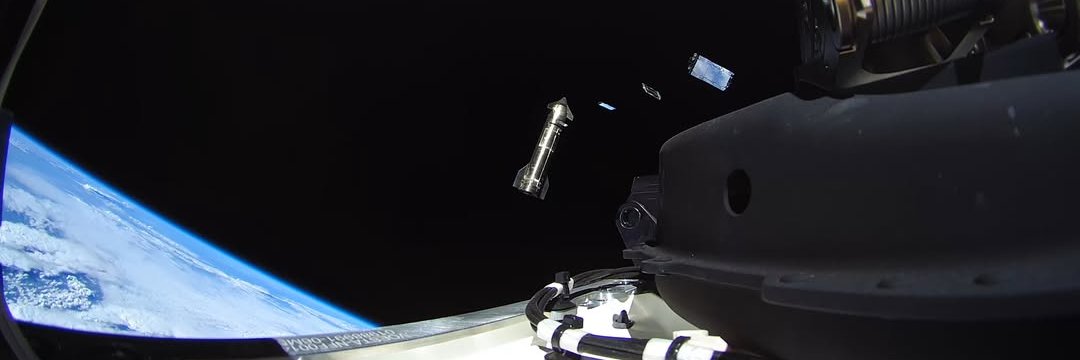
Once on orbit, Starship will deploy its payload of Starlink V3 satellites. Three of these satellites have been modified to acquire imagery of Starship’s heatshield. This method of analyzing Starship’s heatshield has been tested on previous flights and is one of several data sources to help inform Starship’s readiness to return to the launch site on Flight 15.
After deploying its payload, Starship will then coast in orbit for another ~21 hours until its orbit aligns with Starbase for a return. During this multi-hour orbital coast, flight controllers will continuously perform manual and automated checks of Starship systems which, similar to the first orbital flight, will be intentionally conservative. They include Raptor engine health, loss of power or communications, the health of the flight computers and navigation sensors, the structural integrity of the propellant tanks and feedlines, the ability to hold tank pressure, and Starship’s ability to control its attitude.
During this prolonged coast phase, flight control teams have several options to end the mission early and return Starship to precleared areas of the Pacific Ocean if needed. These locations include early- and late-mission splashdown options around Hawaii and a mid-mission splashdown opportunity several hundred kilometers off the coast of Chile. These precleared areas, which were also used during Flight 14, provide a safe place to land Starship if any conditions arise that may preclude the ability to perform a safe reentry.
WHAT SHIP CATCH WILL LOOK (AND SOUND) LIKE:
Flight controllers will only permit Starship to return to Starbase if the vehicle’s status meets our internally developed, and FAA-approved, conditions for a return to launch site and catch.
If these requirements are met, Starship will perform a deorbit burn with a single Raptor 3 engine. This deorbit burn will alter Starship’s path to place the vehicle on a course to reenter Earth’s atmosphere at a specific point over the Pacific Ocean, thousands of kilometers uprange from Starbase.
During reentry, Starship can alter its flight path by moving its four control flaps. This will permit Starship to maintain a safe and known trajectory while guiding itself with high precision control toward Starbase. This control will also allow Starship to carry out a series of small turns in its trajectory to intentionally fly over sparsely populated areas of northern Mexico and southern Texas.
As Starship approaches Starbase from the west, the vehicle will weave its way around the major cities in the Rio Grande Valley, passing to the north of South Padre Island and out over the Gulf of America as it makes its final turn south towards Starbase. This banking maneuver has been demonstrated several times on previous Starship flight tests.
During this phase, residents of Cameron County and those in the nearby area may hear one or more sonic booms as Starship approaches the launch site. A sonic boom is a brief, thunder-like noise a person on the ground hears when an aircraft or other vehicle in the area flies faster than the speed of sound. The sonic boom does not present a health risk and what people experience will depend on weather and other conditions.
As Starship arrives over Starbase, it will perform the final bellyflop maneuver down towards the tower at Pad 2. This bellyflop was proven during a series of high-altitude test hops and during numerous suborbital flight tests. Shortly before reaching the tower, Starship will ignite its three sea-level Raptor engines and flip itself vertical while stowing its flaps. After the flip is complete, Starship will down-select to two Raptor engines and maneuver between the tower's mechanical arms, before down-selecting to a single engine as it comes to a near hover. The arms will close rapidly to catch Starship on its two catch fittings just below the forward flaps. Once Starship registers contact with the tower arms, it will shut down its final Raptor engine.
During reentry, flight controllers will have several options to end the reentry early and safely by intentionally tumbling Starship to ensure that it breaks up in the atmosphere before reaching land. There is also a late-reentry option to send Starship into the Gulf of America if any of its systems or the tower itself encounter an issue after reentry that would preclude a safe catch at Starbase.
THE HOLY GRAIL OF ROCKETRY:
Recovering an entire orbital launch system has never been done, and Starship has always been designed change that. This full recovery is often referred to as the Holy Grail of rocketry as it enables full and rapid reuse of a rocket – opening the door to airplane-like cadence where a vehicle flies again rapidly.
Reaching this milestone with Starship will allow SpaceX to unlock the true capability of Starship and will enable future missions to establish a permanent human presence on the Moon, expand the worldwide Starlink network, launch our Starmind supercompute constellation, extend the light of consciousness to the stars, and make life multiplanetary."
Video below of the what flight 15's mission profile is:
New awards. New mission updates. More progress toward a Moon Base.
We're advancing commercial lunar deliveries, a nuclear-powered rover, launch and orbital transfer services, and infrastructure to support a sustained human presence on the Moon: https://t.co/Yt7oqpvLk5
BREAKING: NASA just announced a new Starship mission for its Moon Base and awarded SpaceX a spot in its $10 billion Moon cargo program.
• Starship will launch communications satellites near the Moon in 2028. The mission will help NASA develop a network linking astronauts and the Moon Base to mission control on Earth.
• Falcon 9 will launch some of NASA’s new Moon Base missions.
• SpaceX was also picked to compete for cargo deliveries to the Moon’s surface under a new 10-year NASA program worth up to $10 billion across all providers.
“Nobody’s ever made a fully reusable orbital rocket… that’s really the critical breakthrough necessary for life to become multi-planetary.”
― Elon Musk
Starship is the vehicle to the Moon and Mars