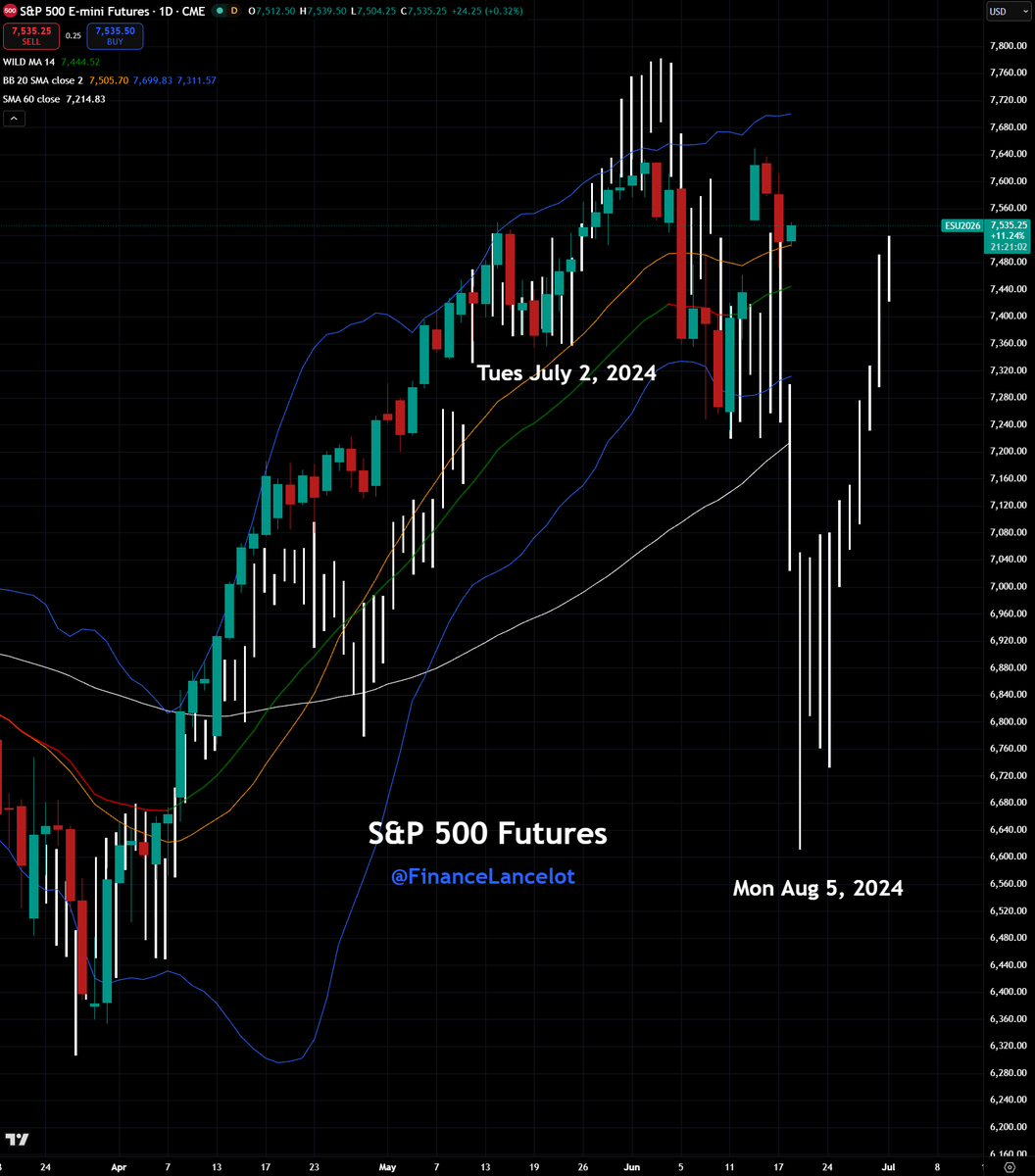
The S&P 500 futures look like they're about to break the July 2024 pattern unless something bad happens tonight.
It was a nice run while it lasted. Trump's comments about "signing" the Iran draft deal were perfectly timed to prevent this.
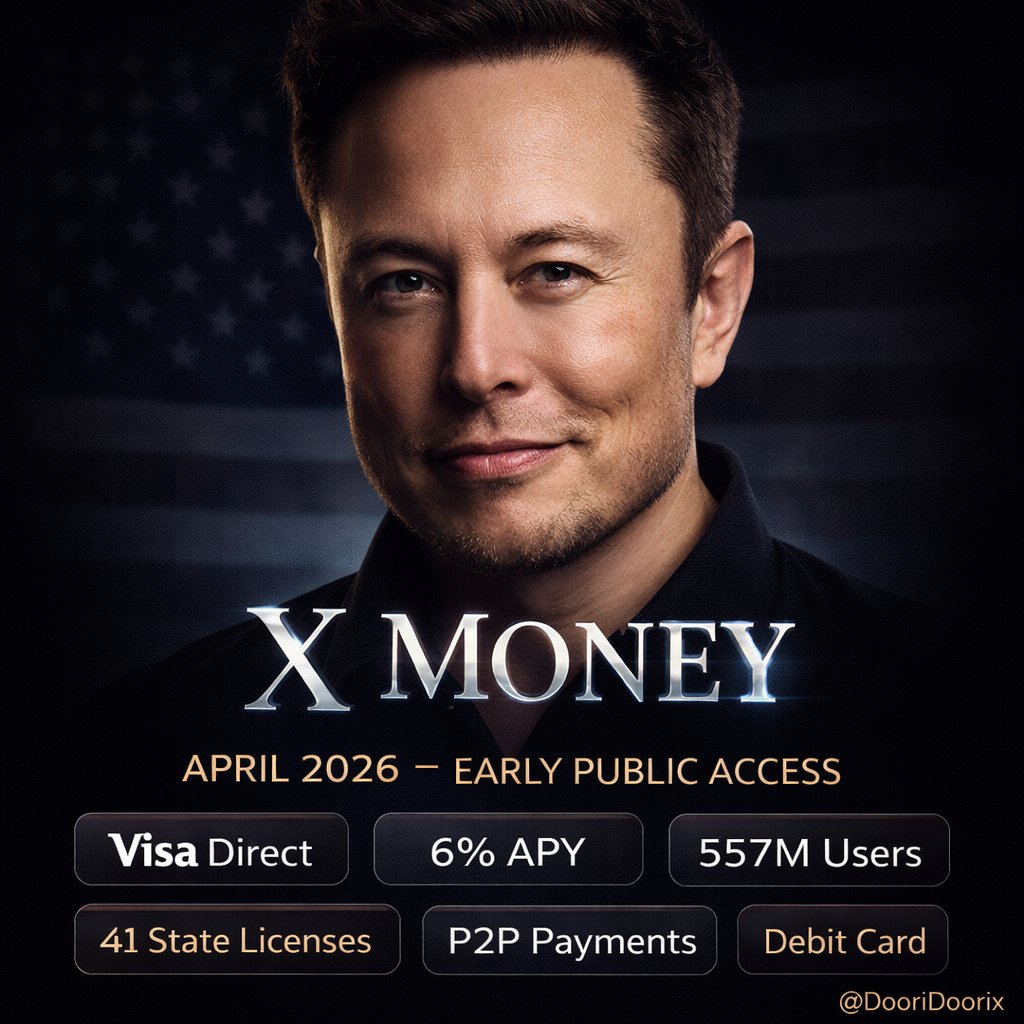
🚨 X MONEY LAUNCHES APRIL 2026 — ELON MUSK JUST CONFIRMED
🔥557,000,000 users.
If you don't know what's about to hit the payment industry, don't scroll down.
That's more than Venmo, Cash App, and PayPal combined.
And it goes live next month.
$XLM $100 $XRP $1,000 @elonmusk Signal 😜
📌 WHAT ELON MUSK SAID
• March 10, 2026: "X Money early public access will launch next month"
• Post reached 64.9 million views
• His goal: "Make X a $250 billion payments company"
• "If it involves money, it'll be on our platform. You won't need a bank account."
📌 WHAT X MONEY OFFERS
• P2P instant transfers between users
• Direct deposit — receive salary straight to X wallet
• Debit card with cashback
• 6% APY on balances — higher than any US bank savings account
• Visa Direct integration — first official partner
• Money transmitter licenses in 41 US states
📌 CRYPTO INTEGRATION
• Launch: fiat only
• But Nikita Bier (X Head of Product) confirmed: "crypto and stock data tools will follow"
• Musk reposted third-party forecast including "crypto integration"
• DOGE surged immediately after announcement
• Official confirmation pending — but the signals are clear
📌 WHY THIS MATTERS FOR XRP & XLM
• X Money × Visa Direct × Cross River Bank → Ripple connection
• 557M users exposed to digital payment rails overnight
• $XRP = wholesale settlement behind the scenes (B2B)
• $XLM = retail payment layer (B2C) — Visa, Mastercard, PayPal, now X
• 6% APY collides directly with CLARITY Act bank lobby war
• Musk is forcing the "stablecoin yield" debate into the mainstream
In 1998, Elon Musk co-founded https://t.co/w03CXIwEkp.
It became PayPal — and changed payments forever.
In 2026, he's doing it again.
557,000,000 users. One app. No bank required. 🚀
#XRP #XLM #XMoney #ElonMusk #CryptoForecast #BullRun2026
DTCC just said they're compressing 50+ years of U.S. market infrastructure into 55 weeks.
$100 TRILLION on-chain. This isn't a drill.
Ripple Prime went LIVE on the NSCC directory March 2nd wired directly into DTCC rails.
The TradFi → Crypto bridge isn't coming. It's already here.
$XRP utility is about to go parabolic. You're early. Act like it. 💥
What if sending money across borders felt as seamless as sending it domestically?
Last year, we set out to transform the cross‑border payment experience with the launch of a new Swift payments scheme – designed to deliver fast, predictable and transparent payments worldwide.
#CrossBorderPayments #SwiftScheme
XRP is a fundamental piece in the full financial stack for modern global finance. The reframe that everyone should be talking about. 🧵
Learn more:https://t.co/seHMpTIwIJ
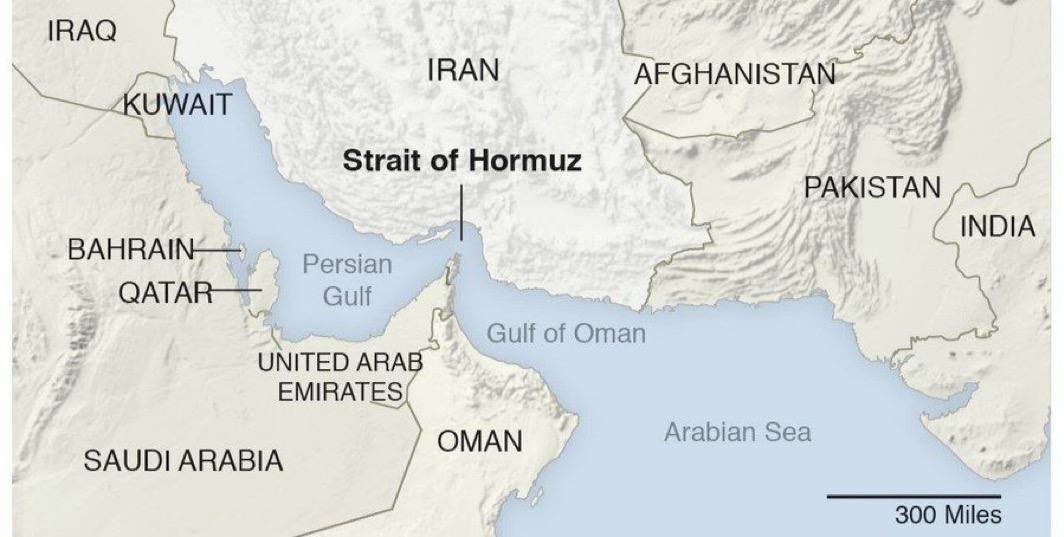
JUST IN: Everyone is asking who wins this war. The answer is not in Tehran or Washington. It is in Riyadh.
Saudi Arabia is emerging from the Hormuz crisis as the undisputed strategic beneficiary while Dubai absorbs the physical damage. This is the rebalancing of Gulf power that no one is modelling and everyone will be pricing within months.
Dubai has been struck repeatedly since February 28. A fuel tank fire at the international airport. Airspace closures. Over 23,000 flights cancelled. Fertiglobe, one of the world’s largest nitrogen producers at 6.6 million tonnes annual capacity, operates from UAE soil that is now under persistent drone and missile threat. The 314 ballistic missiles and 1,672 drones launched at the UAE have not collapsed the country. Its air defenses hold. But they have damaged something harder to rebuild than a fuel tank: the perception of safety that made Dubai the world’s business hub.
Saudi Arabia has absorbed far less direct targeting. The Saudi-Pakistan Strategic Mutual Defence Agreement, signed September 17, 2025, created a military depth that Iran respected even before the war began. Pakistan’s naval assets and nuclear deterrent backstop make direct Saudi targeting exponentially more costly for Iran than striking the UAE. Riyadh calculated this correctly.
Now layer the infrastructure.
Vision 2030 is not a slogan. It is $1.3 trillion of committed capital building cities, entertainment districts, tourism corridors, and industrial zones on a blank slate. NEOM, the Red Sea project, Diriyah Gate, the Qiddiya entertainment complex. None of these have been struck. None carry the insurance repricing that Dubai’s commercial real estate and aviation hub now face. The 2034 World Cup requires stadiums, transport networks, and hospitality infrastructure that is already being built on a timeline that extends well beyond this war.
Every dollar of international capital that hesitates on Dubai because of drone footage is a dollar that considers Riyadh instead. That is not speculation. It is the mechanism by which wars redistribute commercial gravity. The 2003 Iraq war shifted regional banking from Beirut to Dubai. The 2026 Iran war may shift it from Dubai to Riyadh.
The fertilizer dimension makes Saudi ascendancy structural rather than cyclical.
Saudi Arabia controls significant phosphate reserves. Ma’aden, the state mining company, is one of the world’s largest phosphate producers. With Hormuz blocking Gulf urea and ammonia exports from the UAE and Qatar, and China suspending phosphate exports through August, Saudi overland and Red Sea export routes become the only major non-disrupted nutrient pathway accessible to global buyers. NOLA urea at $683 per ton and FAO projecting 100 to 200 million additional people at acute hunger risk means demand for alternative supply is existential, not optional.
Saudi Arabia did not start this war. It pressed Washington to finish it. Reuters confirmed on March 16, citing three Gulf sources and five diplomats, that all six GCC states are urging the US not to stop short. Abdulaziz Sager, chairman of the Gulf Research Center, said Iran crossed every red line. The Gulf wants Iran permanently degraded. Saudi wants something more specific: a region in which its infrastructure, its pacts, its phosphate, and its capital absorb the flows that used to go through a strait it no longer needs to depend on.
The bombs fell on Iran. The drones fell on Dubai. The capital is flowing to Riyadh. And the fertilizer leverage that feeds the next decade of Saudi influence is being locked in by a planting season that closes in four weeks.
https://t.co/iFmUcarGdV
JUST IN: The Pentagon blacklisted the AI that is currently identifying its targets in Iran. Read that sentence again. It is not a contradiction. It is the most important AI policy story of the decade happening in real time during a war.
On 27 Feb, Hegseth designated Anthropic, the maker of Claude, as a “supply chain risk” and ordered a 6-month phase-out from all Department of Defence systems. The formal order followed on 4 and 5 March. The reason: CEO Dario Amodei refused to remove guardrails preventing Claude from being used for mass domestic surveillance of American citizens and fully autonomous lethal weapons systems. He drew two red lines. The Pentagon drew its own.
On 28 Feb, one day after the designation, Operation Epic Fury launched. Palantir’s Maven Smart System, running Claude on classified networks, generated over 1,000 prioritised Iranian targets in the first 24 hours. Target identification. Intelligence assessments. Battle simulations. Operational planning. The AI the Pentagon just blacklisted was the AI the Pentagon used to open the war.
Claude is still running on Maven as of mid-March. CENTCOM retains transitional access for ongoing Iran operations. The Washington Post, WSJ, NBC, and the Soufan Center have all reported Claude’s role in the targeting architecture. The system that compressed the traditional kill chain from weeks to hours, that enabled the Khamenei decapitation strike, that generated the target packages for Kharg Island and Mehrabad, is the same system that Lockheed Martin & Boeing are currently purging from their commercial contracts to comply with the Hegseth order.
The contractors are obeying. The battlefield is not.
Anthropic filed suit on 9 March in two federal courts. Stay appeals were filed on 12 March. Microsoft, retired generals, and AI policy organisations have supported the challenge. The legal argument: designating a company as a supply chain risk while simultaneously depending on its technology for active combat operations creates a constitutional and procurement paradox that no court has previously adjudicated. The stay hearing is imminent.
Amodei’s red lines are specific. Claude will not enable mass surveillance of American citizens on American soil. Claude will not operate fully autonomous lethal systems without human approval in the loop. These are not abstract ethical positions. They are the same guardrails that prevented Claude from being used for the two applications the Pentagon demanded and the same guardrails that did not prevent Claude from being used for the application the Pentagon needed: intelligence-driven target prioritisation with human-in-loop approval for every strike.
The distinction matters. Claude identifies targets. Humans approve strikes. The guardrail is the approval step. Amodei refused to remove it. Hegseth wanted it removed for future autonomous systems. The war proved the guardrail works: 1,000 targets in 24 hrs with human approval for each, a pace that exceeded 2003 shock-and-awe by a factor of two. The system performs at the speed the Pentagon requires while maintaining the oversight the CEO insists on. The designation is not about what Claude does. It is about what Claude refuses to do next.
No direct contracts exist between Anthropic & Israeli defence companies. Rafael, Elbit Systems, & IAI do not run Claude. Any Israeli benefit flows indirectly through Palantir’s Maven platform in joint US-Israeli operations. The targeting data that Israel uses in its own strike packages passes through a system whose maker has been blacklisted by the government that built it.
The AI that drew the red lines is running the war. The govt that blacklisted it can’t replace it mid-campaign & the court case that will determine whether an AI company can be punished for refusing to build autonomous weapons is being adjudicated while that company’s technology generates the target list for the largest US military operation since Iraq.
https://t.co/AEv8EMPdsZ
The Global Currency Reset is here and it starts with the revaluation of 🇮🇶IQD🇮🇶
🚀XRP🚀 is ready for it.
This is some of the best content I’ve ever read on the subject.
Solid addition to the
🇮🇶IQD🇮🇶 MASTERFILE!
Part 1-3 posted below. 🧵
Bookmark and read ASAP!
🚨 THE STRAIT OF HORMUZ IS CLOSED.
This is the biggest financial choke point that could financially collapse the global order.
Nearly 1 out of every 5 barrels of oil in the world moves through that narrow strip of water.
If it stops?
Oil doesn’t “go up.”
It spikes violently.
$120… $150… even $200 oil becomes realistic in a prolonged shutdown.
And when oil explodes, everything explodes with it.
• Gas jumps overnight
• Trucking costs surge
• Groceries get more expensive
• Airlines raise fares
• Heating and electricity bills climb
Oil is embedded in everything you buy.
Now add the financial layer.
In panic, money floods into the U.S. dollar. The dollar can spike hard.
A stronger dollar sounds good but it tightens global liquidity.
It stresses debt markets.
It pressures companies with overseas exposure.
It increases volatility across stocks.
At the same time, higher oil pushes inflation back up.
If inflation surges again:
• The Fed can’t cut rates
• Mortgage rates stay elevated
• Credit card interest stays brutal
• Auto loans stay expensive
Imagine $5–$7 gas.
8% mortgage rates.
Higher food bills.
No relief from interest costs.
That’s not a headline.
That’s middle-class pressure turning into financial suffocation.
This isn’t just geopolitics.
It’s inflation shock → rate pressure → market selloffs → household strain.
If Hormuz stays closed, the real question isn’t “what happens to oil?”
It’s:
Can the average American afford what comes next?
@crypto_bitlord7 When XRP was $0.006, a price of $0.25 felt about as ridiculous as $100 does today. We had a $0.25 party and joked about how impossible $1 seemed.
Ripple just weaponised a decade-old ledger into a full stack --> real-time FX, stablecoin, EVM DeFi (XRPFi)
XRP is the bridge to TradFi, with a narrative that is easy to understand by both instis and retails alike
A snapshot of Ripple/XRP's thesis + product offerings below 👇
- - - - -
1. XRP/Ripple Thesis + catalyst
• More integration with banks and TradFi instis
• @rippleswell 2025 in Singapore starts tomorrow
• Companies and raising to accumulate XRP (search Webus and VivoPower) for their strategic reserve
• XRPFi narrative to make $XRP more useful and onboard more devs + TVL
• Lindy effect (dino coin)
• Large retail holder base (because they made money from XRP + cult-like following)
• Proper entity set up for lobbying purposes
• XRP has always been evil to CT, relatively no one apart from @goodalexander really talks about it --> majority sidelined + non-consensus
- - - - -
2. Snapshot
Ripple has evolved from a single-product remittance company to a multi-line platform --> payments, custody services, stablecoins, EVM chain and project incubation.
Stack
• XRP Ledger (XRPL): one of the longest-running L1s with a token that has large insti + retail holder base
• XRPL EVM Sidechain: Solidity smart-contract support opening up DeFi/L2 composability without bloating the base chain --> XRPFi thesis
• RLUSD (Ripple USD): USD-backed, NYDFS-approved stablecoin, positioned to complement XRP in payments
• Ripple: payments (real-time FX), custody (for institutions), hackathons and accelerators (seeing dApp ecosystem)
- - - - -
3. XRPFi/XRPL EVM Ecosystem
a) Wallet
• @Girin_Wallet
• @First_Ledger
• @BifrostWallet
• @MetaMask snaps
b) Bridges
• @axelar
• @squidrouter
• @SkipProtocol
c) DeFi
• @doppler_fi
• @AnodosFinance
• @MoaiFinance
• @StrobeFinance
• @MagneticXRPL
• @realSologenic
• @HammySwap
• @HoudiniSwap
• @OpenEden_X
d) Meme/ NFT/ ID
• @rddldotfun
• @xrpcafe
• @xrplnames
e) Chart/ TVL
• https://t.co/urLuS2bHkZ
• https://t.co/jN6kei5uJg
• https://t.co/yrHIrIxbBN
- - - - -
4. Highlight on @doppler_fi
• Pioneering the XRPFi narrative (categorical leader + first movers)
• Unlocking Yield for XRP via CeDeFi + on-chain DeFi strats (proven and sustainable model)
• Gives users access to quant-driven yield strategies like spot-perp arbitrage, maintaining on-chain proof-of-reserve
• Enables liquid staking + 1-click leveraged staking for yield compounding
• $30m in TVL so far and 2nd-largest XRP wallet (user base)
*disc: advisor to the team
- - - - -
5. Conclusion
We can see that Ripple/XRP is building the full layer of products (payments, custody, a regulated stablecoin and an EVM sidechain under one umbrella) around a Lindy ecosystem that is finally seeing organic traction and devs mindshare.
This positions Ripple/XRPL as a serious contender for institutional DeFi rails (XRPFi) + cross-border treasury infra and an asset that is easy to understand by both instis and retail.
They’re still trying to value $XRP like a stock
I broke down why that logic fails and why XRP moves on flows and real usage, not speculation
If you care about real-world usage, this shifts everything
Watch here 👇