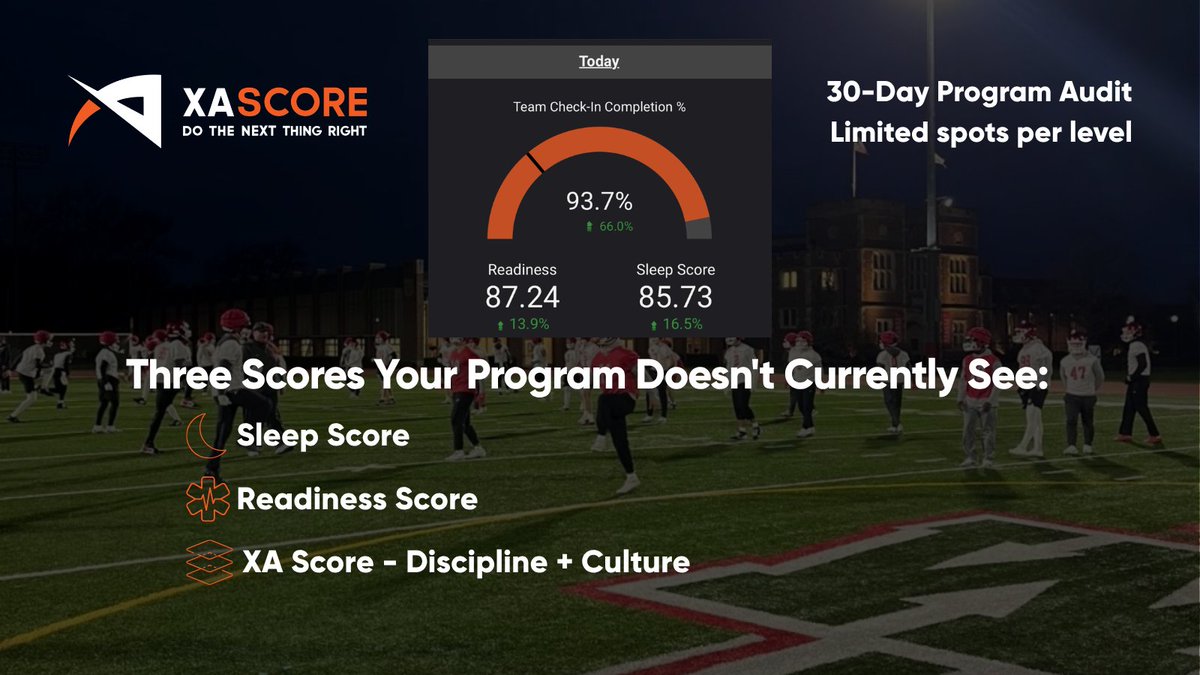
XA Score redefines athletic performance by seamlessly integrating real-time data on daily habits, mental health, and readiness to perform. #DoTheNextThingRight
Developed by coaches, for coaches, and as an outlet for your Student-Athletes.
Earning Trust... Redefining Victories... and Changing the Culture... with #XAScore
Learn more: https://t.co/tEOC3pPLa1
The Head Coaches I’ve spoken to recently are saying two things: I know I need to figure it out. I don’t know where to start.
Unless you as a HC, or someone on your staff is using AI every day already, you need someone to help you get started.
It’s like anything (good) we do in this game. Get reps and stack wins.
After 22 years of coaching college football and now 3 years of using AI to help me be a founder and business owner, I can clearly see the immense opportunity of AI in what I did every single day as Coach…
My 2 cents, connect with Coach Wells!
Most coaches have had this moment. I'm not proud of mine...
A player isn’t practicing well.
You think it’s effort.
Then later you find out they were carrying something heavy you never knew about.
Or worse, you don't find out...
"What would a better coach do?" Awareness changes everything.
This is what awareness looks like at the highest level.
Pause. Reflect. Reset.
The question is…
how often does it happen?
Once a week won’t change behavior.
Daily will.
"What's assaulting you right now in life? Write it down." James Bettcher runs mindful moments with his NFL players to max their on-field performance. Here's the full practice.
Millard West Football is building something real.
A system that shows up every day.
Every athlete. Every check-in.
No guessing.
@MWWildcatFB @david_mceneney
#OnTheRoster | #DoTheNextThingRight
Lane Kiffin with an outside the box philosophy on culture building, the concept of environment as a strategy, and how people don't "buy-in" more than they 'belong':
🔓 The fastest way to change behavior isn’t motivation, it’s environment. Leadership is about creating the conditions where people feel safe, valued, and inspired. When the environment is right, performance doesn't need to be forced; it’s unlocked.
🌅 People don’t commit to a job, they commit to a feeling. If your environment makes them feel like they belong, they’ll want to show up. If it makes them feel managed, they’ll only show up when they have to.
🎨 The trajectory of a team is set long before the results show up. It’s shaped in the culture you tolerate, the standards you reinforce, and the environment you DESIGN every single day.
The environment you create doesn’t just influence behavior, it determines identity. Once people see themselves differently, they develop different habits to align with that belief and push them toward their goals. 🎯
This study is fascinating. But it’s not ‘sleep doesn’t matter.’
It’s:
Sleep matters.
And perception of sleep matters.
The danger is when athletes outsource awareness to a number.
The opportunity is when they learn to recognize patterns for themselves.
That’s where real performance gains happen.
You check your Apple Watch in the morning. Sleep score: 62. You decide it's going to be a foggy day. And then it is.
A 2014 Colorado College study suggests the score itself causes the fog.
164 people walked into a lab. Researchers hooked them up to fake EEG equipment and told them the readout would show their REM percentage from the night before. Then they fabricated a number. Half the room was told 28.7%. Half was told 16.2%. The machine wasn't measuring anything.
Participants took four cognitive tests. The Paced Auditory Serial Addition Test, where you add numbers spoken at increasing speed and hold your last sum in working memory while computing the next. And the Controlled Oral Word Association Task, where you generate as many words as you can starting with a single letter under time pressure. Both are gold-standard measures of attention and executive function used in clinical neurology.
The 28.7% group outperformed the 16.2% group on both. Significantly. How rested participants actually felt that morning predicted nothing.
The mechanism is mindset priming an executive resource. When you believe you slept well, you allocate cognitive effort more aggressively. You don't conserve. You don't pre-disengage. Belief about the resource changes how you spend it.
Two control conditions ruled out demand characteristics. Participants weren't trying harder because they thought they should. Real measurable cognitive performance shifted with the number on the readout.
The Apple Watch sleep score. The Oura ring readiness number. The morning ritual of checking either one is taxing the resource you're about to need.
The performance gap from a fabricated REM percentage was larger than the gap from how rested participants actually felt. The number was louder than the night.
Most programs don't lose games because of talent. They lose them because of what happens between Sunday night and Friday.
Conversation with @ThadWells and our founder, @CoachBMcCaslin, on the system to fix that.
If you're a head coach—or ever want to be one—this 30 minute interview is a MUST watch.
NOTHING is more important than getting good talent on the team and keeping that talent on the field.
Bookmark this for later if you can't watch now.
But if you have the time PLEASE watch!
New from @CoachBMcCaslin:
The NCAA just told programs to prioritize athlete well-being and build systems, not just collect tools.
Daily body weight, done right, is exactly that kind of system. Simple. Consistent. Revealing. And it protects the one thing every program needs most: availability.
https://t.co/r8865A5bL2
"Daily body weight isn't about weight."
"It's about availability."
"Every college program does it. Almost no high school does."
"Hydration → shows up here."
"Sleep → shows up here."
"Fueling → shows up here."
"The question isn't 'what do you weigh?' It's 'what is your weight telling us?'"
"Weight is context. Not identity."
"Read the full breakdown"
Every college football program takes daily body weight.
Almost no high school program does.
It's not philosophy. It's logistics.
And it’s costing them the one thing every program needs most: availability 👇
Great piece from @LemireJoe in @SBJ 👇
https://t.co/rLytFX8fCR
The NCAA just told every program, D1 budget or D3 budget, the fundamentals are the same. Build a system. Know what your athletes are carrying.
Most are guessing. 1.5 million check-ins says we're not.
@CoachBMcCaslin
@CoachBMcCaslin The NCAA isn't creating a new idea. They're naming the gap. From D1 to D3, the fundamentals are the same.
We'll add high school programs to that list... Athletes have something to tell their coaches every single day.
Most programs still don't have a way to hear it.
With Show Me Qualifier this weekend in KC, this is something we were just talking about…
Most teams look similar on Day 1.
Day 2 is where things start to separate.
It’s not always talent.
It’s not always tactics.
It’s who can maintain.
Sleep. Recovery. Emotional steadiness.
The part most people don’t see, until it shows up.
Curious what other coaches see late in tournament weekends.
#ShowMe #Volleyball
Your athletes have something to tell you every day.
Are you listening for it?
Are you connected enough to be what they need you to be, that day?
We are helping coaches answer those questions with confidence.
Every day…
Coaches: if an athlete shows up to practice sore, sleep-deprived, and dehydrated... do you know?
Most don't. Those things are invisible until they show up as something else.
After 20 years coaching, I’ve seen what happens when you don’t really know how your players are doing.
The NCAA is right to push this conversation.
Performance tech should make coaches better decision-makers, not just better data collectors.
That’s what we’re building at XA Score.
We’ve built entire systems around training load.
But we still guess on how athletes are actually responding to it.
That gap shows up mid-season.
And by then… it’s too late.
The NCAA isn’t saying “use more tech.��
They’re saying:
👉 Be intentional about how you use it.
We agree.
XA Score is built to help coaches understand their athletes daily, so better decisions get made and more players stay available.
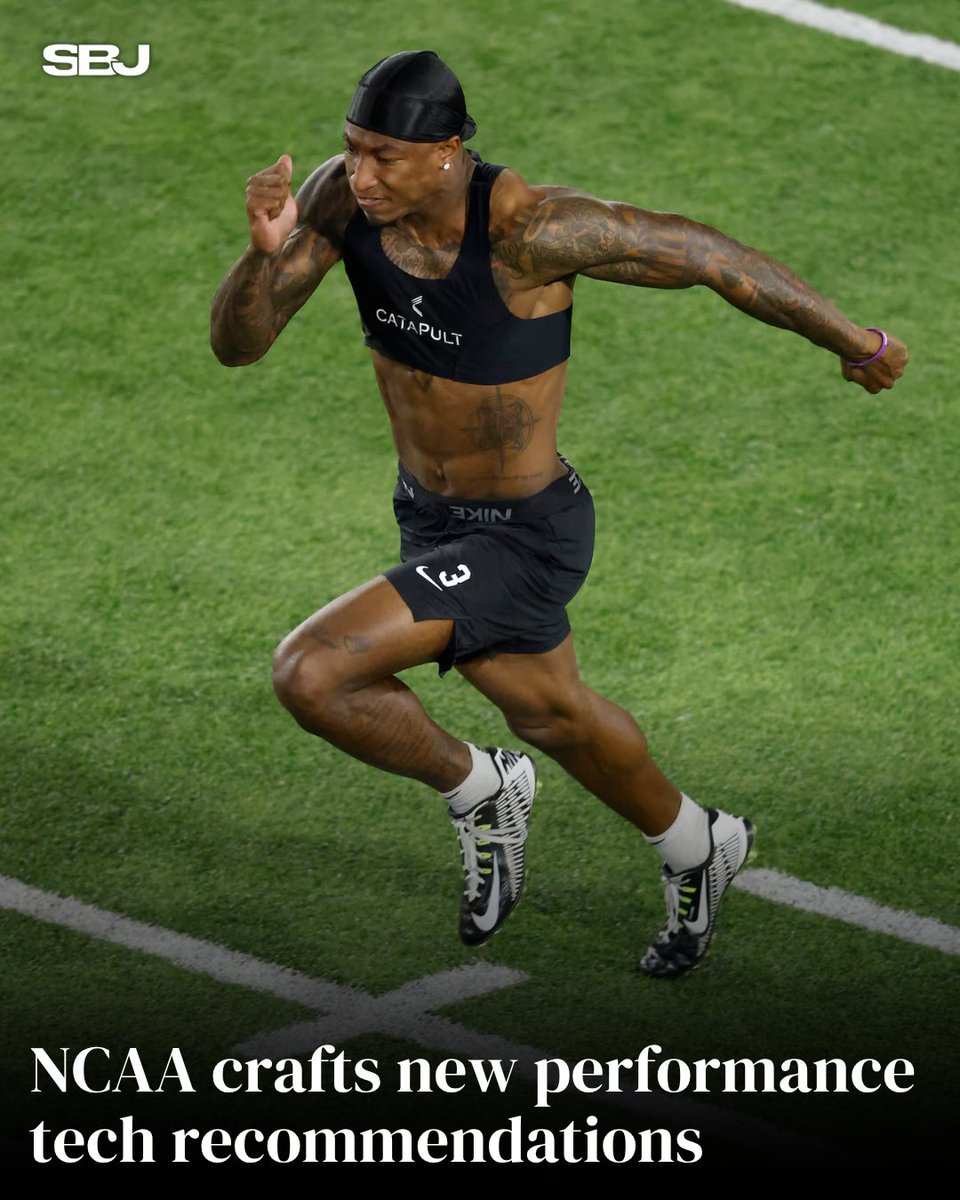
The NCAA published new recommendations on performance technology, giving schools a road map around policy, data management and responsible use.
The focus is on student-athlete health and well-being, collecting what is necessary and doing so transparently.
MORE: https://t.co/1lIFYJljX0
Most programs track what they do.
Very few track how athletes are responding.
Sleep.
Soreness.
Weight trends.
Stress.
That’s where availability is won or lost.
Book Now: https://t.co/hs28DoQAGQ