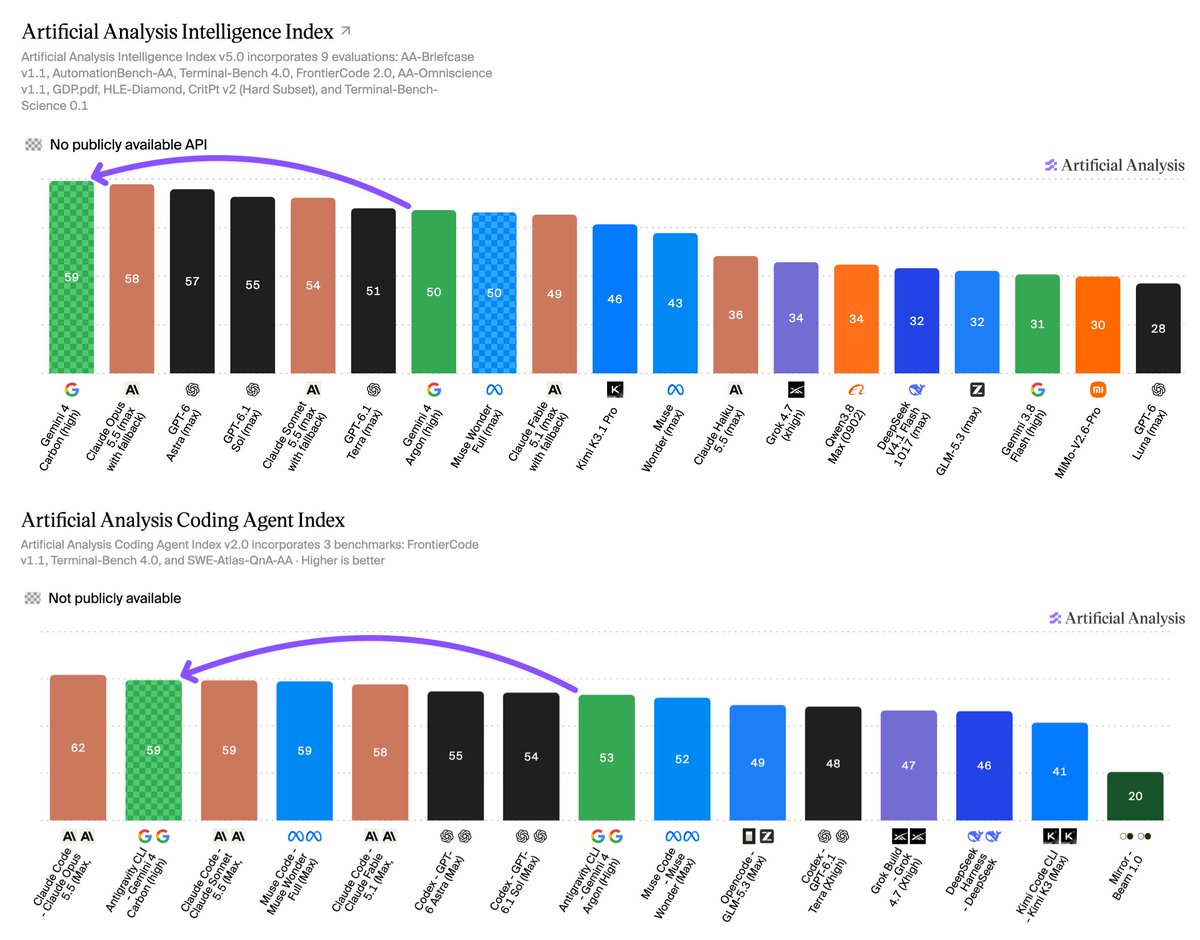
Google’s Gemini 4 Carbon is the new #1 on the Artificial Analysis Intelligence Index v5, and second only to Claude Opus 5.5 on the Artificial Analysis Coding Agent Index
Gemini 4 Carbon scores 59 on Intelligence Index v5, driven by leading performance in complex reasoning, knowledge, and scientific tasks. It also has large gains in coding and knowledge work, particularly when compared to other Gemini models, but it is not leading in all these areas.
As with launch of Gemini 4 Argon, Gemini 4 Carbon is being rolled out to selected users and is not yet publicly available. Google is offering a 50% launch discount, with no confirmed end date. All our charts and figures use standard pricing for both Gemini 4 Carbon and Argon.
Key results for Gemini 4 Carbon with high reasoning:
➤ Gemini 4 Carbon leads the Intelligence Index v5, with the #1 score in 4 of the 9 Index evaluations: HLE-Diamond, Terminal-Bench-Science, AA-Omniscience, AutomationBench-AA. Carbon makes substantial gains elsewhere but is not leading in coding and knowledge work
➤ Behind only Claude Opus 5.5 on coding agents: With Antigravity CLI, Gemini 4 Carbon (high) scores 59 only 3 points behind Claude Code with Claude Opus 5.5 (max, 62) on the Artificial Analysis Coding Agent Index. Carbon ranks second on both Terminal-Bench 4.0 (64%) and FrontierCode v1.1 (51%), behind Claude Opus 5.5 (max) at 56%. Google has historically underperformed in this area and so this improvement stands out
➤ Improved agentic knowledge work, but not yet leading: On AA-Briefcase, Gemini 4 Carbon (high) scores 1609 Elo, a 126-point improvement over Gemini 4 Argon (high, 1483), but still behind models including Grok 4.7 (xhigh, 1638), Muse Wonder (max, 1659) and Kimi K3.1 Pro (1678). The largest gain comes from Presentation, up 293 Elo to 1598, alongside a 120-point improvement in Analytical Quality to 1671
➤ Lower Cost per Task than Claude Opus 5.5 for comparable overall intelligence: Gemini 4 Carbon costs $7.76 per Intelligence Index task, ~23% less than Claude Opus 5.5 (max, $10.04) but ~1.2x GPT-6 Astra (max, $6.25). It uses 123k output tokens per task, 29% fewer than Claude Opus 5.5 (max, 173k). At the same $4/$20 standard pricing, its Cost per Task is in line with Gemini 4 Argon ($7.68), while scoring 9 points higher on the Intelligence Index
➤ Leading AA-Omniscience v1.1 score, with low hallucination: Gemini 4 Carbon scores 54 on our recently updated AA-Omniscience v1.1, 6 points ahead of Claude Opus 5.5 (max, 48) and 8 points ahead of Gemini 4 Argon (46). Accuracy (% correct) rises 10 points over Argon to 58%, while its hallucination rate rises from 4% to 11%. This is still the second lowest of any model, behind only Argon, compared with 50% for both Claude Opus 5.5 (max) and GPT-6 Astra (max)
Key model details:
➤ Context Window: 1M tokens
➤ Multimodality: Text, image, video, and speech input, with text output
➤ Pricing: $4/$20 per 1M input/output tokens, the same as Gemini 4 Argon’s standard pricing, with a 50% discount. Cached input tokens receive a 95% discount ($0.20 per 1M)
Congratulations to the @GoogleDeepMind team!
Running DeepSeek-V4.1-Flash on a 12GB RTX 5070 at over 100+ tok/s is absolutely absurd. 😭
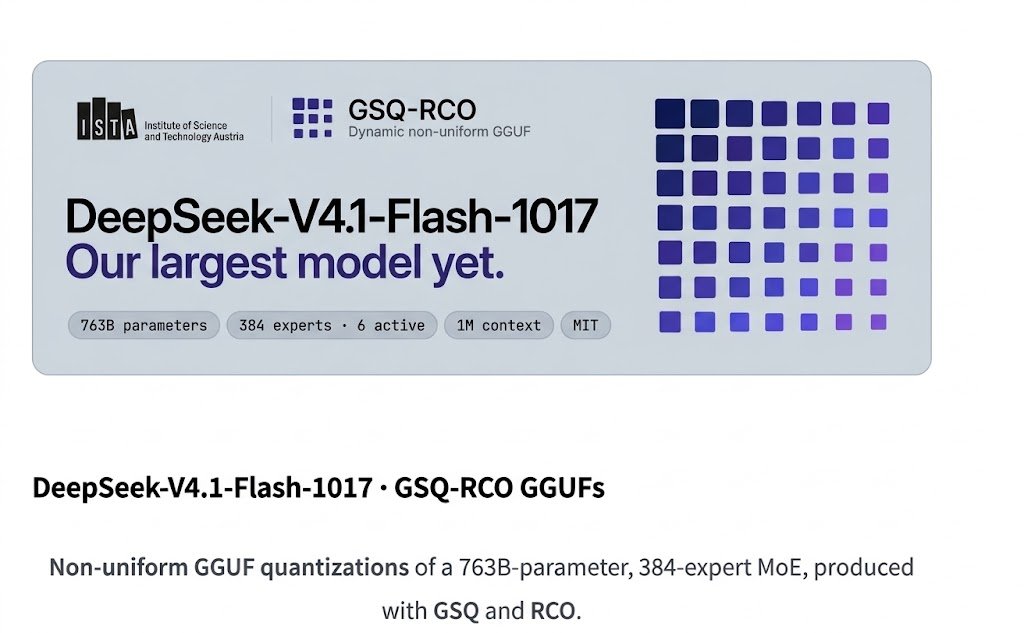
The Strata engine’s layer-major chunked reading + GSQ-RCO quantization makes consumer MoE offloading feel completely native. Prefill is flying, and more RAM directly boosts decode speed.
Local compute is getting ridiculous. 💀
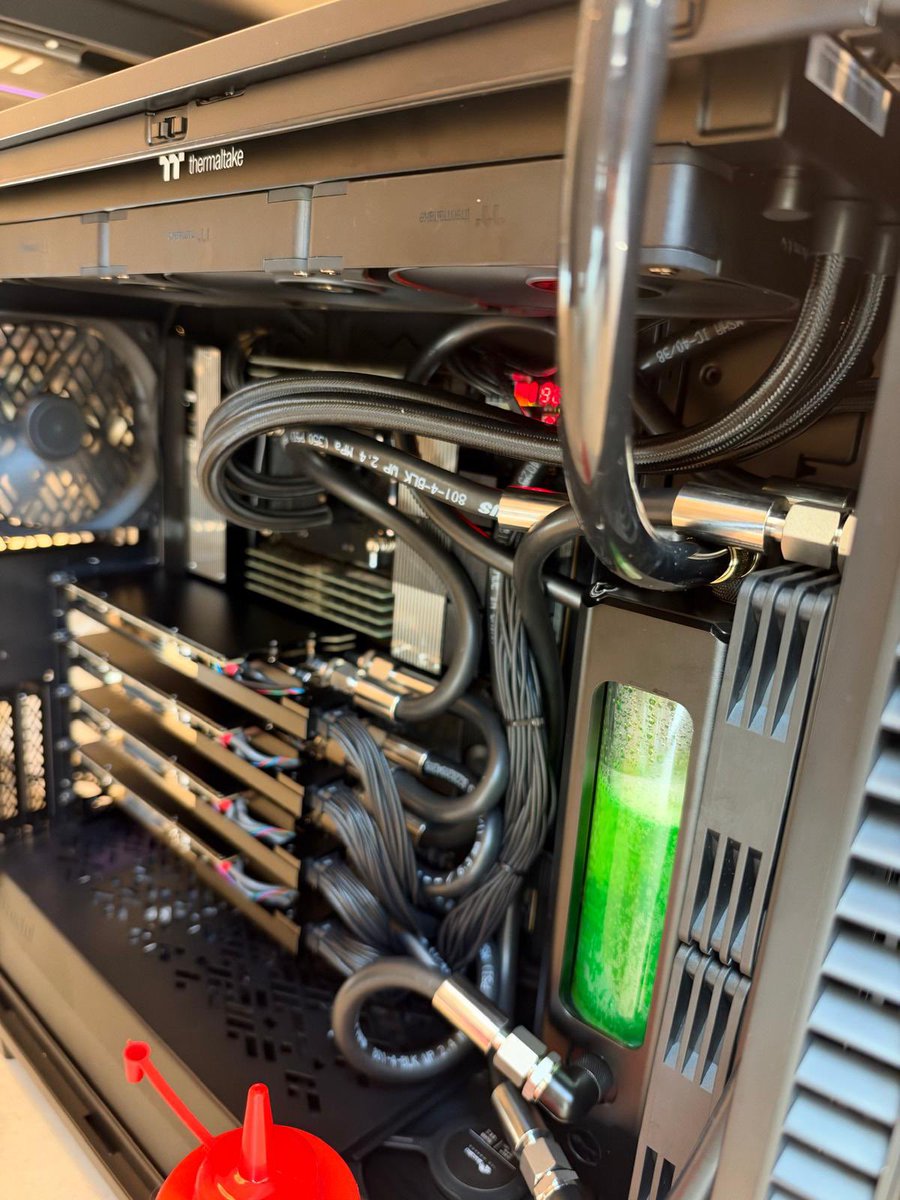
Run DeepSeek V4.1 Flash 1017 with the full official weights on your 4x DGX Sparks, using TensorFold, Abliterated! 🔥
- Full support for switchless TP4
- 1M context, 16M total KV cache
- 16 concurrent sessions with 1M each
- 15 GB of free mem per Spark after load
- OFFICIAL weights, no further quantization!
- Needle passed at 100% depth
- ABLIT is off by default. Gated.
Performance tested on a switchless TP4. It should be faster with a switch.
Decode speeds, non-greedy, thinking on:
- 66 tok/s on prose, single stream
- 96 tok/s on prose, 2 concurrent streams
- 173 tok/s on prose, 16 concurrent streams
Decode speeds, greedy, thinking off:
- 85 tok/s on prose, single stream
- 113 tok/s on prose, 2 concurrent streams
- 210 tok/s on prose, 16 concurrent streams
Decode speeds per stream in deep context (128k), non-greedy, thinking on:
- 58.6 tok/s on prose, single stream
- 83 tok/s on prose, 2 concurrent streams
- 132 tok/s on prose, 8 concurrent streams
Prefill: 4000+ tok/s up to 256k.
This is the best model to run if you have 4x DGX Sparks, bar none! It works so well on the Sparks that it's unbelievable.
Get it here:
https://t.co/6Og2cWfW4f
Turns out there was more to get out of 3-bit. 🙂
Qwen3.8 Flash Next: close to 16-bit on 3 text benchmarks, ~259 tok/s single-request decode.
8500 tok/s prefill (64K)
2× R9700 + system RAM.
New weights are up:
https://t.co/T1i3SiahQv