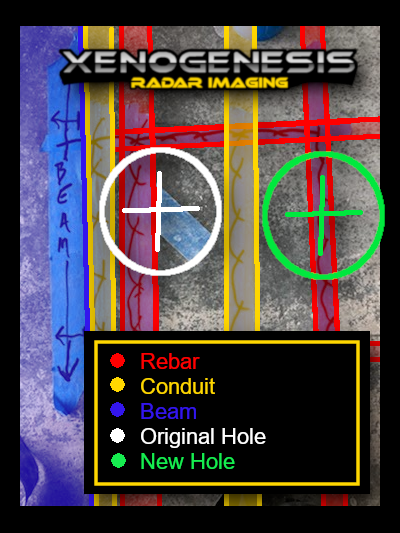
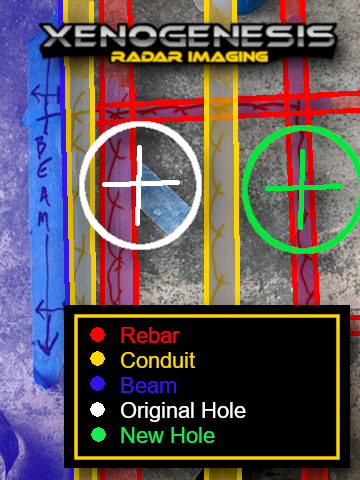
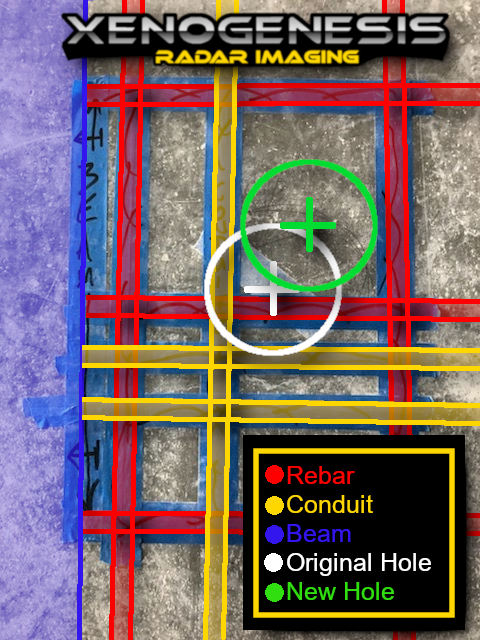
Some times there just is no clear location and moving the hole over a foot in another direction is not an option. In these cases, we try to help you pick the safest option available.
#GPR#GroundpenetratingRADAR#xenogenesis#concrete
This Ground Penetrating RADAR (GPR) Scan was for a floor box. The area was scanned and the box was able to be relocated to avoid any damages to the surrounding conduits.
#xenogenesis#GPR#GroundpenetratingRADAR#concretescanning
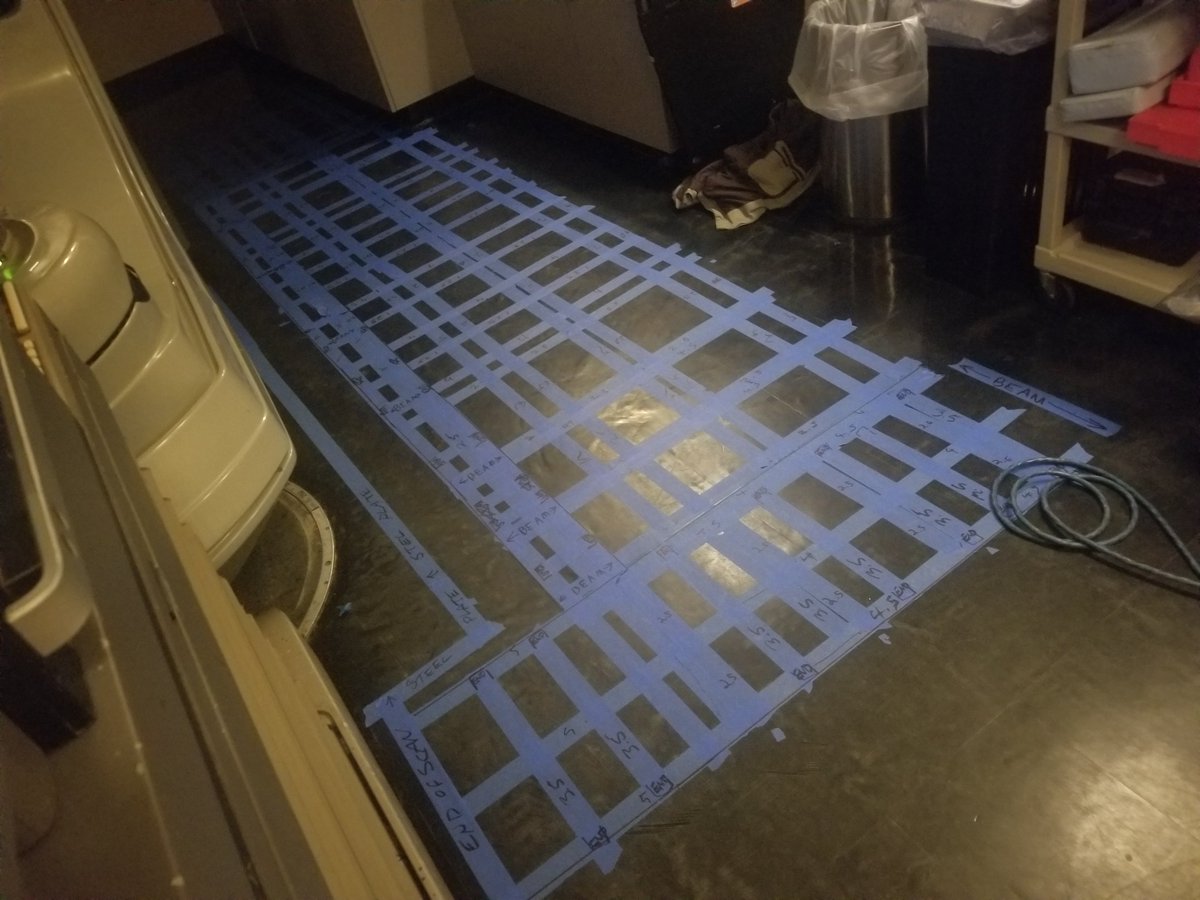
we found the bottom of this small slab on grade area at over 3 feet deep and rebar 1 foot on center 15 inches deep. This is deeper than footers I have seen in large hospital buildings. Talk about built to last
Full Artical Located Here: https://t.co/EBuGc2WrkU
#Xenogenesis#gpr
Ground Penetrating RADAR (GPR) can locate voids or anchors in concrete slabs. By mapping out the rebar mat and scanning the areas in between you can identify any anchors that may be present. #gpr#xenogenesis#Atlanta
In this scan location we found a high concentration of electrical conduits. The original location of the core was going to pass through two electrical conduits embedded in the slab. This was simple to avoid by moving the location 3 inches to an area clear of any steel or conduits
GPR Viewer from https://t.co/JYHW04s262 is one of the best tools for viewing GPR data. This is a FREE tool made by Lawrence B. Conyers. One of my personal favorite features is how it handles gain. You can vary the gain at different depths and get a clearer picture. #gpr
Ground Penetrating RADAR will save you money and keep your team safer. We find one in five scan locations are located above a conduit, PT cable or another significant object. The price of hitting one conduit or PT cable would cost more than 30 scans on average to repair.
#GPR
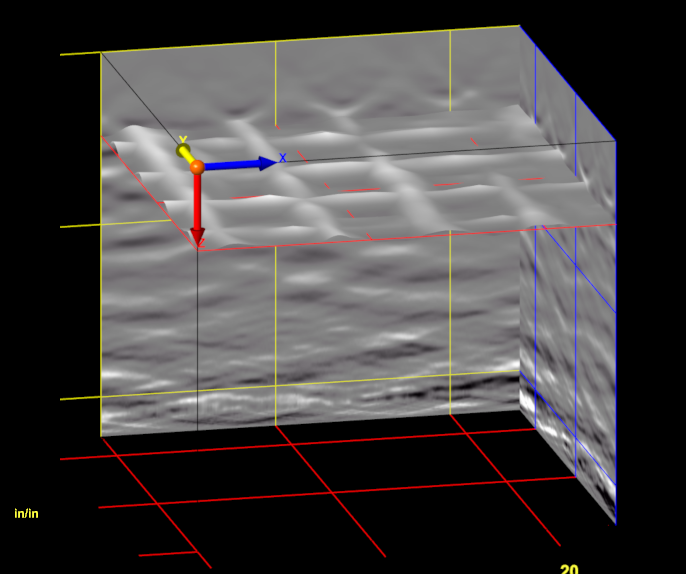
GPR 3D Imaging is a useful tool for getting a picture of what is in the concrete subsurface. 3D is also available for utility or other grade applications for those who needed the data for geophysical applications.
#GPR#groundpenetratingRADAR#concretescanning#xenogenesis
Water can drastically affect the attenuation of the GPR signal. This property can make water leaks very easy to locate with GRP. If you are having trouble locating the source of your massive water bill having a GPR tech come out might be your best option.
#gpr#xenogenesis
The China National Space Administration’s (CNSA) is going to use Ground Penetrating RADAR to look at the subsurface of Mars. This type of Ground Penetrating RADAR (GPR) is also going to be in the NASA Mars 2020 rover, due to launch in July.
#GPR#GroundpenetratingRADAR#mars
2019 GPR Market State
Top Market Performers
GSSI
MALA
IDS GeoRadar
GEOTECH
SSI
US Radar
Utsi Electronics
Chemring Group
Radiodetection
Japan Radio Co
ChinaGPR
Kedian Reed
#GPR#GroundPenetratingRADAR#xenogenesis
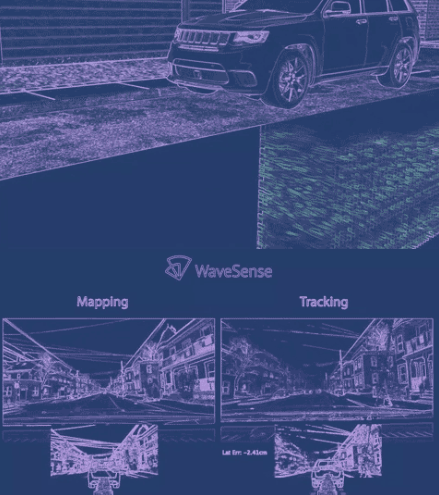
A company called WaveSense is trying to add Ground Penetrating RADAR (GPR) into the array of sensors that are used on self-driving cars. WaveSense uses gpr + gps to map the road.
The full article is located here
https://t.co/JgwHL4zPE5
#GPR#GroundpenetratingRADAR#waveSense
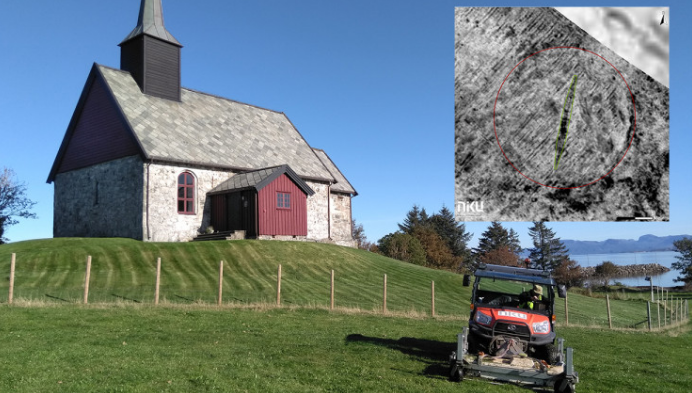
Ground Penetrating RADAR discovered a Viking ship at Romsdal County in Norway. This was done by LBI. Check out more of there discoveries here: https://t.co/Yf081WANhN
#gpr#groundpenetratingradar#xenogenesis#utilitylocate
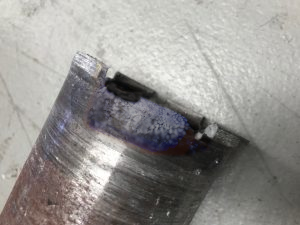
Steel embedded in concrete is hidden to us, but can still be very active. Concrete is very porous which can allow moisture and air to reach the steel if it is not set deep enough in the concrete.
Full Article
https://t.co/D1IfwR4tlB
#gpr#groundpenetratingRADAR#xenogenesis
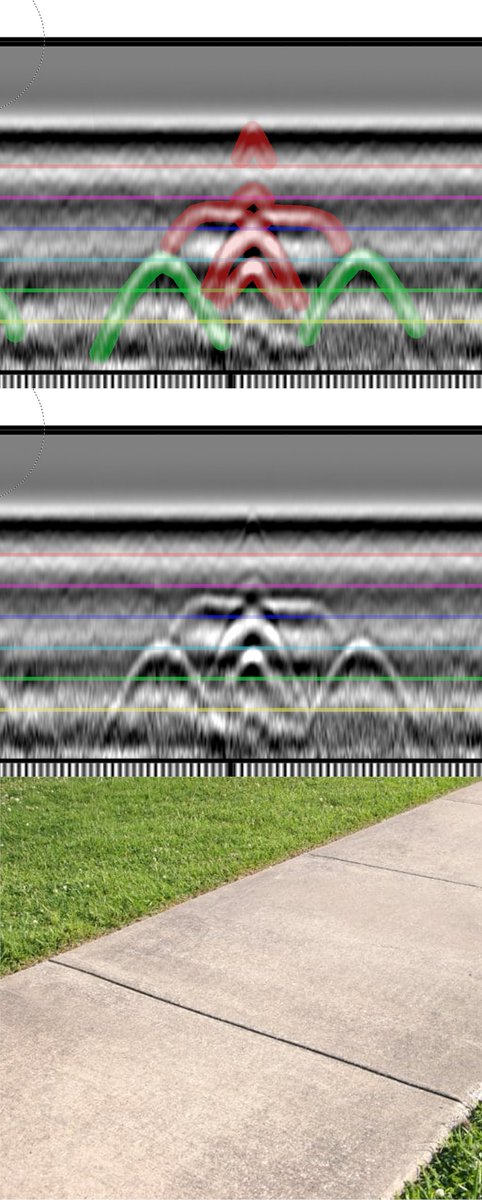
In GPR Concrete Scanning, context and experience is very important. Knowing what peaks are the steel you are looking for and what peaks to ignore only comes with time.
full article
https://t.co/pR4QL64pj5
#xenogenesis#GPRConcreteScanning#groundpenetratingradar#Charlotte
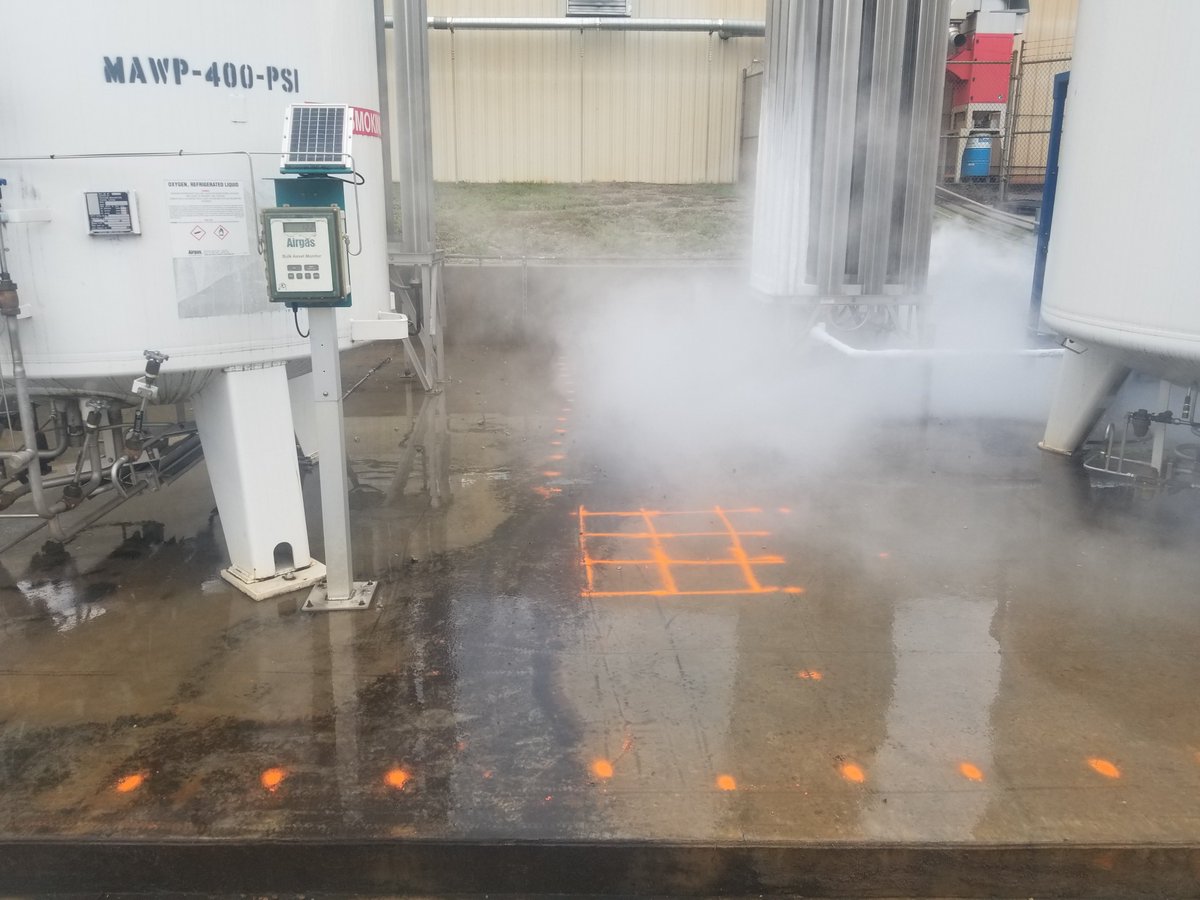
This GPR Concrete Scanning job was for two cores in close proximity. The spots were marked out in orange. After scanning the hole was relocated a few inches to the left and the conduit was avoided.
#gpr#groundpenetratingradar#xenogenesis#atlanta