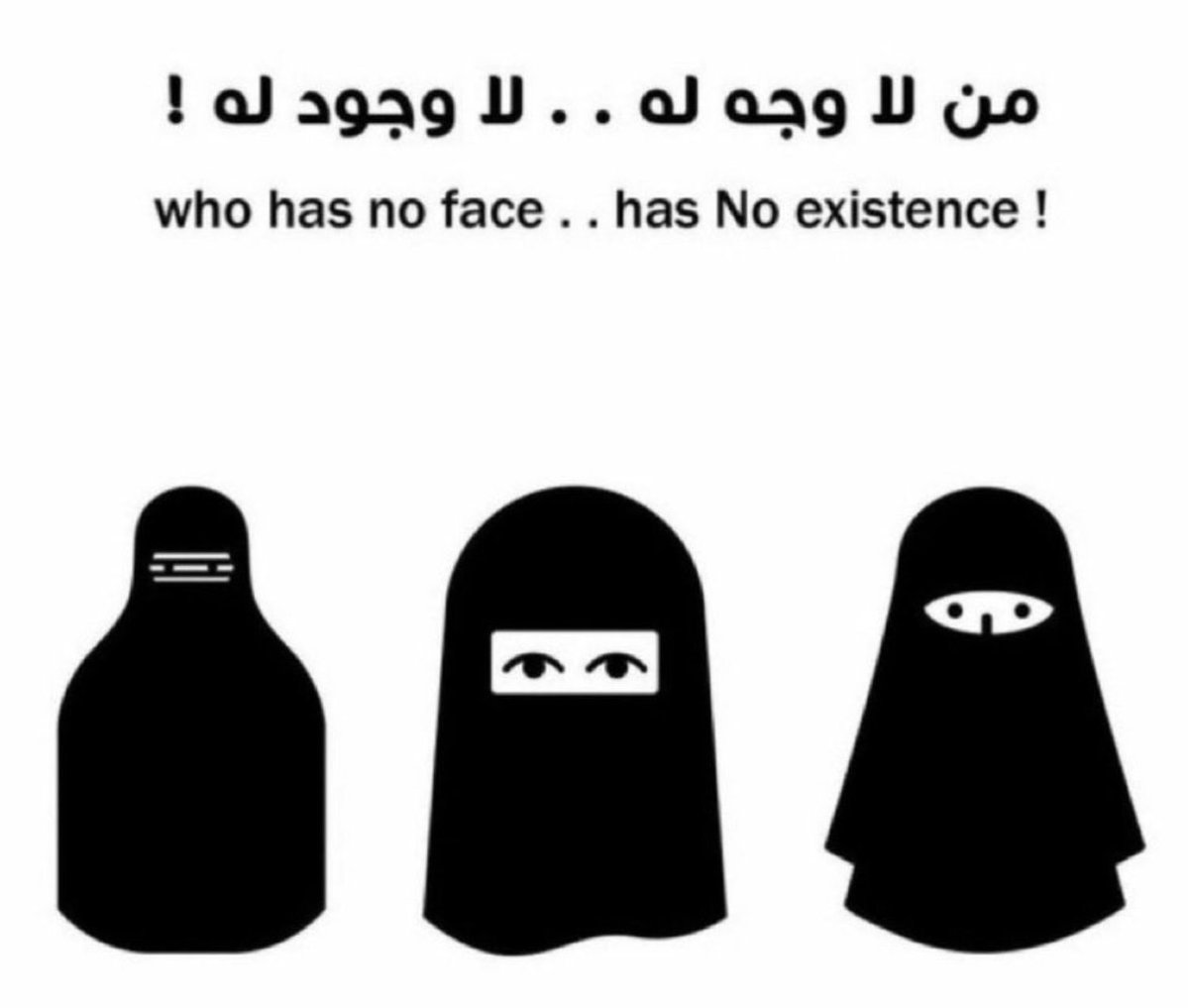
Tomorrow at Speakers’ Corner — Free Your Faces
2-4pm Hyde Park Corner, London.
Dear Let Women Speak supporters,
Tomorrow at Hyde Park we are returning to Free Your Faces and to the women whose voices started this campaign.
It began at Speakers’ Corner last August when I said three words to two young women wearing niqab: “Free your faces.”
Since then, women have written to me quietly and anonymously about what life behind the veil can actually mean.
I woke this morning to hundreds of messages, predominantly from women in Saudi Arabia, but also from Iraqi, Afghan and Syrian women. I still have around 380 messages waiting to be read.
They are writing because women are organising and speaking under the banner No More Niqab 2030, and they want women outside their countries to amplify their voices.
Read their words.
One young woman wrote: “I hate wearing the niqab. I feel like I have no identity and no existence. I feel suffocated, I can’t breathe.” She talks about headaches, about feeling ashamed when she wears it, and about looking at herself and feeling as though she has lost her personality.
Another Saudi woman described being forced into the niqab at fourteen and then, as she grew older, living two completely different lives:
“One version of me was the girl my family expected me to be and the other was who I actually was when I was finally free.” She says she would remove the niqab when she was safely away from her family, only to put it back on before returning home. Her description of what those years cost her is devastating: “I lost my childhood and my teenage years inside a black piece of fabric.”
A fourteen-year-old girl wrote about being frightened of the niqab from childhood and says she was later beaten and forced to wear it despite her family knowing about that fear. She finished her message with these words:
“My face is not shameful. I am not something to be ashamed of. And I deserve to have my voice heard.”
Another woman told me that when she was twelve, girls at her school were ordered to wear the full niqab, black gloves, long socks and loose abayas. According to her account, when they refused, they were called into the school courtyard one by one and beaten until they complied.
Other messages describe a different sort of imprisonment.
Women talk about having to become two people: the woman they really are and the woman their family requires them to pretend to be.
One woman wrote: “I have to live as two people, who I actually am and who I am expected to be.” She no longer believes in the religion she was raised in, but says that openly admitting that could threaten her safety, relationships and place in society.
Others describe being unable to leave their homes freely, needing male relatives to accompany them, being pressured into marriage, being threatened with abandonment, or living in fear that their families will discover the lives they lead in secret.
One of the most important things these women have repeatedly asked me to explain is this: For many of them, the Saudi government is not currently forcing them to wear the niqab. Their families and communities are.
One woman put it plainly: “The government doesn’t force us to wear this thing, it’s the community, the families.”
Saudi Arabia has changed enormously in recent years, and some Saudi women who contact me describe lives of considerable freedom. Others tell me that once the front door closes, their reality is entirely different.
Both things can be true. This isn't about pretending every Saudi woman lives the same life. It is about listening when individual women tell us what their lives are like. Some can study. Some can work. Some can drive.
Yet they tell me they still cannot decide whether their own face may be seen.
One woman wrote of the contradiction she sees around her:
“Men can ignore many other teachings, but the moment it comes to a woman’s clothes, body, sexuality, or freedom, suddenly everyone becomes extremely religious.”
And again and again, among the anger, fear and desperation, comes another message: Please don't stop.
An Iraqi woman wrote today: “Our voices alone are not enough. We also need the support of women from other countries to help amplify our voices.” That is precisely what we can do.
Please go to the Free Your Faces pages on the Let Women Speak website and read the testimonies women sent us last year.
Then look through my X timeline and read what is arriving now.
I have been unbelievably moved by these women, and I am deeply honoured that so many of them have chosen to trust me with their stories.
I don't take that lightly.
Some of them seem to have placed a little piece of their hope in me — hope that if enough people outside their homes, families and countries hear what they are saying, something might begin to change.
They think I might be able to help break the spell: the spell that says this is simply normal, that nobody should question it, that a woman's face is something dangerous or shameful, that family honour belongs on her body, and that obedience is the price she must pay for love and belonging.
I cannot promise these women that I can change their lives. But I can promise them that I will not look away. I can read their words. I can repeat them. I can put a microphone in front of their testimony when they cannot safely stand behind one themselves.
And perhaps, if enough of us do that, the spell really can begin to break.
One of the most extraordinary things about the messages arriving today is that these women are not asking me to speak for them. They are already speaking.
They are asking us to make sure the world hears them. If you are coming to Speakers’ Corner tomorrow, bring one of their testimonies with you.
Choose one.
Print it.
Bring it.
And, if you are willing, stand up and read her words aloud.
Some of these women are taking considerable risks merely by writing to us.
I will continue working through the hundreds of messages waiting for me. I will publish as many as I safely can on X and then put them on the Let Women Speak website so these testimonies are not simply swallowed by a social-media timeline.
There is something extraordinarily powerful about women standing freely in Hyde Park reading the words of women who cannot safely stand in a public square and say those same things themselves.
They have already written the words.
Tomorrow, we lend them our voices.
FREE YOUR FACES
Speakers’ Corner, Hyde Park
Sunday, 2–4pm
Kellie-Jay
Let Women Speak
#٢٠٣٠_بلا_نقاب
@amna77k@user1997060 ؟يامجنونه اهلها قامعينها تبي تتحرر اساسا كل ماتطلعين الشارع بتلاقين نيقابيز
بكل مكان كلهم مجبورات الهاشتاق ذا عشان تنحظر قطعة القماشه الخرا ذي