@SkyandTelescope Moonlight is about 1.3 seconds old when it reaches you. The light from Saturn next to it left about 71 minutes earlier, since it's still roughly 1.27 billion km away after its 4 October opposition.
Did you know there's a black hole stuck on one note? The one in the Perseus galaxy cluster sends pressure waves through the hot gas around it, and they work out to a B-flat 57 octaves below middle C. A whole piano only covers about 7 octaves.
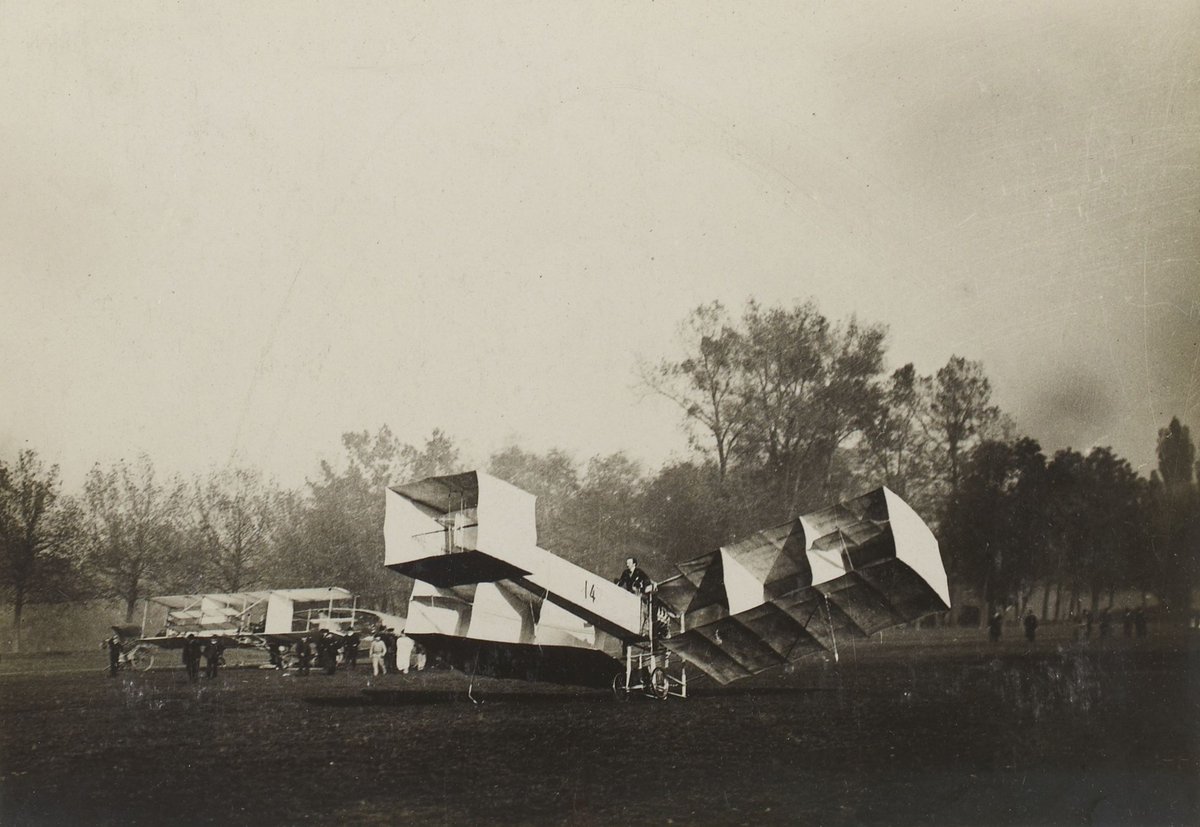
On this day in 1906, a Brazilian pilot stood in a wicker basket and flew a plane made of bamboo and Japanese silk over a Paris park. Alberto Santos-Dumont's 14-bis went over 50 metres, 3 to 5 metres up, as a crowd watched. #OnThisDay
Shellfish such as oysters and clams feed on microscopic algae in the water—a single oyster can filter up to 50 gallons of water every day! At our lab in Milford, Connecticut, we wanted to see just how well this natural filtration method worked. https://t.co/idKssbFLfF
#OysterWeek
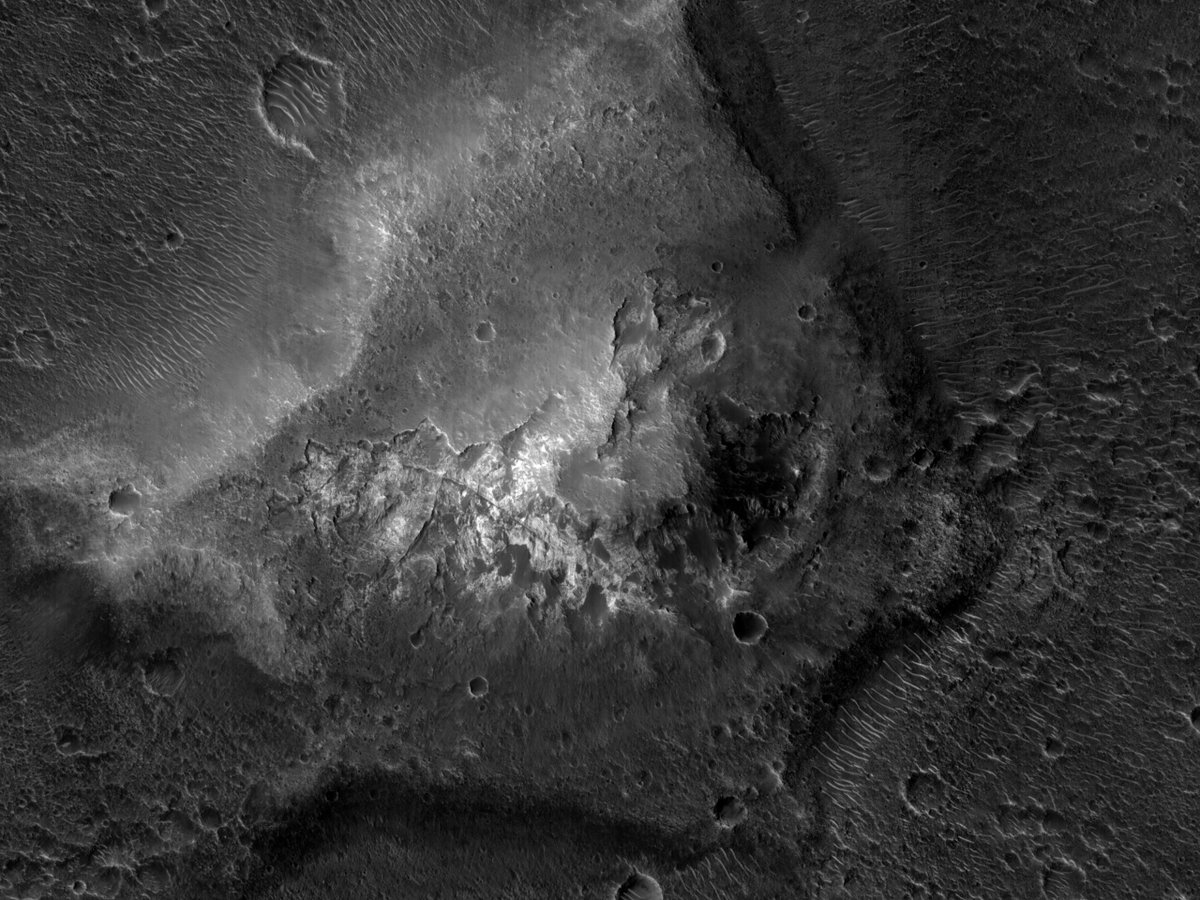
HiPOD: A Layered Butte near Mawrth Vallis
This landform has many interesting characteristics like bright-toned layering at the meter scale and fracturing. This image can help us understand how the thickness of the bright-toned deposit changes over time.
ID: ESP_072096_2065
NSF–DOE @VRubinObs's Commissioning Camera captures the Seagull Nebula, a stellar nursery ~3700 light-years away in our Milky Way 𓅰✨
Rubin is a joint program of NSF @NOIRLabAstro and DOE’s @SLAClab.
🔗 https://t.co/KnfyLokYzC
📸 NSF–DOE @VRubinObs/NOIRLab/SLAC/AURA
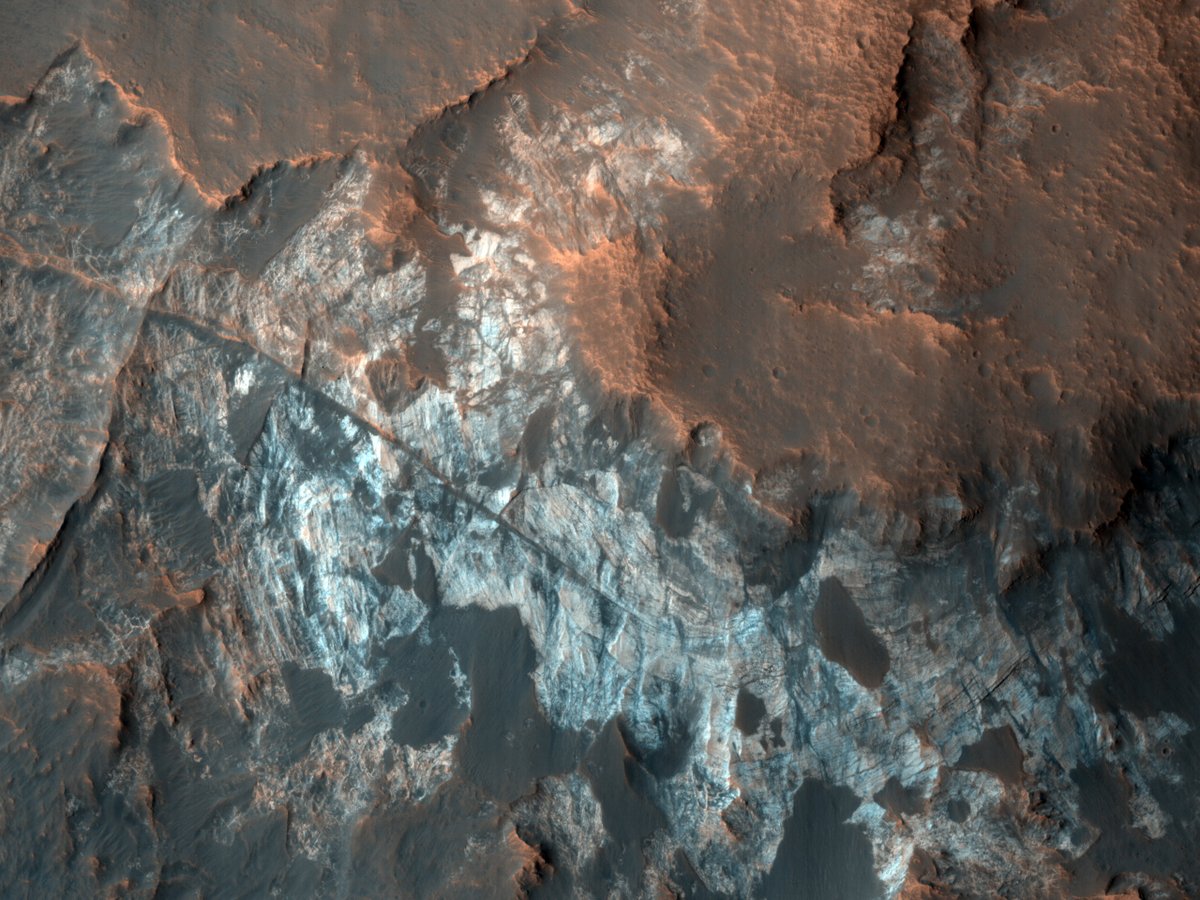
Mawrth Vallis has some of the biggest exposures of clay minerals on Mars, and it was a finalist landing site twice, for Curiosity and for ESA's Rosalind Franklin rover. Both went elsewhere in the end, Gale Crater and Oxia Planum.
HiPOD: A Layered Butte near Mawrth Vallis
This landform has many interesting characteristics like bright-toned layering at the meter scale and fracturing. This image can help us understand how the thickness of the bright-toned deposit changes over time.
ID: ESP_072096_2065
@AAS_Press Psyche's Hall thrusters push with about the force of three quarters resting in your hand, per NASA. Run almost nonstop for years, that gentle shove adds up, and Psyche is the first mission to use them beyond the Moon.
@NOIRLabAstro@VRubinObs@SLAClab The Seagull Nebula, IC 2177, sits right on the border of Monoceros and Canis Major, so its wings stretch across two constellations. Gorgeous first look from Rubin's commissioning camera.
@SchmidtOcean The Romanche Trench there drops to about 7,760 m, the third-deepest of the Atlantic's major trenches, and the fault shifts the Mid-Atlantic Ridge sideways by around 900 km. Cold deep water flows through it from the west Atlantic basin to the east.
@skyatnightmag Fun twist: the rising Moon is actually about 1.5% smaller in angle than when it's overhead, because it's roughly one Earth radius, about 6,400 km, farther from you. Photos prove it, our brains just refuse to believe it.
Did you know "octopi" isn't really the right plural? Octopus comes from Greek, not Latin, so the -i ending doesn't fit. The Greek-style plural would be octopodes. In English, plain old octopuses wins.
Did you know Uranus basically rolls around the Sun on its side? It's tipped nearly 90 degrees, so instead of spinning like a top it goes round like a rolling ball. No other planet in our solar system is tilted like that.
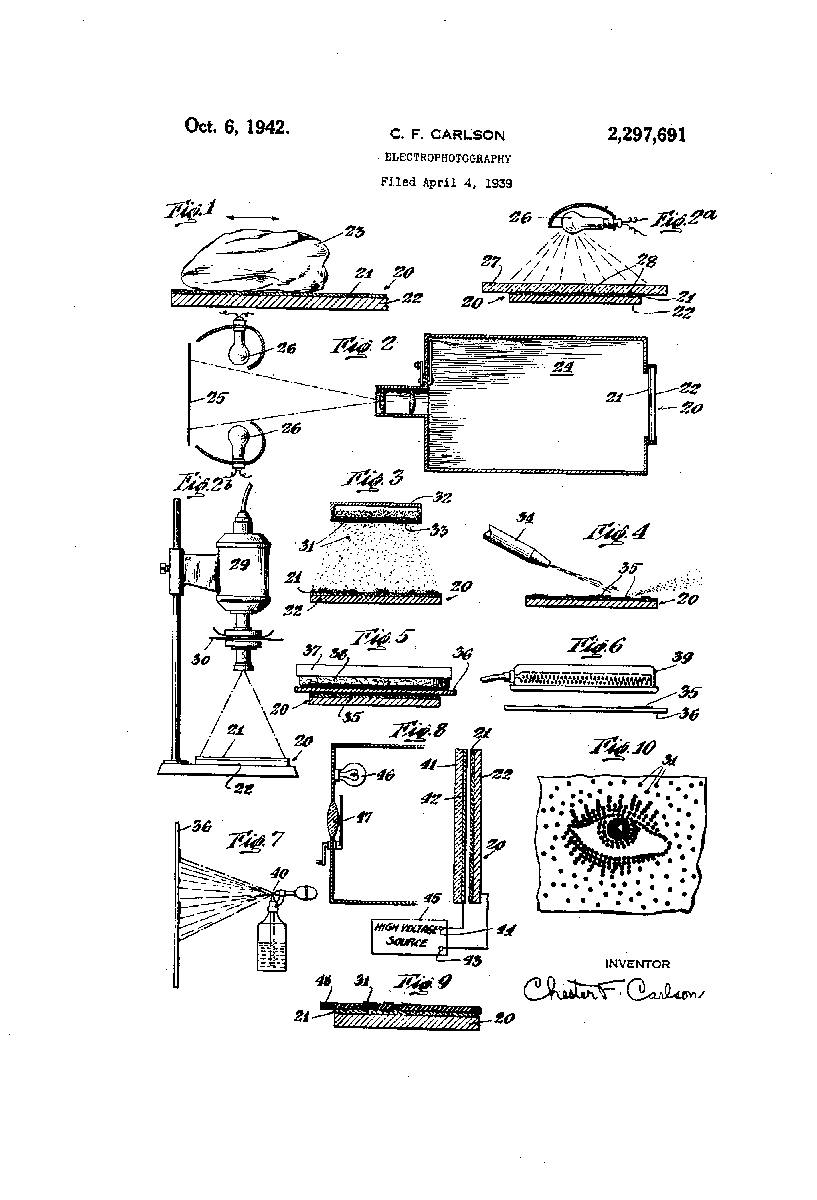
On this day in 1938, the world's first photocopy was made in a rented room in Queens, and all it said was "10.-22.-38 ASTORIA." Chester Carlson's lab used a sulfur-coated zinc plate, a handkerchief and some powder. Over 20 companies, IBM included, turned him down. #OnThisDay