Chapter 30: Cartagena, Back to South America https://t.co/6tDullisBL
We never tire of reminding you that the oldest Spanish laws favored manumission, while other European nations—for all their boasted civilization—have consistently blocked this absurdly inhuman practice.
Chapter 29 From Batabanó to Trinidad
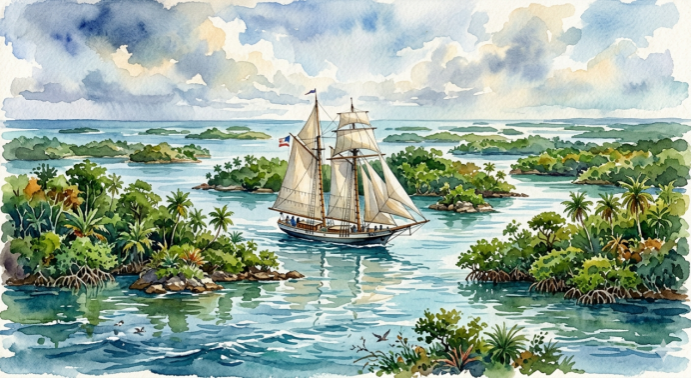
In 1494, during his second voyage, Christopher Columbus, struggling for fifty-eight days against winds and currents between Isla de Pinos and the eastern point of Cuba, named these islands the “Gardens of the Queen.”
——Alexander.von.Humboldt
https://t.co/43ne26KJ3X
Chapter 28: Beautiful Havana https://t.co/lpsNvN0LWK
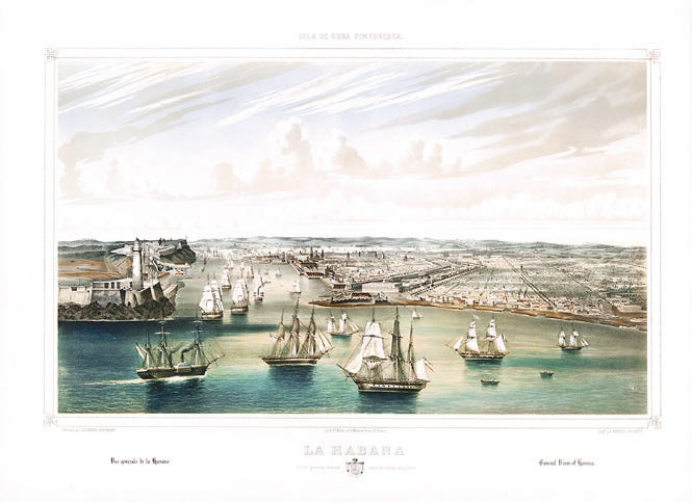
The prosperity of Havana and its commercial connections with the ports of the Pacific enabled me to raise funds for several years. I had exchanged my income in Prussia for part of the payments made to General Gonzalo O’Farrill, the Spanish ambassador to Prussia.
——Alexander.von.Humboldt
Chapter 27 The Voyage from the Venezuelan Coast to Havana https://t.co/MsK4WAKdeO
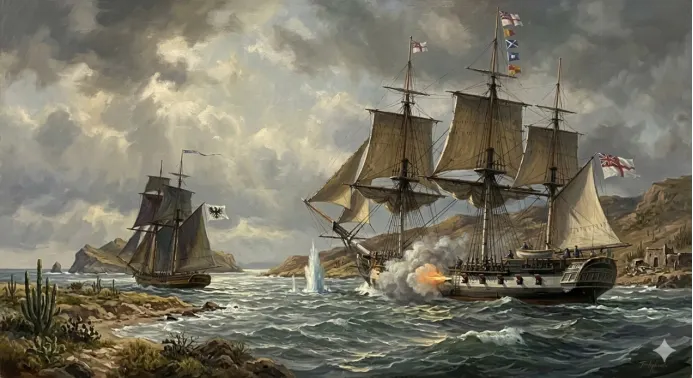
On December 3, we were uneasy at the approach of a small vessel supposed to be a pirate, but as it drew near, we recognized the Balandra del Frayle.
——Alexander.von.Humboldt
Chapter 26 From Villa de Pao to New Barcelona https://t.co/zHWdDQ0hXc
Since my arrival in America, I have had no opportunity of expressing myself in my native language, and I could have wished that it had not been on so unpleasant an occasion.
——Alexander.von.Humboldt
Chapter 25 — Llanos del Pao
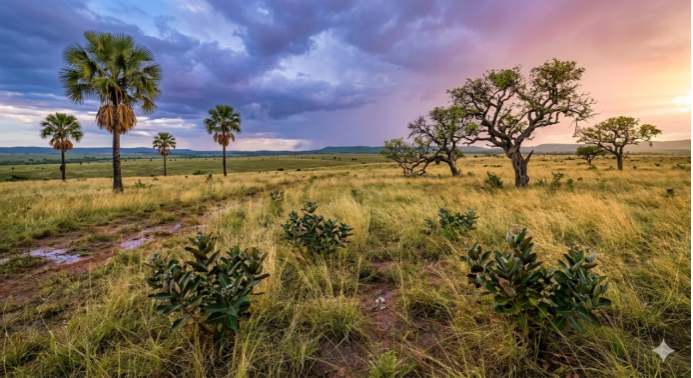
Mirages made the plains appear to glitter with water. When, after walking for an hour, we reached the palms that stood on the horizon like masts, we were surprised to realize how many things are connected with the existence of a single plant. The wind, losing its force among the leaves and branches, heaped sand around the trunks. The fragrance of the fruit and the verdure attracted birds that love to swing on the arrow-shaped leaflets. A murmur of low sounds arose on all sides. In the intense heat, we, accustomed to the death-like silence of the Llanos, felt cooler on hearing the rustling of the foliage. Insects and worms, so rare in the Llanos, teemed here in such abundance that even a low tree, unnoticed in the forests of the Orinoco, produced a spot of life in the midst of the desert.
——Alexander.von.Humboldt
https://t.co/nvC7aZfL8C
Chapter 24: Snuff, Silent Dogs, and the Terminus of Angostura https://t.co/nrWAlhvdnH
According to missionary testimony, if the curare was highly active and immediately mixed with the blood, the mere pressure of this poisoned nail could prove a fatal wound.
——Alexander.von.Humboldt
Chapter 23: Farewell to Esmeralda: The Farthest Outpost https://t.co/b8x9p0NbX0
It is through the four largest tributaries received by the Orinoco on its right bank—the Caroní, the Cura, the Padamo, and the Ventuari—that European civilization will one day penetrate into this region of forests and mountains, covering an area of 3.3 million square kilometers, and bounded on the north, west, and south by the Orinoco.
——Alexander.von.Humboldt
Chapter 22 Navigating the Upper Orinoco River https://t.co/2OZgK4s8z6
Bonpland, a carpenter of immense strength, foolishly rubbed curare on a slightly bleeding finger, and then fell to the ground, dizzy for half an hour.
——Alexander.von.Humboldt
Chapter 21: The Casiquiare River: Longing for Stars, Not the Moon https://t.co/gFtpBKmeNJ
What a contrast between two parts of the same torrid zone—between the sky of Cumaná, where the air is as pure as in Persia and Arabia, and the sky of the Río Negro, veiled like that of the Faroe Islands, without sun, moon, or stars!
——Alexander.von.Humboldt
Chapter 20: The fortress of Río Negro: Blackwater, Whitewater, and Colonial Undercurrents https://t.co/zvAzAISjjD
It seems that the very bond linking the beautiful languages of Camões and Lope de Vega became, paradoxically, what separated two peoples forced into involuntary neighborhood.
——Alexander.von.Humboldt
Chapter 19: Sojourn at Javita: Rainforests, Parasites, and Overland Boat Hauling https://t.co/hxUreqOyo3
This gave us ample reason to repeat the words of an Oriental poet: “Of all animals, man is the most fantastical in habit, the most disordered in inclination.”
——Alexander.von.Humboldt
Chapter 18: The Blackwater Labyrinth: A Secret Corridor Between the Orinoco and the Amazon https://t.co/twSlQReCAo
Under cover of night, we quitted the waters of the Orinoco almost imperceptibly; and at sunrise, found ourselves, as it were, transported into a new country, on the banks of a river scarcely heard of by us, which was to guide us, by the isthmus of Pimichin, towards the Rio Negro, on the frontiers of Brazil.
——Alexander.von.Humboldt
Chapter 17: Maipures Rapids: Swarms, Storms, and the Faint Echoes of Civilization https://t.co/vWqdDoggWH
The resilient Father Zea, depicted by Humboldt as enduring an insect-plagued purgatory, later became the prototype for “Padre Nicanor Reyna” in Gabriel García Márquez’s One Hundred Years of Solitude. Márquez accurately replicated this historical detail: the same geographic coordinates (the Raudales Rapids), the same meager fare (plantains and cassava), and that sense of absurdity of being envied by distant compatriots amidst suffering.
Chapter 16 The Atures Mission: Waterfalls, Dead Languages, and the Insect Inferno https://t.co/yLeX6q3i0x
The Orinoco River flows from south to north, intersected by a transverse granite mountain range. The riverbed is obstructed twice; the rushing waters violently strike rocks that form steps and lateral dams. The scenery here is extraordinarily magnificent. Neither the falls of Tequendama near Bogotá nor the grandeur of the Cordillera can diminish the impression I received upon first seeing the rapids of Atures and Maypures.
——Alexander.von.Humboldt
Chapter 14: San Fernando de Apure: The Gateway to the River Systems https://t.co/X7aeCZB6DV
Some accidents in life defy rational control. I was seized with terror, yet managed to restrain myself.
——Alexander.von.Humboldt
Chapter 13: The Great Transition: From Highlands to the Llanos Grasslands https://t.co/1Y2qrlOvOs
The Llanos (Spanish for “plains”) cover approximately 570,000 square kilometers—slightly larger than metropolitan France—mostly below 300 meters in elevation.
Chapter 12: Lake Tacarigua: An Elegy of Hydrology, Ecology, and Humanity https://t.co/MReLZaX1OG
This watercolor landscape was created in 1882 in Leipzig by Christian Anton Goering—the renowned nineteenth‑century German naturalist, explorer, and artist. Titled Panoramic View of Lake Valencia, Venezuela (with Flamingos)(German original: See v. Valencia, Venezuela), the work offers a comprehensive portrayal of the expansive wetlands and distant horizons of Lake Valencia (Lago de Valencia), a celebrated lake in central Venezuela.
The region’s ecosystem had been the subject of pioneering study by the great savant Alexander von Humboldt; as his follower, Goering left behind an exceptionally valuable body of first‑hand visual documentation.
Grand Panoramic Composition:
Tropical bamboo grove on the left: Unlike the detail view, the panorama reveals tall, tufted tropical bamboo (Guadua) rising along the left edge, their slender foliage thrusting skyward. Interspersed among them are forest trees ablaze with red blossoms—rendered with notable botanical precision.
Ecological focus at center: Amid shallow, interlaced waterways stands a flock of vividly plumaged American flamingos alongside several egrets, wading and resting in the shallows. Set against the vast panorama, they underscore the immensity of the natural setting.
Lush rainforest on the right: The foreground on the right vividly depicts dense wild bananas, low‑growing ferns, and dangling aerial roots heavy with vines, leading the eye upward and deeper into the shadowed heart of the jungle.
Exquisite Light and Atmosphere:
The entire scene is bathed in an extraordinarily soft, warm backlight—suggesting either a tropical sunset or dawn. In the distance, Lake Valencia shimmers like a mirror, while the rolling coastal mountains along the opposite shore emerge and fade within the misty haze along the horizon. The sky grades from peachy‑orange at the horizon into pale blue overhead, achieving a near‑perfect balance of warm and cool tones against the dark, deep yellow‑greens and bottle greens of the foreground.