XMAX Inc. has filed a Form 8-K with the U.S. SEC, disclosing that on May 28, 2026, the Company entered into definitive Securities Purchase Agreements with select non-U.S. investors for a private placement. The Company will issue 486,500 shares of its common stock at $7.347 per share, securing total gross proceeds of $3,574,315.50. The participating investors are subject to an 18-month lock-up period restricting the sale, pledge or transfer of the acquired shares. Conducted pursuant to Regulation S exemption, this unregistered equity offering has been formally documented and filed, with the 8-K report authorized and signed by the Company’s CEO on June 2, 2026.
They discussed 8 topics:
1, Why Go Public Now?
2, Starlink V3 and Next-Generation Global Communications
3, Fully Reusable Starship Rocket
4, Lunar-to-Mars Development Roadmap
5, Orbital AI Datacenters
6, Domestic U.S. Semiconductor Production via Terafab
7, SpaceX’s AI Strategic Layout & Industry Positioning
8, Corporate Culture, Talent Development & American Patriotism
SpaceX is poised to complete the largest initial public offering ever witnessed across human history. This landmark listing is expected to break successive world capital market records one after another. Enormous proceeds from the IPO will provide abundant financial backing for its cutting-edge aerospace research. Sufficient capital injection will greatly speed up Starship development and Mars exploration layouts. This unprecedented financing milestone officially launches humanity’s progressive journey toward the interstellar age. The transformative turning point will earn an indelible spot in the chronicles of human space exploration, and historians and future descendants will consistently mark this extraordinary day throughout the ages.
Soon, its footprint will expand from the Greater Austin area to the entire state of Texas, then across the American South, and ultimately the whole United States. Think that’s where the expansion stops? Far from it. The pace of growth will only accelerate. Before long, Robotaxis will be ubiquitous worldwide. Beyond that, Robostarship, built on the same core logic as Robotaxi, will traverse every corner of the Solar System.
Nasdaq 100 Stocks with 400% returns over past year:
-2000 peak = 22
-Today = 6
The number of extreme Nasdaq winners today is the highest it has been since 2000, but there is a long way to go to match the mania of the previous Tech Bubble.
XMAX Inc. has filed a Form 8-K with the U.S. SEC, disclosing that on May 28, 2026, the Company entered into definitive Securities Purchase Agreements with select non-U.S. investors for a private placement. The Company will issue 486,500 shares of its common stock at $7.347 per share, securing total gross proceeds of $3,574,315.50. The participating investors are subject to an 18-month lock-up period restricting the sale, pledge or transfer of the acquired shares. Conducted pursuant to Regulation S exemption, this unregistered equity offering has been formally documented and filed, with the 8-K report authorized and signed by the Company’s CEO on June 2, 2026.
While most settle for mundane worldly comforts, Elon Musk keeps his gaze fixed upon the stars. He dismantles impossibilities via first-principles reasoning, fuels technological breakthroughs with audacious visions, and turns lofty dreams into reality through relentless cost optimization. Back in 2008, he stood at the brink of bankruptcy while helming both SpaceX and Tesla, repeatedly dismissed as a charlatan amid relentless setbacks. Yet it was this all-or-nothing resolve that empowered him to rewrite history time and again.
Musk’s greatness lies not in accumulated wealth, but in expanding humanity’s perceived limits: from Earth to Mars, from fossil fuels to renewable sustainability, from biological cognition to digital immortality. His portfolio of enterprises transcends pure commerce, evolving into core engines advancing civilizational advancement, turning the long-held fantasy of humanity’s million-year survival into tangible possibility.
When Starship ferries humankind to the Red Planet, when clean energy lights up every corner of the globe, and when human consciousness attains digital permanence, posterity will remember this visionary of the early 21st century. Through a lifetime of relentless pursuit, he has set humanity forth on an epic voyage toward the cosmos. His journey marks no ending, merely the dawn of new marvels; an interstellar era for all mankind is slowly unfolding under his stewardship.
We will soon witness the greatest IPO in human history, and this listing is by no means an endpoint but the inception of another miracle. Bolstered by Elon Musk’s sweeping cosmic vision, cutting-edge technologies and pioneering cost-control approaches, SpaceX is poised to clock successive milestones not only on humanity’s voyage of space exploration but also throughout global capital markets.
SpaceX's IPO is becoming real :
- SpaceX has reportedly publicly filed for a Nasdaq listing under ticker $SPCX
- IPO valuation discussions range from $1.5T–$2T, potentially making it the largest IPO in history
- Starlink is now the company’s biggest financial engine, generating billions in annual revenue
- Elon Musk is expected to retain significant control even after the company goes public
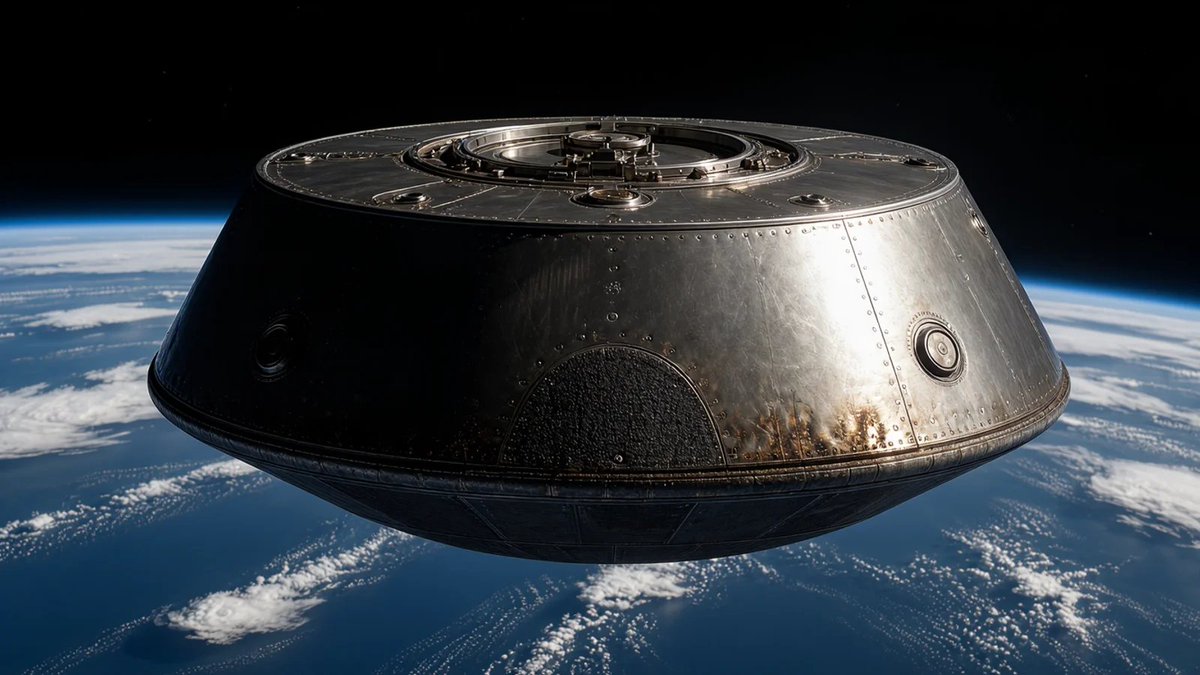
FAA documents have unveiled new details about SpaceX’s unannounced Starfall uncrewed reentry vehicle program, which the company has not publicly discussed.
Starfall is designed to support in-space microgravity manufacturing and rapid point-to-point cargo delivery from orbit to Earth.
The FAA approved two test reentries in the Pacific Ocean and ruled the missions pose no significant environmental harm.
These disc-shaped vehicles can launch atop Falcon 9 or Starship, for either orbital or suborbital flights.
SpaceX aims to build mass-producible Starfall capsules that can precisely deliver payloads back to Earth.
The vehicles will help return high-value products like advanced materials and pharmaceuticals made in space.
Starfall is a key step toward SpaceX’s goal of creating a self-sustaining in-space manufacturing economy.
XMax Popular Science: FSD vs VLA: Two Core Technical Paths for Autonomous Driving
As autonomous driving evolves, Tesla’s FSD and Vision-Language-Action (VLA) models stand for two entirely different technical routes in the industry. Though both aim to enable smart driving, their underlying architectures, working logic and design philosophies differ greatly.
Tesla FSD adopts a pure vision end-to-end neural network and does not integrate large language models (LLMs). Built on BEV, Occupancy Networks and temporal neural modules, it follows a "photons in, controls out" paradigm. Trained with massive real-world driving data and physical simulation, FSD focuses on 3D environment perception, obstacle detection and trajectory prediction. It acts as a driving-specialized world model, learning driving rules and responses purely from real scenarios instead of semantic reasoning. All driving decisions are directly output by neural networks, replacing traditional manual code.
In contrast, VLA models combine vision, large language models and action execution. Cameras capture visual information first, while LLMs take charge of semantic understanding, logical reasoning and interpreting complex traffic scenarios. The language module analyzes scene intentions, traffic hints and unusual road conditions, then converts judgments into driving commands. VLA excels at handling tricky long-tail scenarios thanks to human-like logical thinking.
Simply put, FSD relies on data-driven visual neural networks for physical driving tasks, while VLA leverages LLMs to boost semantic comprehension. Neither path is absolutely superior. They represent two mainstream directions, and are gradually learning from each other as the technology advances.
The ongoing 70-month drawdown in the Bloomberg US Aggregate Bond Index, starting in August 2020 with a peak decline of -17.2%, is the longest on record since 1976, far outpacing prior downturns.
Driven by the Federal Reserve’s aggressive rate hikes to tame post-pandemic inflation, soaring U.S. fiscal deficits and national debt, and lingering expectations of prolonged high interest rates, this slump signals the end of the 40-year bond bull market—an era of falling rates that once made bonds a reliable safe haven.
It has also erased the traditional negative stock-bond correlation, exposing classic 60/40 portfolios to "double-kill" risks. While surging yields have boosted bonds’ long-term appeal, market volatility may persist amid lingering inflation and fiscal uncertainty.
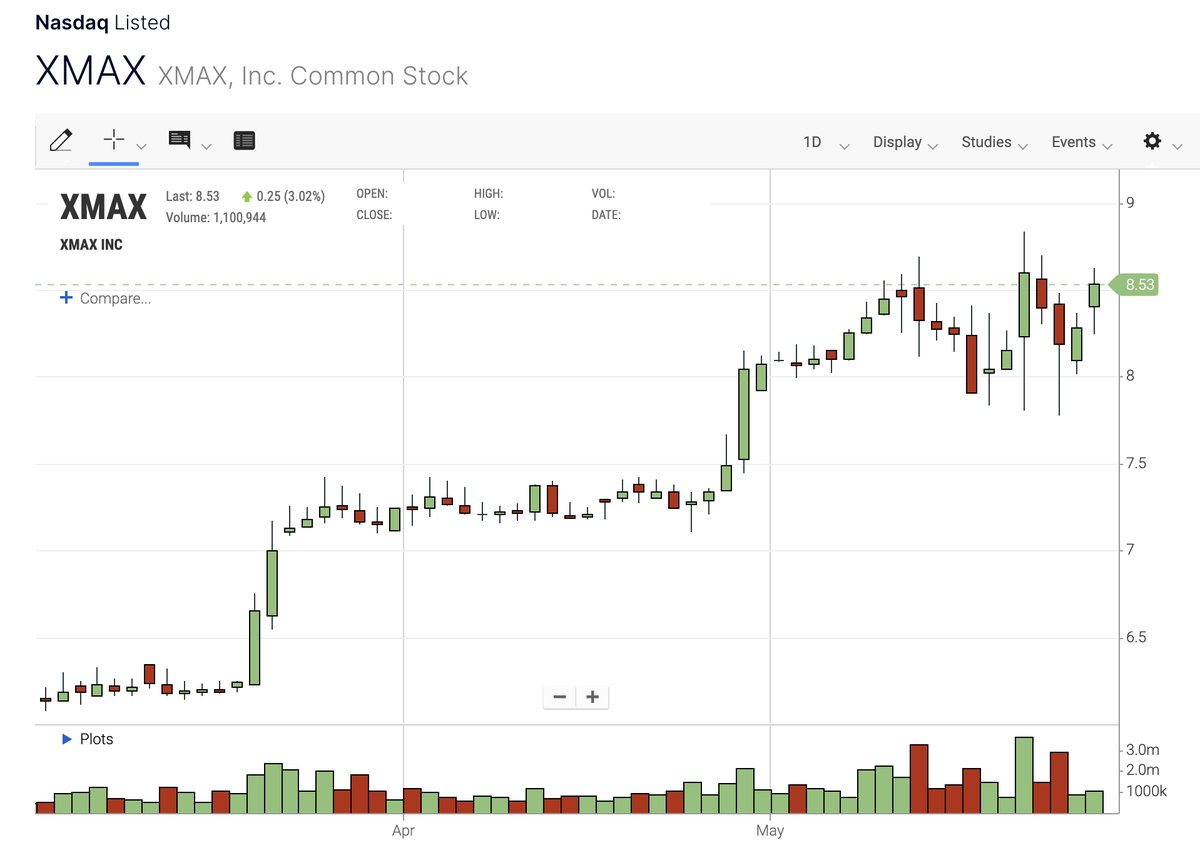
XMAX’s recent trading reflects robust market resilience. Despite short-term volatility, our share price has rebounded firmly to hold its elevated range. This sustained strength underscores investor confidence in our strategic roadmap and long-term value creation. Thank you to our shareholders for your continued trust. #XMAX
This collection of snapshots is far more than scenic photos. They are the quiet dialogue between humanity and a distant world. A robotic eye wandering over Martian soil, carrying the endless curiosity of a species that never limits its gaze to one home.Across Sol 1353 on Mars, Curiosity keeps framing the alien landscapes of the Red Planet.
We send machines to the stars not just to study rocks and terrain, but to answer a primal question: Where do we stand in the vast universe? Every frame sent back from 140 million miles away is proof — exploration is etched into human nature.
#CuriosityRover #MarsSol1353 #MarsExploration #NASA #RedPlanet
It is a purpose-built L5 autonomous machine engineered from the ground up to eliminate human drivers entirely. No steering wheel, no pedals, no illusions of control—this sleek two-seater with signature gullwing doors is a rolling AI supercomputer, not a car with training wheels.