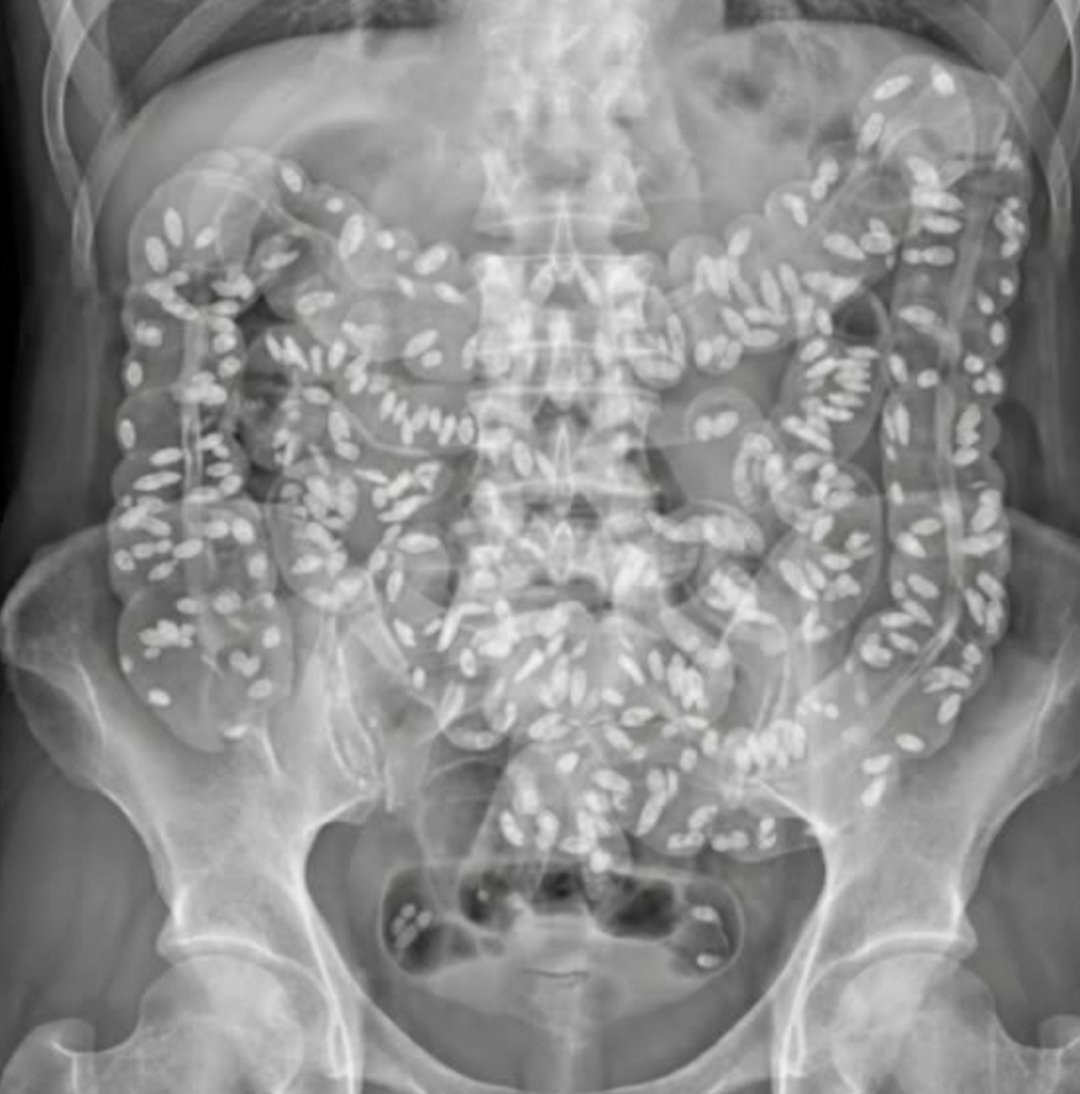
The doctor took a breath and said, “What showed up on the X-ray could be the cause of your abdominal pain, but before we explain things to you, we need to ask you a few questions.”
At that moment, the woman froze in shock
The doctor took a breath and said, “What showed up on the X-ray could be the cause of your abdominal pain, but before we explain things to you, we need to ask you a few questions.”
At that moment, the woman froze in shock
A woman arrived at the hospital with severe abdominal pain. After examining her, the doctor asked her to get an X-ray.
When the results came in, the doctor stared at the screen for a while, then called in another doctor to look at the X-ray.
The woman couldn’t wait any longer and asked anxiously, “Doctor, is something wrong?”
He didn’t answer her. He zoomed in on the X-ray and asked, “Have you noticed any change in your appetite lately? Do you feel hungry all the time?”
She nodded and said, “Yes.”
A woman arrived at the hospital with severe abdominal pain. After examining her, the doctor asked her to get an X-ray.
When the results came in, the doctor stared at the screen for a while, then called in another doctor to look at the X-ray.
A fascinating 3D look at our internal anatomy—from the airway and lungs to the nervous system and heart. Nature's greatest engineering! 🫀🧠✨ #SmartDoctor#Anatomy#MedicalEducation#Biology"
A fascinating 3D look at our internal anatomy—from the airway and lungs to the nervous system and heart. Nature's greatest engineering! 🫀🧠✨ #SmartDoctor#Anatomy#MedicalEducation#Biology"
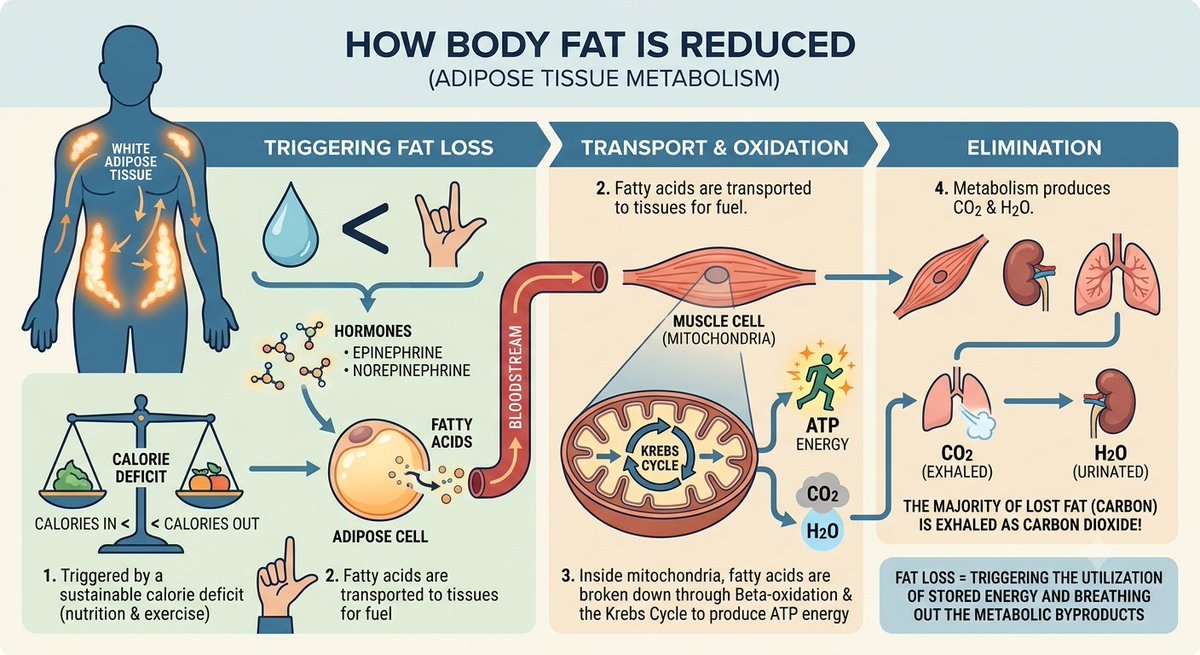
How to body fat reduced.
Your body stores fat in cells (adipose tissue) as an energy reserve. When you consistently eat fewer calories than you burn (a calorie deficit), your body initiates a precise biochemical process to mobilize this stored energy.
The critical scientific fact illustrated here is that you don't sweat or urinate away most of your lost weight—your LUNGS exhale the bulk of the metabolized fat mass as carbon dioxide.
How to body fat reduced.
Your body stores fat in cells (adipose tissue) as an energy reserve. When you consistently eat fewer calories than you burn (a calorie deficit), your body initiates a precise biochemical process to mobilize this stored energy.
The Main Mass is Exhaled: The byproduct of metabolizing these fatty acids is the generation of two simple waste products: H2O (Water) and CO2 (Carbon Dioxide).
The blood carries these fatty acids to energy-consuming tissues, such as your muscle cells. Once inside, they are transported to the mitochondria (often described as the cell's engines). Here, through metabolic processes like the Krebs Cycle and beta-oxidatio.
1. Hormones Release Fatty Acids: A calorie deficit signals the endocrine system to release hormones (like epinephrine). These hormones activate enzymes that trigger the fat cells to release their contents, known as fatty acids, into your bloodstream
"Quick Science Check: 🧠
Which organ in the human body consumes the most energy (about 20% of the body's total oxygen and calories) even when you are just resting?
Drop your answers below! 👇
"Quick Science Check: 🧠
Which organ in the human body consumes the most energy (about 20% of the body's total oxygen and calories) even when you are just resting?
Drop your answers below! 👇
Gas Exchange (Alveoli):
At the end of these tiny tubes are millions of microscopic air sacs called alveoli.
Oxygen passes from these sacs straight into your bloodstream, while carbon dioxide (waste gas) moves from your blood into the sacs
Here is a quick and simple summary of how your lungs work:
Inhalation (Breathing In):
The diaphragm (a muscle beneath your lungs) moves down, creating space in your chest.
Air enters through your nose and mouth, traveling down your windpipe (trachea) into your lungs