$XOBAK is live on Robinhood Chain.
CA: 0x4c9f9e6d0b33f694e7f3f28b64e7a48471eb9fec
Agent-managed concentrated liquidity for stock tokens on Robinhood Chain.
The one thing the zap can't do is promise you'll leave the way you came in.
A share is a claim, in proportion, on the deployed liquidity, the fees not yet collected and any idle balance. Burn it and you get your cut of both assets at the mix the position holds that moment.
Deposited USDG, withdrew half stock token? That is an in-range position doing its job, not a bug. And the USD value can be lower than what you put in, even in a month the vault collected fees.
It's on the deposit screen, where the decision is made.
What the dust is.
A swap never lands on the exact ratio: the price moves between quote and fill. Whatever is left after both legs are deposited is dust. It goes back to you in the same transaction.
Not kept. Not swept into the vault. Not rounded away.
Two numbers protect the swapped portion, and only the swapped portion.
The minimum-output floor, 2%: the swap returns at least 98% of the quoted amount, or the whole zap reverts. A 20-minute deadline: a transaction that sits in the queue past it reverts instead of filling at a price that has moved.
The unswapped leg never touches a pool, so it never needs either.
Reverting is the cheap outcome. The expensive one is the fill you didn't want.
Most of the equity that's come on chain has never earned a cent from the market it trades in.
Not because the fees aren't there. Because collecting them by hand has been a losing trade for most of the people who tried.
That's the whole job.
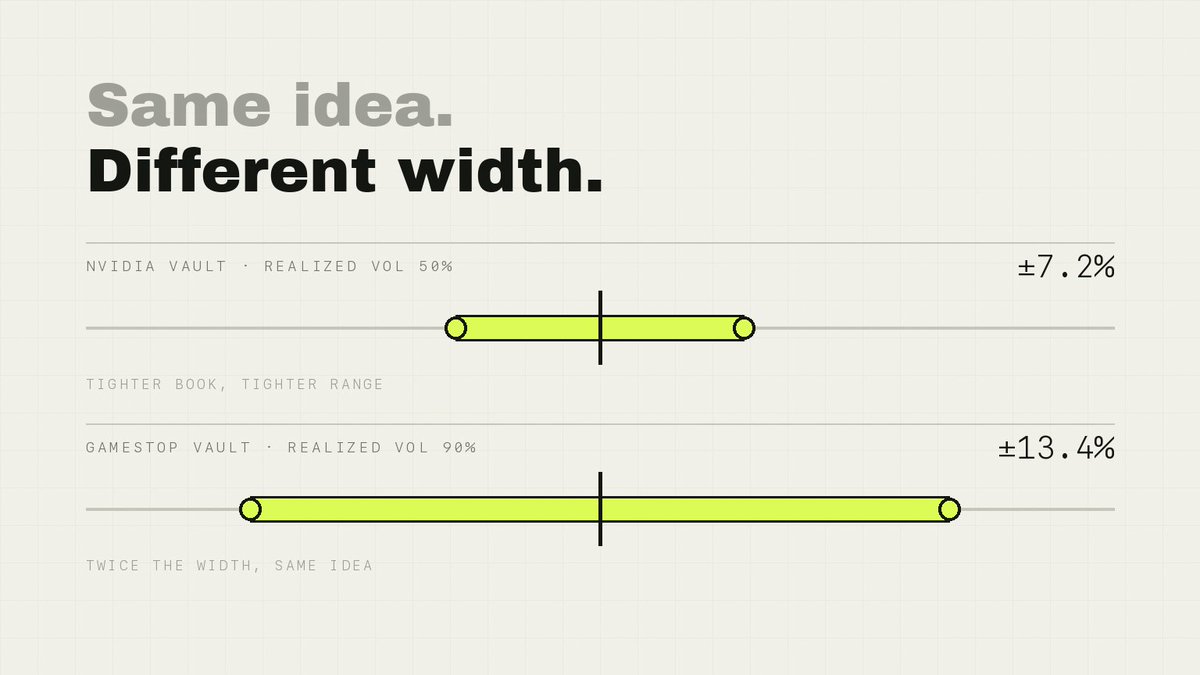
Why our GameStop vault runs a range nearly twice as wide as the NVIDIA one.
Realized vol near 90% on one, closer to 50% on the other. One width for both puts the first out of range on an ordinary Tuesday.
Wider earns less per dollar in range. It just spends more of the month in it.
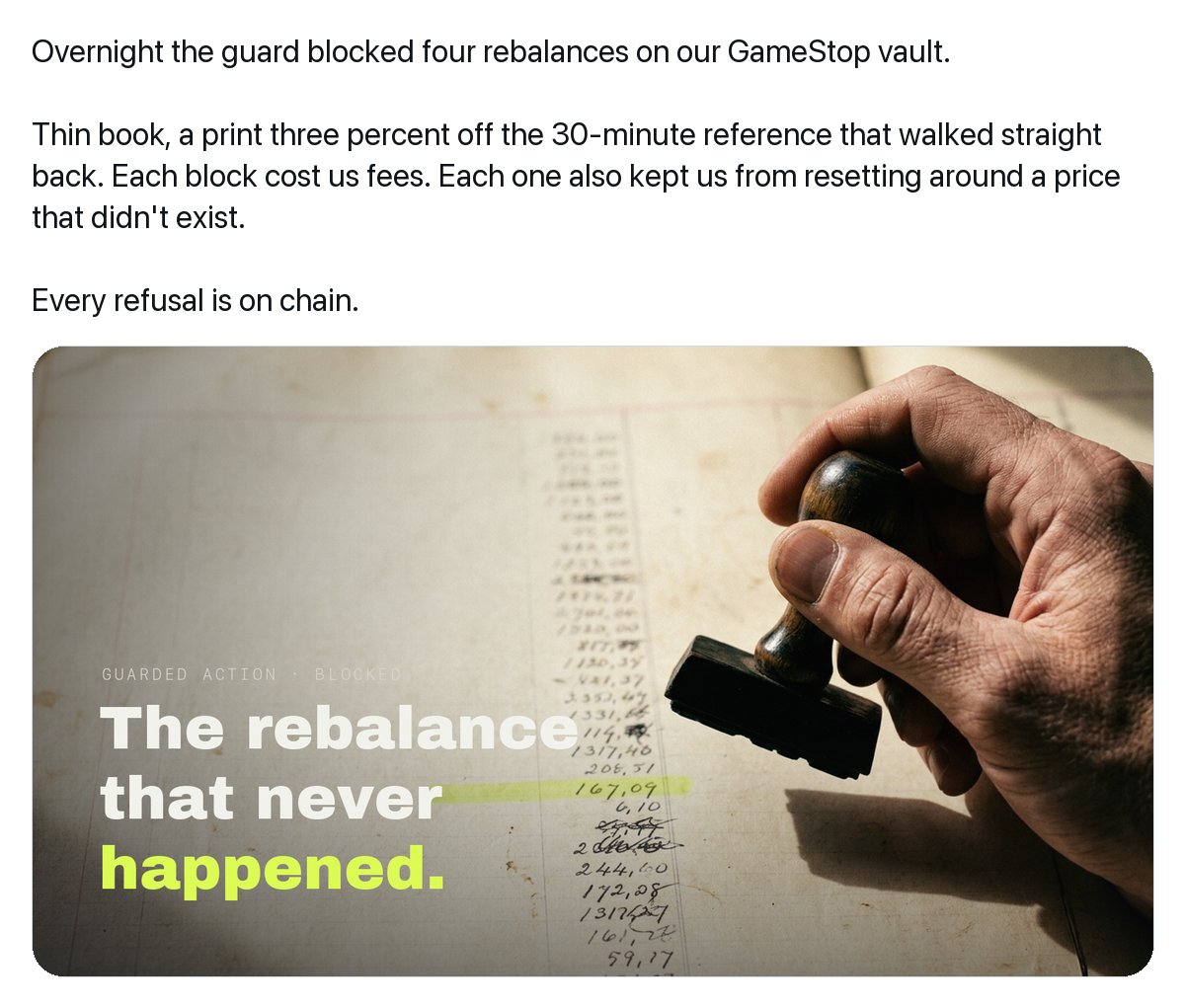
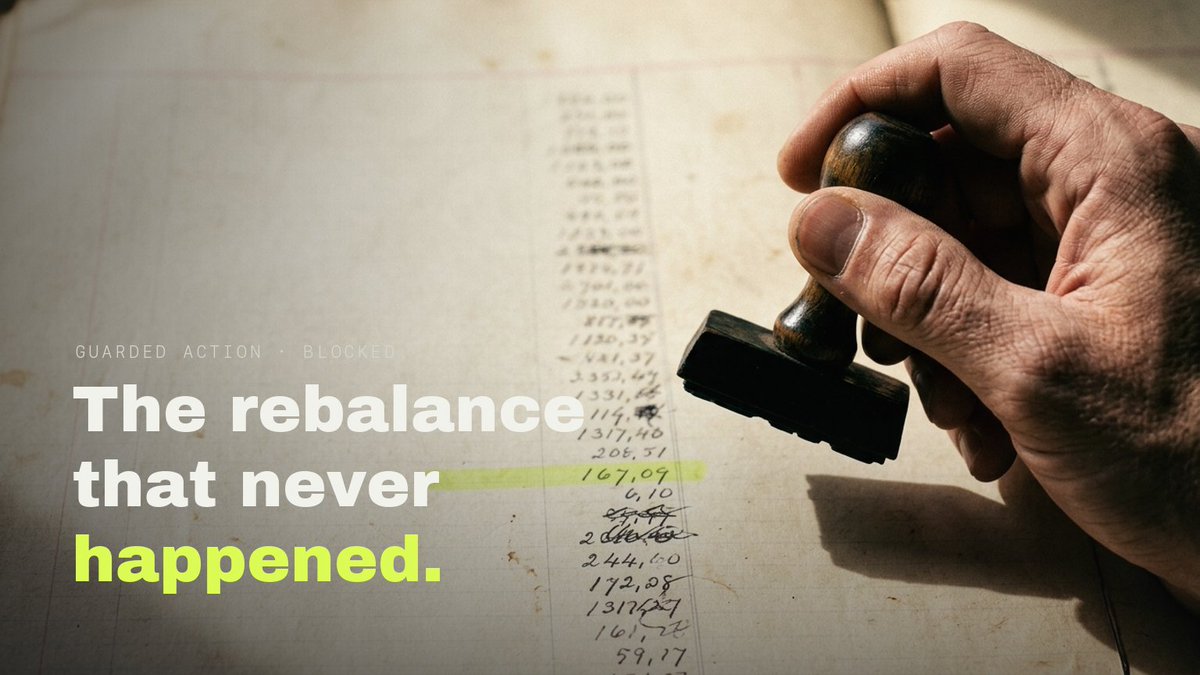
Overnight the guard blocked four rebalances on our GameStop vault.
Thin book, a print three percent off the 30-minute reference that walked straight back. Each block cost us fees. Each one also kept us from resetting around a price that didn't exist.
Every refusal is on chain.
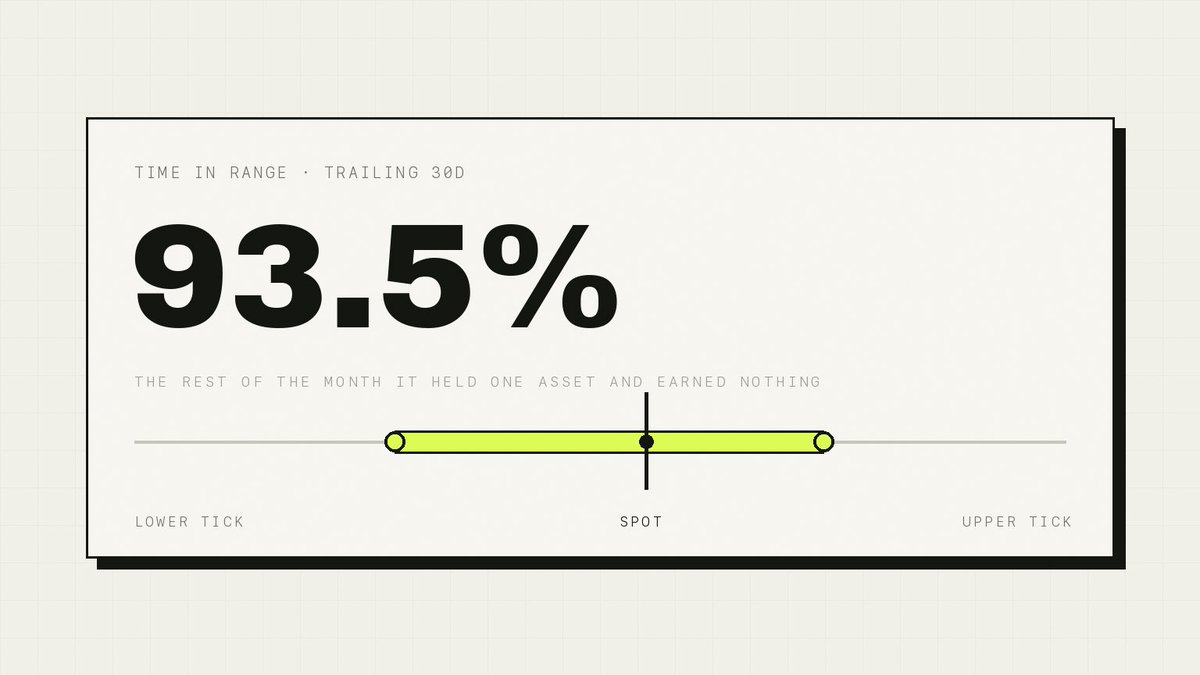
Shipped: time-in-range is now a running percentage on the range readout, not a yes/no badge.
"In range" says nothing about the month. The percentage says how much of it your money was working.
Nobody asks for this until the month they spend out of range without noticing.
Providing concentrated liquidity is not hard because the math is hard.
It's hard because the position is only correct for as long as the price stays where you left it.
Two findings from the Uniswap v3 record are worth sitting with. More than half of liquidity providers finished unprofitable once impermanent loss was netted against fees — across the studied cohort, $260M of impermanent loss against $199M of fees earned.
The second one is stranger. Researchers found no statistical evidence that providers who repositioned more often did better.
That's the part everyone skips. Effort was not the missing input. The people clicking the most were not the people winning.
A vault is not a nicer set of tick controls. It's the admission that this was never a manual job.