Introducing #XPayr: The all-in-one platform that makes crypto payments EFFORTLESS, and then rewards you for being a part of the ecosystem.
This is more than a tool. This is a revolution. 🧵👇
$XPayr #CryptoPayments#Web3#DeFi
Adopting a new payment rail usually means rewriting the part you trust most.
Not the checkout — the layer underneath. The settlement contracts, the verifier, the reconciliation job that's been quietly correct for two years. New chain, new semantics, new bugs in the code that decides who got paid.
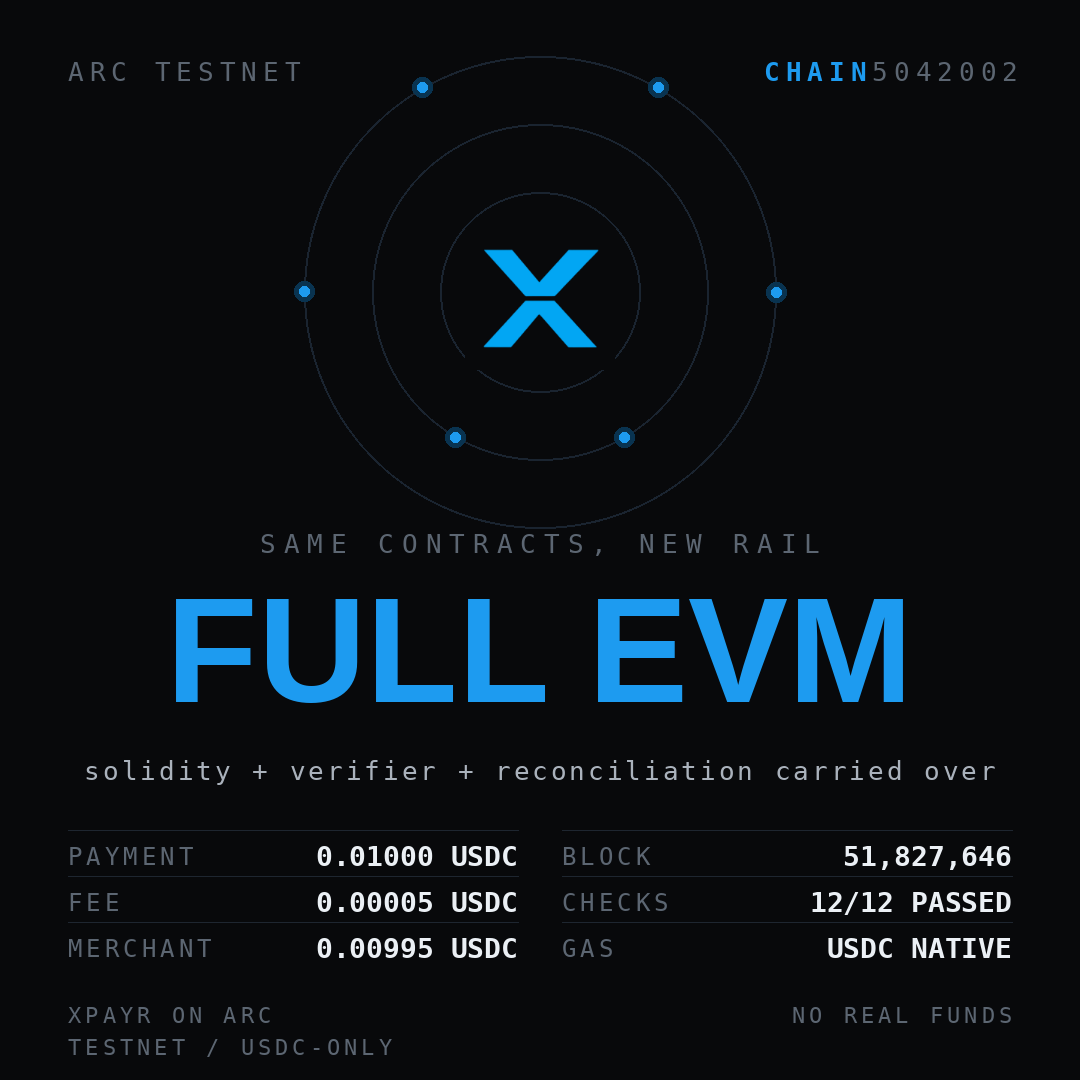
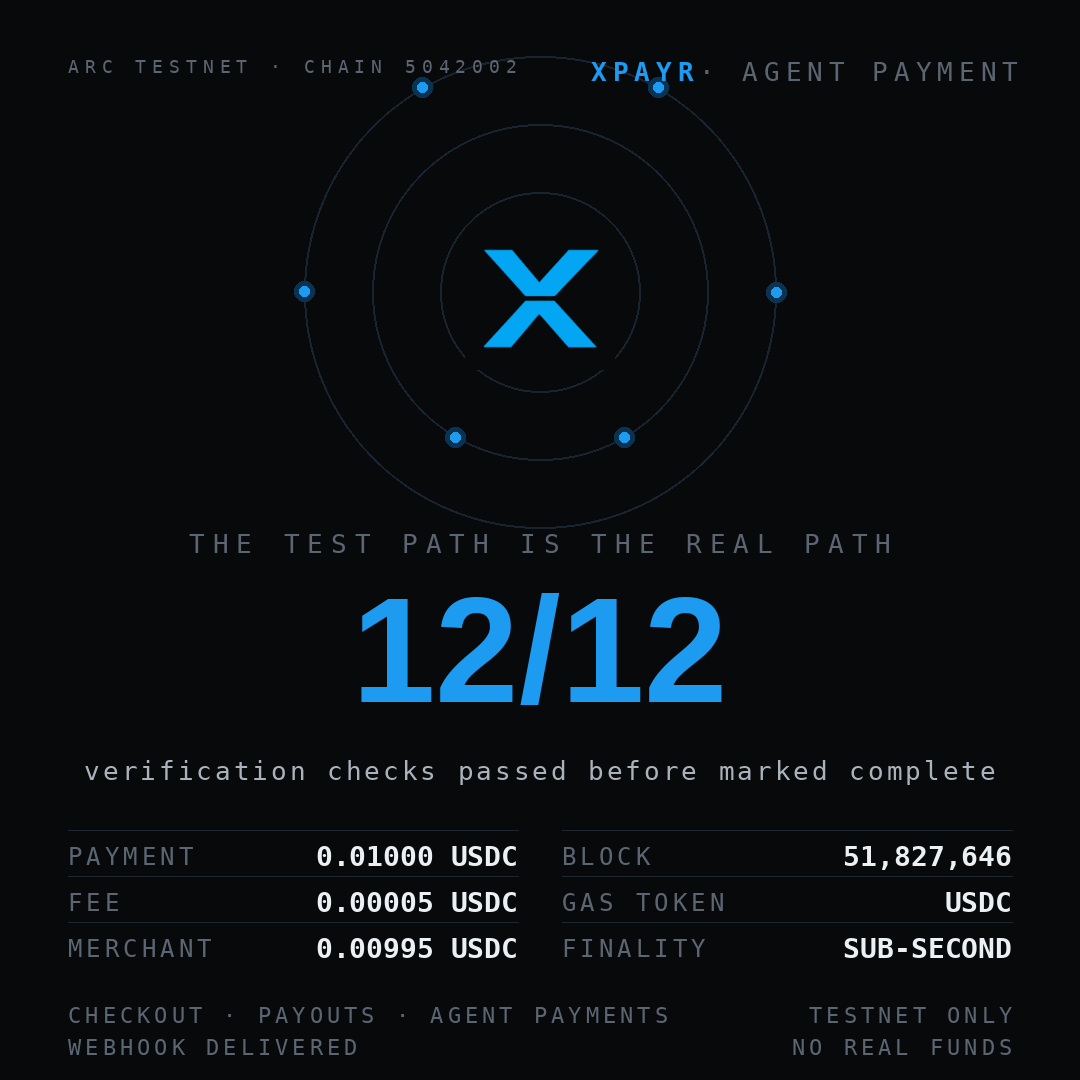
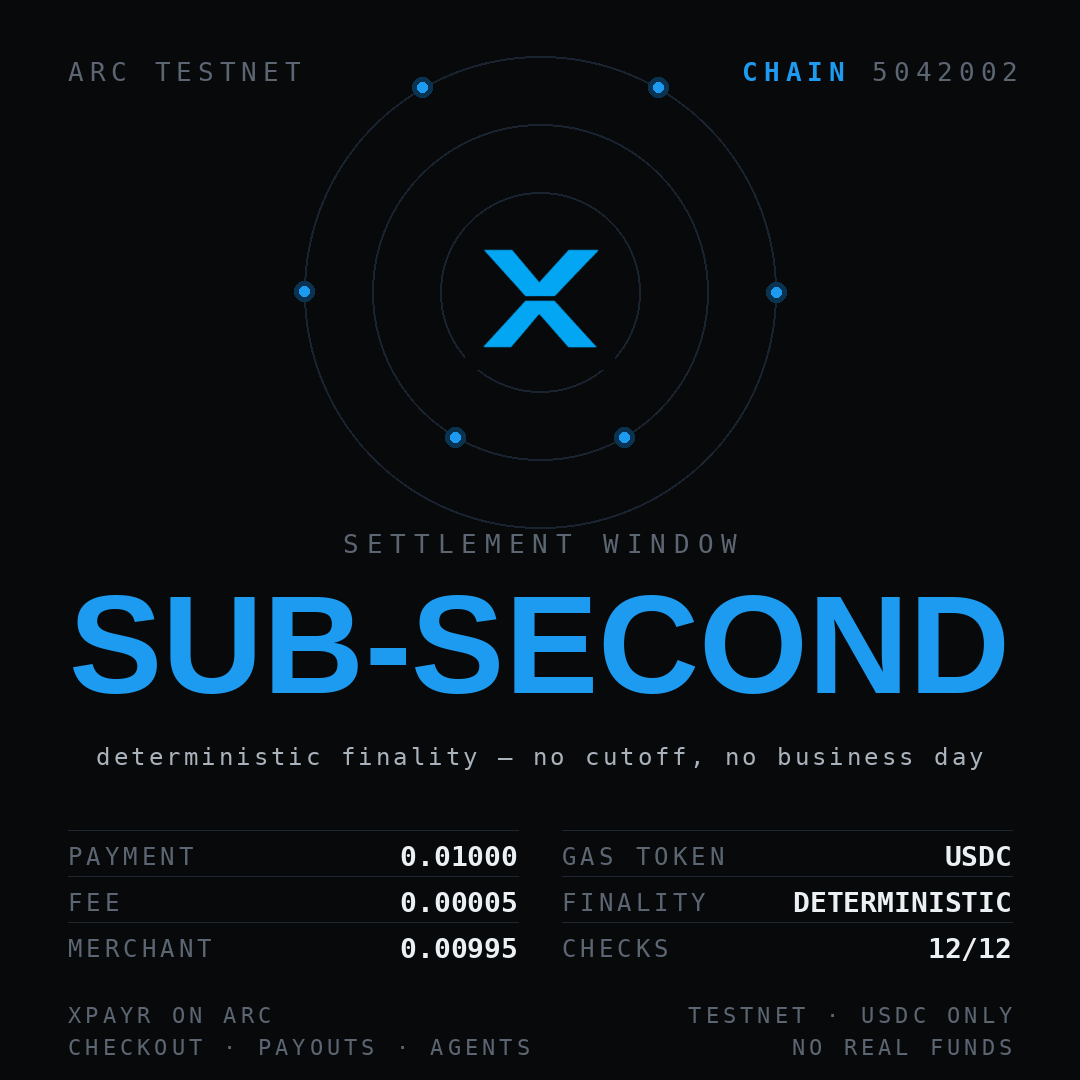
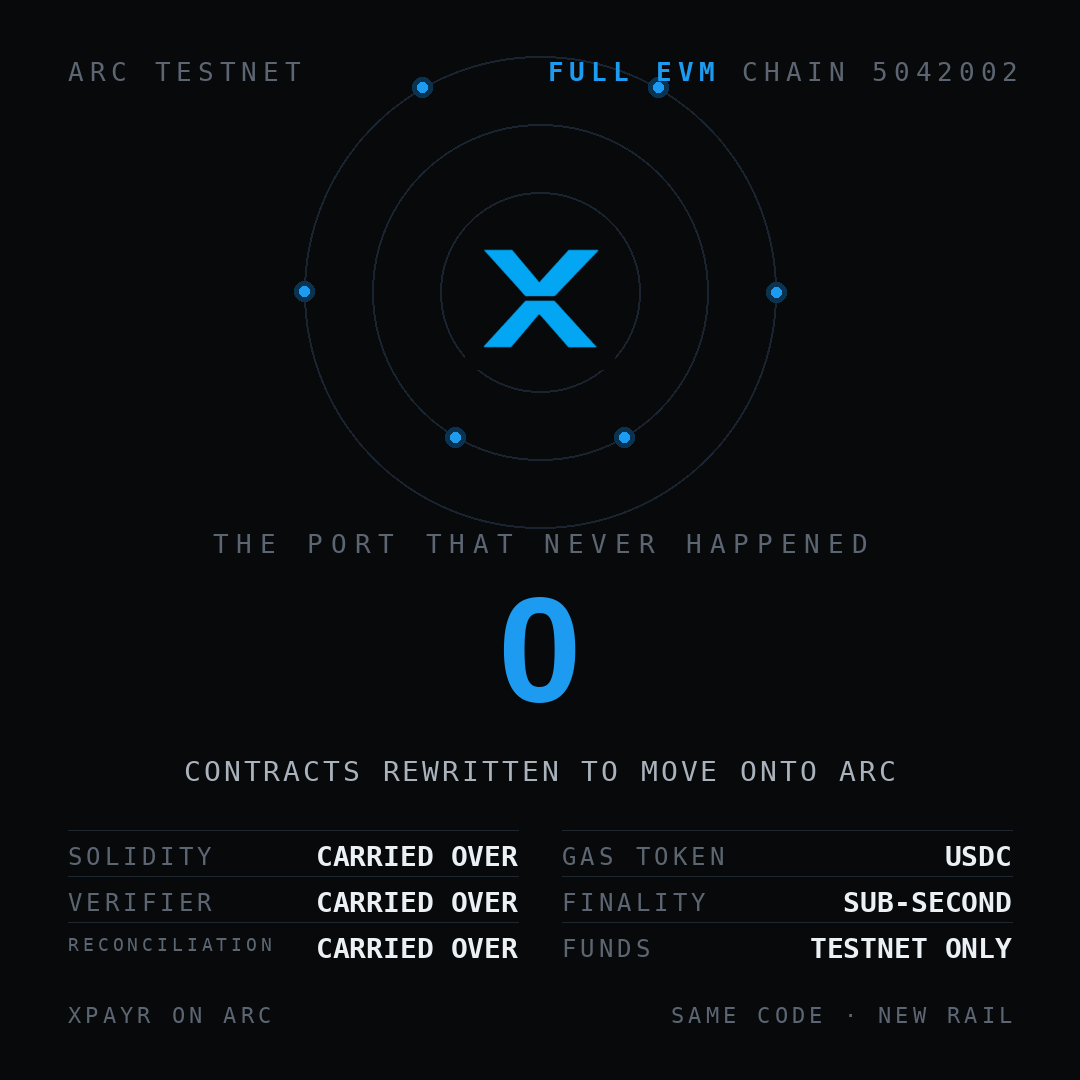
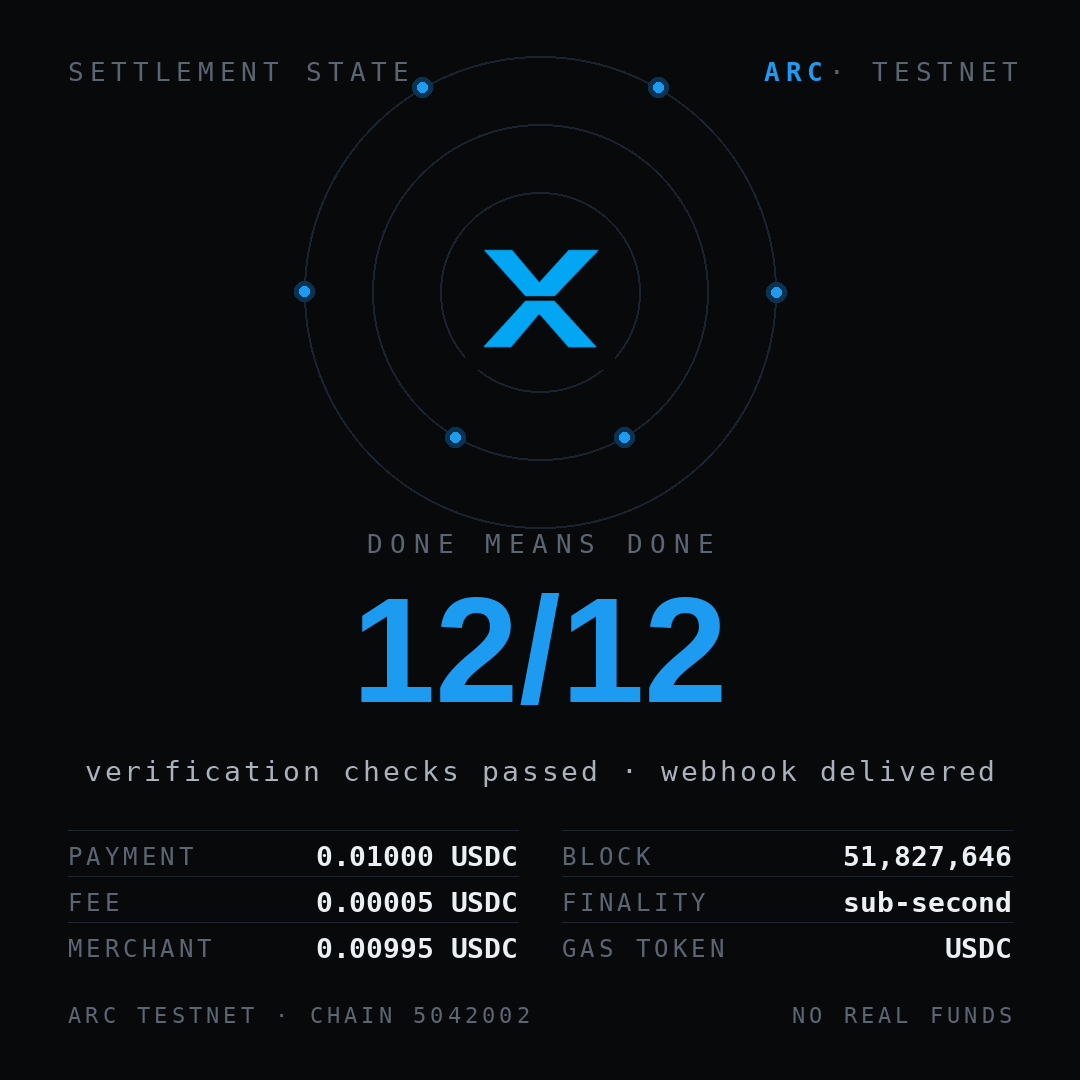
@arc is full EVM — chain id 5042002 — so that work carried over as-is. It's a Circle network where @USDC is the native gas, and finality is deterministic and sub-second. Our agent test: 0.01000 USDC in, 0.00005 fee, 0.00995 to the merchant, block 51,827,646.
@XPayrPay runs checkout, payouts and agent payments there. Still testnet, USDC-only, no real funds.
Builders: which part of your stack would you refuse to rewrite for a new chain?
#Arc #USDC #XPayr #stablecoins
Your business has a single point of failure that never makes it into the architecture diagram.
You'll design around a database going down and pay for a second region. Then all of the revenue passes through one account you don't control, and the runbook for that one is an email address.
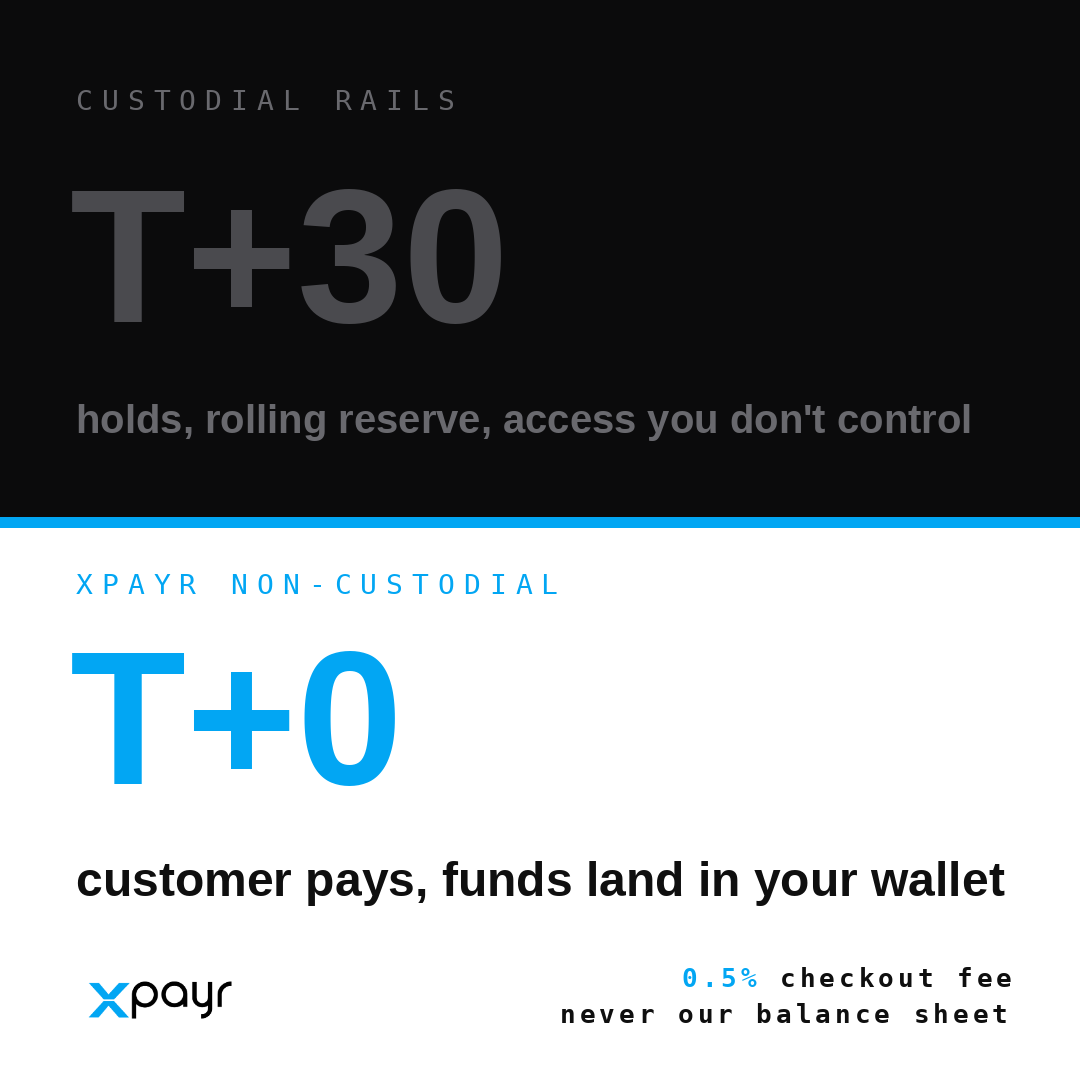
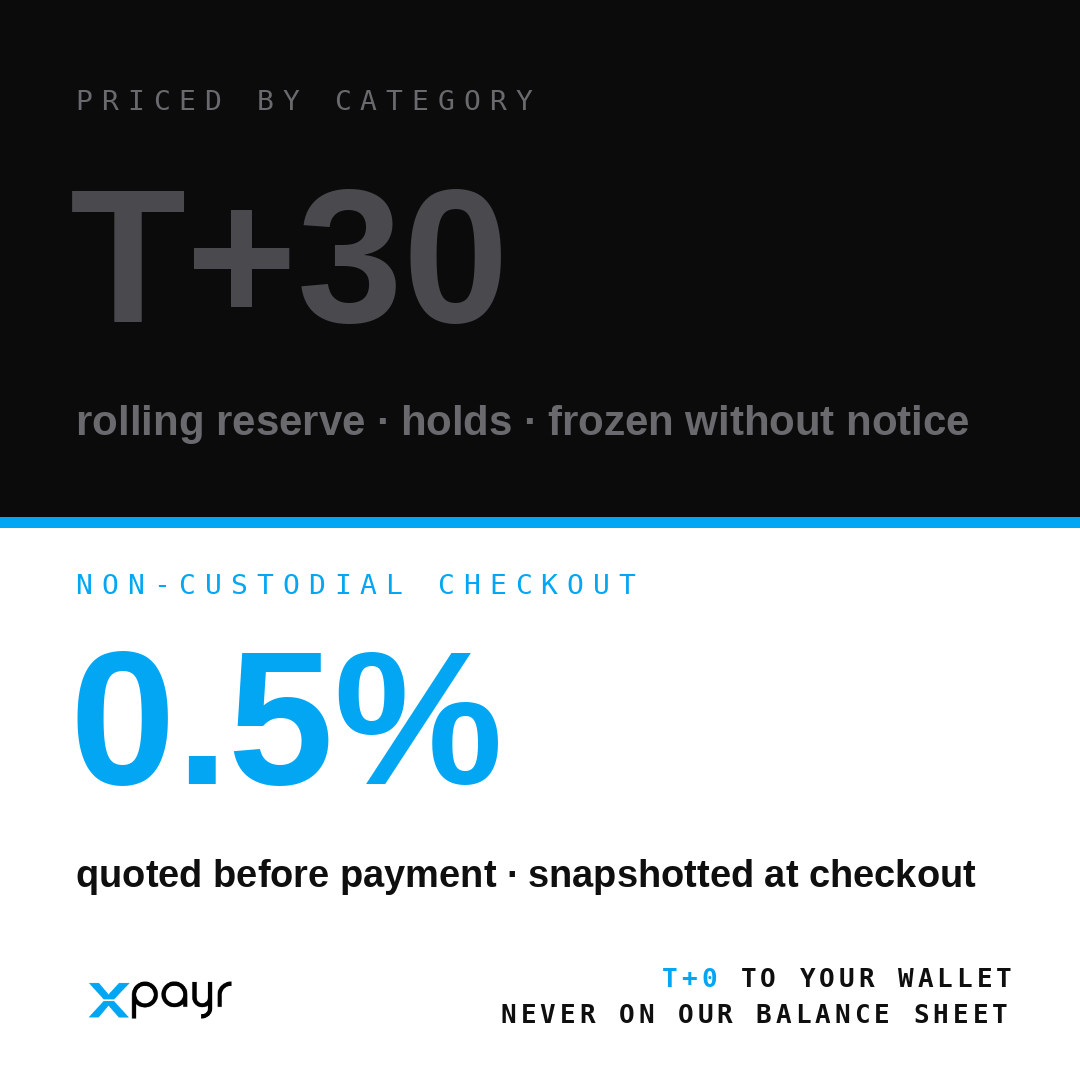
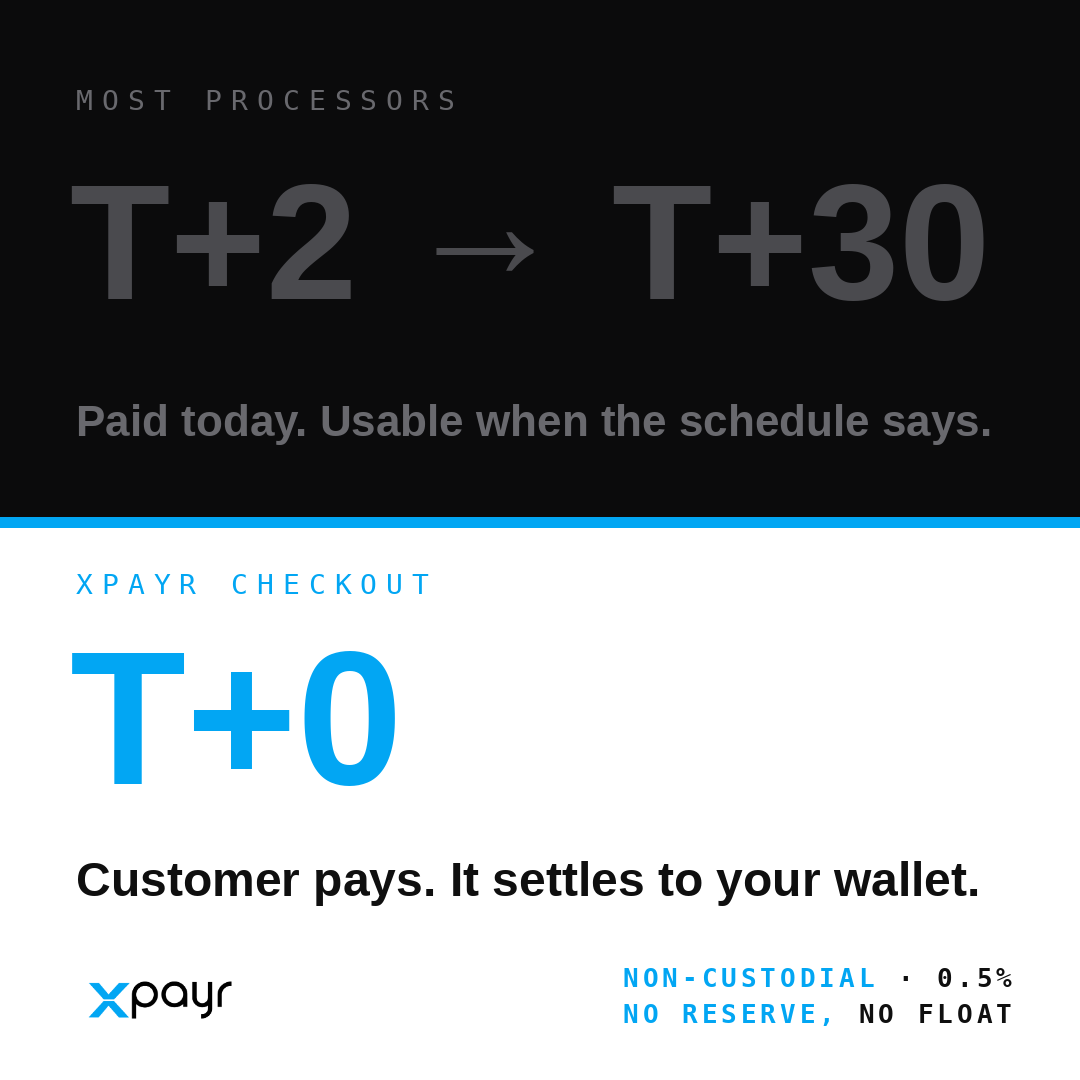
That's not a technology risk, it's a custody risk. The money sits with the processor first — holds run T+2, T+7, sometimes T+30, a rolling reserve keeps a slice back, and access can be suspended without notice.
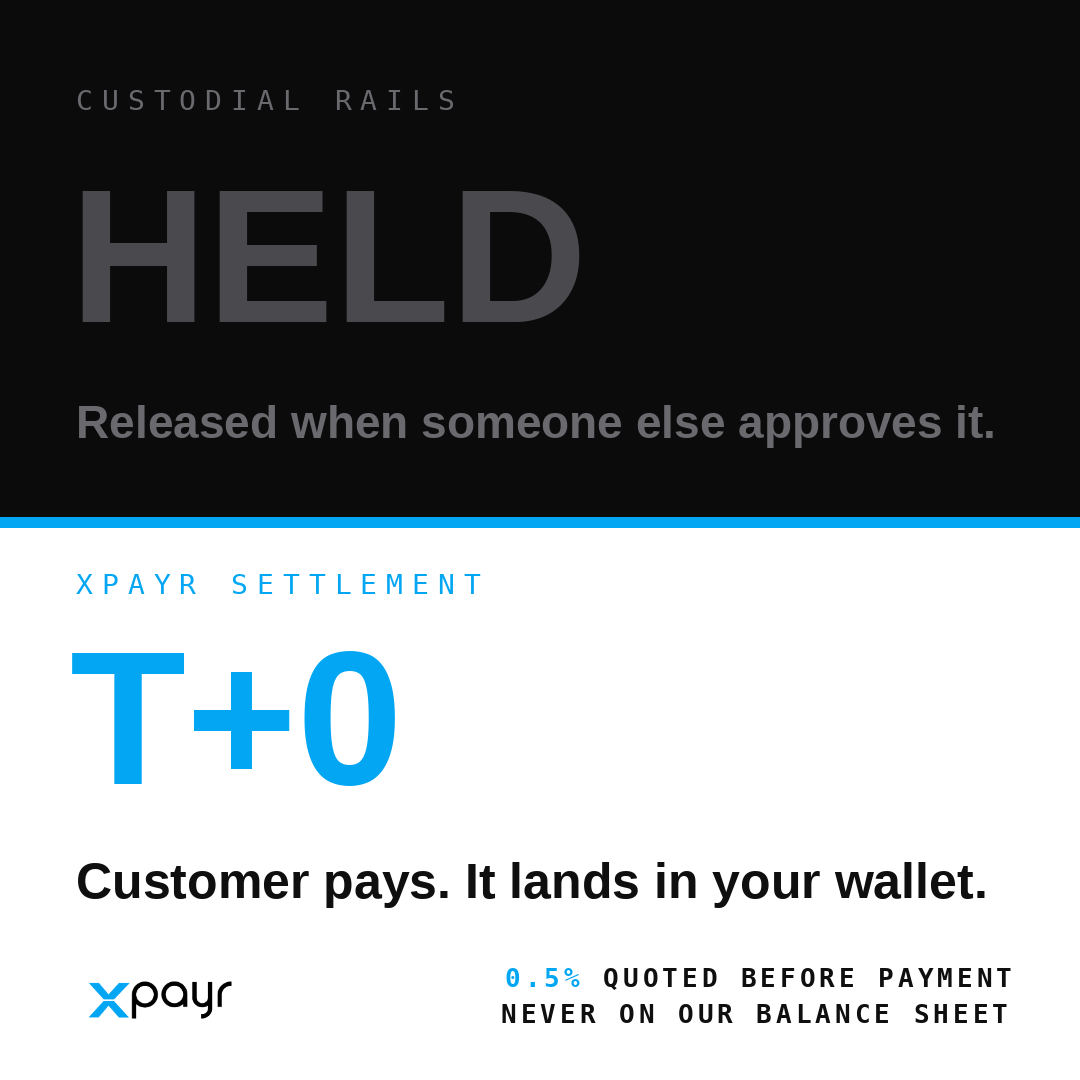
XPayr is non-custodial: the customer pays, funds land in your wallet at T+0, and they never touch our balance sheet. Checkout is 0.5%, quoted before the payment and snapshotted so it can't drift after.
What's your runbook if payouts stop tomorrow?
#XPayr #stablecoins #payments #ecommerce
Most teams can't tell you what one payment cost them. They can tell you a monthly average.
The charge lands in one system, the network fee in another, and the statement arrives weeks later in a different unit. By then the cost is smeared across everything, so unit economics get modeled instead of measured.
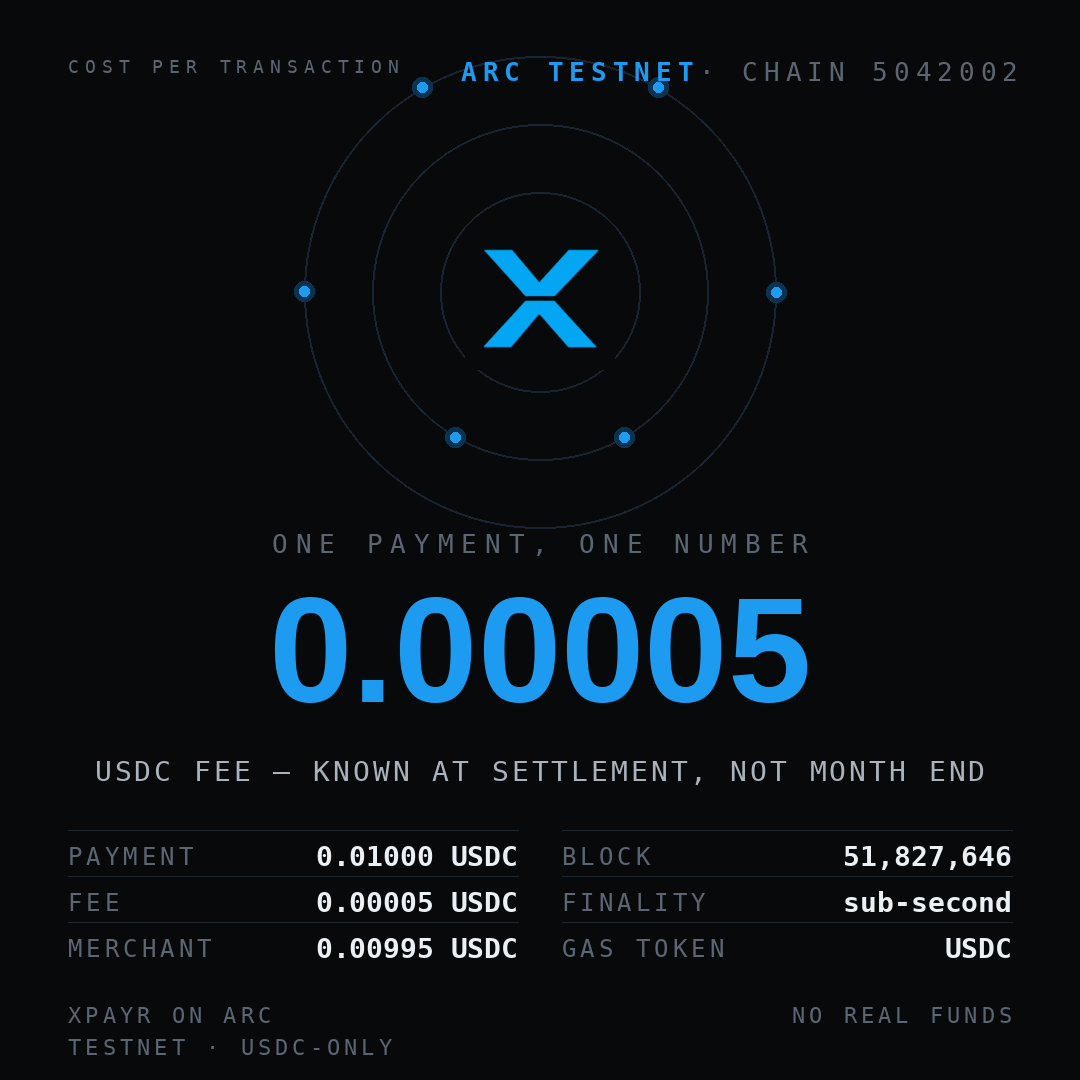
On @arc it's one line. It's a Circle network where @USDC is the native gas, so a payment and its fee are the same dollars: our agent test settled 0.01000 USDC in, 0.00005 fee, 0.00995 to the merchant, block 51,827,646. Finality is deterministic and sub-second, so the number is final when the payment is.
@XPayrPay runs checkout, payouts and agent payments there. Still testnet, USDC-only, no real funds.
Builders: what did your last transaction cost, to the cent?
#Arc #USDC #XPayr #payments
Payout day is scheduled around someone else's calendar.
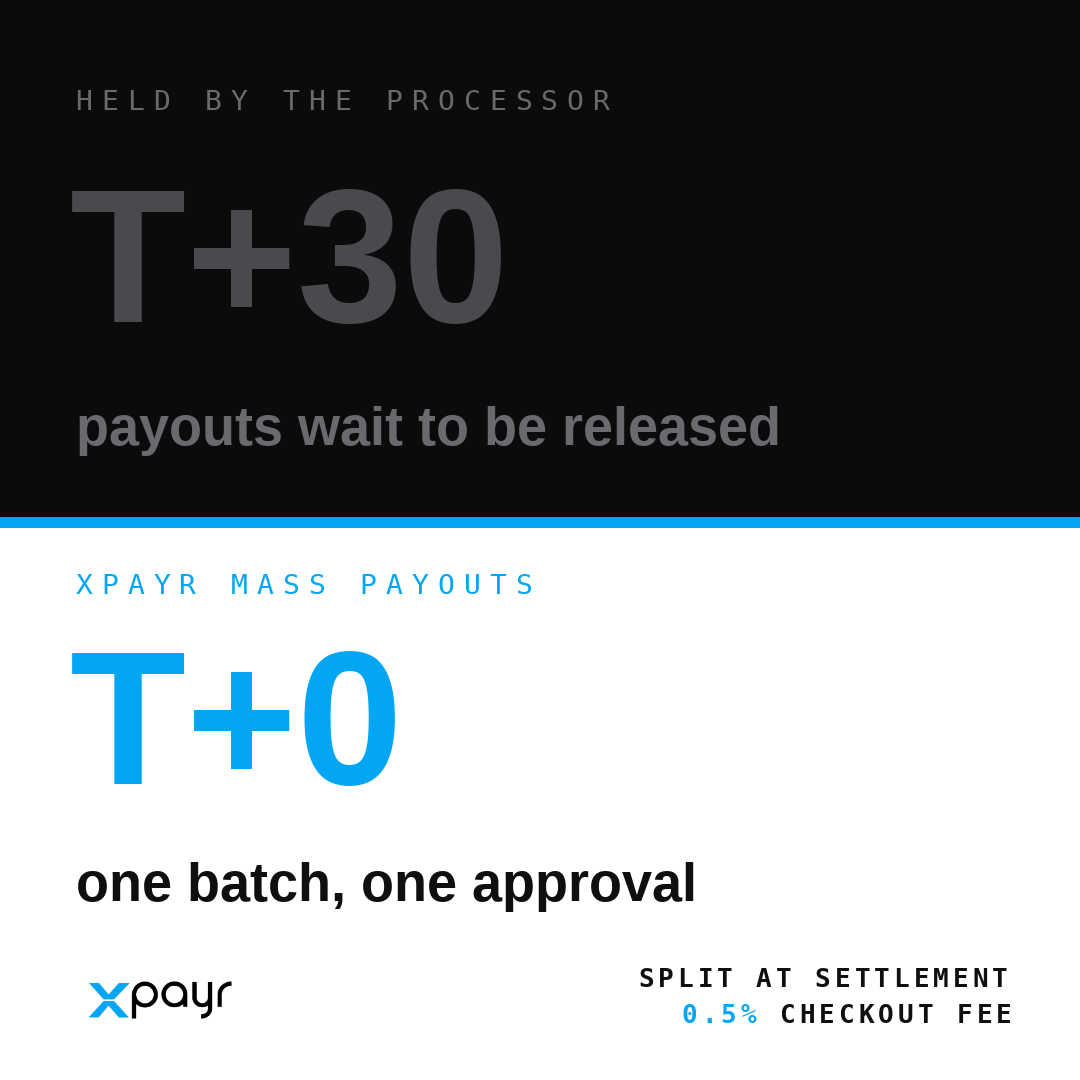
You know what you owe on the first. Whether you can send it depends on when the money is released — holds run T+2, T+7, sometimes T+30, and a rolling reserve keeps a slice back against what your category might do. Your payout list waits on a settlement clock you don't control.
XPayr never holds the money, so there's no clock. The customer pays and it settles to your wallet at T+0 — funds never enter our balance sheet. Mass payouts go out as one batch with one approval, and the revenue splitter divides at settlement, so shares land already separated.
What does your payout schedule actually wait on?
#XPayr #payments #stablecoins
Every payments team has a staging environment that lies to it.
Sandbox cards that always approve, settlement that lands instantly, a webhook that never arrives late. You test against a simulator, then learn what the rail actually does with real money on a Tuesday afternoon.
On @arc the test path is the real path. It's a Circle network where @USDC is the native gas, finality is deterministic and sub-second, and it's full EVM — chain id 5042002. Our agent payment test: 0.01000 USDC in, 0.00005 fee, 0.00995 to the merchant, block 51,827,646, 12/12 checks passed, webhook delivered.
@XPayrPay runs checkout, payouts and agent payments there. Still testnet, USDC-only, no real funds.
Builders: what does your staging environment still lie to you about?
#Arc #USDC #XPayr #payments
A percentage point is the cheapest-looking number in your business.
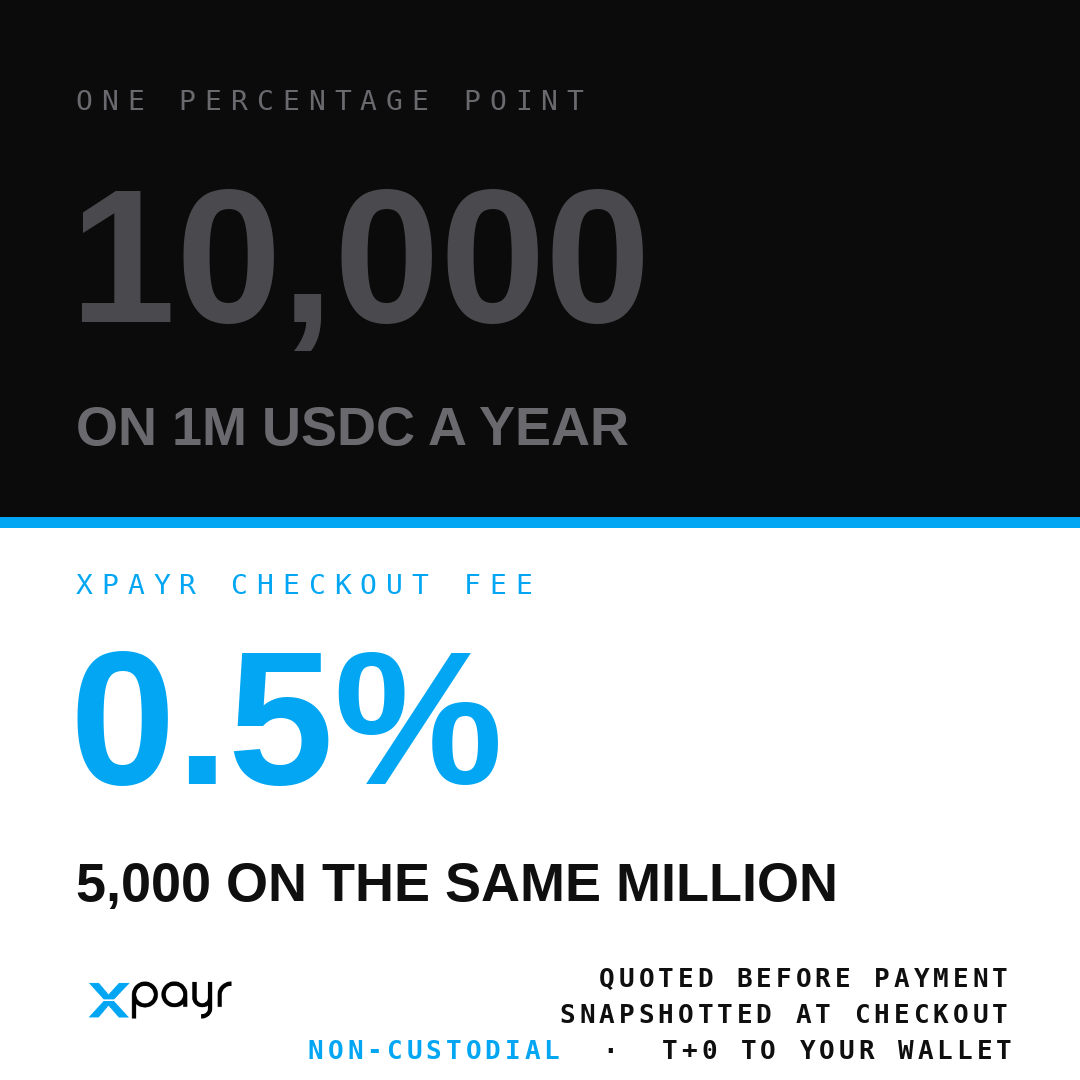
Pricing pages print it as one character and leave the arithmetic to you. On 1M USDC a year, every point is 10,000 — money already earned, already collected from your customers, priced in a unit small enough to read past.
XPayr is 0.5%: 5,000 on that same million. The fee is quoted before the payment, snapshotted at checkout, and expires rather than going stale — the number you agreed to is the number that runs. Non-custodial the whole way: the customer pays, it settles to your wallet at T+0, and the funds never enter our balance sheet.
Run the arithmetic. What does one point cost you a year?
#XPayr #payments #stablecoins #ecommerce
There's a step in most crypto payment onboardings that has nothing to do with the merchant's business: go get a second asset and hold enough of it.
They came to accept dollars. First they have to take a position in something else and keep a balance topped up so payouts don't stall. Finance calls that treasury work. It's a toll booth demanding its own currency.
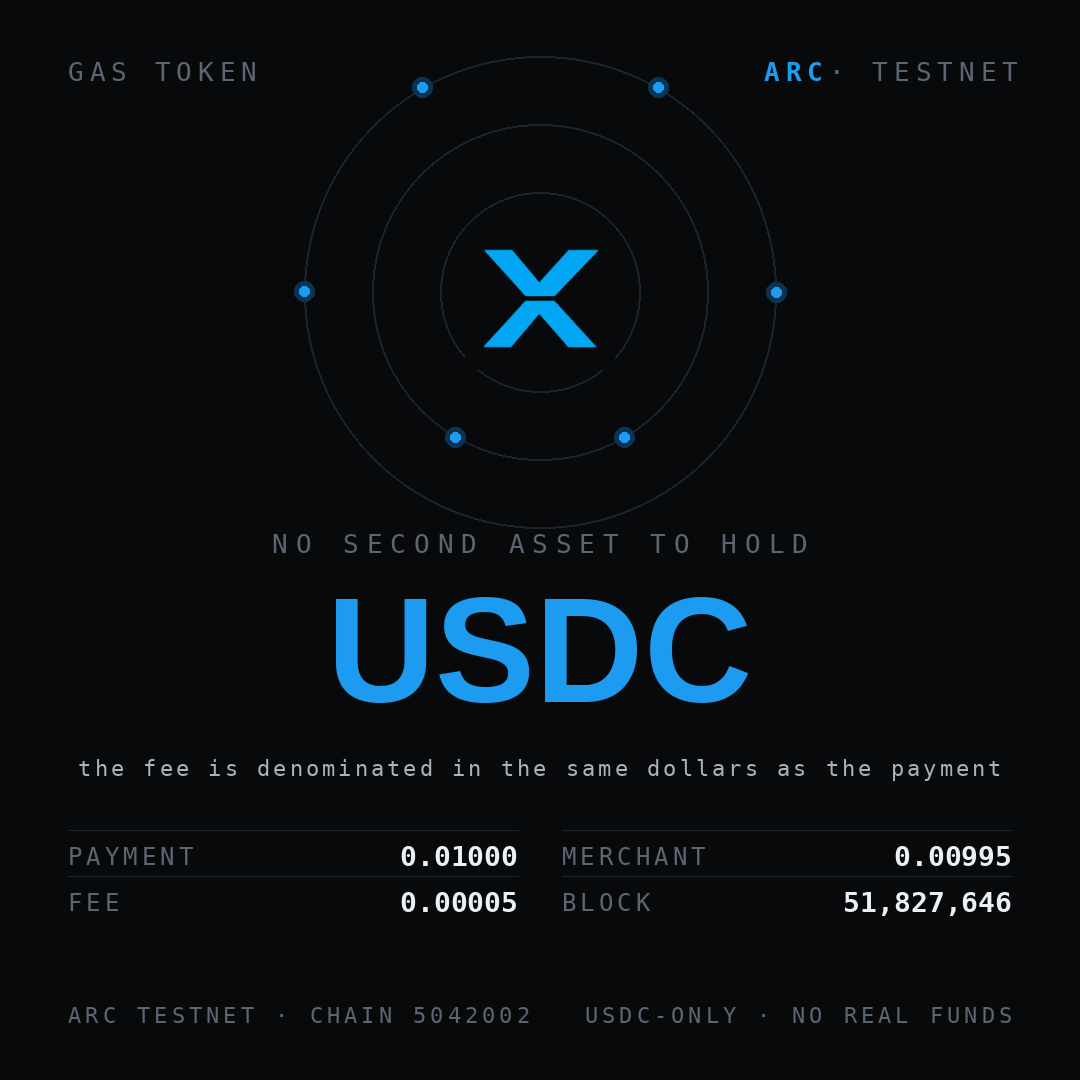
On @arc that step is gone. It's a Circle network where @USDC is the native gas — payment, fee and payout are the same dollars. Our agent test settled 0.01000 USDC in, 0.00005 fee, 0.00995 to the merchant, block 51,827,646.
@XPayrPay runs checkout, payouts and agent payments there. Still testnet, USDC-only, no real funds.
Builders: what's in your onboarding that has nothing to do with your user?
#Arc #USDC #XPayr #stablecoins
Every merchant audits its own revenue using a document written by the company holding the money.
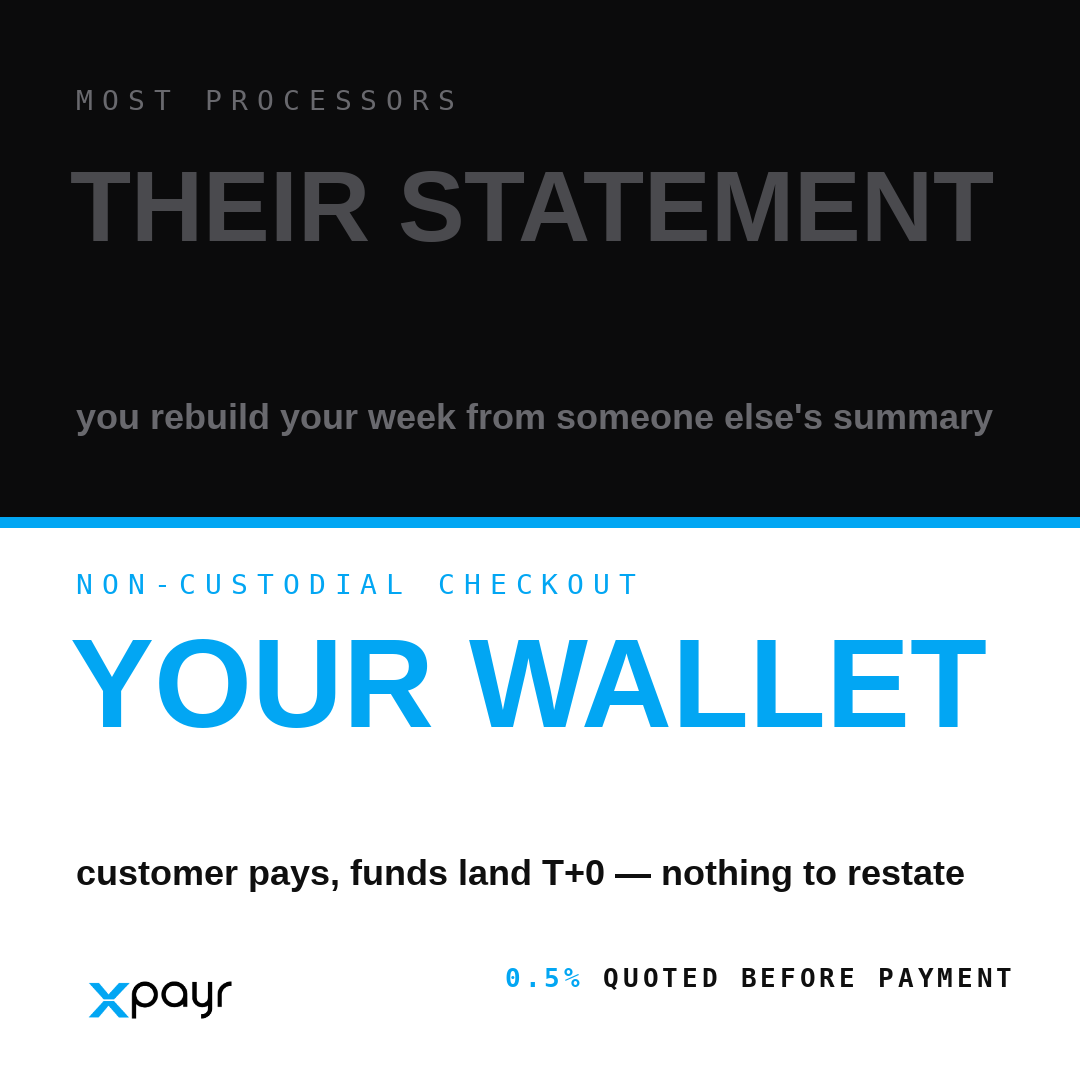
That's what a settlement statement is: gross here, a fee line there, a reserve you didn't choose, five days of sales batched into one row. Reconciling means rebuilding your own week from someone else's summary — and when it doesn't tie out, the only place to ask is the party that produced it.
XPayr is non-custodial. Funds never enter our balance sheet: the customer pays, it lands in your wallet at T+0, and the 0.5% fee was quoted and snapshotted before the payment moved. Nothing to restate later.
What's the last statement line you couldn't explain?
#XPayr #stablecoins #payments #ecommerce
An agent can do the whole job now except the last step: paying for it.
Not because the payment is hard, but because the rail assumes a person — a card someone owns, a billing email someone reads, an invoice someone approves at month end. So we hand agents our credentials and call it automation.
On @arc that assumption isn't load-bearing. It's a Circle network where @USDC is the native gas, so the payment and its fee are the same dollars, and finality is deterministic and sub-second. Our agent test: 0.01000 USDC in, 0.00005 fee, 0.00995 to the merchant, block 51,827,646, webhook delivered.
@XPayrPay runs agent payments, checkout and payouts there. Still testnet, USDC-only, no real funds.
Builders: what does your agent still have to ask you for?
#Arc #USDC #XPayr #payments
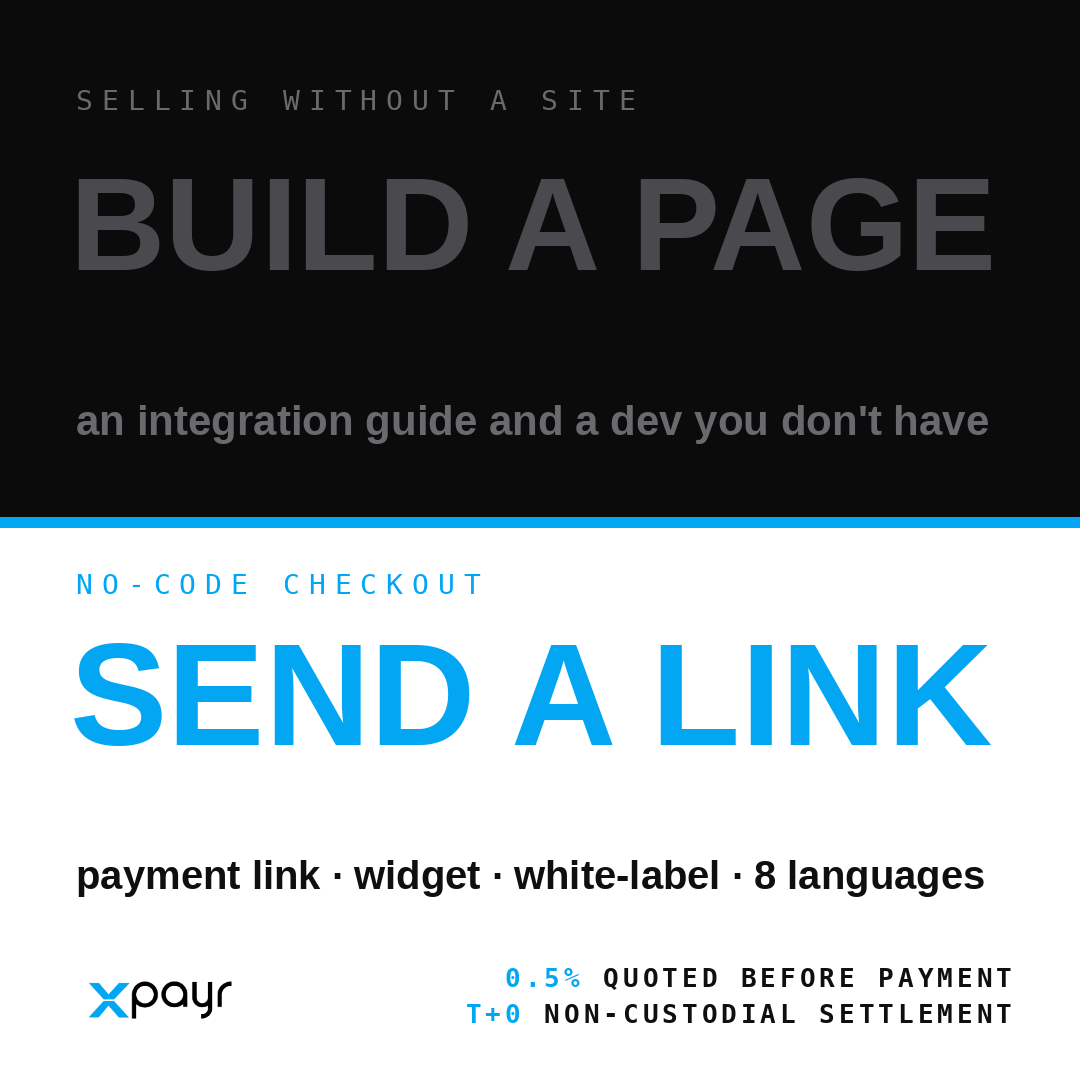
Not everything that gets sold has a checkout page behind it. A DM, an invoice, a link in a bio — the sale is agreed long before there's a page to put a button on.
Most stacks treat that as the unsupported case: an integration guide, a developer you don't have, and a page you didn't want to build.
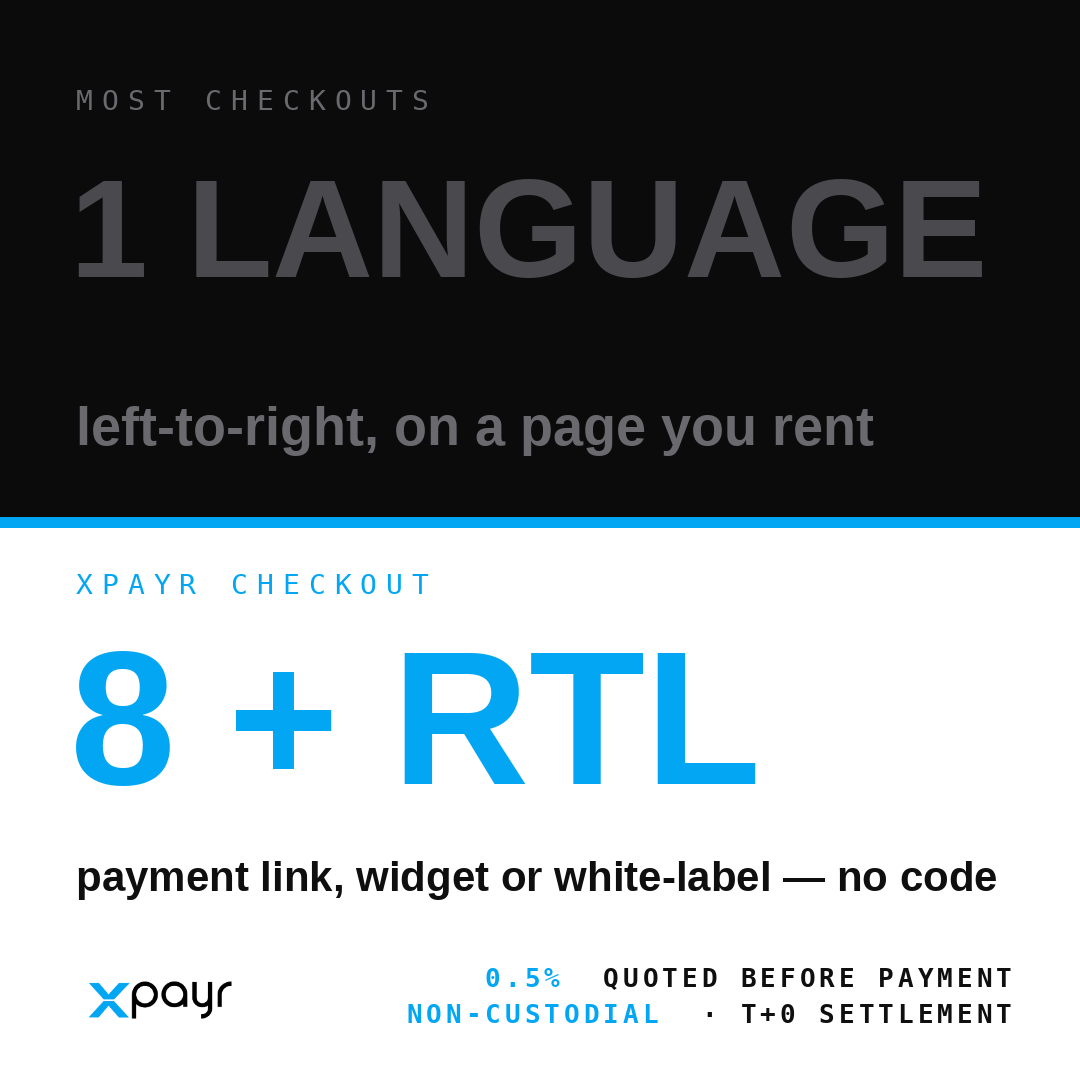
XPayr's checkout is no-code — a payment link, an embeddable widget, or white-label inside your own product, in 8 languages including RTL. It's non-custodial, so the customer pays and it settles straight to your wallet at T+0; the funds never touch our balance sheet. 0.5%, quoted before the payment and snapshotted at checkout.
What was the last thing you sold without a checkout page?
#XPayr #payments #stablecoins #ecommerce
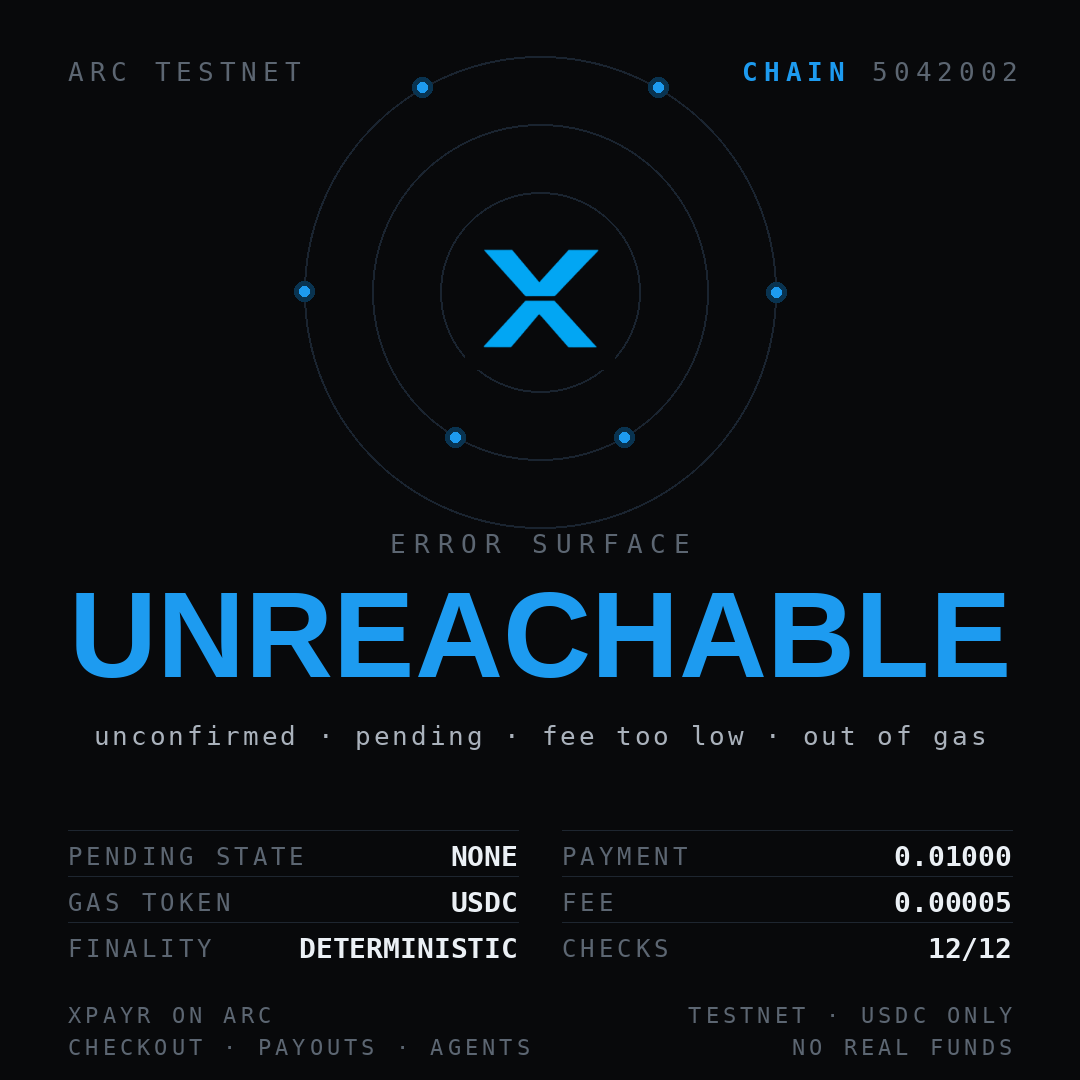
Open any payments SDK's error list and count how many entries are actually about money.
Most aren't. They're the rail's uncertainty promoted to an API surface your integrators must handle: unconfirmed, still pending, fee too low, insufficient gas, stuck transaction.
On @arc, rows of that table stop being reachable. It's a Circle network where @USDC is the native gas, so there's no second token to run out of, and finality is deterministic and sub-second, so there's no pending state to represent. Our agent test settled 0.01000 USDC with a 0.00005 fee: 12/12 checks, webhook delivered.
@XPayrPay runs checkout, payouts and agent payments there. Still testnet, USDC-only, no real funds.
Builders: which error code in your stack has never been about the money?
#Arc #USDC #XPayr #payments
Your rate was never really about your business. It was about the bucket you got sorted into.
That's what risk pricing is: a category gets a number and you inherit it. Then a rolling reserve holds back a slice of every sale against what the category might do, holds run T+2, T+7, sometimes T+30, and an account can be frozen without notice. None of it is a judgment about you. It's a model protecting itself with your float.
XPayr never prices your risk, because it never holds your money. The customer pays and it settles to your wallet at T+0 — funds never enter our balance sheet. 0.5%, quoted before the payment, snapshotted at checkout, recipient locked in config.
What is your rate actually pricing?
#XPayr #payments #stablecoins
Most payment products run on a calendar nobody chose.
Cutoff times, business days, a payout sent Friday evening that becomes a Monday problem. None of it is about moving money — it's the batching money used to require, and everything above it inherits the shape: pending screens, "3-5 business days", a queue of people waiting out a weekend.
On @arc there's no calendar. Finality is deterministic and sub-second, so a payout is done when it's done. It's a Circle network where @USDC is the native gas, so a payout and its fee stay in one unit — our agent test settled 0.01000 USDC with a 0.00005 fee.
@XPayrPay runs checkout, payouts and agent payments there. Still testnet, USDC-only, no real funds.
Builders: what does your product still promise in business days?
#Arc #USDC #XPayr #payments
Every merchant has two revenue numbers: what customers paid, and what they can actually use this week.
The gap isn't fees or fraud. It's a schedule — payouts on a cycle, a reserve held back, the rest conditional on nobody deciding otherwise. Finance plans against the second number, and the first one quietly becomes a marketing metric.
XPayr is non-custodial, so there's only one number. The customer pays and it settles to your wallet, T+0 — the funds never touch our balance sheet. 0.5% checkout fee, quoted before the payment and snapshotted at checkout, recipient locked in config.
How far apart are your two numbers right now?
#XPayr #payments #stablecoins #ecommerce
Every new payment rail arrives with a second invoice: rewrite everything that touches money.
That's usually the real reason a chain doesn't get adopted. Not the benchmarks — the quarter spent porting contracts, re-auditing a verifier, and teaching reconciliation rules it can't rehearse in production.
@arc is full EVM, chain 5042002, so that invoice never arrived. Our Solidity, verifier and reconciliation logic carried over as-is. It's a Circle network where @USDC is the native gas and finality is deterministic and sub-second — most of what we did change, we deleted.
@XPayrPay runs checkout, payouts and agent payments there. Still testnet, USDC-only, no real funds.
Builders: what migration are you postponing because of the code around it?
#Arc #USDC #XPayr #stablecoins
The most expensive part of paying 200 people isn't the fee. It's the approval.
Payout tooling assumes every transfer is its own event — its own instruction, its own confirmation, its own place to make a mistake. So the work scales with the number of recipients instead of the number of decisions, and finance spends the week checking rows.
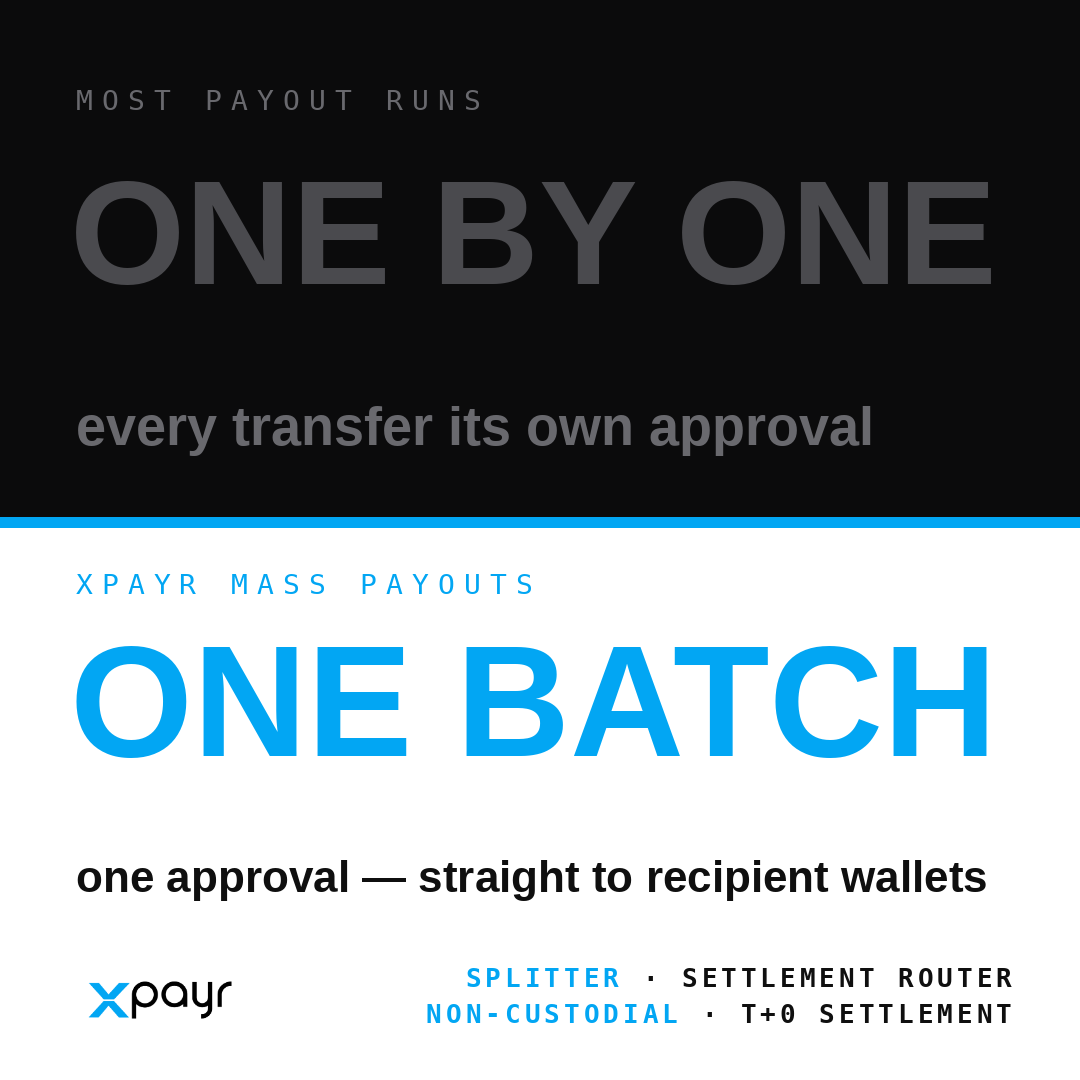
XPayr runs mass payouts as one batch, one approval. Non-custodial the whole way: the money never lands on our balance sheet, it goes to recipient wallets at T+0. Same idea in the splitter — revenue divides at settlement instead of after it.
How many approvals sit between a finished sale and the people it's owed to?
#XPayr #stablecoins #payments
Checkout, payouts and agent payments are three different integrations wearing one company's logo.
Money in, money out, and machine-to-machine each arrived from a different provider, with its own fee unit and its own settlement window — so reconciliation became the work of noticing they disagreed. Nobody designed that shape. It accumulated.
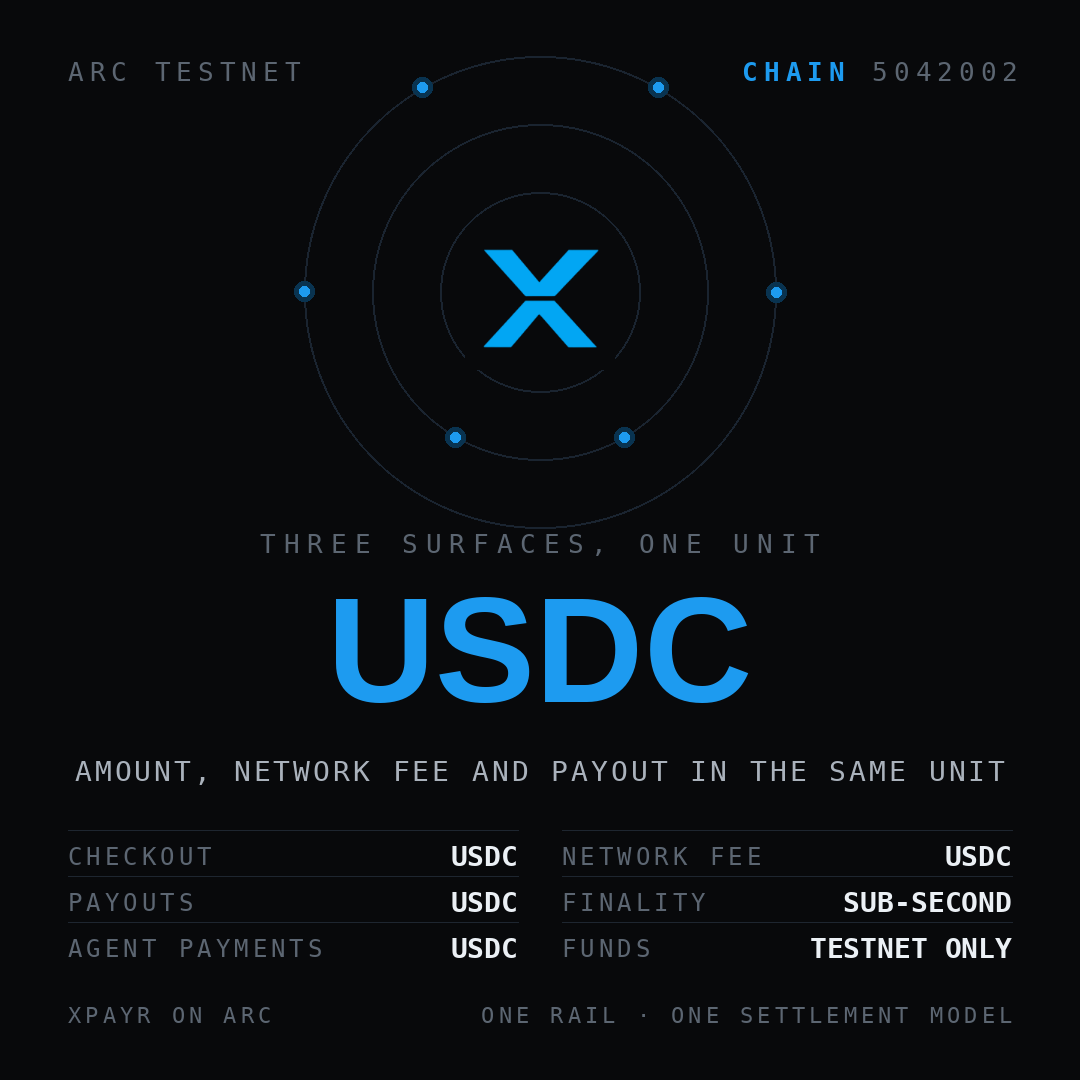
On @arc it collapses. It's a Circle network where @USDC is the native gas, so a charge, a payout and an agent's fee are denominated in the same dollars. Finality is deterministic and sub-second, so all three answer at the same moment. Full EVM, chain 5042002.
@XPayrPay runs all three there. Still testnet, USDC-only, no real funds.
Builders: how many settlement models is your product carrying right now?
#Arc #USDC #XPayr #payments
You translated everything except the screen where the money moves.
The site adapts. Support answers in whatever language shows up. Then the buyer reaches checkout and gets one language, left-to-right, on a page you rent — and changing it means filing a ticket against someone else's roadmap.
XPayr gives that screen back: payment link, widget or full white-label, no code, 8 languages with RTL included. The 0.5% fee is quoted before payment and snapshotted at checkout. Settlement is non-custodial — funds land in your wallet T+0 and never enter our balance sheet.
The last screen is the worst place to make someone hesitate.
Which language does your checkout speak?
#XPayr #payments #ecommerce
The transfer is rarely the hard part. Getting your own system to agree it happened is.
On most rails settlement is a probability that improves with time, so integrations end up with two bad options: hold the order until it feels safe, or mark it paid early and write the reversal logic you hope never runs. Both are guesses wearing a status field.
On @arc, finality is deterministic and sub-second — one moment is true, and downstream state gets written once. Our agent test payment: 0.01000 @USDC in, 0.00005 fee, 0.00995 to the merchant, block 51,827,646, 12/12 checks passed, webhook delivered.
Still testnet, no real funds.
How long does your system wait before it believes a payment?
#Arc #USDC #XPayr #stablecoins
There's a clause in most processor agreements that lets someone else decide when your revenue moves. Not the rate, not the hold schedule — the part that makes your payouts conditional.
It only matters on the day it matters. Until then it reads like boilerplate, while the money your customers already paid sits in an account you don't control.
XPayr is non-custodial. Funds never enter our balance sheet: the customer pays, it settles to your wallet, T+0. Nothing of yours is held here, so there is nothing to freeze and nothing to release. The fee is 0.5%, quoted before payment, snapshotted at checkout, recipient locked in config.
If your payouts stopped tomorrow, how long could you keep operating?
#XPayr #payments #stablecoins #ecommerce