What happens when a criminal case relies on testimony from someone who may have something to gain?
Yale Law School researcher Laura Fernandez spent years investigating jailhouse informant Paul Skalnik, whose testimony helped prosecutors secure convictions in multiple cases, including death penalty cases.
Her research uncovered troubling patterns and helped lay the groundwork for a bestselling true crime book examining the reliability of jailhouse informants and the consequences for people whose lives hang in the balance.
In a Q&A, Fernandez discusses her findings and the questions they raise about fairness in the justice system: https://t.co/RxR4nje9uD @YaleLawSch
Some of the Milky Way's faintest companions are finally coming into view.
Using early images from the new Vera C. Rubin Observatory, Yale astronomy graduate student William Cerny led a study identifying Aquarius IV, a previously unknown system of stars roughly 355,000 light-years from Earth.
The discovery offers a glimpse of what the observatory could reveal about our galaxy's hidden neighbors, how galaxies form, and the mysteries of dark matter. Read more: https://t.co/KByWFSJIDS
Mucins are her mission.
Yale chemist Stacy Malaker is working to better understand proteins that have long been difficult to study.
Mucins help produce mucus, but they also play important roles in health and disease. By developing ways to break these complex proteins into smaller pieces, Malaker's lab is helping scientists study them in greater detail, with potential implications for detecting and treating diseases like cancer.
Read a Q&A with Malaker: https://t.co/IMsJwwzyRV
The world is expanding protected areas, but are they doing enough to safeguard wildlife?
A new report from Yale's Center for Biodiversity and Global Change finds that many species and their habitats remain inadequately protected, with particularly concerning gaps for threatened species.
While progress on land has been limited, researchers found more encouraging signs in ocean conservation: https://t.co/TfOdcjrRvp
Public health programs can do more than change behaviors. They can also “rewire” social networks.
In rural Honduras, Yale researchers studied what happened when families received education about maternal and child health.
When only a few households participated, those who received the lessons were less likely to turn to other neighbors for health advice, leaving some people less connected. But when most households participated, connections across the community actually grew.
The findings show that sharing health information can change not just what people know, but who they turn to and trust.
Explore the research: https://t.co/UZ8XkGxWmQ
What can gravitational waves tell us about the universe?
Yale astrophysicist Chiara Mingarelli is helping scientists answer that question. As part of the NANOGrav collaboration, she contributed to research that revealed the first direct evidence of a gravitational-wave background in 2023, offering new insights into how supermassive black holes grow and galaxies form.
Now, Mingarelli has been named a fellow of the American Physical Society, recognizing her pioneering contributions to gravitational-wave research.
Learn more about her work: https://t.co/rsCxxNgHPE
A friendship between two researchers has opened doors for students on both sides of the Atlantic.
For more than 20 years, Yale anthropologist Richard Bribiescas and his colleague Grazyna Jasienska in Poland have worked together, creating opportunities for students to travel and build lasting connections.
Now, Bribiescas has been recognized by the Polish Academy of Arts and Sciences for his contributions to their partnership.
Read their story: https://t.co/Nmu6a9Fnfi
When he first arrived as a student at Yale Law School, Michael Woodford ’80 J.D. wasn’t particularly interested in economics. But Yale’s culture of intellectual freedom and curiosity set him on a path that this month culminated in a Nobel Prize in the field.
Read his story: https://t.co/Y84MplduE0 @YaleLawSch
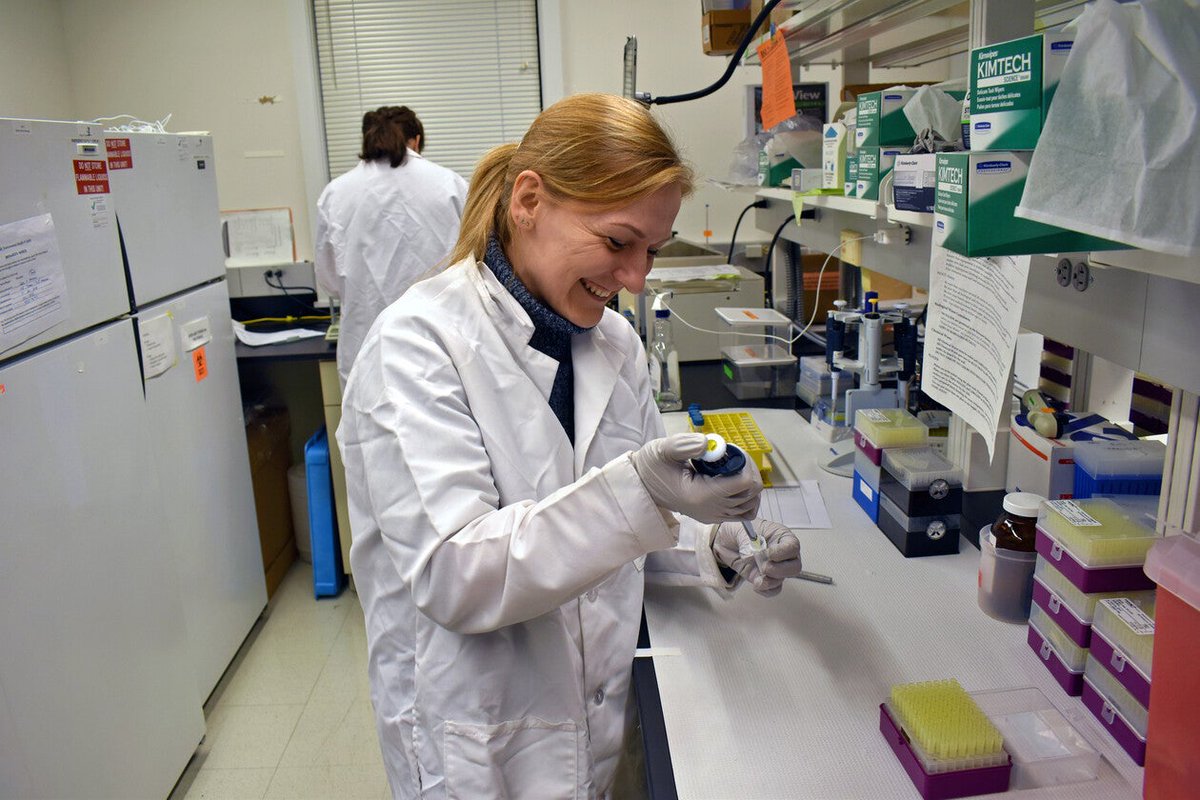
Why are so many people afraid of Pap smears?
For some, it's the discomfort or pain of the exam. For others, it's the anxiety of an abnormal result or the possibility of further testing.
Yale gynecologic oncologist Blair McNamara understands those concerns. But she also explains why Pap smears remain an important tool for preventing cervical cancer, and how patients can feel more comfortable during screening.
In a Q&A, McNamara addresses common concerns and shares what patients should know before their next exam: https://t.co/CNHWsGYChK
This new home is making a big difference for two New Haven educators.
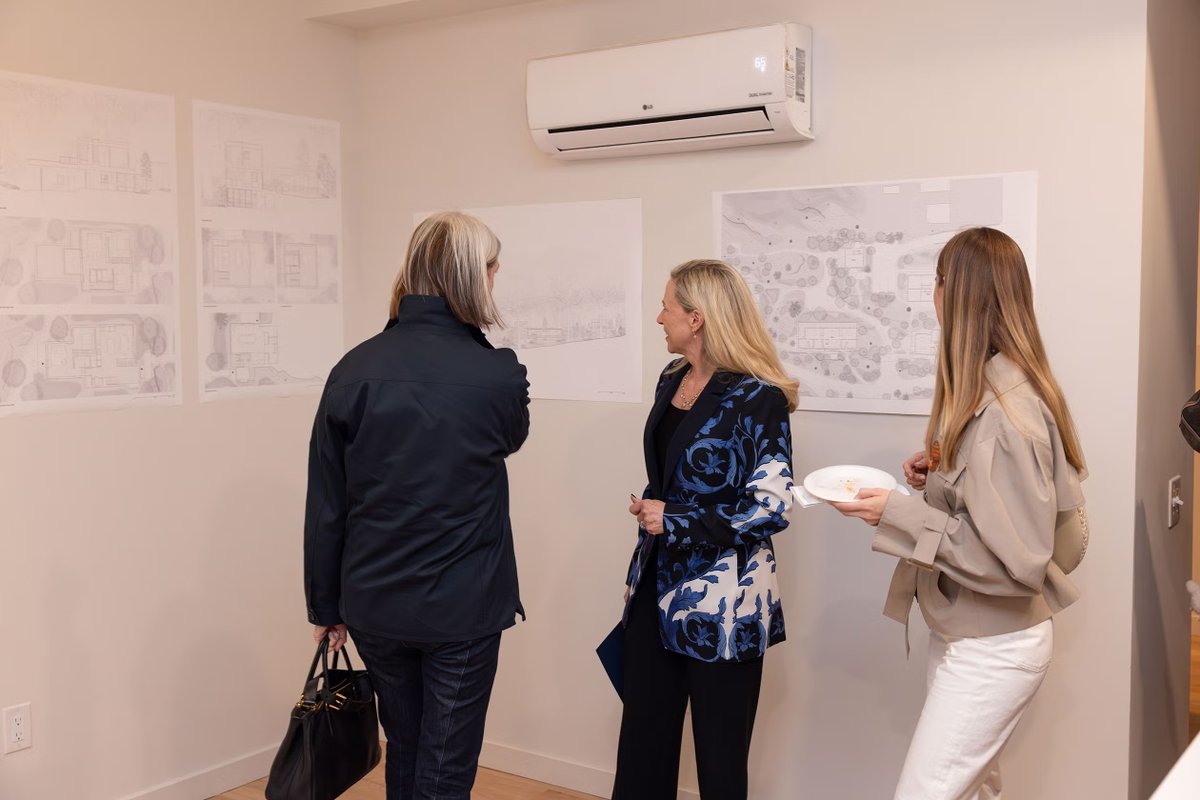
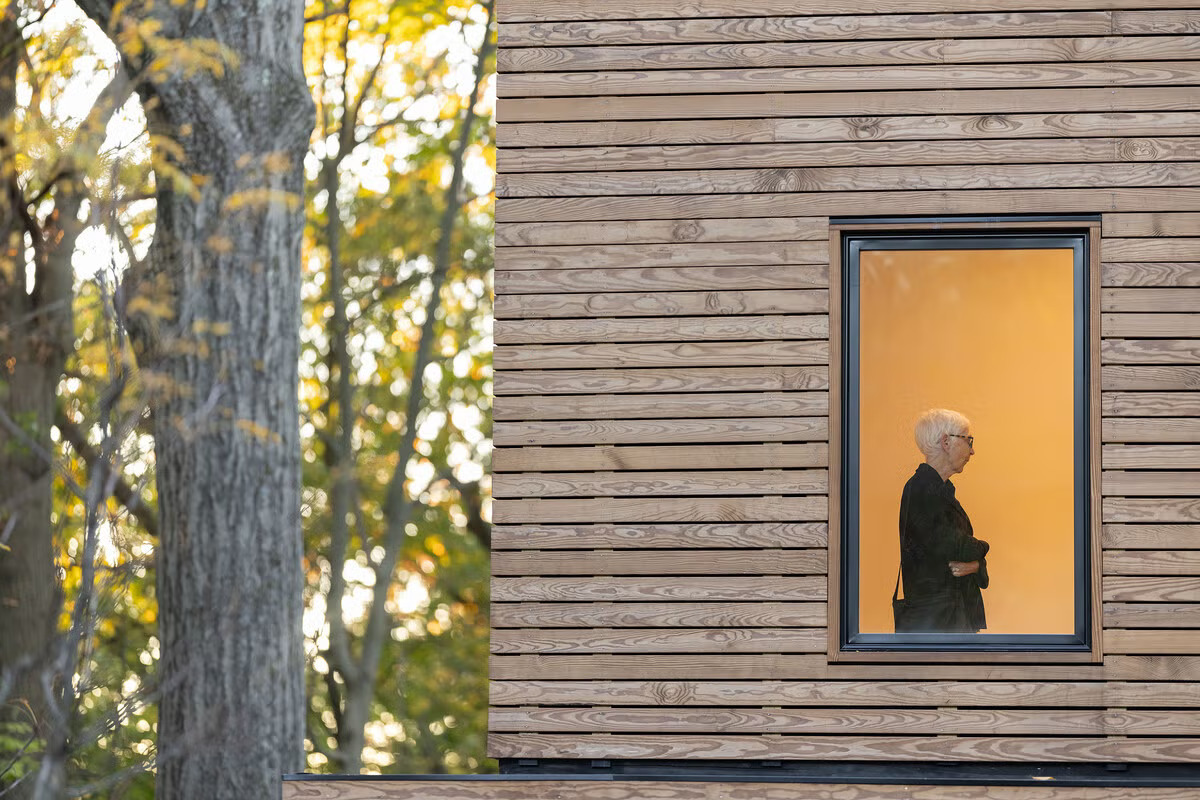
Through the Jim Vlock First Year Building Project, Yale architecture students worked with local partner Friends Center for Children to design and build “The Nest,” a two-family home that will provide rent-free housing for teachers at the center.
For future resident Aurora Coon, the home will help ease housing costs and give her and her husband more flexibility to pursue their career goals.
Swipe through for a look at the new home, and meet some of the people who brought it to life: https://t.co/E5KihHMX73
The Yale Club of New Haven recently honored 48 local high school seniors with Yale-Seton Book Awards, recognizing their outstanding character and intellectual promise.
Each student received two books, one to keep and one for their school's library.
Meet this year's winners: https://t.co/FH6aimZZfr
Up close, a pointillist painting looks like thousands of individual dots. Step back, and a bigger picture emerges.
Yale researchers say something similar may help explain how AI chatbots make sense of information. A new study offers clues about how large language models recognize patterns and organize information in ways that resemble aspects of human reasoning.
The findings could help scientists better understand how these systems work and make their responses more predictable.
Take a closer look at the research: https://t.co/xSoUVjVqdD
Cannabis. Chatbots. Salamanders. Cancer research.
Four stories. One podcast episode. Under 10 minutes.
In the latest episode of Yale's new podcast, Beyond Blue, psychiatrist Deepak D’Souza helps us understand what today's increasingly potent cannabis means for mental health, particularly for young people.
We’ll also talk about when to question the answers AI chatbots give us, the quiet evolution of salamanders, and how exercise helps our bodies fight cancer.
Stories worth sharing. From Yale, for you.
Listen now and follow Beyond Blue on Apple Podcasts, Spotify, YouTube, or wherever you get your podcasts: https://t.co/9xd8C7NmFW
At Yale, pathologists are using AI to help spot things the human eye might miss. When reviewing prostate biopsies, doctors can compare their findings with areas flagged by an algorithm, giving them another opportunity to catch potential signs of disease.
Pathologist Sudhir Perincheri explains how AI is becoming a useful second set of eyes in the lab: https://t.co/YUSwIb6EfD
How concerned should we be about plague?
Following the mysterious death of a researcher at a Russian laboratory, plague is back in the headlines. But Yale physician-scientist Ingrid Katz says there's no evidence so far that the incident poses a broader threat to the public.
In a Q&A, Katz explains what we know and don't know, how different forms of plague spread, and why careful investigation matters more than speculation: https://t.co/68zBPgkbRQ
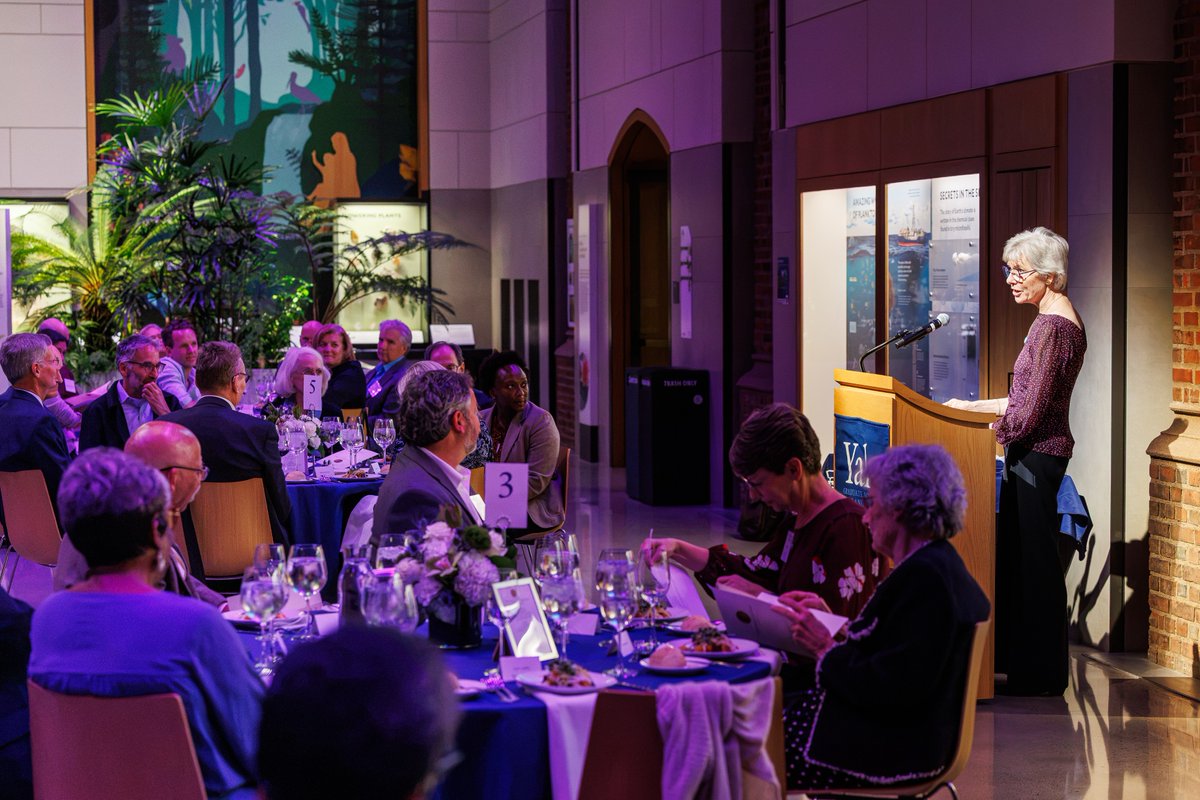
This week, the Yale Graduate School of Arts and Sciences celebrated the recipients of its highest honor, the Wilbur Cross Medal, recognizing their achievements in scholarship, teaching, and public service.
The ceremony included remarks from Yale President Maurie McInnis and Graduate School Dean Lynn Cooley. This year's honorees:
▪️ Carol Carter ’72 PhD
▪️ James Dieterich ’68 PhD
▪️ Amy Richlin ’78 PhD
▪️ James Robinson ’93 PhD
Learn more: https://t.co/xDuzMuAU5u
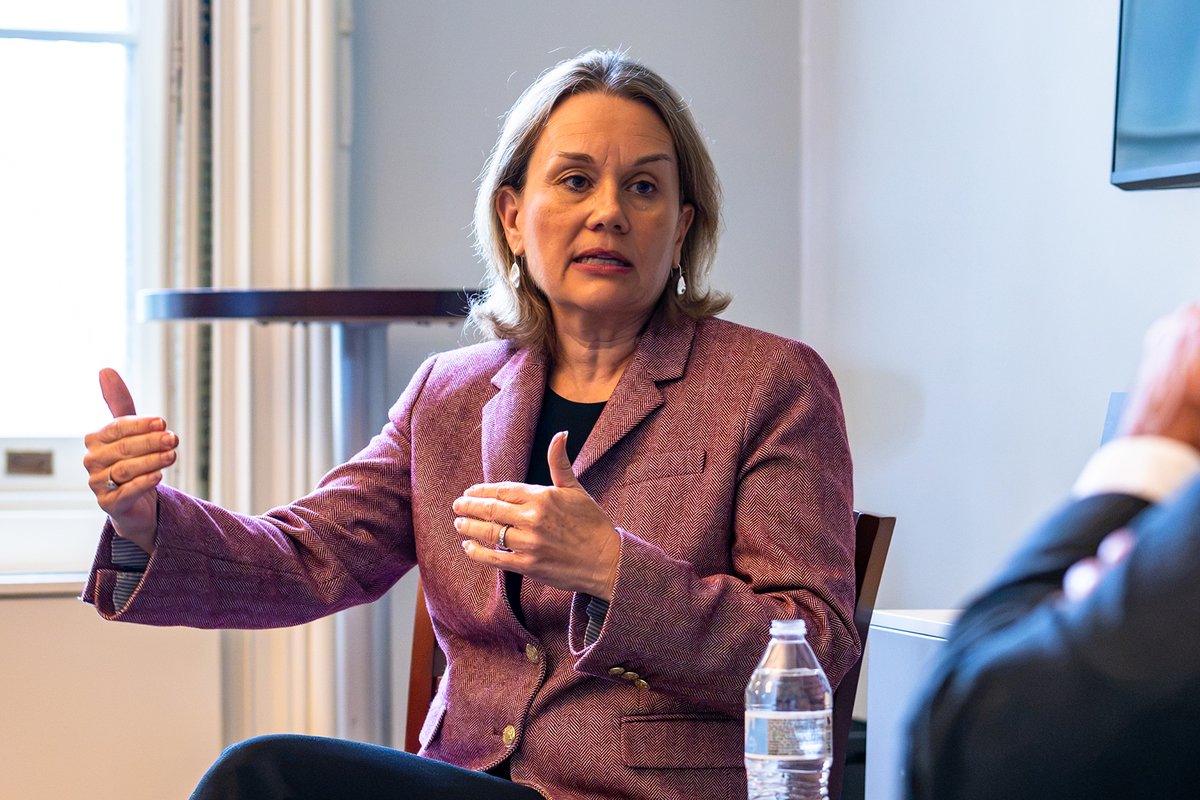
Even after more than 20 years in diplomacy, Julianne Smith is still learning.
The former U.S. ambassador to NATO is now teaching at the Yale Jackson School of Global Affairs, where her students are bringing fresh perspectives to some of the world's toughest security challenges.
In fact, Smith says she's considering sharing some of their policy ideas with actual policymakers.
In a Q&A, she reflects on her experience at NATO, the challenges facing the alliance, and what she's learning from the next generation: https://t.co/IgLibdK9k0
For Julia Jarcho, making theater and studying it have always gone hand in hand.
As a child, she accompanied her mother to experimental theater productions in New York City. By high school, she was writing plays of her own.
Now a Yale professor, playwright, and director, Jarcho continues to bring those two worlds together. In a Q&A, she reflects on the experiences that shaped her creative life and what she's working on next: https://t.co/rhiYwnrtaf