We are young Catholics for ordered migration. Nations may regulate borders for the common good. Charity without order is not Catholic. CCC 2241.
*We are laity*
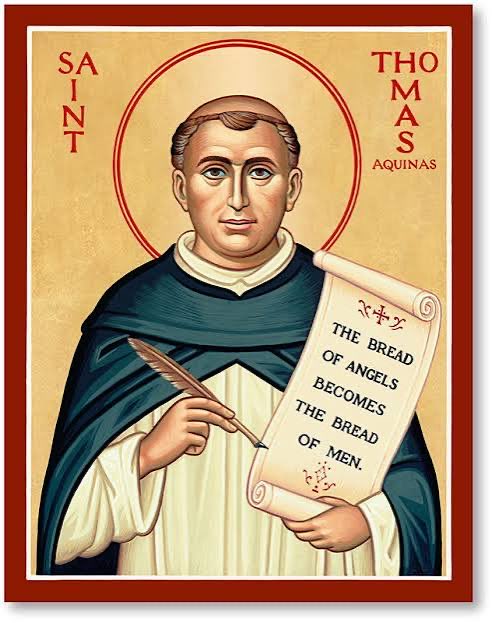
St. Thomas Aquinas did not teach that arrival alone makes a citizen.
Some nations waited until the 2nd or 3rd generation to grant citizenship at all, because a foreigner who does not yet have the common good at heart can do the people real harm. Dwelling somewhere was not the same as governing it.
If the Catechism binds the immigrant to the heritage and the laws of the country that receives him, as Aquinas taught, then why do our shepherds fail to mention it?
We grew up with much of the same.
The laity have been pushing for a return to proper tradition, through looking at the actual, historical teaching of the Church.
You can see the pendulum swinging, we must continue to fight and work toward appropriate forms of worship in our liturgies across the USA as well.
@frankmcasanova We don’t believe formal chapters will be part of our foundation at this point, but we will have organized campus events and tours in the future.
A deep reflection is right, and the Church gives us the tools for it. CCC 2241 asks two things at once: prosperous nations must welcome the foreigner as far as they are able, and public authority may set conditions on immigration for the common good.
This isn't new. St. Thomas Aquinas taught that the Old Law commanded peaceful, just treatment of strangers, while making citizenship come gradually, so newcomers could truly join the common life of the people.
@CatholicVote Glad to see the Catechism in this debate. CCC 2241 says both things: nations can and should regulate migration for the common good, and prosperous nations must welcome the foreigner as far as they are able. Order and charity belong together.
Catechism 2241 does not only tell the nation to receive. The duty is real, and it binds the immigrant to respect, with gratitude, the material and spiritual heritage of the country that receives him, to obey its laws, and to carry its civic burdens. A Catholic does not or should not pretend that refusal is a second valid option. Ingratitude toward the country that took a man in is a failure of the duty the Church specifically names.
It is not, by itself, a sentencing. Deportation is an act of civil authority, not of private judgment. The Catechism permits the state to make immigration subject to juridical conditions. Where a person is present contrary to those conditions, or breaks the laws he was bound to keep, removal is a morally licit remedy. It is the ordinary means by which a nation upholds the order the teaching allows. A neighbor’s lack of gratitude is a reason for clear speech and, where the law has made it a condition, for the state to act.
The Catechism is not referring to a mood or a slogan. It means the inheritance of the country that received him. Its laws, its public language, its constitutional order, and the moral and religious patrimony that formed it. “America is a melting pot, therefore every culture is already American” removes the duty in question. A man received into a people does not acquire the right to redefine it. He joins it. We all know what an American is.
@BenGee312 We recognize the need to speak with clarity on numerous issues facing our communities at this time, but we are solely focused on migration and tackling that message before we can even begin addressing other topics.
Catholic doctrine on immigration has a firm basis in theology and philosophy. St. Thomas Aquinas, in the Summa Theologiae (I-II, q. 105, a. 3), treats the judicial precepts of the Old Law on foreigners. He distinguishes three relations, not one rule.
The first is the traveler passing through. The second is the newcomer who comes to dwell in the land. In both cases the Law made kind provision: the stranger was not to be molested.
The third is the foreigner who wishes to be admitted entirely to the fellowship of the people and to their mode of worship. Quoting Aristotle, the Angelic Doctor notes that in most ancient societies, citizenship was not conferred until after the second or third generation.
“The reason for this was that if foreigners were allowed to meddle with the affairs of a nation as soon as they settled down in its midst, many dangers might occur, since the foreigners not yet having the common good firmly at heart might attempt something hurtful to the people,” he writes.
This of course included the Israelites of the Old Testament. For the sake of brevity and focus, we will address that part of it in full in a separate post.
The order observed by these ancient societies provided peaceful residence to any foreigner who chose to dwell in the land and keep the civic religion. But to dwell in the land was not yet to share in ruling it.
Citizenship, with all its incumbent rights and duties, was only conferred on those who were fully incorporated into the society: who knew their neighbors and regarded them as their fellows; who rejected the prejudices of their former country against their new one; who knew the customs, beliefs, and laws of the land they inhabited and no other.
The legal path to American citizenship follows the same pattern, albeit less strictly. A prospective citizen must learn the Constitution and the laws, and must swear an oath renouncing allegiance to his country of origin, pledging allegiance to the United States, and accepting the obligation to serve the country in a time of crisis.
But in this era of unchecked migration, these principles have largely been disregarded. We have allowed tens of millions of people from all over the world to enter our country who do not have the “common good firmly at heart.” Hundreds of thousands have come from adversarial nations, or ones that are plagued by terrorism, drug and human trafficking. Many migrants see the United States as an economic zone to take from rather than a nation with a people to join, living apart from American society and sending the fruits of their residence here elsewhere.
A well-ordered policy receives the immigrant who takes his neighbor as a fellow, joins the community, and works for the common good of his new home, with his loyalty here and not elsewhere. Civil authority has the right and the duty to establish that order. The Church ought to recognize the charge this lays on civil servants, pray for them, and preach the teaching in full, rather than rebuke them for exercising an office she herself acknowledge.
Good afternoon and happy Monday Catholics! Hope everyone had a great weekend and was able to make it to Mass yesterday!
Today we’re announcing our instagram page. This is our only and official page.
Instagram : ycom_initiative
Our website will be going live soon as well, so be on the look out for that.
Also, we want to announce that we are working on providing answers to common questions we’ve been posed. A Q & A if you will. Stand by for that!
We’re continuing to grow our movement and have had many productive conversations with people, and we thank everyone who has reached out so far.
Thank you and God bless!
The core contention of Young Catholics for Ordered Migration, is that our leaders are teaching and opining incorrectly on the issue of immigration to the United States and the West more broadly. The obvious question, then, is, “what does the Catholic Church actually teach about immigration?”
The Catechism of the Catholic Church in Paragraph 2241 states:
—
“The more prosperous nations are obliged, to the extent they are able, to welcome the foreigner in search of the security and the means of livelihood which he cannot find in his country of origin. Public authorities should see to it that the natural right is respected that places a guest under the protection of those who receive him.
“Political authorities, for the sake of the common good for which they are responsible, may make the exercise of the right to immigrate subject to various juridical conditions, especially with regard to the immigrants' duties toward their country of adoption.
“Immigrants are obliged to respect with gratitude the material and spiritual heritage of the country that receives them, to obey its laws and to assist in carrying civic burdens.”
—
Obviously, all immigrants are deserving of human dignity, for we are all made in the image and likeness of God. That human dignity includes the right to pursue sufficient means of provision for themselves and their families.
Concurrently, the nations receiving migrants who come in a lawful and orderly way have a duty under God to treat them with respect, afford them equal opportunity and justice, and protect them from persecution, just as it has with all native-born citizens.
But the Church also recognizes the right of the host nation to impose reasonable limits. The phrase “to the extent they are able” acknowledges that resources are finite and circumstances preclude certain individuals or groups from being brought into the society promptly, or at all.
The United States is approaching $40 trillion in debt, with annual budget deficits approaching $2 trillion. Nearly 60% of our spending is on social welfare services, and another 15% is interest in our outstanding debt. We are not, by any stretch of the imagination, able to accept more foreigners that further strain our systems.
Moreover, the Catechism explicitly allows for reasonable restrictions to ensure order and the common good of all citizens. Immigrants are necessarily subject to the laws of the host nation, which includes immigration laws; and they are bound to an equivalent duty to fully participate in the society of the host nation.
This means there is no moral latitude for behaviors, customs, religious practices, or subcultures that disregard or conflict with the just civil laws of the nation. There is no moral latitude for racial or ethnic enclaves that discriminate against native citizens by language or cultural barriers. And there is no moral latitude for ethnocentrism, sedition, or revolution by violence or otherwise.
Unfortunately, whether through a disproportionate spirit of complaisance or ideological capture, the Bishops and other Church leaders have neglected the entire second half of the paragraph, and even the aforementioned phrase, almost entirely. In nearly all published statements from the USCCB, all the way down to offertory prayers at Sunday Masses, political leaders and the lay faithful are told to welcome the stranger, without recognizing that the stranger must also ingratiate himself into the community.
The chief aim of our initiative is to reform that neglect through information and education. Our hope is that by the Grace of God and seeking truth in charity, the Bishops will broaden their understanding of the issue, engage our civil leaders with discretion instead of misdirected outrage, and preach the Gospel instead of political rhetoric.
Our nation is at a tipping point. Tens of millions of people have entered the United States illegally, straining public welfare programs and resources and altering the social fabric of our country.
Despite the serious costs of unchecked migration, our shepherds in the Catholic Church have said relatively little. The U.S. Conference of Catholic Bishops has spoken clearly about the dignity of migrants, but far less about the dignity of native citizens and of the nation itself.
We believe Church leadership has neglected part of its God-given duty to shepherd its own flock. When care for noncitizens is emphasized without a corresponding concern for the common good of the nation and the welfare of its citizens, the hierarchy of responsibilities becomes disordered. Americans are losing jobs. Americans are becoming victims of violent, organized crime.
Young Catholics for Ordered Migration was founded to help restore that balance: to stand for the dignity of the United States and the West, and for our right, under the laws of nature and of God, to secure our borders.
We exist to present the hard truths about unchecked migration charitably, but without apology, to leaders in the Church and in public life.
Our aim is to persuade Church leaders to recover the Church’s full and long-established teaching on migration; to encourage respectful dialogue between the Church and civil authorities; and to reform how the Church preaches and teaches on this issue.
Addendum: our Direct Messages are flooding right now. We will respond to everyone who approaches in a professional manner in due time, however it may take some time.
We appreciate each and everyone who wants to offer their support and collaboration.
Good morning Catholics and supporters. We are making this announcement as an update of what’s going on.
1) Current status
We are strictly online for now. This X account is our only official channel. No website, other social apps, or 501(c)(3) as of today.
We are rolling a website and Instagram page soon. Standby for those, but until announced, this is our only official network.
There is no chapter network and no mass membership. Do not found one in our name. We will organize those in due time. Any independent efforts to organize outside of our official structure will only cause confusion and will jeopardize the effort.
We are not taking donations yet.
Any public page, group, or chapter claiming to be us that this account has not named is an imposter.
2) What we are
A society of baptized Catholics. Nonpartisan, in full communion with the Bishop of Rome and our diocesan bishop.
We exist to recall the Church’s full teaching on migration (CCC 2241), and to seek reform of how that teaching is applied by Catholic institutions in the United States.
3) What we are doing
Several public figures have reached out to collaborate. We are working those conversations daily. We will announce what is real when it is real.
Near-term aim: 1–3 contacts in each diocese, then conversation with bishops and local officials. Not a protest tour or a reactionary online movement.
We are looking for help from people with a specific skill (writing, design, law, local knowledge). If you believe we can work together, our DMs are open for now until we establish an official communication network.
We are also looking for someone to create a professional logo and banner for us. Our DMs are open.
4) How this account will run
We will not be posting frequently. The point is dialogue inside the Church. There are already thousands of accounts on here voicing their opinions on the Papacy, USCCB, and the Church, sometimes charitably and sometimes not. Our goal is not to become one more.
Things are moving. If you want to help, share the teaching and DM a short note with what you can actually do.
5) What we’ve done
We have met with collaborators from 7 states across the country, and are working to establish contact in every diocese. We have also garnered interest in Europe and Canada.
6) What to expect
Do not expect to hear from this account on a daily basis.
Do not expect to see us in the comment section of the Pope’s or the USCCB’s tweets.
Do not expect us to align with your ideal niche political movement.
Do not expect “takes” from this account.
DO expect us to grow across the country as we expand our network of collaborators.
DO expect us to eventually meet with local officials and Catholic leaders.
DO expect things to move slow for a while.
DO expect professional, directed dialogue with everyone we engage with in the public sphere.
DO expect GREAT things!
IUVENES CATHOLICI PRO MIGRATIONE ORDINATA
Good morning Catholics and supporters,
Incredibly grateful to everyone who supported this, we’ve had amazing progress so far, reaching nearly 10,000 supporters in under 24 hours. Again, we couldn’t be more grateful and we pray that this movement can make itself heard.
YCOM Society exists for one reason. The Church’s teaching on migration has two poles. The first (welcome the stranger, human dignity) is preached constantly.
The second (nations have the right and duty to regulate their borders for the common good) is treated as optional. The hierarchy, in theory, seldom references this second teaching, and in practice, disregards it to a troubling degree.
We believe disordered migration has led to real consequences to the common good, which the Church’s own teaching already requires us to weigh.
We seek to call upon Catholic social teaching, the Catechism, the writings of the Saints, and the Bible, in order to reform the US Catholic Church’s attitude and action towards unchecked mass immigration.
We are a nonpartisan, laity and (for now) strictly online organization. We hold with the utmost respect the office of the Papacy, the Episcopate and the role of the USCCB in the US Catholic Church. We seek dialogue and reform, not disrespect or disobedience.
We are not affiliated with political parties or policy; our movement is strictly within the Catholic Church, and seeks to engage with the Bishops of the USCCB, the administrators of Catholic Charities, and influential Catholics in government, media and business for productive dialogue.
All help and support is welcomed, no matter how big or small. For now we are a grassroots online movement, but we hope this movement grows into something that the Church cannot ignore.
We are currently seeking trustworthy, faithful and skilled baptized Catholics who support this cause and want to help establish the movement. Direct messages are open currently, however anonymous & unverified accounts will not be considered.
This is the only official channel for this organization. We are working to launch a website, Instagram and Substack and will make announcements for each.
For now, continue showing your support, and as stated, we are incredibly grateful to all who have shown up so far, and we can pray for many more.
This is an online public teaching project for now. We are not *yet* a nonprofit, a conference circuit, or a network of chapters.
If you are interested in helping from the grassroots and have specific skills, let us know.
God Bless
We are a Society of young Catholics for ordered migration.
The Church does not teach open borders.
Our Society’s mission is this:
To speak the neglected half of Catholic teaching on migration until the teaching of the US Bishops reflects the Catechism, not a partisan agenda.