Remote work is not a shortcut.
It is a strategy.
Working remotely means:
*Serving international clients at a high standard
*Communicating clearly in writing, every time
*Managing time without someone watching over my shoulder
I chose this path.
Customer Support has its own language.
Here's the glossary 🔠👇
💚 The scoring metrics → CSAT, CES, NPS
💚 The clock metrics you'll live in → FRT, ART, AHT, TAT
💚 The commitment stack → SLA, SLO
💚 The team shorthand → L1/L2/L3 (support tiers)
A CRM is more than just a tool.
It's where great customer relationships begin.
A good CRM helps you:
• Track customer conversations.
• Follow up on time.
• Resolve issues faster.
• Deliver a more personalized customer experience.
Remote customer support is more than answering emails.
Here are the tools I work with:
* Email and live chat: my strongest channels
* Zendesk: multi-channel support, SLA tracking
* HubSpot CRM: customer records, follow-ups
CSAT stands for Customer Satisfaction Score.
It measures how happy a customer is after an interaction with your support team.
Why it matters:
— Low CSAT = customers leaving
— High CSAT = customers staying and referring others
Good customer support is not about closing tickets fast.
It is about:
* Understanding the customer's actual problem
* Communicating clearly and without jargon
* Following up until the issue is resolved
* Leaving the customer with a better impression.
Weekly Recap
Customer support is more than answering messages.
It is:
• understanding emotions
• staying calm under pressure
• communicating clearly
• solving problems patiently
• and making customers feel heard
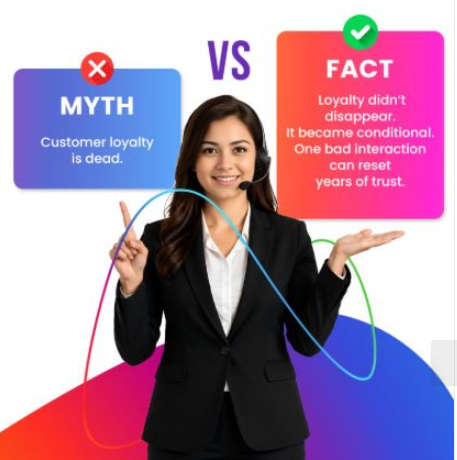
Loyalty hasn’t disappeared it’s become fragile.
Today, one poor interaction can undo years of trust and future revenue.
Brands that win aren’t just consistent in delivery, they’re consistent in experience.
3 Mistakes Customer Service Agents Make, even experienced agents fall into these habits:
1. Over-apologizing instead of clarifying
2. Assuming the customer understands the process.
3. Rushing to close instead of confirming resolution
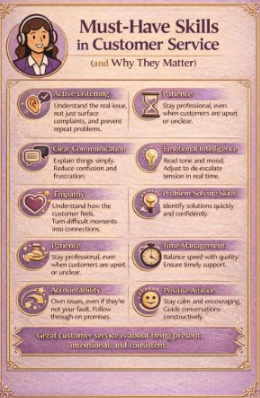
Must-Have Skills in Customer Service (and Why They Matter)
Customer service isn’t just about answering questions. It’s about how you think, listen, and respond when it matters most.
Here are the core skills every strong customer service professional needs:
Customer Success needs to retire the phrase “Just checking in”
If your outreach doesn’t add value, it adds noise
Customers don’t need more pings.
They need insights, outcomes, and momentum 💥📈
So how do we move from “checking in” to showing up with purpose .
🚨 “You’re too expensive” is usually NOT why customers churn.
It’s just the easiest thing to say on the way out 👋
As a Customer Success Executive, I’ve learned this:
💸 Price is often the excuse.
📉 Lack of value is the real reason.
A VA isn’t just support — they’re an extension of your operations.
Skills matter.
But attitude and reliability matter even more.
The right VA doesn’t create more work for you — they reduce it.
Most teams don’t fail because they lack process.🫠
They fail because they hide behind it. 👀
At the start, structure feels like progress:
Playbooks 📘
Templates 📄
Dashboards 📊
One thing customer service quietly teaches you is emotional intelligence.
You learn that the same message can create two completely different outcomes depending on how it is delivered.
Leads coming in is one thing.
Keeping them properly organized is another.
Without a structured tracking system, follow-ups get missed and opportunities slip away.
As an Administrative Virtual Assistant, I help businesses.
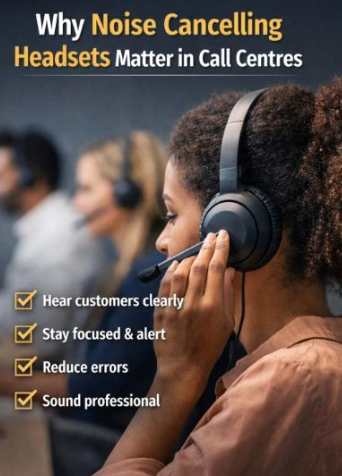
In a call center, background noise comes from everywhere. Other agents talking, phones ringing, team leads giving instructions, and general office movement. Without a noise cancelling headset, all of that competes with the customer’s voice.
Customer Service Etiquette "The Little Things That Make a Big Difference"
Customer service isn’t just about solving problems, it’s about how you show up while doing it.