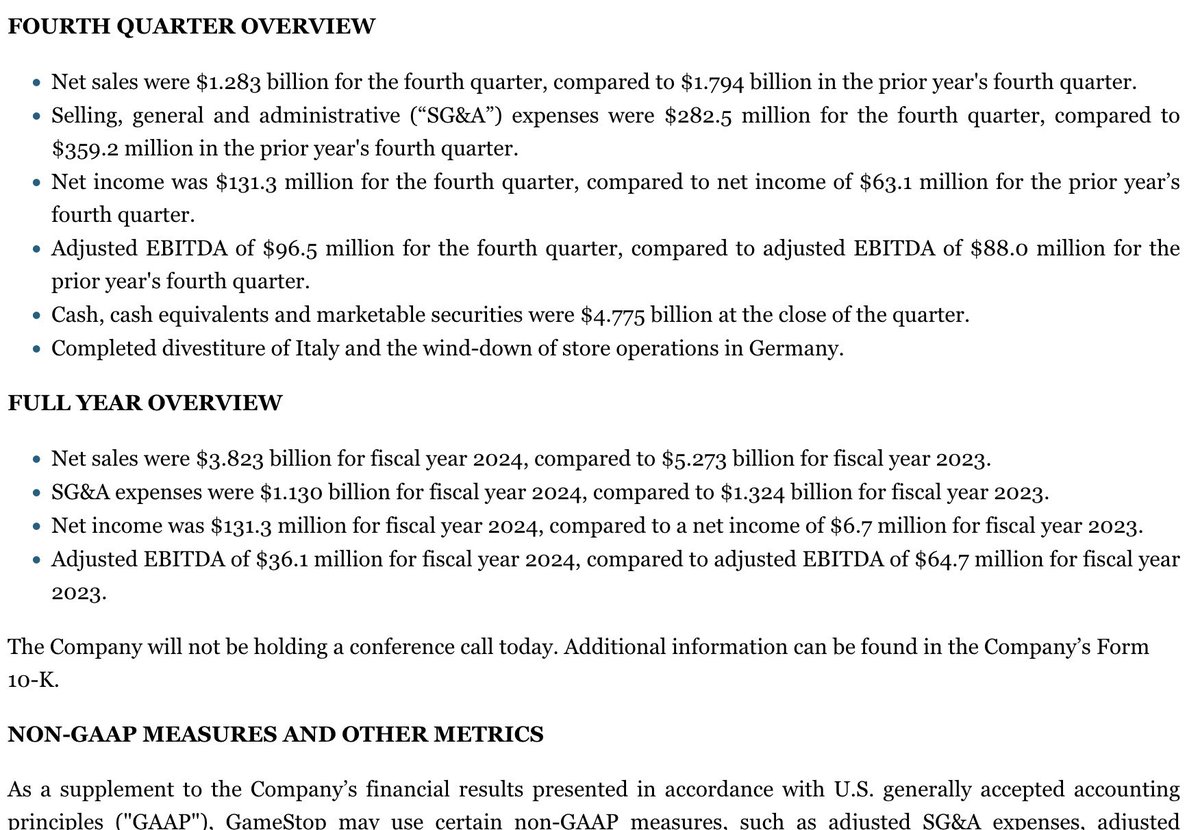
Ok I’ve never even posted about it before but $GME looks crazy. Usually ignore it but wow one Kitty pump tweet and this should breakout.
*might be a top signal or might mean $50+ comes*
Bags are packed! ✈️ We're ready for #Token2049 in Singapore.
Looking forward to connecting with amazing people and partners in the #Web3 space. 🚀
If you're attending, we’d love to meet you! 🙌
I was thinking, how many public co CEOs - literally in history - have taken:
Salary: $0
Bonus: $0
Stock: 0 shares/options granted
Not a single dollar in wages, not a single share of stock, not a single option, nothing. Not Jobs, Ellison, Buffett, Musk. It may be only one.
From The Article:
"In the tumultuous world of stock valuation, where investors seek the elusive combination of undervaluation and growth potential, two metrics have emerged as paramount: the price-to-cash ratio and year-over-year earnings growth percentage. GameStop Corp, a company that has garnered significant attention in recent times, is currently demonstrating remarkable strength in both these metrics, positioning itself as a compelling deep value play.
As of June 14th, GameStop's price-to-cash ratio stands at less than 3, a figure that outshines all 100 companies listed in the Nasdaq100 index. This metric, which compares a company's market value to its cash reserves, is a crucial indicator of financial health and stability. With a price of $27.50 per share, GameStop's low price-to-cash ratio underscores its potential for being undervalued relative to its cash position.
Furthermore, GameStop boasts an impressive year-over-year earnings growth percentage of 112.05% for the trailing 12 months. This staggering growth figure places GameStop ahead of 99 out of 100 Nasdaq100 companies, highlighting its exceptional performance in terms of earnings expansion. For value investors seeking opportunities in companies with strong growth trajectories, GameStop's stellar earnings growth sets it apart as a promising contender.
GameStop's enviable position with a price-to-cash ratio of less than 3 and virtually no debt sets a sturdy foundation, particularly in anticipation of a possible recession. With ample cash reserves and minimal debt obligations, GameStop is well-equipped to weather economic downturns with resilience. This financial strength not only enables the company to navigate challenging market conditions but also positions it strategically to capitalize on opportunities that arise during periods of economic uncertainty. In the event of a recession, GameStop could leverage its robust cash position to acquire distressed assets or companies at favorable valuations, potentially strengthening its market position and diversifying its revenue streams. Additionally, the absence of significant debt alleviates financial burdens and provides flexibility, allowing GameStop to adapt its strategies and investments prudently to mitigate the impact of economic downturns. Overall, GameStop's prudent financial management and strong cash position offer a solid framework for navigating potential recessions while also presenting opportunities for strategic expansion and growth.
The significance of these metrics becomes even more apparent when considering GameStop's recent history and the broader market context. Despite facing challenges and undergoing significant transformations in its business model, GameStop has managed to adapt and thrive in an ever-changing retail landscape. Its ability to generate cash and sustain robust earnings growth underscores the resilience and agility of the company's management team.
For investors, particularly those with a value-oriented approach, GameStop's combination of a low price-to-cash ratio and impressive earnings growth presents an intriguing opportunity. While the company's stock has experienced volatility and garnered attention from retail investors and Wall Street alike, its fundamental strength as reflected in these metrics suggests that there may be unrecognized value waiting to be unlocked.
However, it's important to note that investing in GameStop, like any other stock, carries inherent risks. Market dynamics, industry trends, and company-specific factors can all influence the stock's performance in unpredictable ways. As such, thorough due diligence and a clear understanding of one's investment objectives are essential for making informed decisions."