It’s World Thyroid Day!
Take a look at our animation showing the thyroid’s vital role in our health.
Please share to help people to #BeThyroidAware and to receive prompter diagnosis and treatment.
Thank you
https://t.co/5EqZm1OWPz
#WorldThyroidDay#BeThyroidAware#thyroid
It’s #WorldThyroidDay! Thyroid conditions affect many worldwide—yet still go undiagnosed.
Take a moment to learn how your thyroid could be impacting your health.
🎧 Tune into our podcast “Have I Got a Thyroid Problem?” for expert advice and insights 👉 https://t.co/S2rk85aOlt
Want to learn more about hormones? Give our podcast, Hormones: The Inside Story a listen, available on all podcast platforms. #WorldHormoneDay https://t.co/vk1VfvCFQ6
Tip No.4
Exercise helps your body produce hormones and to keep your body in balance. Try to get 1.5-2.5 hours a week of physical activity. Swimming, running and even skateboarding is great to get your heart rate up.
Tip No.3
The old saying is true – you are what you eat! Fill your diet with fresh vegetables, fruit, and whole grains. We aren’t saying don’t have some treats, but keep it managed and balanced to keep those hormones in check! https://t.co/DJgJILLlzr
Tip No.2:
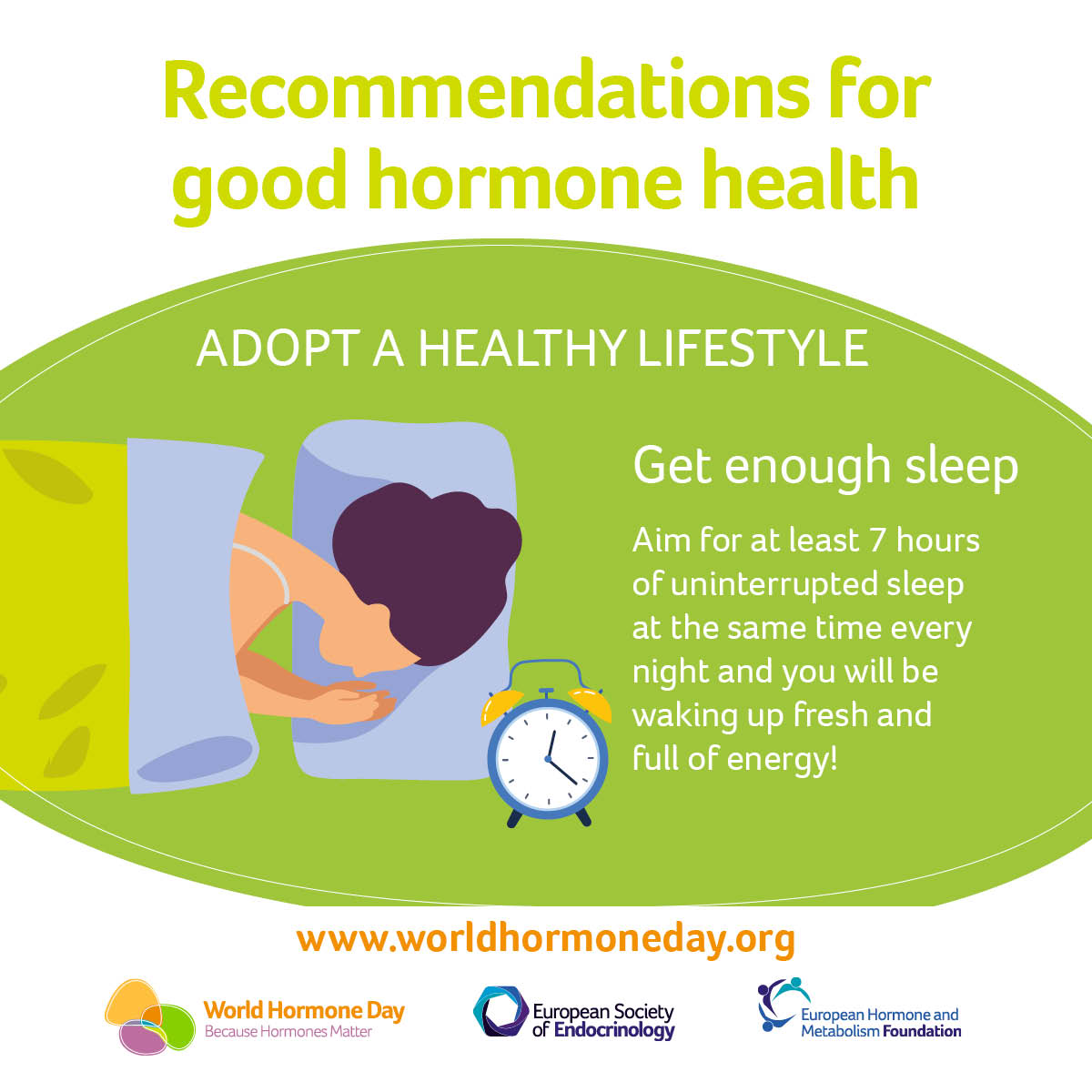
Sleep is key for great hormone health, try to get seven hours of uninterrupted sleep to wake up ready to face the day. Try going to sleep at the same time each night for a hormone happy routine! #BecauseHormonesMatter https://t.co/wNtXpLq3jy
Our top tips for hormone health No.1
Reduce exposure to things that can disrupt your endocrine system that can often be found in plastics. Switch to glass or stainless-steel containers, and drink tap water instead of bottled. #BecauseHormonesMatter
Did you know, your risk of osteoporosis increases after #menopause? It’s a good time to focus on your long-term health. Find out more about osteoporosis and how it can be treated: https://t.co/rEcXgcZZNZ #WorldMenopauseDay
Vaginal dryness or irritation is common during menopause, but vaginal oestrogen (like gels or pessaries) can help, especially for those who can’t take other forms of hormone therapy. #WorldMenopauseDay https://t.co/S8EwJ9ECRH.
#Menopause usually occurs after age 45, but if the ovaries stop working before 40, it’s called Premature Ovarian Insufficiency (POI).
Discover what causes #POI, how it’s diagnosed and ways to manage the symptoms: #WorldMenopauseDay#POIAwareness https://t.co/OFZeoz9Qmp
Be cautious about taking herbal supplements for #menopause symptoms. There’s limited evidence that these work, and they’re not regulated like prescription medicines.
@AnniceMukherjee explains some evidence-based treatment options: https://t.co/MfmyQTpE4K #WorldMenopauseDay
#Menopause marks one of the biggest natural hormonal shifts for women and it can lead to a number of unpleasant symptoms. But is there a testosterone-based equivalent in men? Find out in our podcast episode "Menopause vs. manopause" https://t.co/IGJ6ZrO4B2 #WorldMenopauseDay
Experiencing brain fog during #menopause? It’s often temporary and improves once your hormone levels stabilise. #WorldMenopauseDay https://t.co/Qh3F7DK6e1
You can still conceive during #perimenopause. It's worth considering your contraception options if you’re sexually active with a male partner during this period and not planning a pregnancy. #WorldMenopauseDay#MenopauseAwareness
Did you know, many women find #perimenopause symptoms more intense than in post-menopause due to the large hormonal fluctuations during this phase. https://t.co/5WK8U54vUo #WorldMenopauseDay#Perimenopause
Hormone Replacement Therapy (HRT) can be a safe and effective option for managing #menopause symptoms like hot flushes, night sweats and mood changes. Find out more about this treatment option: https://t.co/8Agmautj3d #HRT: #WorldMenopauseDay
When your periods have stopped for 12 months in a row, you've reached menopause. Menopause usually starts between the ages of 45 and 55, but it can happen earlier.
Want more info? Check out our myth-busting menopause resources: https://t.co/5FwvCSmdc4 #WorldMenopauseDay
Perimenopause means "around menopause"— this is the natural transition to menopause. Symptoms like irregular periods, hot flushes and vaginal dryness can occur. #WorldMenopauseDay#MenopauseMatters
Tomorrow is #WorldMenopauseDay! We'll be sharing expert-developed, evidence-based resources to combat misinformation and provide trustworthy insights on menopause and women’s health. Want to a sneak peak? Check out our website: https://t.co/84VETJEwi9