Septic cardiomyopathy involves dynamic systolic and diastolic abnormalities, making isolated assessment of LVDD insufficient for interpreting short-term mortality risk. https://t.co/x6PLXd8Jm3
The 2026 Surviving Sepsis Campaign Guidelines have just been released.
Sharpen you clinical decision-making and improve outcomes – read the guidelines for free:
Adult: https://t.co/wXOwIGA2jB
Children: https://t.co/1aTMO7Gwuh
JUST RELEASED!
The 2026 Update of the Surviving #Sepsis Campaign Guidlines is now online!
Permanent Free Access
Adult: https://t.co/TPARmzFMPg
Children: https://t.co/EhEbIeK9R6
JUST RELEASED!
The 2026 Update of the Surviving #Sepsis Campaign Guidlines is now online!
Permanent Free Access
Adult: https://t.co/Noup1PiXmZ
Children: https://t.co/zN6pifl8FT
Sepsis subtypes & response to IV vitamin C
🧫3 sepsis subtypes based on inflammatory response profile among critically ill adults
🍋NO subtype benefitted from vit C; heterogeneity of effect in magnitude of harm
🍊similar cytokine network in all subtypes
🔓 https://t.co/1IDts0dDYg
LV diastolic dysfunction in septic shock
🖥️ LVDD highly prevalent
🪦 not associated with mortality or 💦 initial fluid balance but with 🫁 significantly lower P/F ratio
🫀LVDD improved in survivors, suggesting #sepsis induced impairment of LV relaxation
🔓 https://t.co/SAiiLQ6t9E
CMV in #ICU: be aware!
🩺 pathophysiology
🧫 infection & disease definitions
🔥 reactivation in non-immunocompromised pts
🕯️ CMV in immunocompromised critically ill
⚠️ incidence & risk factors
🔬 presentations & diagnosis
🩺 treatment & prevention
🔓 https://t.co/vFJtJInxpe
Life-supporting interventions in older ICU patients
🔎 > 230K pts in 🇯🇵
🛟 many life-supporting interventions, ⬇️ with age
🏥 ½ of pts in 80s & 60% >90y did not return home
🔓https://t.co/QFs6uVtGOW
With editorial: how to provide better-tailored care?
🔓https://t.co/IGqZpe9Eb7
GCS: evolution & future celebrating 🎂 50 anniversary
🗺️ since introduction, GCS has been rapidly adopted into clinical practice due to its simplicity
🧠 bedrock of assessment of acute #TBI, its use expanded to any pts at risk of impaired consciousness
🔓https://t.co/ymVlqRY39P
🖥️ Difficult weaning can result from several causes, including impaired function of lung, heart, respiratory pump. #POCUS valuable tool across all stages of mechanical ventilation, including weaning, if properly trained staff. #echofirst#FOAMus
🔗 https://t.co/eVzrG0Yjvu
Using routinely collected #ICU data?
#AI models may assist in diagnosis, treatment & complex care, but before using for #datascience several challenges: quality, lacking long term outcomes, inherent bias, need for temporal updates, should be considered.
🔗 https://t.co/xeYCWhnvit
🎉 Best wishes for a happy (& full of published papers) 2025 to the Intensive Care Medicine #ICM community!
📫 Do not forget to submit manuscripts at https://t.co/HPuWXlPEVG
🖋️ Instructions for authors/Submission guidelines https://t.co/SbdhMLhI2C
Can we use #AI to better treat acute kidney injury?
🤖 role of #ArtificialIntelligence
🔮 prediction & prevention of #AKI
🔍 AKI sub-phenotyping
🩺 (cross-specialty) AKI management
🚧 limitations
🔍 future research
#FOAMcc on @icmjournal.bsky.social
🔓 https://t.co/ITuBFUbmHG
📣 Thank you @yourICM for sharing our findings with the ICM community.
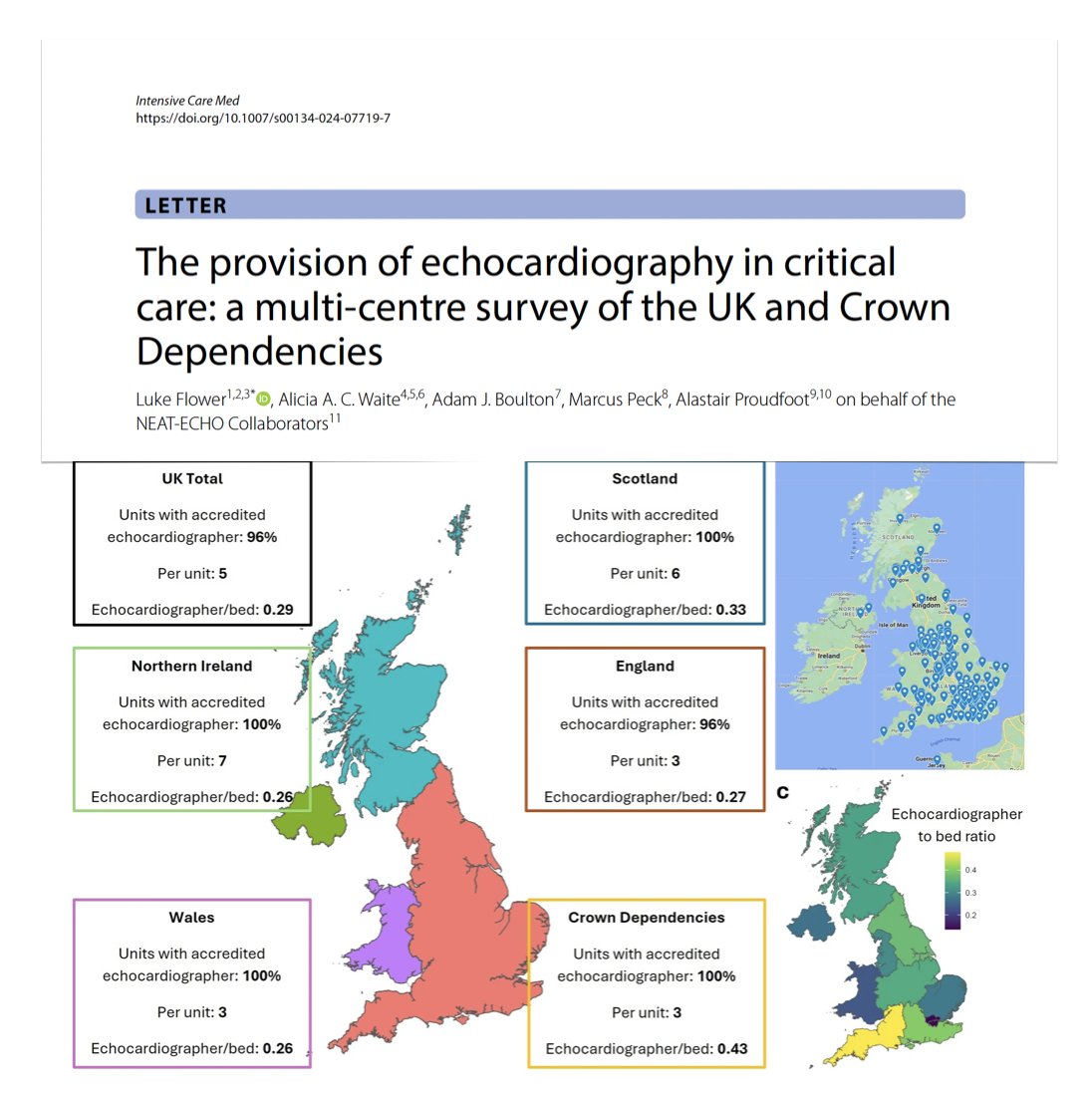
🫀NEAT-ECHO demonstrated a need to improve UK echo provision & shock care, alongside the potential impact of trainee-led research. @TRICNetwork
📝 1: https://t.co/KNgn4nmyUj
📝 2: https://t.co/nj7pzEb0TF
🧵2/2
🖥️ 89% had approved trainer, teaching provided in 55%
🖥️ 62% had an echo lead, only 44% of them had dedicated time for role
🖥️ only 15% units reported all-hours access to emergency #echo, 42% unreliable/no access
🖥️ regional echocardiographer-to-bed ratio: 0.48 to 0.14
Echocardiography in ICU
🔍survey by @TRICNetwork@ICS_updates@FICMNews & @BSEcho, 178 🇬🇧 critical care units
🖥️significant heterogeneity in provision
🖥️96% had accredited clinician
🖥️16% of medical staff accredited in FOCUS & 4% in advanced #echo
🔓https://t.co/VXkTN4GbL3
🧵1/2
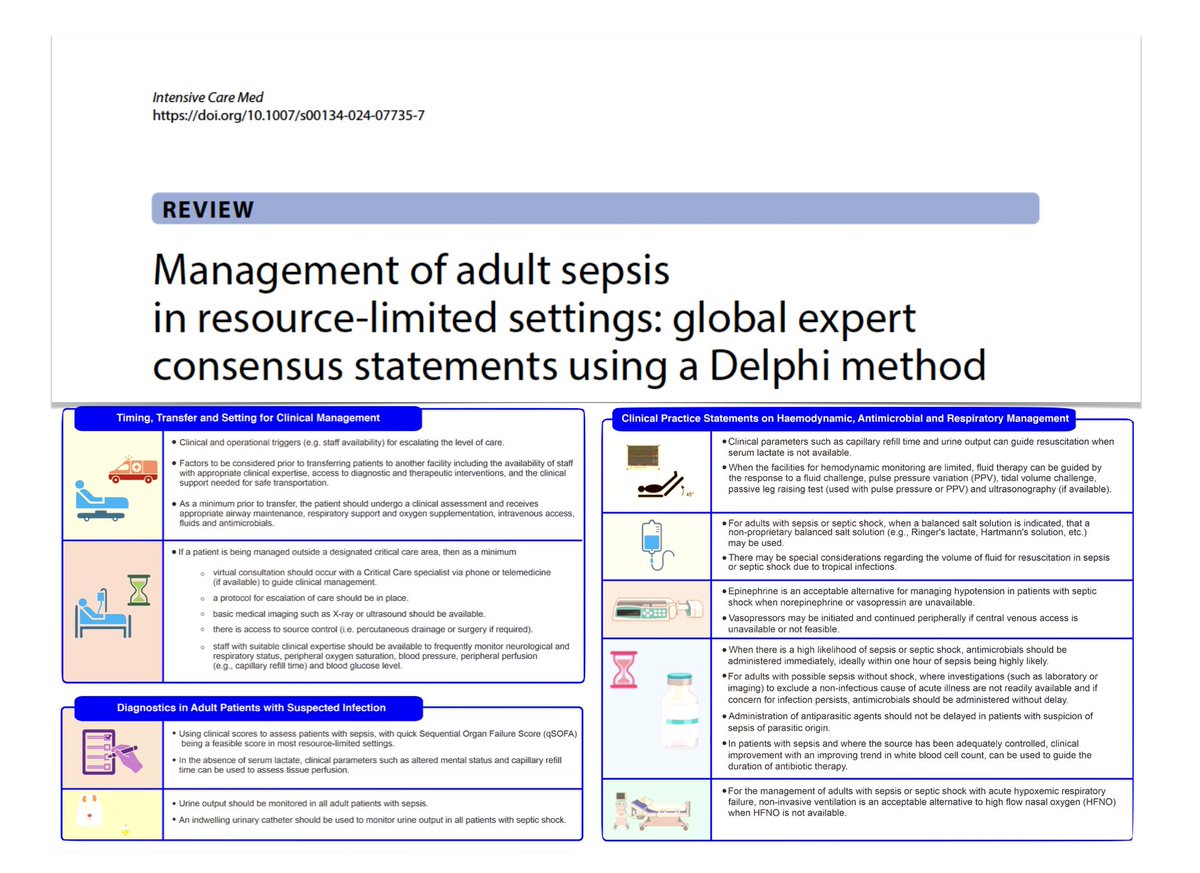
Managing adults with #sepsis in resource-limited settings
🔍 international Delphi consensus
🩺 statements complement existing guidelines where evidence is lacking + add relevant aspects of management of critically ill, providing additional guidance
🔓 https://t.co/dRGoIfZfQ0